

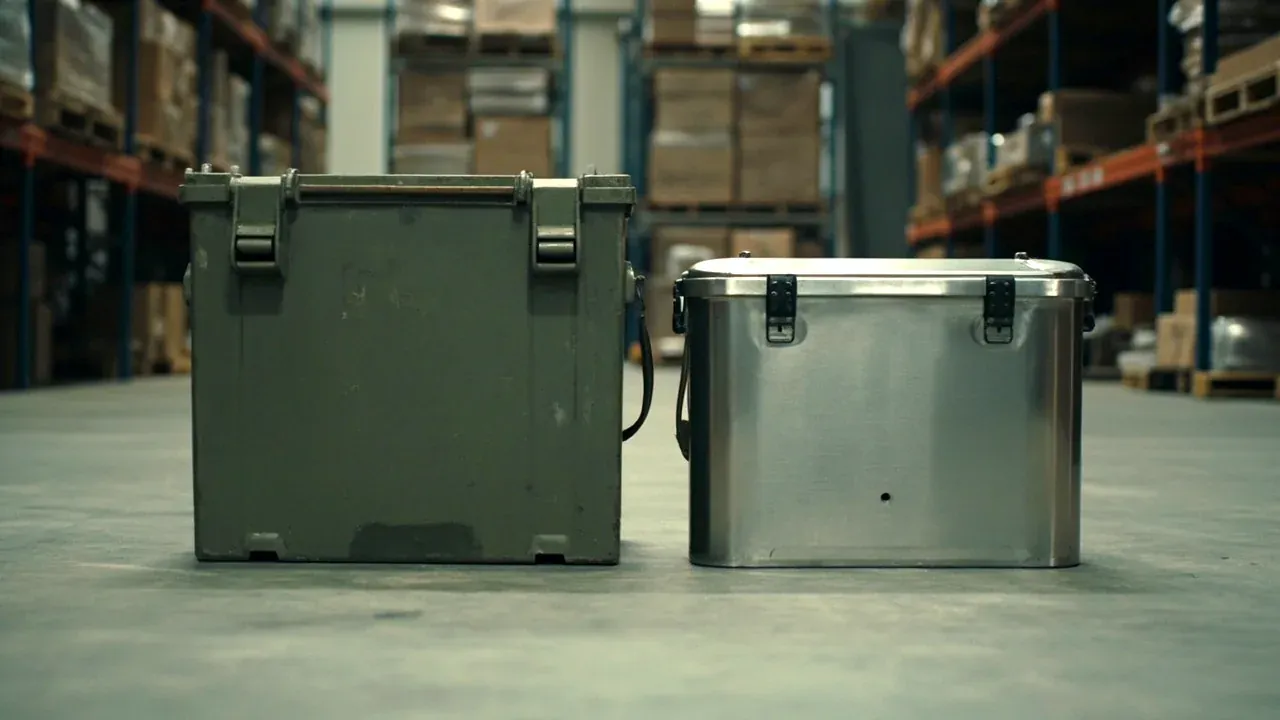
Quick answer: The same batch of supplies fits both boxes, with different priorities. A ration box is built around cleaning, odour isolation and unit portions; an insulated carrier is built around holding temperature for hours. Four dimensions separate them: sealing logic, cleaning dead corners, condensation, and turnover cost. Short rule: short-haul portion circulation with repeated food contact points to the ration box; long holds to the carrier.
Table of contents
- One batch of supplies: ration box versus insulated carrier
- Sealing and odour isolation
- Cleaning dead corners
- Condensation across a temperature swing
- Turnover cost beyond the purchase price
- FAQ
1. One batch of supplies: ration box versus insulated carrier
The same batch of supplies fits both boxes, but the division of labour differs. A ration box treats its shell as a food-contact surface: washable inside, odour-tight closed, loaded by portion. An insulated carrier treats its shell as a thermal barrier: insulation first.
In the photo, a grey ration box and a stainless carrier stand side by side: thin wall, gasket groove and draw latches against a thick wall with heavy latches.
Two questions settle the order: short-haul portion circulation or a long hold, and does the shell touch food repeatedly? The answers point to one box and one acceptance regime.
2. Sealing and odour isolation
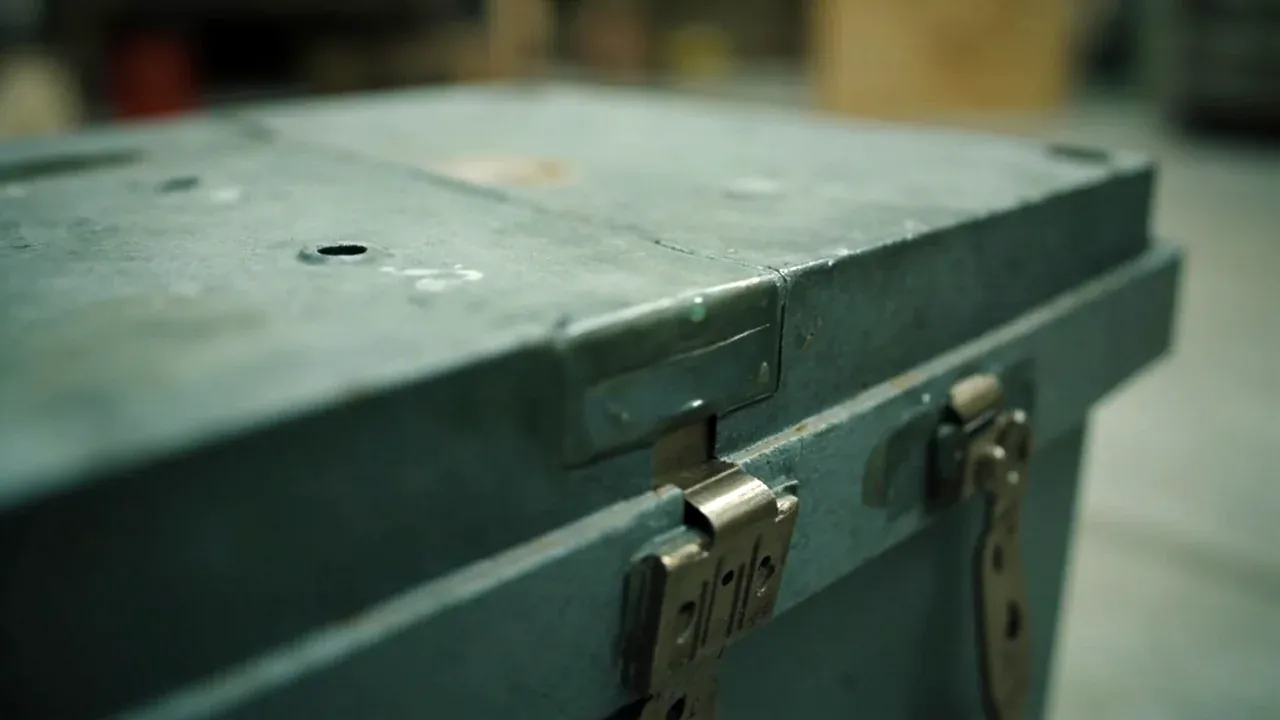
A ration box seals at the rim: a gasket in a lid groove is compressed by the draw latches and rebounds to fill the seam; smell stays in and out, vapour stops with it.
An insulated carrier seals by a different logic: insulation comes first, so the wall is liner, insulation and jacket held by latches, the seam carries no continuous gasket, and odour and moisture control are by-products. Odorous supplies separate the two in half an hour.
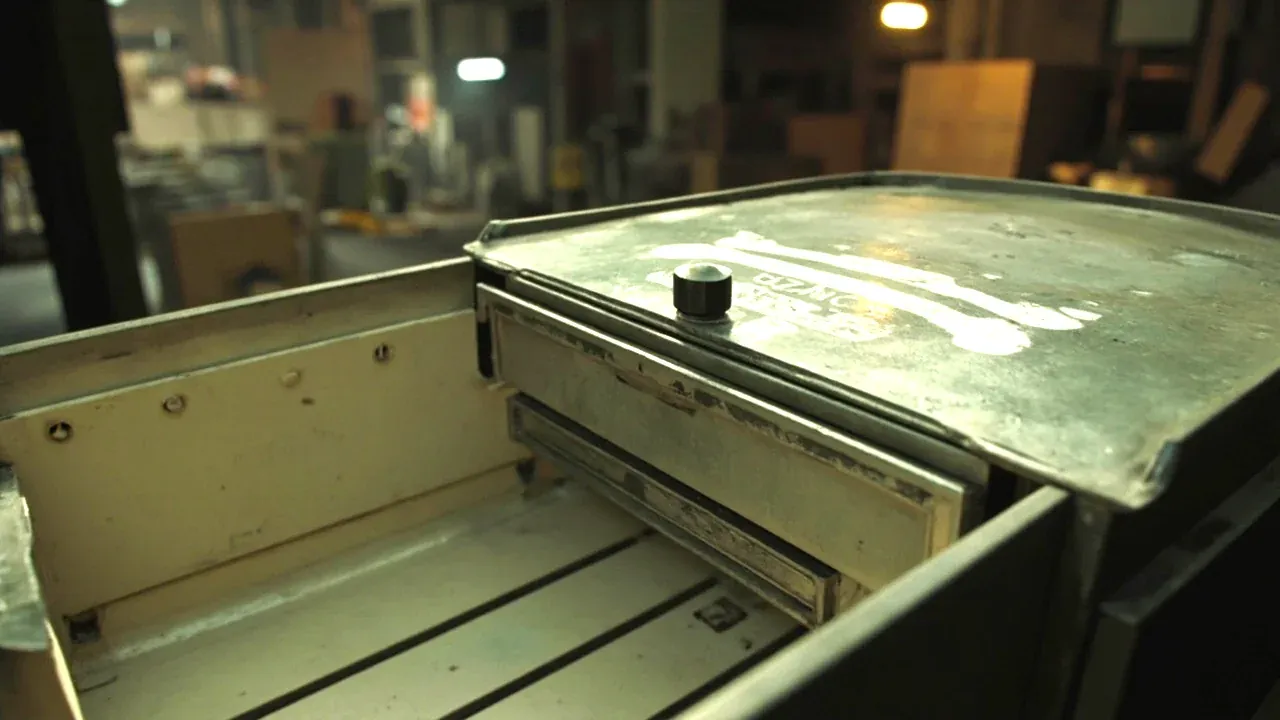
Sealing is not sealing shut: a vent membrane passes gas but holds liquid, and a button settles pressure before opening.
3. Cleaning dead corners
Cleaning is where the gap is widest. A ration box interior is a food-contact surface: one-piece radiused walls, chamfered joints, rinse water running out. A carrier keeps an air gap between liner and insulation, and welds, piercings and jacket edges hide moisture and debris; daily wiping reaches the liner only.
Dividers serve cleaning too: ration box trays are removable and wash with the shell, while carrier liners are mostly welded. Daily portion circulation means daily washing, and wash-line fit decides box life.
4. Condensation across a temperature swing

Condensation is the common exam, at different spots. A box moving from cold to warm cools its face below the dew point and condenses outside. In the photo, one shell is beaded and its twin dry: the thin ration box wall beads mostly on shell and rim, while the gasket keeps the inside dry.
A carrier hides its condensation in the gap. Insulation slows the liner and keeps the outer face above the dew point, so the outside looks dry; but vapour crosses liner welds and latch piercings and condenses inside the insulation. It shows up late — heavier box, shorter hold — and one broken jacket lets water in for months.
5. Turnover cost beyond the purchase price
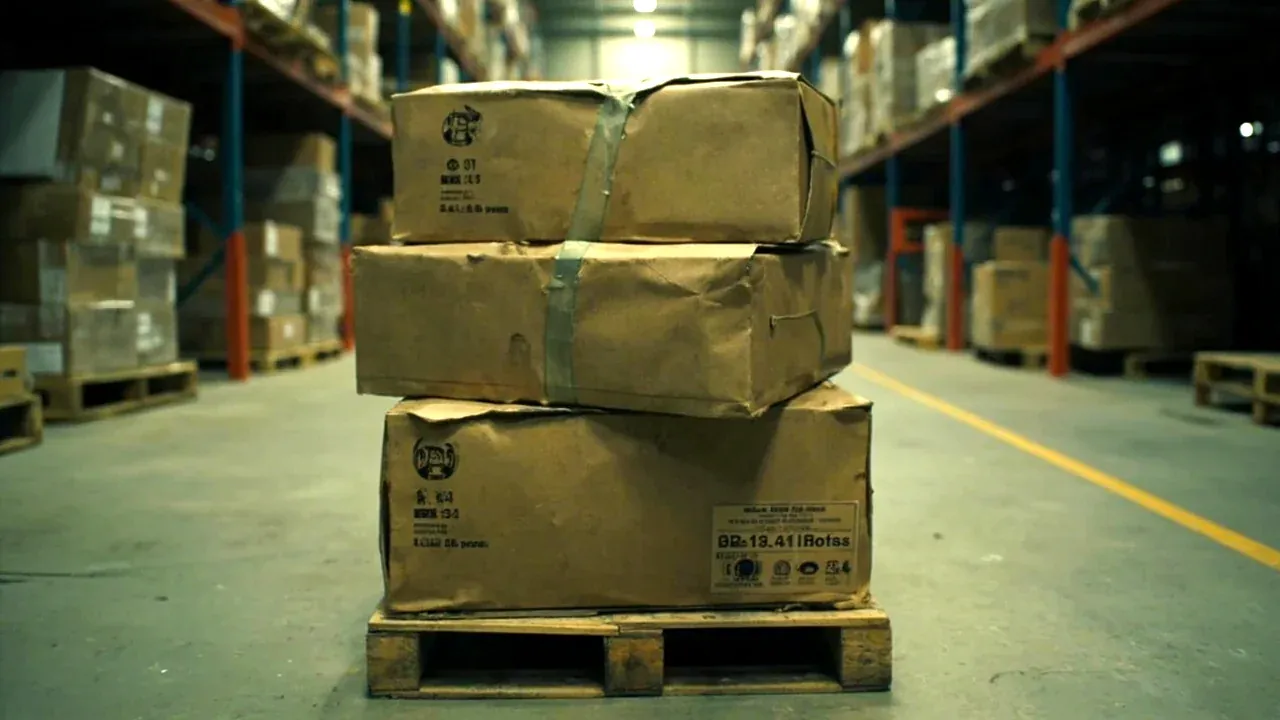
Purchase price is only the first account. In the photo, three ration boxes sit on a pallet with a strap over the lids: short-haul pallet circulation is the daily round. Three more accounts complete the bill:
| Account | Ration box | Insulated carrier |
|---|---|---|
| Washing | Whole shell through the line | Gap cannot be cleaned |
| Repair | Hardware is replaceable | Insulation damage scraps the box |
| Stacking | Flat lids, strap a pallet | Heavy, fewer per pallet |
Stacked up, short-haul portion circulation usually gives the ration box the lower whole-life cost; a long hold spreads the carrier's price across hold time.
Conclusion
The trade-off compresses into four lines: sealing by continuous rim gasket or latch pressure; cleaning by a one-piece radiused interior or a gapped wall; condensation at the outer rim or hidden in the gap; turnover by replaceable hardware and pallet module or by hold time. Set the scene with two questions — short-haul portion circulation, repeated food contact — then compare prices; the choice between ration box and insulated carrier is written.
This article covers container-side specifications and design implications only.
Related Reading
- Food catering insulated case
- Cold chain case guide
- Condensation control in cases
- Total cost of ownership for cases
Related Products
- 8 Series — Gun Cases; Military Equipment Cases; Camera Equipment Cases; Drone Cases; Watch Cases; Knife Cases; First Aid Cases; Electronics Equipment Cases
- WL8-2812 PP Gun Case — model WL8-2812
- All protective cases and toolboxes: 7 series, 158 models