

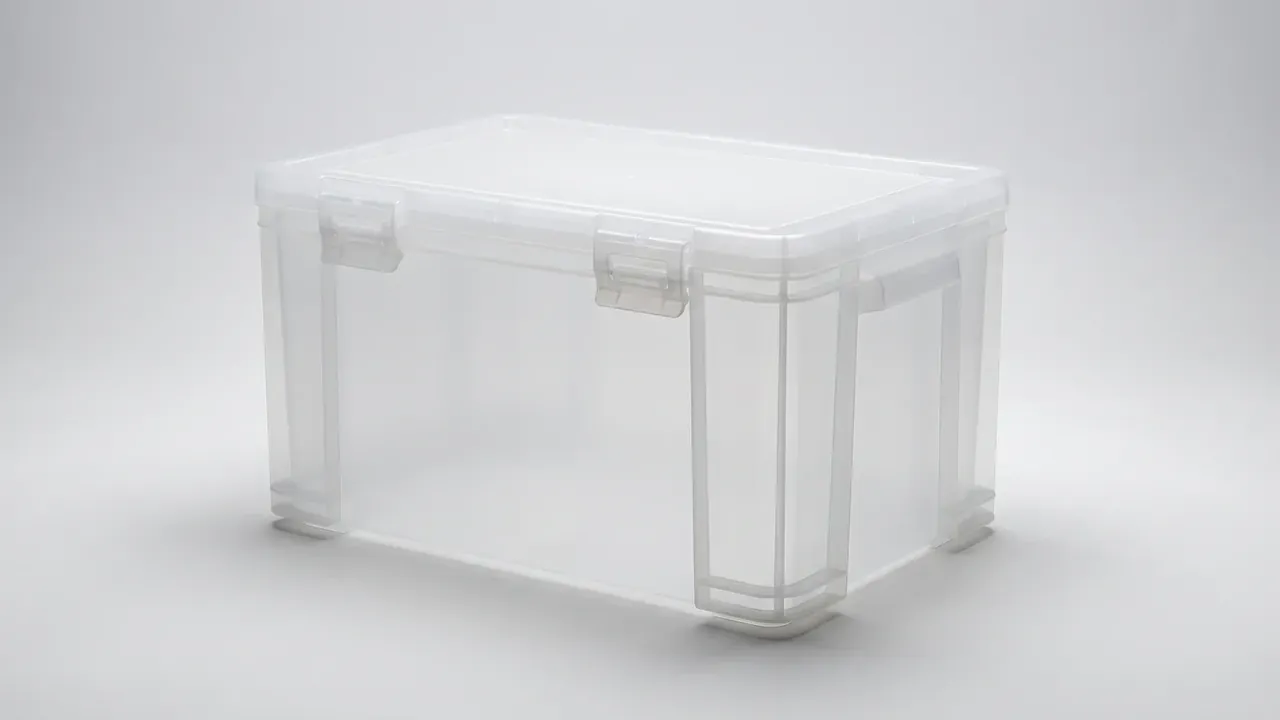
Quick answer: Yes, but the saving comes from the process, not the box. A reusable plastic shipping box at 58 yuan amortises to 1.16 per trip over fifty cycles, against 8 yuan for cardboard with tape and fill. The comparison only holds once washing, return transport and a three percent loss rate are inside it.
Table of contents
- The three-year bill for a reusable plastic shipping box
- Fifty cycles: amortisation from 1.16 to 0.58
- Washing, ageing and a three percent loss rate
- Five checks you can run on site
- FAQ
1. The three-year bill for a reusable plastic shipping box
A small-appliance parts factory ships five thousand times a year, 180 km per run, to three cities. It used five-ply corrugated at 6.8 yuan a box plus 1.2 yuan of tape and fill. Purchasing put three years on one sheet.
| Item | Cardboard | Reusable plastic shipping box |
|---|---|---|
| One-off spend | Zero | 17,400 yuan (300 boxes at 58) |
| Boxes over three years | 102,000 yuan | 1,566 yuan (27 lost) |
| Tape and fill | 18,000 yuan | Zero |
| Washing and return | Zero | 28,500 yuan (1.9 per trip) |
| Three-year total | 120,000 yuan | 47,466 yuan |
| Cost per trip | 8.00 yuan | 3.16 yuan |
The cardboard column is a spend that resets to zero every three years. In the plastic column, the one-off is barely a third of the total; the rest is washing and return freight that recur every week. The useful part is not the gap but the split: which line is actually spending.
An automotive parts supplier found a far smaller gap: his lane is one-way, so empties need a dedicated truck back.
Cardboard wins on direction, not price: ship it and you are done. The reusable box starts spending on the way back.
2. Fifty cycles: amortisation from 1.16 to 0.58
Amortisation is the line most often miscalculated.
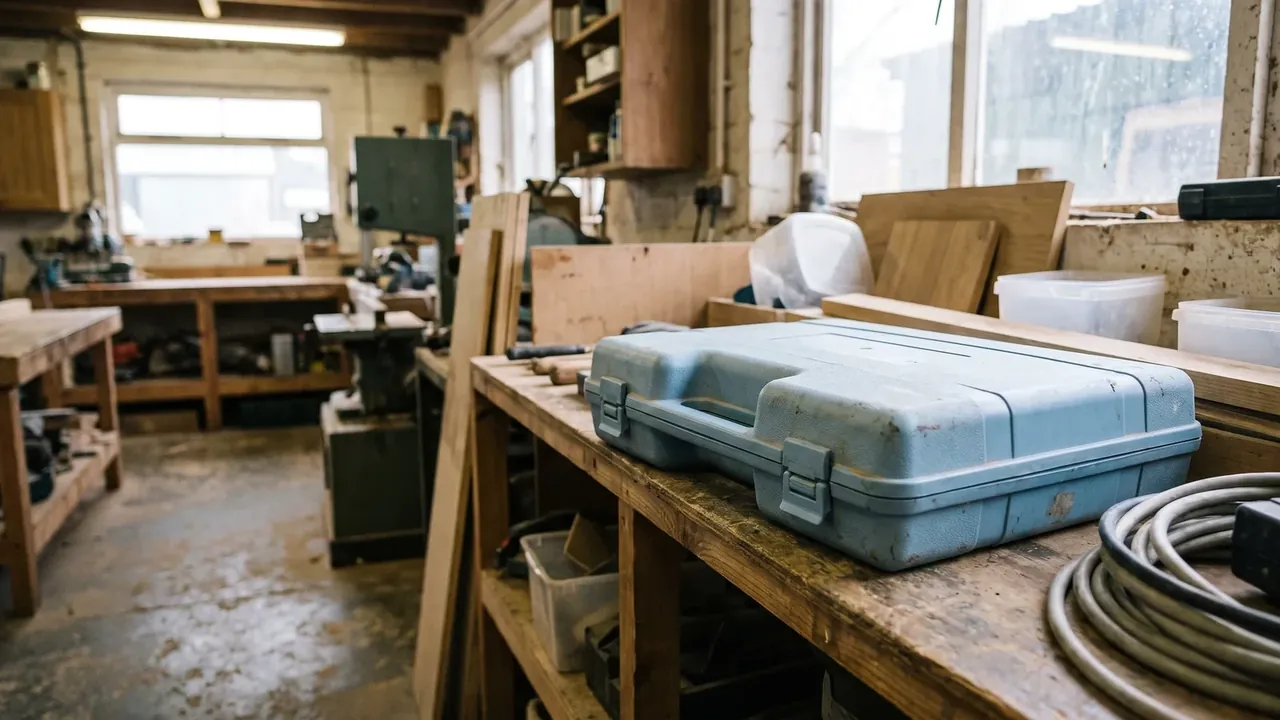
58 yuan over fifty cycles is 1.16; over a hundred it is 0.58. The "sixty fen" figure in most sales decks is not invented; it assumes a hundred cycles. At thirty cycles the same box costs 1.93 per trip, which is why the honest range is 0.6 to 1.2.
| Cycles reached | Amortised cost | Plus 1.9 washing and return | Against 8 yuan cardboard |
|---|---|---|---|
| 30 | 1.93 | 3.83 | 4.17 saved |
| 50 | 1.16 | 3.06 | 4.94 saved |
| 80 | 0.73 | 2.63 | 5.37 saved |
| 100 | 0.58 | 2.48 | 5.52 saved |
The curve is steep early: thirty to fifty cycles cuts 0.77 per trip, fifty to a hundred only 0.58 more.
Fifty is not the break-even point; on pure price the box wins before ten cycles. Fifty is where building a process starts to pay: return racks, wash baskets and scan labels only amortise once a box passes fifty cycles.
So reverse the order: ask how many trips the lane runs a year and how often a box turns, then talk price. Where a box turns five times a year, fifty cycles takes a decade.
3. Washing, ageing and a three percent loss rate
Of the three hidden costs, loss is underestimated first.
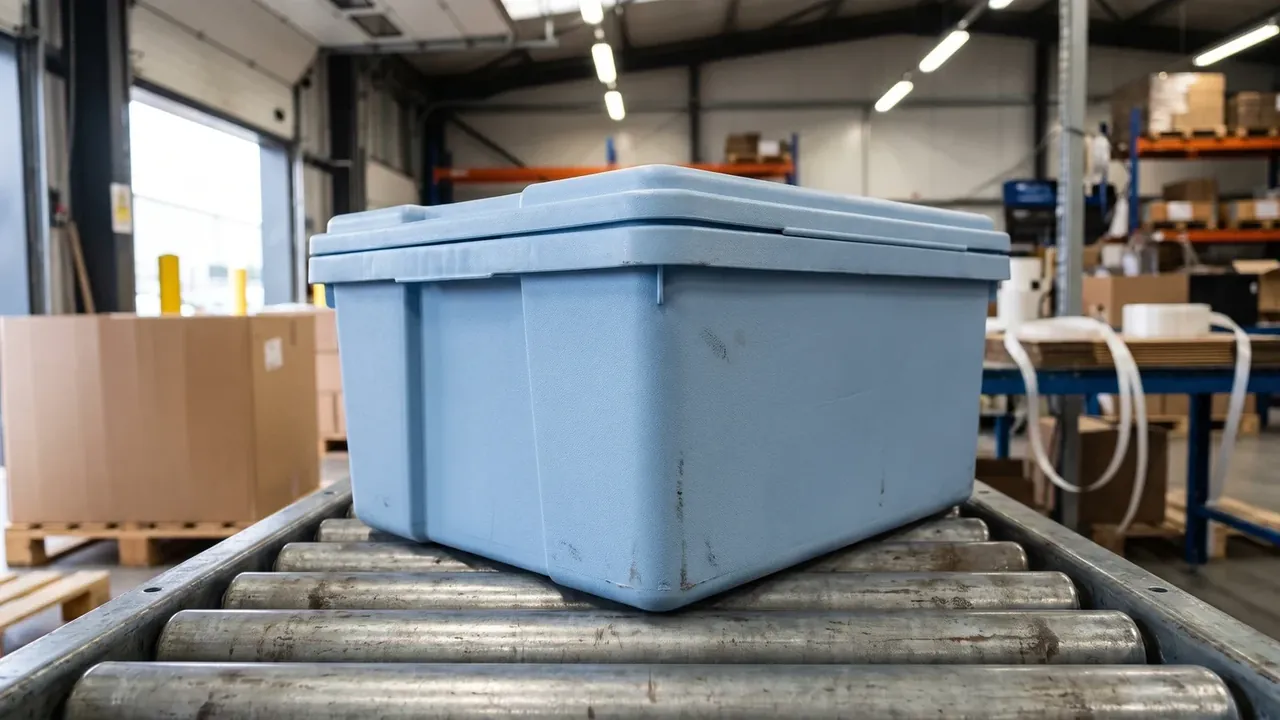
Three percent is the industry norm: of every hundred boxes out, ninety-seven come back. On a base of three hundred that is nine a year, twenty-seven over three years, 1,566 yuan at 58 each. The money is small; the base thins to 273 usable boxes.
Washing is the easiest line to forget. Water at 60 °C, eight litres, a forty-second spray: about 1.2 yuan. Add drying space and basket depreciation and it lands near 1.9. Boxes come back refused for residue more often than for damage.
Ageing follows ultraviolet. Boxes stored outdoors chalk within three years and crack at the corners; the same batch indoors is serviceable at five. That near-doubling of life moves the amortised figure between 0.6 and 1.2.
The three-to-one folding ratio decides return freight. Fifty-six boxes fill a truck upright; folded, the same truck takes 168, cutting return runs from three to one. On a one-way lane that matters more than the box.
4. Five checks you can run on site
A data sheet will not separate good from bad. Five actions will.
- Press the long side: a single hand at the midpoint should deflect no more than 3 mm and spring back without a white mark.
- Trap a sheet of A4 under the closed lid: if it pulls out, the rim is warped.
- Stack four loaded boxes for forty-eight hours: the bottom box should not bulge past 2 mm.
- Hang a full box by the handle for ten minutes: no whitening or cracking at the root.
- Cycle the folding hinge two hundred times: no stiffness, no squeak.
The first two take five minutes; the last three need samples side by side. Three suppliers at the same nominal size separate immediately.
One more check never appears on a data sheet: whether the base sits flat. A base with external ribs touches a roller conveyor on a few lines and hops; a flat base runs quiet.
Conclusion
Over three years the reusable plastic shipping box does beat cardboard, and the saving comes from zero consumables and folded returns rather than unit price. The threshold is cycles: below sixteen turns a year, neither the amortisation nor the process works. Put loss, washing and ageing into the per-trip figure before switching instead of comparing 6.8 with 58. A reusable plastic shipping box suits a loop you can manage.
This article discusses only the container (case body) side of specifications and design intent, and does not cover any handling, loading or use of the contents.
Related Reading
- Sizing and load checks for transit cases
- Washing, repair and retirement rules for returnable boxes
- Returnable boxes against one-way packaging
Related Products
- 8 Series — Gun Cases; Military Equipment Cases; Camera Equipment Cases; Drone Cases; Watch Cases; Knife Cases; First Aid Cases; Electronics Equipment Cases
- WL8-2812 PP Gun Case — model WL8-2812
- All protective cases and toolboxes: 7 series, 158 models