


Quick answer: A reusable shipping and storage container differs from single-trip packaging, wooden crates, metal racks and plastic totes on five points — design cycles, empty-return volume, replaceable parts, sealing class and cost per cycle. Score them separately and the ranking flips with lane length.
Table of contents
- How a Reusable Shipping and Storage Container Compares
- Comparing Cycle Counts Without Inflating the Denominator
- Empty Return Cost Shows Up in Volume
- Repair and Sealing Draw Two Lines
- Cost per Cycle and the Segmented Verdict
- FAQ
1. How a Reusable Shipping and Storage Container Compares
Five options share one price sheet but are not the same object: packaging is consumed per shipment, crates are scrapped per trip, racks depreciate yearly, totes retire one by one, and a reusable shipping and storage container is amortised over cycles.
| Option | Forming | Design cycles | Cost per cycle |
|---|---|---|---|
| Single-trip packaging | Corrugated board | 1 | 46 |
| Wooden crate | Plywood, nailed | 1 | 210 |
| Metal rack | Welded steel | 1800 | 0.92 |
| Plastic tote | Moulded PP | 260 | 0.46 |
| Reusable case | Rotomoulded PE | 500 | 2.59 |
On that column the case costs five times the tote, yet low cost per cycle is not low total cost.
2. Comparing Cycle Counts Without Inflating the Denominator
Design cycles assume no loss, no float, no overload. Real lanes discount them: 100 units bought, 20 parked at a supplier or in transit, 80 available, so the denominator takes 0.8.
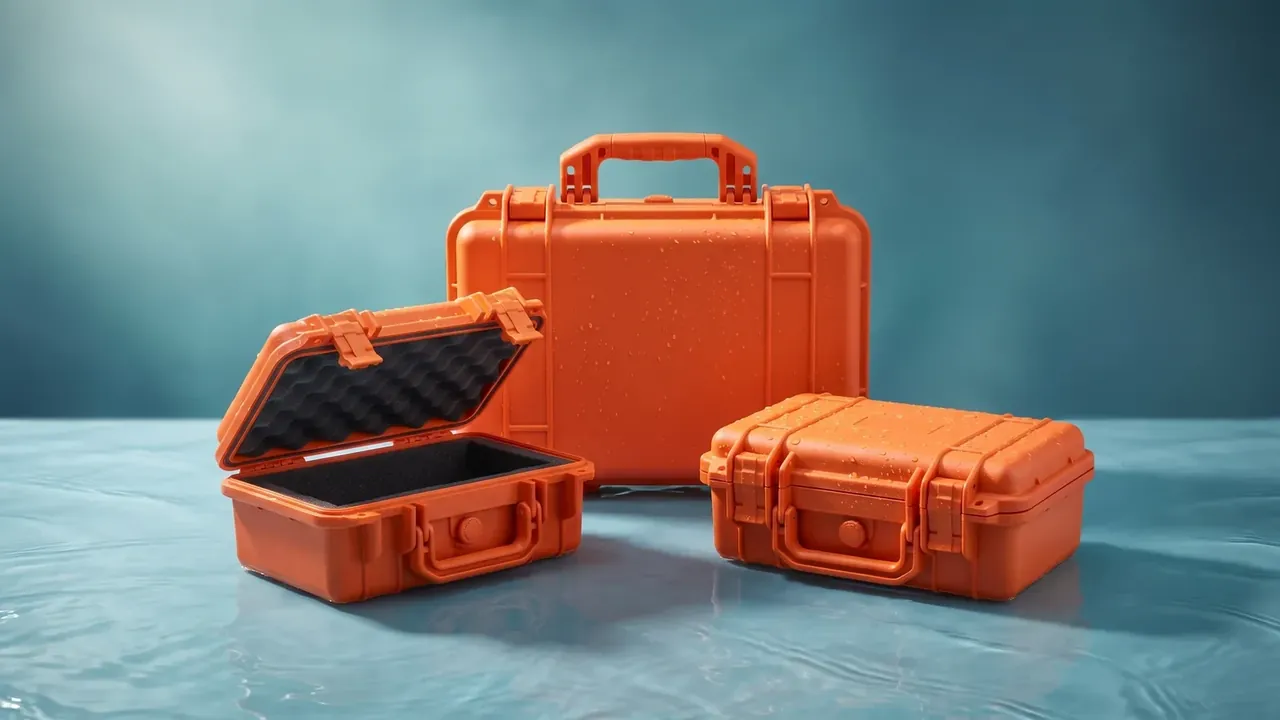
Washing is the hidden consumer: pumping detergent through the case ages the gasket, and washing every third cycle instead of every cycle stretches gasket life about 40%, letting the denominator reach 340. Failure mode matters too — totes split, crates die at the nail line, racks rust at welds, and a reusable shipping and storage container fails at the latch.
3. Empty Return Cost Shows Up in Volume
Flattened board reaches 1:12, so single-trip packaging wins the return leg.
| Option | Empty ratio | One unit empty | Annual return freight |
|---|---|---|---|
| Single-trip packaging | 1:12 | 0.01 m³ | Negligible |
| Wooden crate | 1:1 | 0.31 m³ | Not returned |
| Plastic tote | 1:1.8 | 0.07 m³ | 1900 |
| Metal rack | 1:2.4 | 0.13 m³ | 3400 |
| Reusable case | 1:3.5 | 0.034 m³ | 1100 |
On a 380 km lane at 65 per cubic metre, 20 trucks a month and 24 units each, loose empties take 2.88 m³, nested they take 0.82 m³: 134 saved per truck, about 16,000 a year, none on a quotation.
4. Repair and Sealing Draw Two Lines
Repair is about swappable parts, not difficulty. Packaging and crates have none; totes take a weld that never regains strength; racks accept new beams but need paint to dry; the latch and gasket of a reusable case take 6 and 12 minutes to change.

Sealing is the harder line. Board, timber, totes and racks stop dust and nothing else; a gasket in a groove holds IP65, so a case from a −25 °C freezer enters a 60 °C trailer without condensation. Where it is not needed, the feature is money spent for nothing.
5. Cost per Cycle and the Segmented Verdict
Cost per cycle is (price + repair) ÷ actual cycles, with freight in the numerator: packaging 46, crate 210, tote 0.46, rack 0.92, reusable case 2.87.
| Lane type | Cycles per year | Better fit | Why |
|---|---|---|---|
| One-way export | 1 to 2 | Single-trip packaging | Denominator too small |
| Short in-plant, light | 200+ | Plastic tote | No seal needed |
| Heavy in-plant loop | 120+ | Metal rack | Stiffness, beams |
| Regional transfer | 40 to 80 | Reusable case | Sealing, return ratio |
| High-value precision | 60 to 120 | Reusable case | Sealing, impact |
The boundary is the lane, not the price: below five cycles a year nothing reusable amortises, above 40 with a regional leg or a moisture requirement, a reusable shipping and storage container undercuts single-trip packaging.
Conclusion
Taken singly, a reusable shipping and storage container leads on nothing: fewer cycles than a rack, a higher price than a tote, more empty volume than flattened board. It wins by passing all five at once and by having no rival on sealing and replaceable parts. Segment the lane, fold freight in, and the decision returns to the reusable shipping and storage container.
This article discusses only the container (case body) side of specifications and design intent, and does not cover any handling, loading or use of the contents.
Related Reading
- Inspection and retirement points for reusable cases
- Life-cycle cost against single-trip packaging
- Stacking and picking organisation in the warehouse
- Specification terms for stackable cases
Related Products
- 8 Series — Gun Cases; Military Equipment Cases; Camera Equipment Cases; Drone Cases; Watch Cases; Knife Cases; First Aid Cases; Electronics Equipment Cases
- WL8-2812 PP Gun Case — model WL8-2812
- All protective cases and toolboxes: 7 series, 158 models