

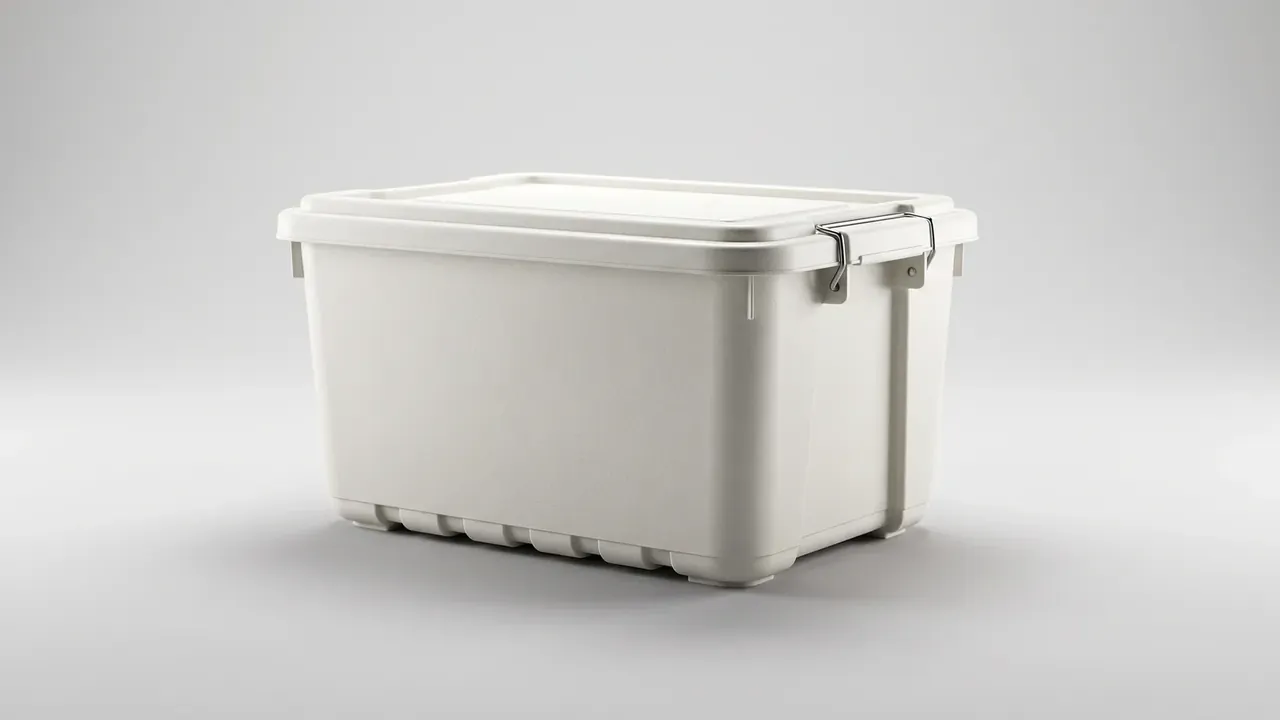
Quick answer: Five structural choices set the life of a reusable shipping and storage container: design for repeated cycles, wall thickness against ribs, replaceable gaskets and hinges, stacking and fork geometry, and a repair structure.
Table of contents
- How a Reusable Shipping and Storage Container Is Built to Last
- Wall Thickness and Rib Layout
- Serviceable Gaskets and Hinge Interfaces
- Stacking Pockets and Fork Entry
- Repair Structure and Shared Spares
- FAQ
1. How a Reusable Shipping and Storage Container Is Built to Last
Design life is written in open-close cycles, not years. A rig runs 3000 cycles as the standard grade, which at four openings a day is about two years of in-plant circulation.
Reusability is not a thicker wall. It is stress spread across several paths so one failure does not condemn the box: gasket, hinge and latch moulded separately, screws instead of adhesive.
| Key point | Where it lives | Criterion |
|---|---|---|
| Design for cycles | Body, wear parts | 3000 cycles |
| Wall and ribs | Sides, base | 3.0 mm, 5.5 mm |
| Gasket, hinge | Groove, boss | 6.5 mm groove |
| Stack, fork | Pockets, slots | 8 mm, 100 mm |
2. Wall Thickness and Rib Layout
A 3.0 mm side wall is what the process allows. Thinner, and the wall bulges in a 1.2 m drop until the lid no longer grips; thicker, and cooling climbs from 28 seconds past 40, carrying sink marks and stress.
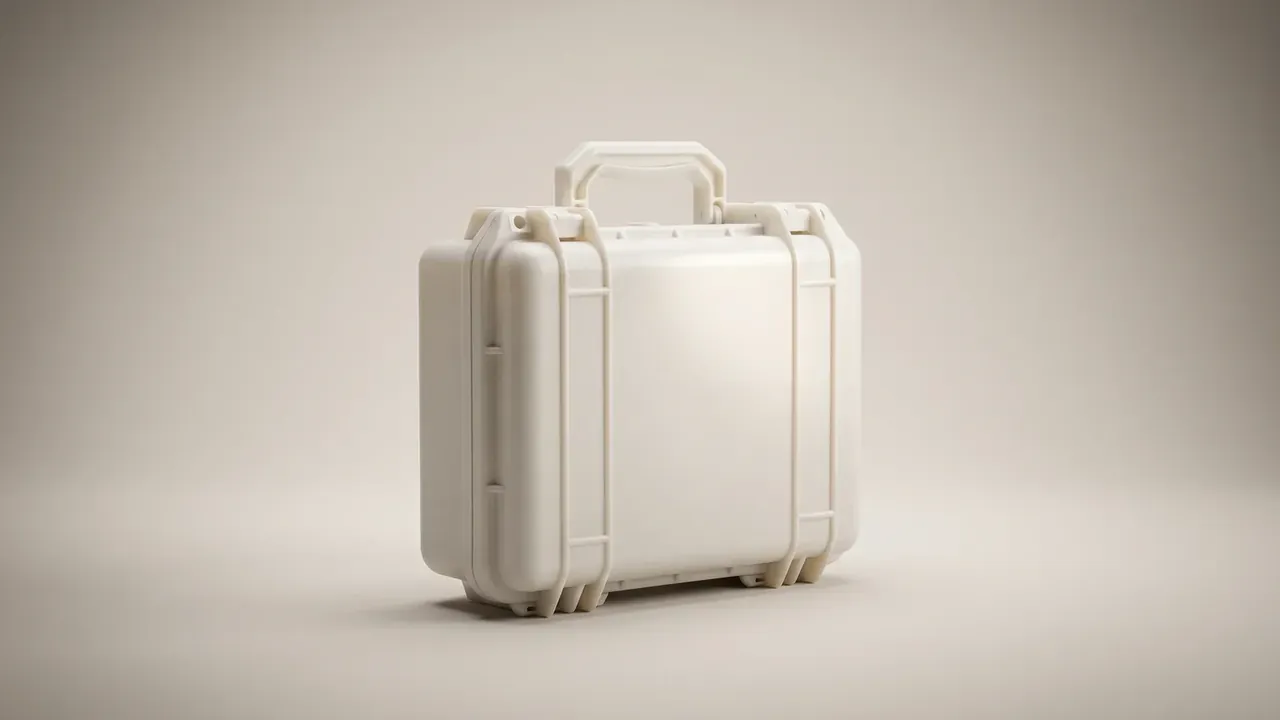
On a reusable shipping and storage container the base carries the most load at 5.5 mm. Ribs are structural: at 8 mm height and 120 mm pitch the side wall bends about a third as far as a flat plate of the same thickness. The root needs R1.5, or repeated stacking opens a crack at that corner.
Draft runs 0.5 to 0.8 degrees, more where ribs are deep. The gate sits at the base centre, pushing the weld line mid-way along the long side. Water at 45 °C against a 60 °C mould holds shrink variation under 0.3 mm; beyond that the lid grips on one side and floats on the other.
3. Serviceable Gaskets and Hinge Interfaces
The gasket on a reusable shipping and storage container is EPDM at Shore A55, seated in a 6.5 mm groove at 25 to 30 percent compression. Under-compress it and the seal leaks; over-compress it and the rubber takes a permanent set within two years. A push-in groove lets the cord be pulled out as one length, where peel-and-stick dies on first removal.
Hinges run on a 4 mm stainless pin, knurled at one end and drilled at the other so it can be driven out. M5 screws torque to 2.5 N·m; past 3.5 N·m the boss cracks. A 0.2 mm pin clearance prevents seizure after condensation.
4. Stacking Pockets and Fork Entry
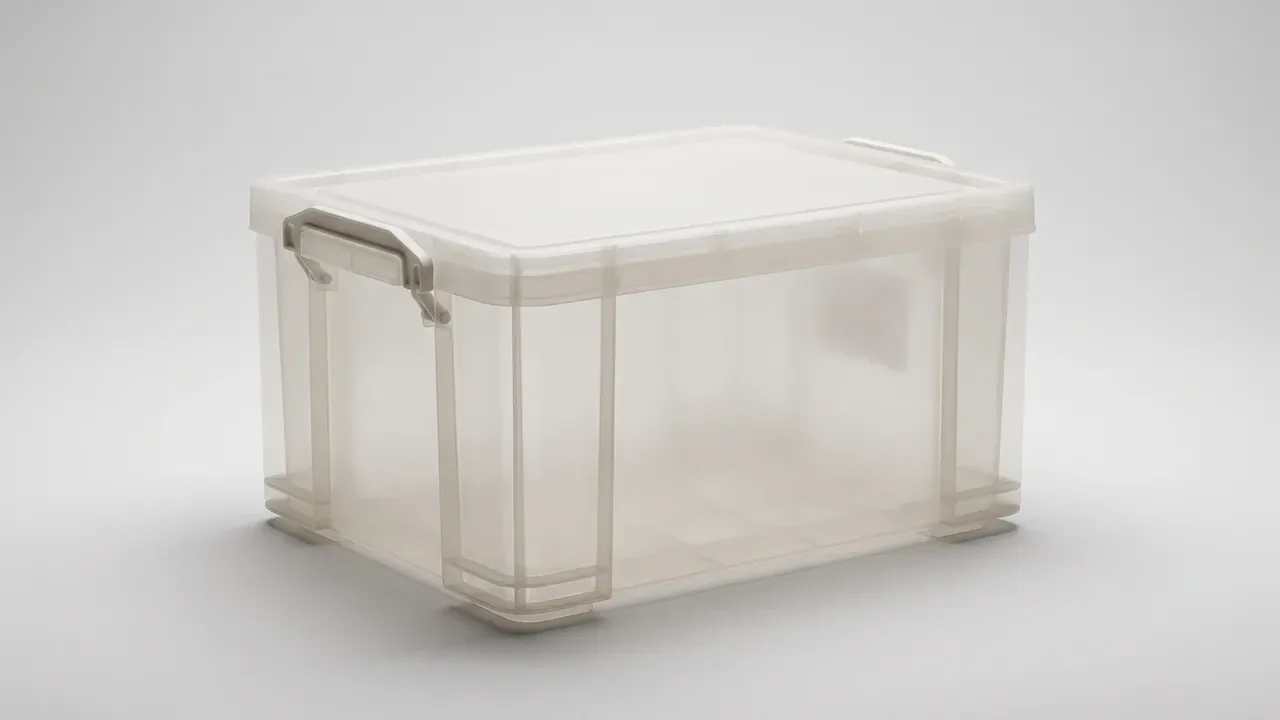
Top pockets mate with base pads. At 8 mm depth and 12 mm pad width, lateral movement stays inside 3 mm, and four high the bottom box carries about 480 kg static. That figure sets rib density in the base, not wall thickness.
| Duty | Loaded area | Structural answer | Figure |
|---|---|---|---|
| Four-high stack | Base, corner feet | Continuous cross ribs | 480 kg on the bottom box |
| Fork insertion | Mouth, columns | Chamfer plus 2 mm return | 100 mm opening |
Fork entry sits at the bottom of the long side, 100 mm high and 200 mm wide, chamfered with a 2 mm return so repeated insertion does not chew a notch. Stacking is a creep problem and fork handling an impact problem.
5. Repair Structure and Shared Spares
On a reusable shipping and storage container, repair structure starts with spares that cross model lines. Hinge bore spacing is fixed at 60 mm so three box heights share one hinge; latches keep identical screw positions, so a field swap replaces the latch and leaves the base. Spares run at 5 percent of the fleet for hinges and 8 percent for gaskets.
A bolted structure also separates into body and fittings at end of life, so the body recycles as one material.
Conclusion
The five points form one chain: cycles set the life target, wall and ribs split the load, replaceable seals stretch the life, stacking and fork geometry separate the load paths, and the repair structure breaks total life into part life. Aligned this way, those choices are what make a reusable shipping and storage container worth reusing.
This article discusses only the container (case body) side of specifications and design intent, and does not cover any handling, loading or use of the contents.
Related Reading
- Cleaning and inspection intervals for reusable boxes
- Specification and structural conditions for specialized units
- Mould cavity care and maintenance rhythm
- Rotomoulded body forming and wall control
Related Products
- 8 Series — Gun Cases; Military Equipment Cases; Camera Equipment Cases; Drone Cases; Watch Cases; Knife Cases; First Aid Cases; Electronics Equipment Cases
- WL8-2812 PP Gun Case — model WL8-2812
- All protective cases and toolboxes: 7 series, 158 models