

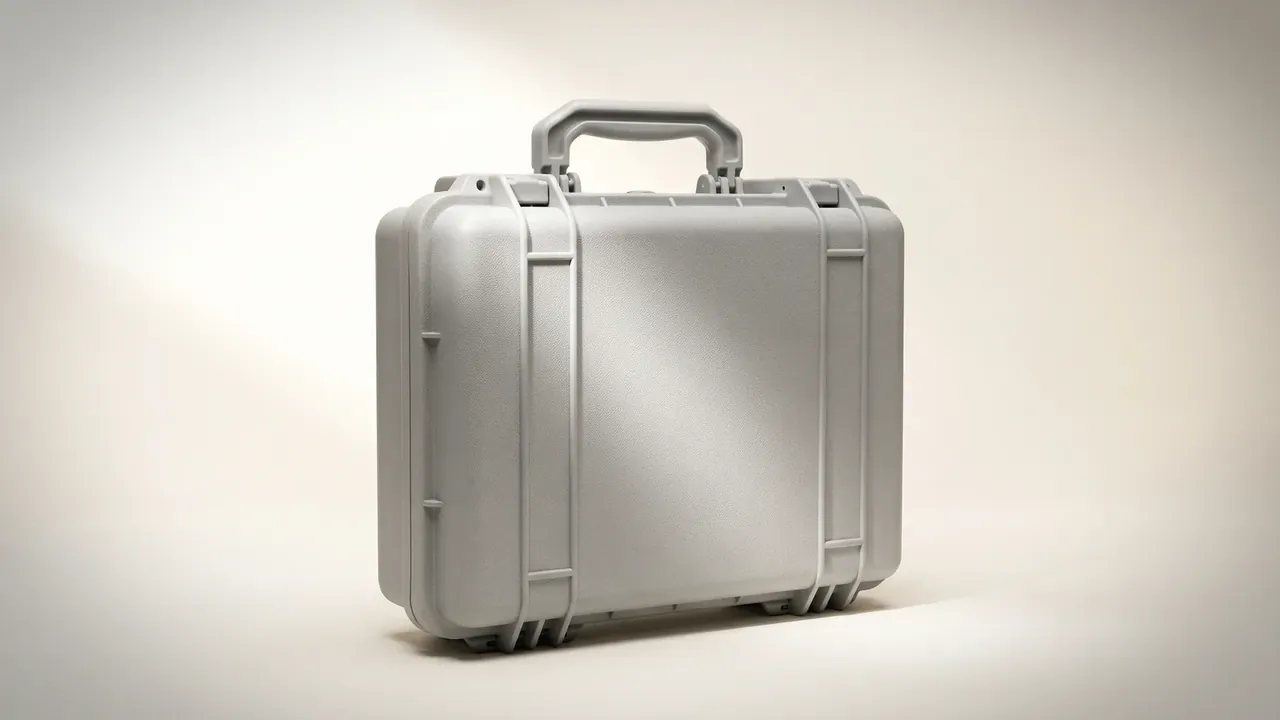
Quick answer: Five tests decide the choice: trips per year against purchase price, internal dimensions against pallet and trailer, cleaning against seal design, stack and handling limits, and spare lead time.
Table of contents
- Trips per Year on a Reusable Shipping and Storage Container
- Internal Dimensions and Load Factor
- Cleaning Method Against Seal Design
- Stack Height and Handling Limits
- Repair Parts and Lead Time
- FAQ
1. Trips per Year on a Reusable Shipping and Storage Container
Price alone says nothing about a reusable shipping and storage container; it has to be divided by trips. A case at 320 used 25 times lands at 12.8 per trip, against 18 for a one-way timber crate, so the lines cross at trip 18.
Return freight belongs in the same sum. Empty cases take volume, and on a full-trailer rate the return leg adds 20 to 30 percent, which can push the crossing point from trip 18 out to trip 26.
| Option | Unit cost | Trips | Per trip | Fits |
|---|---|---|---|---|
| Timber crate | 108 | 1 | 18 | Single delivery |
| Reusable A | 320 | 25 | 12.8 | Fixed return lane |
| Reusable B | 460 | 60 | 7.7 | High-frequency loop |
Annual trips multiplied by planned years is the test: below 25, skip reuse unless the return leg already runs empty lorries.
2. Internal Dimensions and Load Factor
On a reusable shipping and storage container, external size sets the trailer and the stack; internal size decides how much goes in. Work back from the largest item plus its cushion, and start corner radii at R15, which takes another 10 mm off each usable corner.
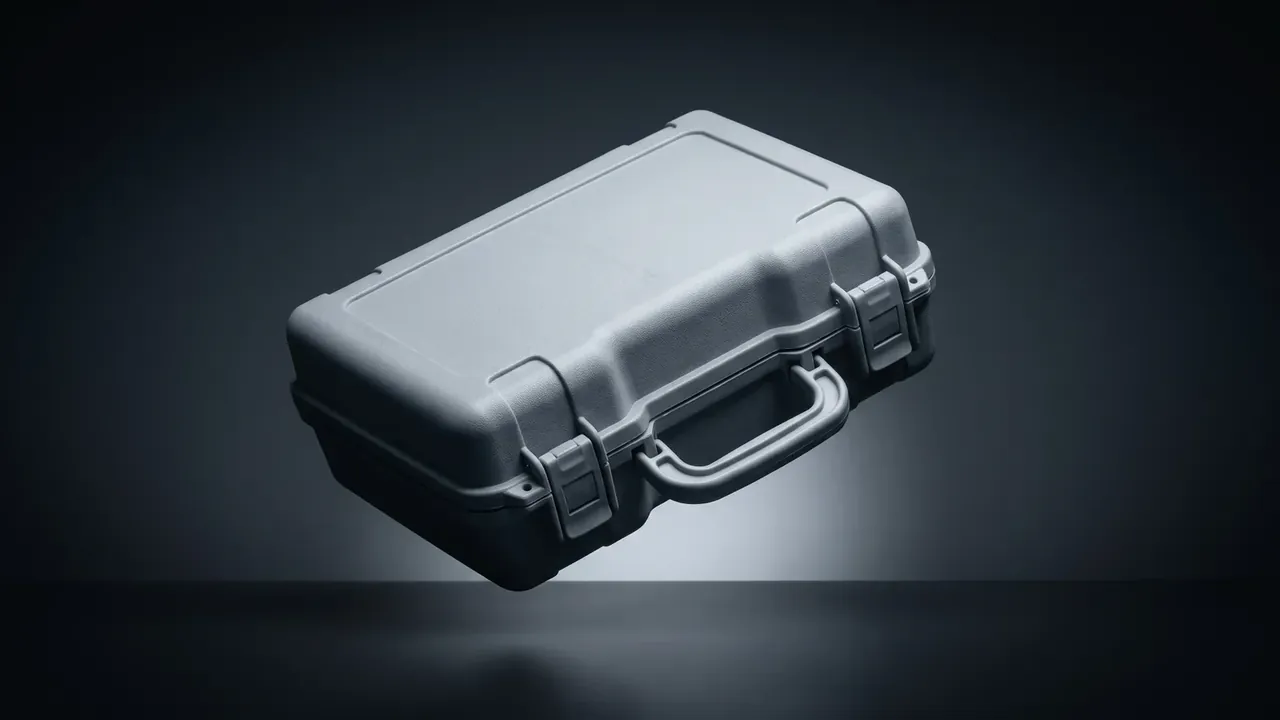
Load factor is loaded volume over internal volume. A 560 × 360 × 280 mm cavity holds about 56 litres; twelve items at 3.8 litres fill 46 litres, a load factor of 82 percent. At 65 percent the case is one size too large.
Check the pallet module at the same time. Six cases of 560 × 360 mm on a 1200 × 1000 mm pallet leave under 20 mm at the edges; more than 80 mm and the cases shift in the stack.
3. Cleaning Method Against Seal Design
Cleaning runs against the seal, not beside it. Wash at 60 °C and 8 bar and the gasket must survive detergents between pH 6 and 9: EPDM manages, while some thermoplastic elastomers swell and start weeping within three months.
Soaking lines need hinge pins in 304 stainless or better; wipe-down lines are served by zinc-plated parts. Allow four hours of drying and double it for a body without a drain port, or water sits in the groove.
4. Stack Height and Handling Limits
Stack height on a reusable shipping and storage container starts as clear height over case height, then comes down by a fifth. At 4.2 m clear and a 320 mm case the arithmetic gives 13 layers; plan five and leave the rest for fork trucks and sprinklers.
| Handling | Weight ceiling | Interface needed | Common misjudgement |
|---|---|---|---|
| Manual carry | 20 kg | Two side handles | Contents weighed, body forgotten |
| Pallet and fork truck | 750 kg per pallet | Flat base, nothing protruding | Feet catch in pallet gaps |
| Roller conveyor | 15 kg | Continuous flat base | Feet drop between rollers |
Weight per case is the hard limit. Contents at 18 kg plus a 4 kg body make 22 kg, past the manual ceiling, so the floor drags the case and the base corners fail first. Either take weight out or fit a sling-through handle.
5. Repair Parts and Lead Time
Availability of a reusable shipping and storage container follows lead time, not spare price. A hinge in three days and a gasket in seven is acceptable; past two weeks the floor reaches for tape and cable ties, the seal fails, and the case retires early.
Three questions settle it: do common spares cross model lines, is the minimum order above a year of consumption, and can the supplier give part numbers.
Conclusion
The five tests run in order: trips decide whether to buy, internal dimensions set the size, cleaning screens the seal, stack and handling check the weight, and spare lead time confirms the case reaches the end of its amortisation. Run in order, they separate a sound decision on a reusable shipping and storage container from a cheap one.
This article discusses only the container (case body) side of specifications and design intent, and does not cover any handling, loading or use of the contents.
Related Reading
- Lifecycle cost of reuse against one-way packaging
- Specification and layer conditions for stackable boxes
- Deriving internal size from load factor
- Pallet and case marking conventions
Related Products
- 8 Series — Gun Cases; Military Equipment Cases; Camera Equipment Cases; Drone Cases; Watch Cases; Knife Cases; First Aid Cases; Electronics Equipment Cases
- WL8-2812 PP Gun Case — model WL8-2812
- All protective cases and toolboxes: 7 series, 158 models