

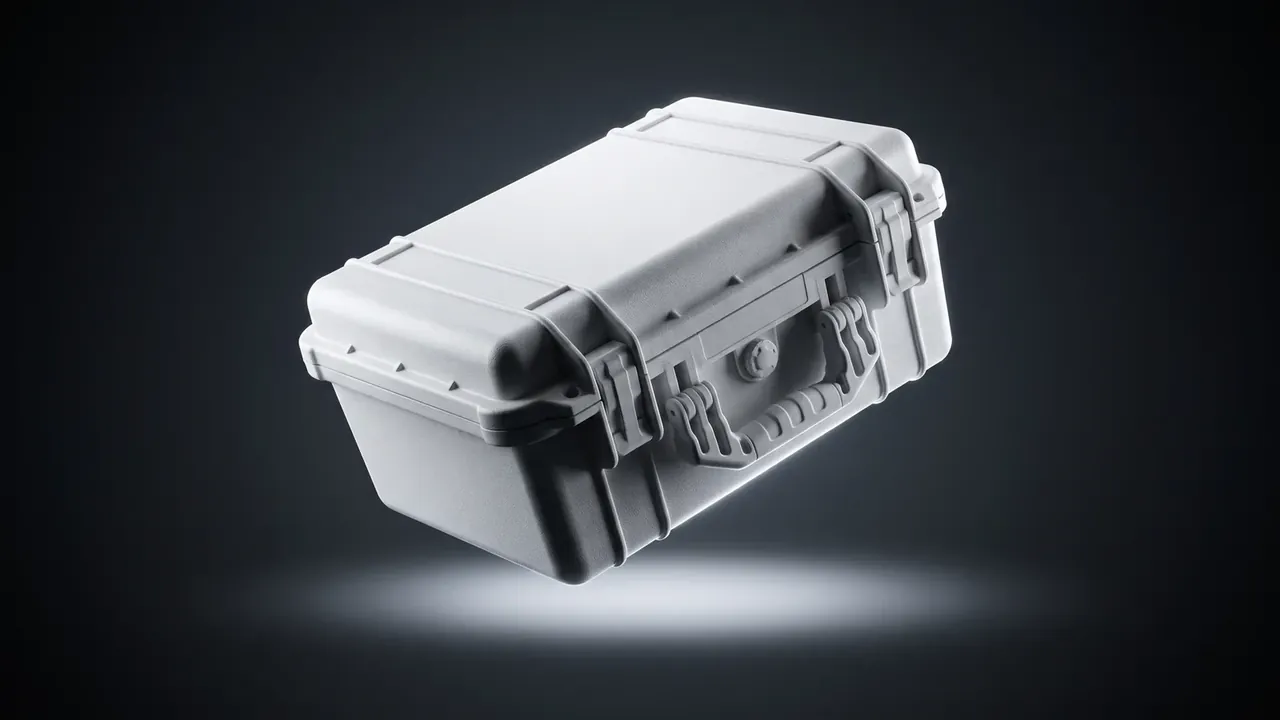
Quick answer: Acceptance means four gates and one verdict table: first article locks the mould state, batch sampling proves consistency, seal, drop and stacking give readings, marking ties the unit to its lot. Only general and minor defects return to service after repair.
Table of contents
- Four Gates in Reusable Shipping and Storage Container Acceptance
- First Article Approval and Batch Sampling
- Measuring Size and Wall Thickness
- Seal Test, Drop and Stacking
- Marking, Traceability and Repair Limits
- FAQ
1. Four Gates in Reusable Shipping and Storage Container Acceptance
Acceptance standards drift into long checklists, and a list read top to bottom leaves only the appearance in mind. A Reusable Shipping and Storage Container is better organised by gate: each gate holds the questions due at that moment.
The gates carry different sample sizes. First article takes 3 units from the first run; each incoming batch of 8 yields 3 samples; 2 units are pulled after 200 cycles; repaired units are checked one by one.
| Gate | Sample | Release condition |
|---|---|---|
| First article | 3 units, full check | all items pass, sample sealed |
| Incoming batch | 3 of 8 | zero critical defects |
| Cycle review | 2 units after 200 uses | seal and lid gap in limit |
| After repair | every unit | repair area retested |
2. First Article Approval and Batch Sampling
First article answers three questions: is the mould state correct, is the process window stable, can the test run on the floor? The three units go through dimensional check, seal and stacking, drop, then are sealed and signed.
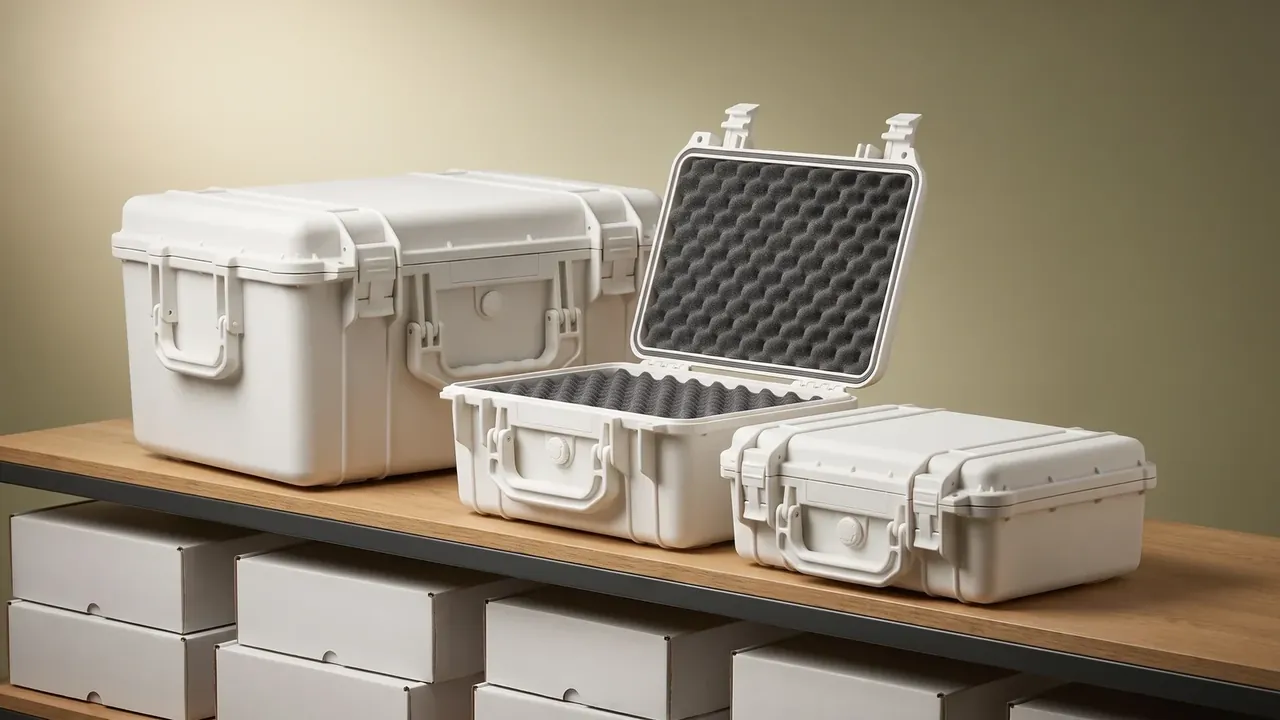
Sampling a Reusable Shipping and Storage Container follows risk, not manpower. Three of eight per batch, zero critical defects, one general defect allowed for repair, from different cavities and shifts.
3. Measuring Size and Wall Thickness
Size disputes are rarely about tolerance and usually about the measuring point. On a Reusable Shipping and Storage Container, outer length and width are read at the narrowest point, the cavity 50 mm above the base, the height with lid and bumpers included.
Wall thickness is read by ultrasound, 3 points per face, 12 per unit, corners included. The criterion is a thinnest point at 85 percent of nominal or above: 5.1 mm where nominal is 6.0 mm.
Measure at a stable temperature. A case brought in from outdoors can sit 10 °C from room temperature, which biases the gauge. Write four hours of acclimatisation into the standard.
4. Seal Test, Drop and Stacking
The seal test on a Reusable Shipping and Storage Container runs two ways. Pressure: 30 kPa inside, held 60 s, no more than 1 kPa drop, soap solution along the rim. Immersion: 1 m for 30 min. Pressure finds the leak, immersion gives the verdict.
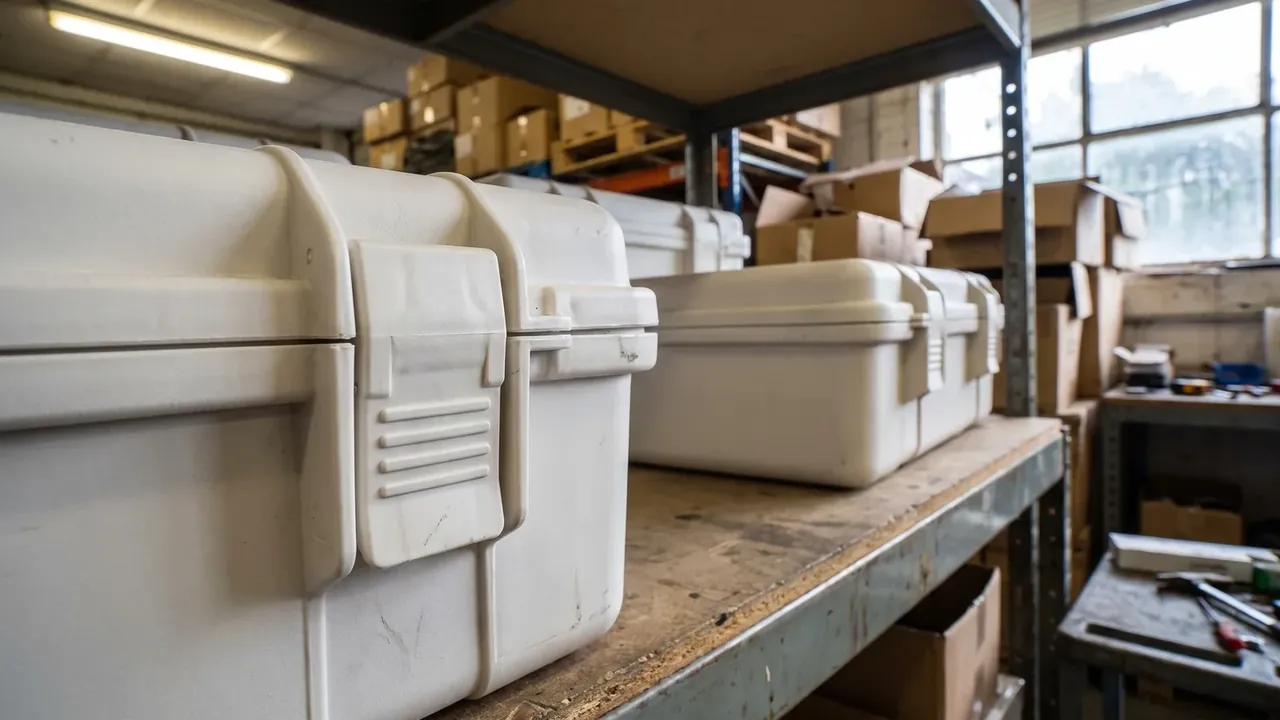
Drop is one corner, one edge, one face at 1.2 m. Three criteria: no through crack, latches still work, lid gap within 2.5 mm.
Stacking loads 270 kg on the bottom unit for 24 h, then reads lid sag one hour after unloading: 2 mm maximum.
| Item | Method | Pass line |
|---|---|---|
| Outer size | tape, narrowest point | within ±3 mm |
| Wall thickness | ultrasound, 12 points | 85 percent of nominal |
| Lid gap | feeler gauge, three points | 1.5–2.5 mm |
| Seal | 30 kPa held 60 s | under 1 kPa drop |
| Drop | 1.2 m corner, edge, face | no through crack |
| Stacking | 270 kg for 24 h | lid sag 2 mm |
5. Marking, Traceability and Repair Limits
Marking is judged on three things: can it be read, will it last, can it be traced. Raised characters 8 mm and above, 0.8–1.2 mm proud, and a 12-digit batch code.
Traceability means one case leads back to one material lot. Batch code, first-article seal number and test report number must line up; a code without a report says only when the case was made.
Verdicts run in four grades. Critical defects are scrapped, never repaired, because repaired strength cannot be verified. Major defects are downgraded. General and minor defects may be repaired within limits, then retested for seal and drop.
Conclusion
The verdict order fits in one line: check that the first article was sealed, that batch records are complete, that seal, drop and stacking readings match, then let the defect grade decide repair or rejection. Thresholds belong to the technical agreement and the third-party report, but the sequence is what makes a Reusable Shipping and Storage Container standard work.
This article discusses only the container (case body) side of specifications and design intent, and does not cover any handling, loading or use of the contents.
Related Reading
- Cleaning, inspection and retirement
- Shipping marks and documents
- Incoming inspection for supply cases
- How ingress ratings are stated
Related Products
- 8 Series — Gun Cases; Military Equipment Cases; Camera Equipment Cases; Drone Cases; Watch Cases; Knife Cases; First Aid Cases; Electronics Equipment Cases
- WL8-2812 PP Gun Case — model WL8-2812
- All protective cases and toolboxes: 7 series, 158 models