

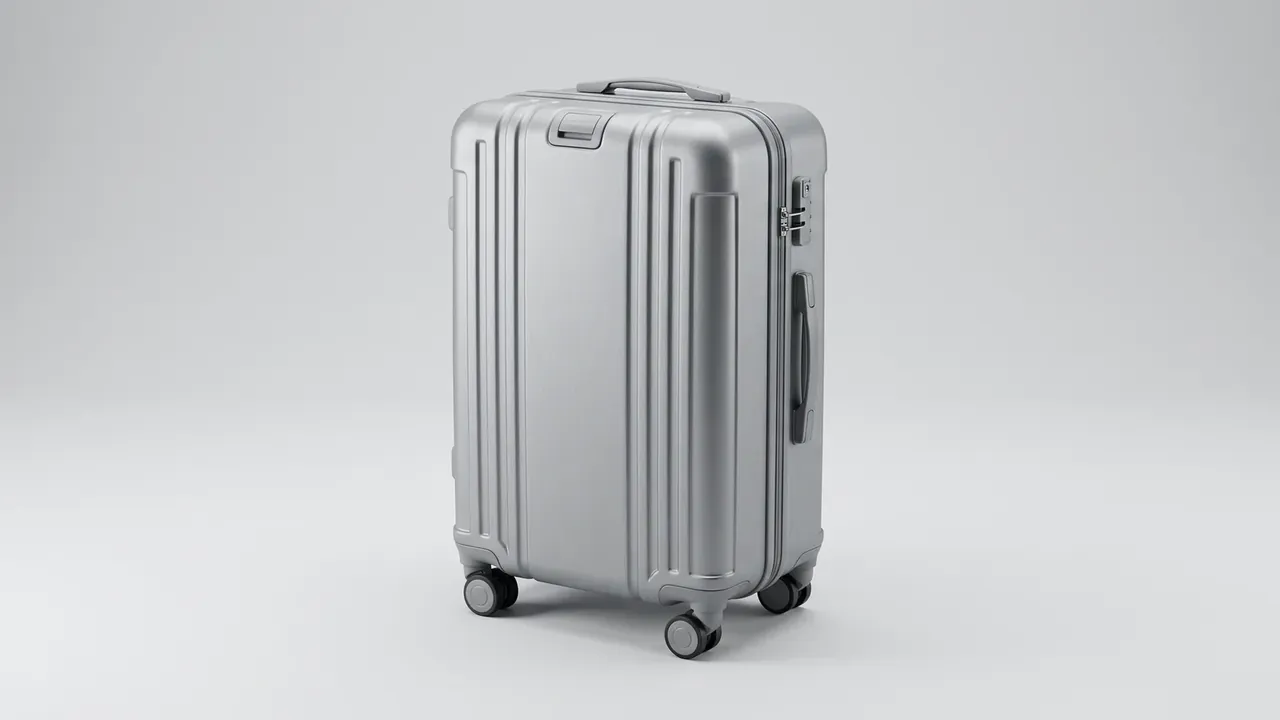
Quick answer: Adding thickness everywhere is the easiest way to specify a rifle case and the most expensive one. The shell needs full section at three load paths only; thinner walls elsewhere open and close better. At 1.2 m of cavity, empty weight falls from 9 kg to 6.2 kg.
Table of contents
- What Full-Thickness Walls Actually Buy
- Three Places to Thin the Shell
- Rotomoulded Cases: Five Stacks at Nineteen Kilos
- Where Soft Bags and Aluminium Cases Win
- When Not to Choose a Rifle Case
- FAQ
1. What Full-Thickness Walls Actually Buy
Going from 2.6 mm to 4 mm everywhere is easy to quote. The bill arrives as weight: a 1.2 m rifle case climbs from 6.2 kg to over 9 kg while three zones carry load.
Uniform thickness also changes how a case fails: a thin wall flexes and absorbs energy, a thick wall passes it into the foam.
| Zone | Uniform | Zoned | Result |
|---|---|---|---|
| Base | 4 mm across | 3.4 mm over 30 cm | 1.4 kg heavier |
| Side walls | Thickened all round | 2.6 mm plus two ribs | Same crush, 0.9 kg lighter |
| Lid | Thickened all over | 3 mm local, recess over optics | Lids that seat |
2. Three Places to Thin the Shell
The lid centre comes first: it resists closing suction and the odd stacked box, so a recess and ribs restore stiffness.
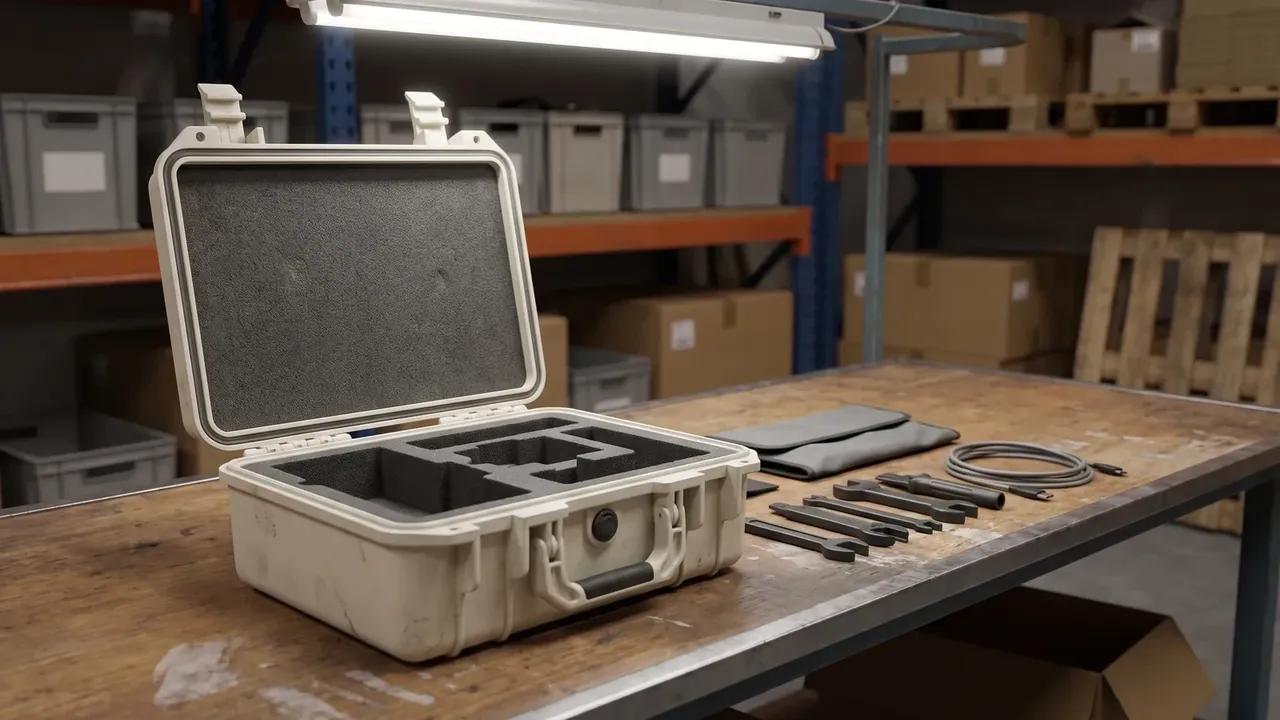
The side-wall edges come second: the flange already carries the load. The end radius comes third, where geometry spreads stress without section.
Foam zoning and wall zoning are one decision seen twice. Stiff at mid-body means a thin insert there, or the shell lifts the rifle off its bed: 6 mm on the three cross-dividers, 3 mm at the ends.
Sight along the parting line for an even gap. Leave the case at -20 °C overnight, then at 60 °C, and close it again; a lid that will not latch means the zoning is wrong.
3. Rotomoulded Cases: Five Stacks at Nineteen Kilos
Rotomoulded shells start at 4.5 mm, weigh 19 kg empty and stack five high; an injection-moulded rifle case sags at the lid by layer three.
| Type | Empty | Wall | Stack | 1.2 m drop | Price |
|---|---|---|---|---|---|
| Injection | 6.2 kg | 2.6 mm | 3 | Rebounds | 1.0 |
| Rotomoulded | 19 kg | 4.5 mm | 5 | Fine cracks | 1.6 |
| Aluminium | 5.4 kg | 1.2 mm | 2 | Corner dents | 2.6 |
How often does it move in a year? Moved twice, a forklift carries the 19 kg and stack height decides. Opened four times a day, 19 kg turns carrying into dragging, and dragged corners wear three times faster. Weight never picks a shell; it picks a handling method, and that picks the shell.
Salt spray: a rotomoulded body does not rust, but its latches need 240 hours; an injection case passes at 96.
4. Where Soft Bags and Aluminium Cases Win
A soft bag beats a rifle case for one person, a short distance and frequent opening: no rigidity, no lid to seat, and folded it takes a corner of a boot.
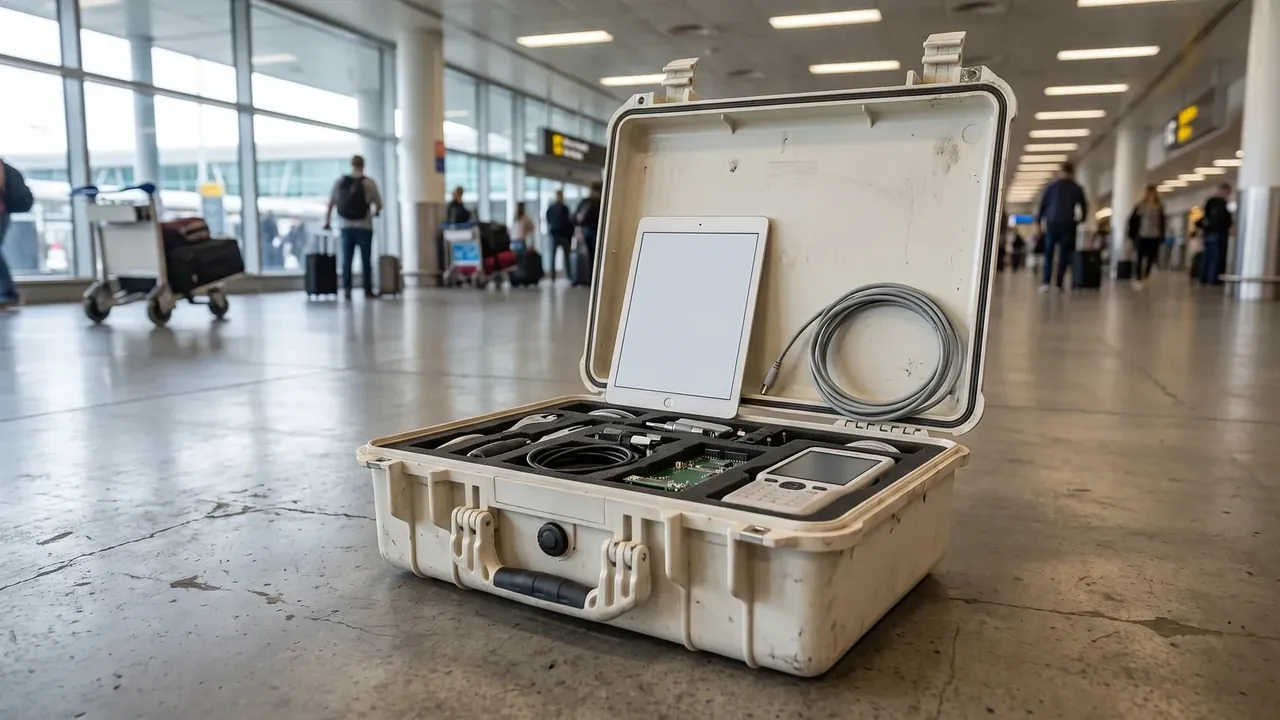
Aluminium wins on appearance and the airport leg. At 5.4 kg it is 0.8 kg lighter than injection, but the panel is 1.2 mm and a 1.2 m drop dents a corner for good. It suits baggage somebody watches, not a truck bed.
Soft bags hate compression, aluminium hates drops, injection cases hate stacking. Put that line at the top of the selection sheet.
5. When Not to Choose a Rifle Case
- Fewer than two moves a year with fixed storage: a rotomoulded case or a rack, where stack height wins;
- Work inside the case: a toolbox with an open-cell insert;
- Anything carried up stairs by hand: a soft bag, lighter and cheaper to scuff;
- Long outdoor service with a 60 °C day-night swing: fix shading and drainage first.
The first test is the one people skip: it says nothing about performance, only about how often the case moves.
A wrong choice is rarely the wrong case. It is too much case.
Conclusion
A rifle case does not improve by being uniformly thick. The shell wants stiffness at mid-body and give at the ends, and the foam is zoned the other way round. Outside that envelope, a rotomoulded case, an aluminium frame or a soft bag fits better. Count moves and stack height first, and the rifle case is only asked to do what it does well.
This article discusses only the container (case body) side of specifications and design intent, and does not cover any handling, loading or use of the contents.
Related Reading
- Ammunition box materials compared
- Tool box lid materials
- Industry requirements for cases
- Hard-shell suitcase materials
Related Products
- 8 Series — Gun Cases; Military Equipment Cases; Camera Equipment Cases; Drone Cases; Watch Cases; Knife Cases; First Aid Cases; Electronics Equipment Cases
- WL8-2812 PP Gun Case — model WL8-2812
- All protective cases and toolboxes: 7 series, 158 models