

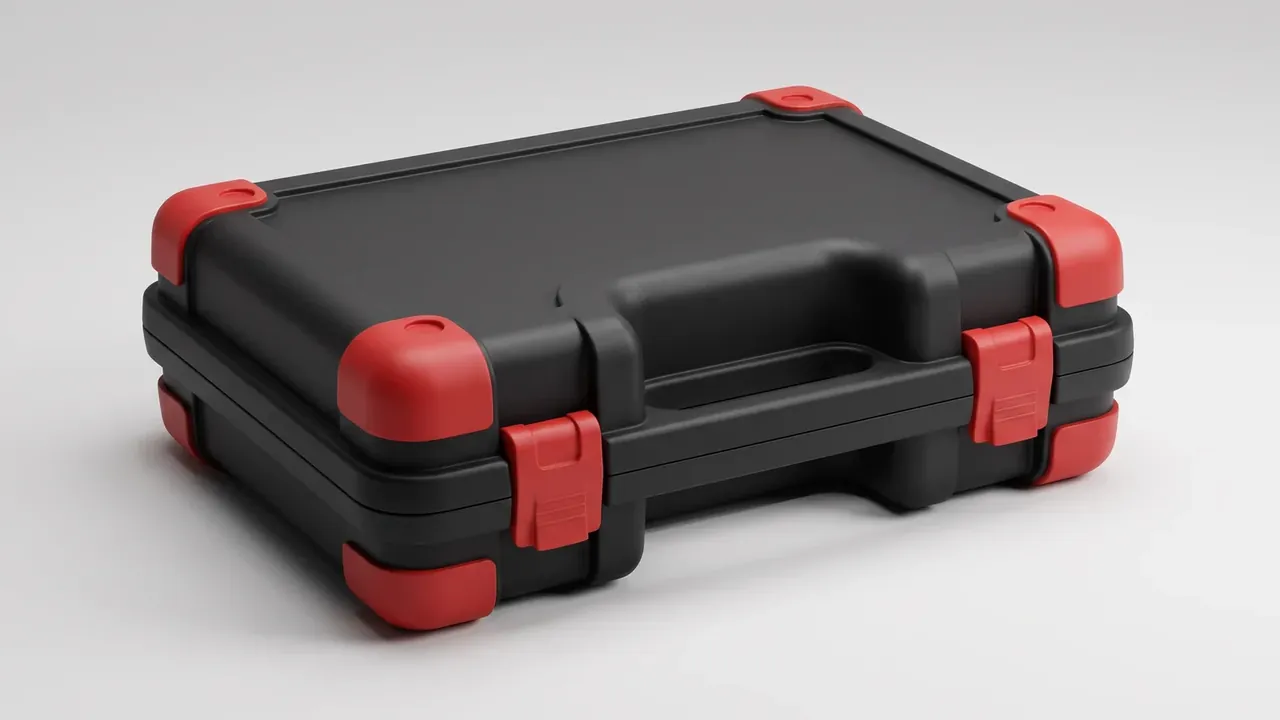
Quick answer: Four numbers screen half the suppliers before price is even discussed: minimum order quantity, who pays for tooling, how lead time splits, and payment terms. Put all four on paper and the unit price becomes comparable.
Table of contents
- What sits inside a Rolling Tool Case quotation
- MOQ and tooling ownership
- Splitting lead time into four stages
- Sampling, audits and payment terms in order
- Five signals of a padded quote
- FAQ
1. What sits inside a Rolling Tool Case quotation
A Rolling Tool Case quotation opens into six lines: shell moulding, hardware, interior foam, packaging, tooling amortisation, inspection. The first five are per unit, inspection per batch; merged, comparison loses its base.
The shell dominates: a 4.6 kg body at 2.5 mm wall costs about 41 CNY in resin at 9 CNY per kilogram, roughly 40 percent of unit price, plus a 45 second cycle on a two-cavity tool.
| Line | Basis | Share | Usual gap |
|---|---|---|---|
| Shell moulding | Unit weight times resin price plus machine hour | 40 to 45% | Regrind ratio not stated |
| Hardware set | Handle, four casters, latches, grip | 20 to 25% | Caster size and material missing |
| Interior | EVA or egg-crate foam, per set | 8 to 12% | Density and thickness unstated |
| Packaging | Carton plus divider | 5 to 8% | Pallet not included |
| Tooling amortisation | Tooling cost over agreed volume | 5 to 10% | Amortisation volume mismatched |
| Inspection | Per batch, third party included | 2 to 4% | Sampling ratio missing |
The most blurred line is tooling amortisation, hidden in the unit price or standing alone.
2. MOQ and tooling ownership
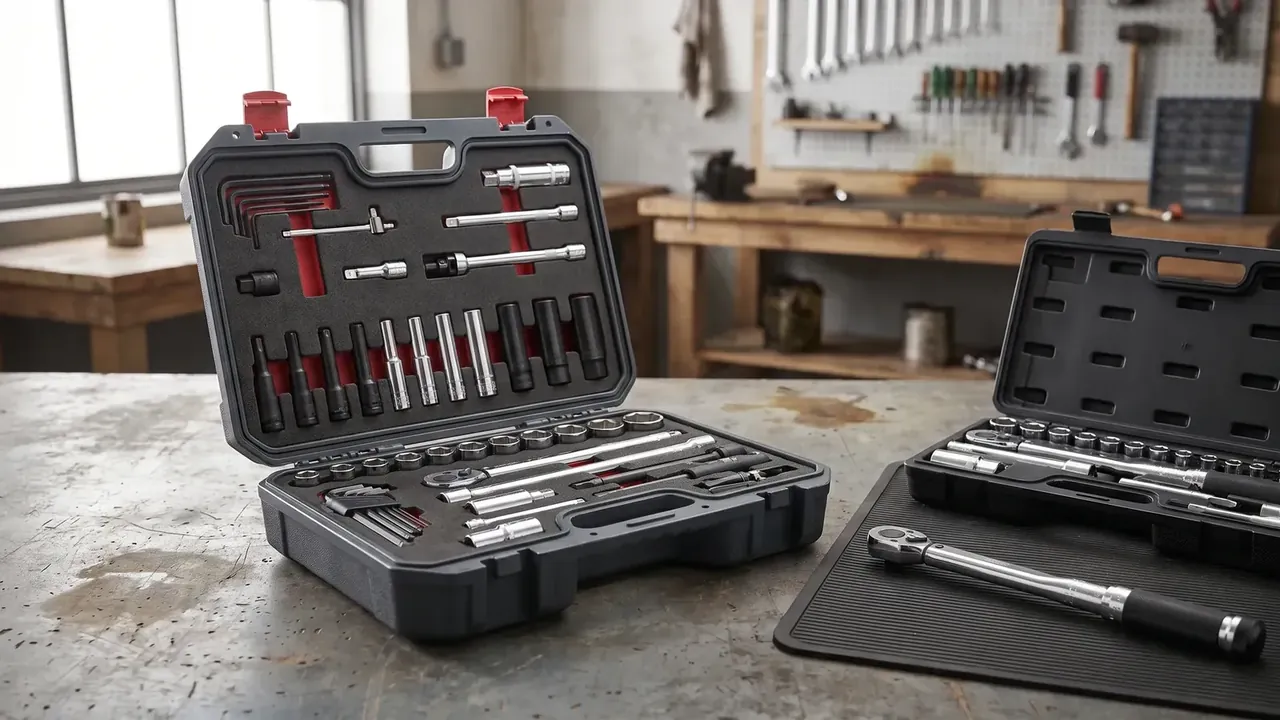
MOQ runs on two axes: per colour and per order. The floor is 300 pieces per colour and 1000 per order; below 300 a colour change needs purging, and 8 kg of purge lands on the unit price. Tooling is the second axis. A Rolling Tool Case mould quotes near 28,000 CNY, and ownership matters more than the money. If the buyer pays, the tool belongs to the buyer and the supplier only stores it; if not, it is amortised per shot, and who funds a replacement after 300,000 shots belongs in the contract. Three trial shots sit inside the tooling price; the fourth onward bills 800 to 1200 CNY.
3. Splitting lead time into four stages
A lead time of 35 days carries no information. Split it: 7 days for material, 15 for moulding, 3 for assembly and packing, 2 for inspection, 27 in total and 8 days of buffer. Under 5 days, a peak-season insert will slip.
| Stage | Days | Clock starts | Risk |
|---|---|---|---|
| Material | 7 | Deposit and colour chip approved | Pigment and hardware arrival |
| Moulding | 15 | Tool on press | Press schedule, tool upkeep |
| Assembly | 3 | Shells off the machine | Foam and carton readiness |
| Inspection | 2 | Packing finished | Third-party booking |
Ocean freight sits outside that table: Ningbo to Hamburg 32 days, Los Angeles 22, and folding both into one promise of 45 days is how delay becomes nobody's fault.
4. Sampling, audits and payment terms in order
Wrong order means paying twice. Sample first, audit second, terms last: the sample fixes structure and colour, the audit confirms capacity, and terms come when the supplier knows the order size.
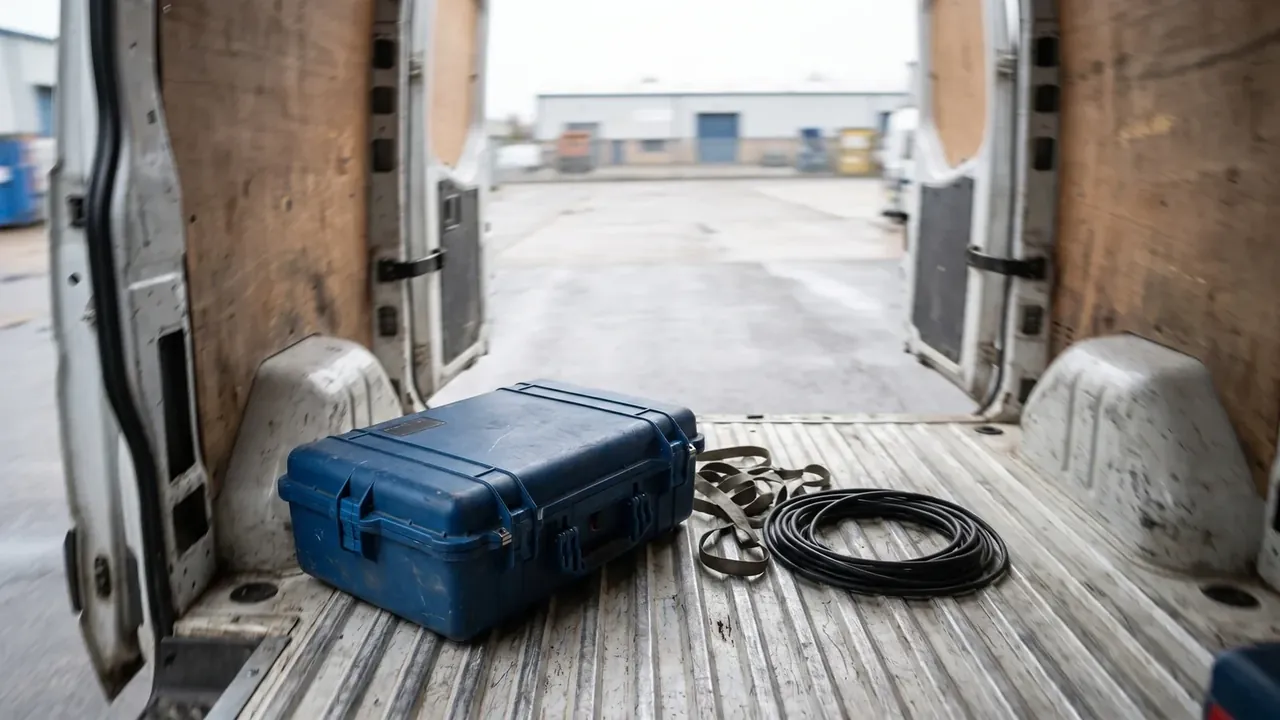
Sampling takes about 7 days and costs 800 to 1500 CNY, usually credited against the order. The audit checks presses of 800 tonnes or more, an in-house tool room, and which Rolling Tool Case models are running.
Each extra 30 days adds 2 to 3 percent; ninety days is working capital folded into the price.
5. Five signals of a padded quote
Five signals, by frequency:
- Unit price under material cost: 4.6 kg at 9 CNY per kilogram is 41 CNY of resin alone, so 38 CNY comes back elsewhere.
- Tooling billed once, with no word on ownership or storage duty.
- A lead time given as one total, with no stage dates to chase.
- No VAT or freight basis, where a 13 percent gap eats the margin.
- Sample and bulk from different tools: mismatched cavity numbers shift shrink and colour.
The fifth is hardest to prove later; photograph the cavity number on one kept sample.
Conclusion
Procurement of a Rolling Tool Case comes down to four numbers in combination: MOQ sets the purge cost, tooling money sets ownership, staged lead time sets whether delay can be claimed, and terms set how much capital cost hides in the unit price. Line them up and quotations become comparable, which is why every discussion should open with the four numbers of a Rolling Tool Case.
This article discusses only the container (case body) side of specifications and design intent, and does not cover any handling, loading or use of the contents.
Related Reading
- Where a rolling tool case is moved
- How a tool box is built
- Scoring a case supplier
- Lid structure and sealing
Related Products
- 8 Series — Gun Cases; Military Equipment Cases; Camera Equipment Cases; Drone Cases; Watch Cases; Knife Cases; First Aid Cases; Electronics Equipment Cases
- WL8-2812 PP Gun Case — model WL8-2812
- All protective cases and toolboxes: 7 series, 158 models