

Quick answer: A case 5why is not five questions but five layers, each with one checkable piece of evidence: a number, a record, a drawing, a rule.
Table of contents
- Turning the complaint into a number
- Layers two and three
- Layers four and five
- 90 minutes, three parties, one A3
- Three countermeasures
- FAQ
1. Turning the complaint into a number
A complaint never enters a case 5why in the customer's words. "The lid will not close" has to become a measured symptom: a 200-piece lot, a 1.8 mm gap between lid and lower rim with the latch closed, against a 0.5 mm limit, concentrated at the front left corner, lot 20260912.
The first why asks why the gap reaches 1.8 mm, not why the operator missed it. The first points at a dimension chain, the second at a person, and a person is the hardest thing to change. One complaint opens one case 5why; two grievances on one sheet fork the chain at layer two.
The last column of the table is a mirror: a sentence that falls into it cannot descend a layer, it goes back for evidence. Two complaints of the same symptom open a case; a single one goes through after-sales.
| Layer | Question | Evidence | Invalid answer |
|---|---|---|---|
| 1 Symptom | Position, deviation | Caliper, photo, lot | Does not fit |
| 2 Process | Press, shift, lot | Process card, machine no. | We followed the standard |
| 3 Parameter | Setting that drifted | Mould and pressure curves | The machine is old |
| 4 Design | Margin in the drawing | Drawing, tolerance | Always designed this way |
| 5 Rule | Rule that let it escape | Inspection frequency, release | Carelessness |
2. Layers two and three
Layer two asks for the process subject, so the answer carries a number: press 7, shift B, material PP-3, tool M-118. "We followed the standard" is not an answer, because without a subject there is no record to pull.
Layer three is where parameters enter: mould at 62 ℃ or 48 ℃, packing 6.8 s, cooling 35 s, read from machine curves rather than memory, which drifts more than 10% over two weeks.
Only three records count: a timestamped curve, a signed first-article sheet, a shift handover. Missing one, the layer has no evidence.
Four drifts cluster at this layer: asking about people, jumping to a conclusion, repeating one cause, answering without evidence.
| Drift | Looks like | Correction | Cost |
|---|---|---|---|
| Asking about people | Answer names a person | Ask which step let it through | 10 min a layer |
| Jumping to a conclusion | Layer one says mould | Position and number only | A day late |
| One cause, many layers | Adjacent layers share a noun | Swap the noun, re-ask | 20 min a case |
| No evidence | Probably, roughly | Mark open, do not descend | 1 to 3 days |
Asking about people is easy to spot, because the answer contains a who; rephrased as which step failed to stop the defect, the target becomes a station, a gauge or an inspection frequency, all changeable inside 30 days.
Repeating one cause is the hardest to see, because every layer reads as plausible: layer three says the gap is large, layer four says it again, which means the viewpoint never moved. Swap two adjacent layers for a single noun; if the sentence still reads, re-ask.
Two habits keep the sheet honest. An open item gets an owner and a date in the same meeting, or it disappears by the next one, and a layer answered by a supplier is confirmed by a document rather than a phone call, because a call cannot be filed.
3. Layers four and five
By layer five a case 5why has two root causes left: design, meaning drawings, tolerances, structure and material, and process, meaning parameters, tooling, inspection frequency and release rules. The class decides who signs the countermeasure.
Layer four finds the latch seat at 0.3 mm clearance against a flatness tolerance of 0.6 mm either way, stacking to 1.5 mm in the worst case; layer five finds flatness is not on the first-article sheet at all, so the rule allowed the deviation out.
The test is the cost of change: a drawing revision means design, a parameter or tooling change means process. Here the two split evenly, so the case gets two countermeasures instead of one vague instruction.
Verification differs as well: 30 samples for design, three consecutive lots and a capability index of 1.33 for process.
4. 90 minutes, three parties, one A3
A case 5why meeting gets 90 minutes: 10 reading the file, 15 reproducing the defect, 40 on the five layers, 10 classifying the cause, 15 writing countermeasures. Overrun means the chain broke, not that the team was thorough.
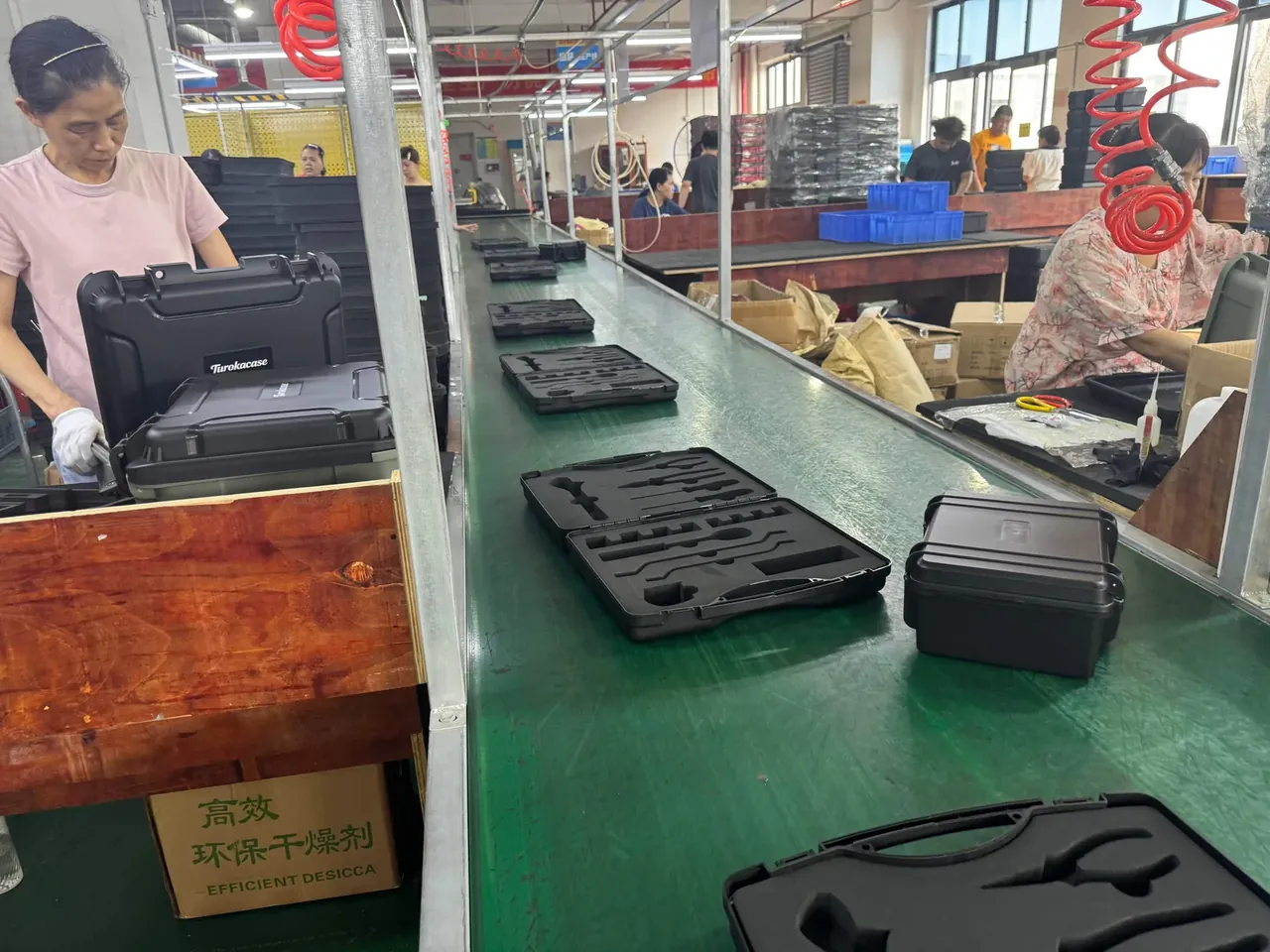
The 15-minute reproduction is not optional. One failing and one good case on the same bench, the same caliper on the same point, and the difference appears on the spot.
That leaves 8 min per layer, and a layer passing 15 min without evidence is marked open while the meeting moves on. Three parties attend: quality chairs and writes, process brings parameters and tooling, after-sales brings the customer's words and photos. With one missing, the matching layer stays open and the A3 cannot be signed.
One sheet only: symptom and evidence top left, the five layers running down the left with an evidence number each, design or process ticked top right, three countermeasures bottom right with owner and date.
5. Three countermeasures
Three countermeasures close a case 5why: block what already shipped, change a parameter, drawing or tool, prevent recurrence through an inspection item or a mistake-proof fixture. Each carries an owner and a verification date, and a fourth one usually means the cause was never classified.
| Countermeasure | Type | Owner | Verify by | Pass |
|---|---|---|---|---|
| Flatness on 3 first articles | Block | Quality, Chen | 2026-11-20 | 5 lots with records |
| Latch clearance to 0.2 mm | Change | Process, Zhou | 2026-11-28 | 30 samples under 0.5 mm |
| Flatness on first-article sheet | Prevent | Quality, Chen | 2026-11-10 | Form revised |
Dates are written as days inside 30. Countermeasures saying as soon as possible almost never land by the three-month review.
Recurrence needs its definition fixed in advance: the same failure mode complained of again within 12 months counts once, numerator repeats, denominator all complaints of that mode. A three-month window understates it, since most case complaints surface after a season of use.
On that basis one line moved from 12% to 3% in 11 months, with two countermeasure delays along the way.
Conclusion
The A3 template can be copied as it stands: row one the symptom and its number, row two the press, shift and lot, row three the drifted parameter and its curve number, row four the drawing tolerance and its stack-up, row five the rule that let the defect escape. Each row carries one evidence number on the right, and the circled row opens the next meeting. The countermeasure block keeps three cells, block, change and prevent, each with an owner and a date inside 30 days. That date is the only hard constraint on the sheet; without it a case 5why is just a longer explanation. At review, read dates first and recurrence second, and the countermeasure has landed only when the same failure mode stays away for 12 months.
This article discusses container-side specifications and design implications only, and does not cover any handling, loading or use of the contents.
Related Reading
- Batch consistency sampling
- Quality control at case assembly
- Incoming inspection for case lots
- IQC sampling levels 0.65 and 1.0
Related Products
- 8 Series — Gun Cases; Military Equipment Cases; Camera Equipment Cases; Drone Cases; Watch Cases; Knife Cases; First Aid Cases; Electronics Equipment Cases
- WL8-2812 PP Gun Case — model WL8-2812
- All protective cases and toolboxes: 7 series, 158 models