

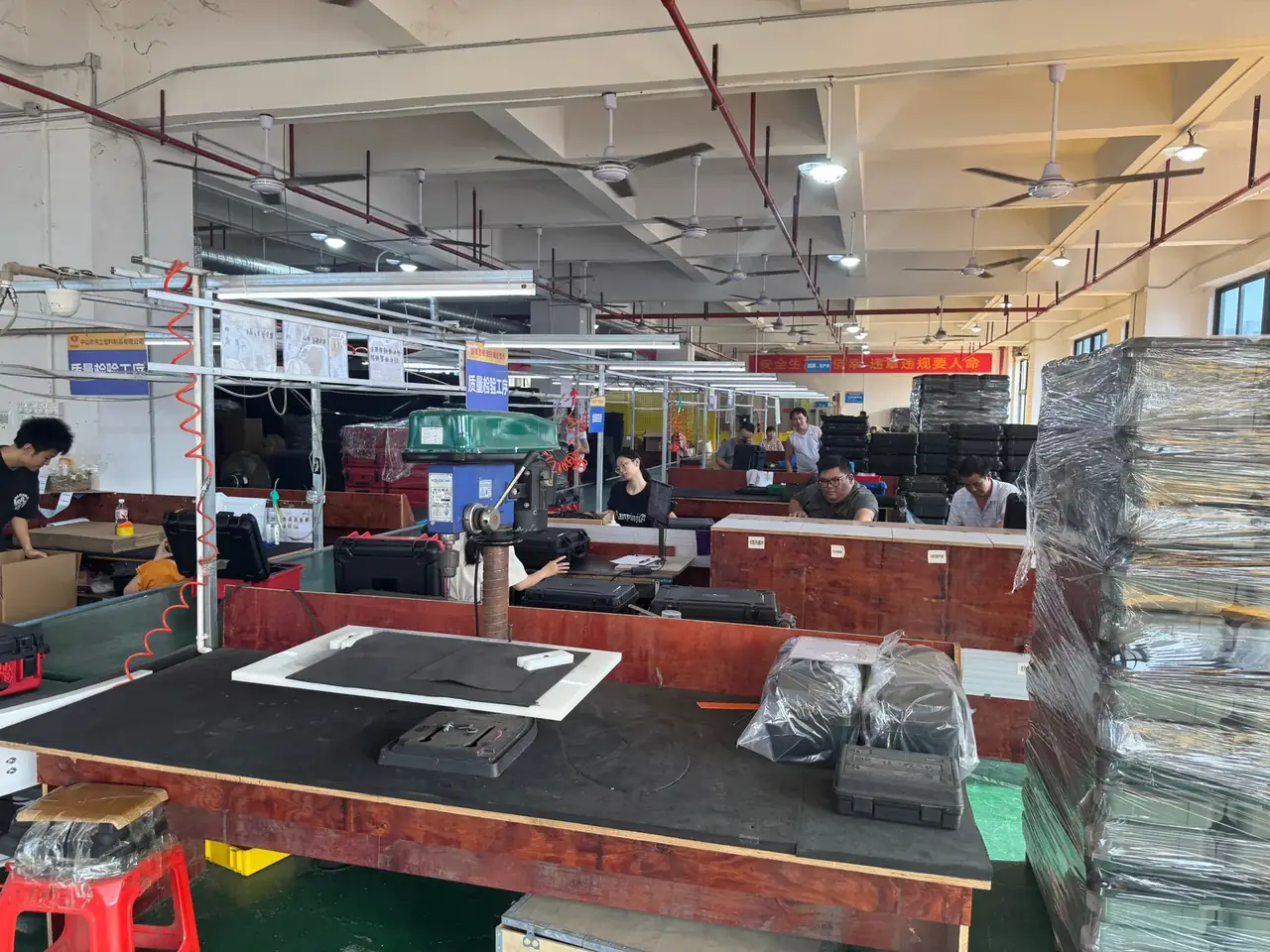
Quick answer: A rush order buys days with changeovers, not with extra capacity: 2.5 h and 180 kg of regrind each time, so price the swap before you accept the date.
Table of contents
- Price the swap before you promise a date
- Three ways to make room
- Four gates that keep impossible rush orders out
- The arithmetic for 500 units
- Holding the 12% ceiling
- FAQ
1. Price the swap before you promise a date
Five hundred units on top of a 14,000-unit month is 3.6% more volume, harmless on a load chart. The real move is the mould position: one changeover costs 2.5 h and 180 kg of regrind, and the three methods need one, two and three.
Capacity inside a month is fixed, so any order admitted pushes another out. The question is whose job slides, by how many days, and who pays.
There is no zero-cost method, only a choice about which side absorbs the cost.
Planners ask if a press is free and stop there. Trimming, hardware and foam cutting sit behind moulding, so a saturated finishing line jams a fast insertion.
| Insertion method | Changeovers | Original order slip | 500-unit completion | Cost shape |
|---|---|---|---|---|
| No insertion (baseline) | 0 | 0 days | Day 12 | Ships on plan, no extra downtime |
| Tail loading | 1 | 0 days | Day 9 | Uses 2 spare shifts at the plan end |
| Equal swap | 2 | 2 days | Day 6 | Moves 1 live job, changeover each way |
| Split run | 3 | 5 days | Day 4 | Two presses, plus a reset changeover |
Inside the 2.5 h, mould removal takes 40 min, purging 25 min, mounting and alignment 55 min, and first-article approval 30 min. The press runs but sells nothing for close to 2 h.
At a 25% regrind credit, 180 kg of runner becomes 135 kg of real loss.
2. Three ways to make room
Tail loading drops the 500 units into the next free window and leaves live jobs alone. The coming 72 h must hold 2 spare shifts, 16 h in total; if rework eats them, the insertion becomes a late order overnight.
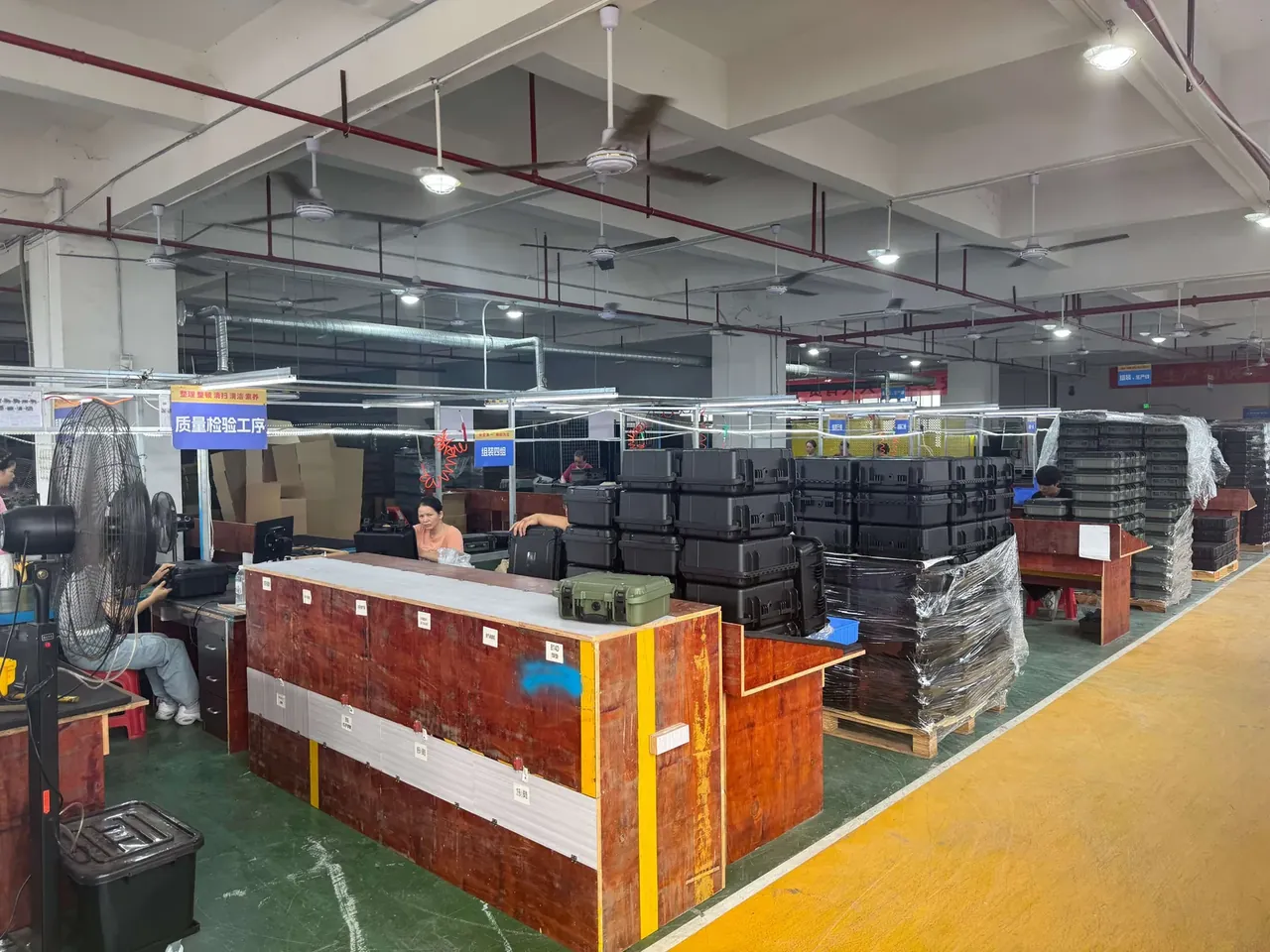
An equal swap is steadier. Lift one live job of 200 units or more, run the rush batch in the freed position, pay one changeover out and one back, and the displaced job slips 2 days. Its owner signs.
A split run is fastest and dearest. The 500 units break into 300 and 200, each press takes a 36 h window, and resetting the second machine adds a third changeover. The original slips 5 days.
The three differ less in machine time than in who carries the delay.
Pick by three facts: does the original customer accept a 2 to 5 day push, does the rush part share a mould with running work, and how many changeovers the month has left.
3. Four gates that keep impossible rush orders out
A gate gives refusal a basis. Written as numbers, four thresholds let a planner decide without instinct.
| Gate | Threshold | Action when it fails |
|---|---|---|
| Mould shot balance | 15% or more left | Another press, or tail loading only |
| Resin cover | 3 days or more | Draw the same grade, else decline |
| Finishing load | 85% or less | Split the batch or push one shift |
| Customer consent to split | 1 signed sheet | Switch to an equal swap |
The 15% shot balance measures distance to the next service. On a 25,000-shot interval, inserting below 3,750 shots left squeezes the maintenance window out, and the tool runs damaged to the next interval.
Three days of resin is the floor. Five hundred units at 2.3 kg each need 1,150 kg of pellets, 1,242 kg after an 8% setting loss; short of that grade, a rush purchase takes 2 days.
The 85% finishing load is a soft line. Cross it and the parts wait a full shift at the trim bench.
If any gate fails, change the method rather than the promise.
4. The arithmetic for 500 units
Two cavities at a 41 s cycle give 175 units an hour, 161 after an 8% setting allowance, so one press yields about 3,200 units in a 20 h day.
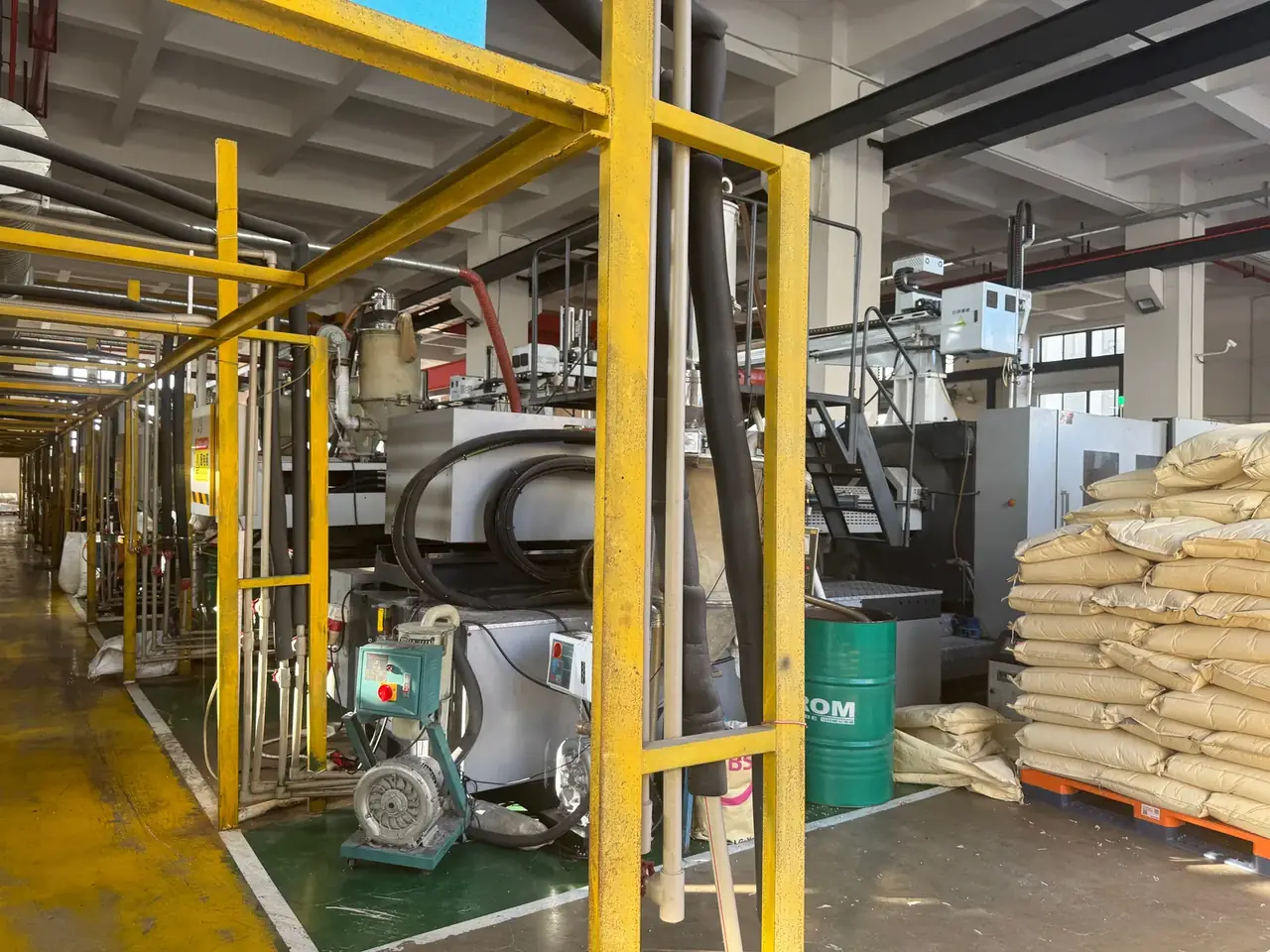
Tail loading: 2.5 h of downtime strips 402 units of machine time, 180 kg of regrind is worth 1,656 yuan at 9.2 yuan a kilo, and expedited freight adds 2,400 yuan for two pallets. Near 4,100 yuan, day 9.
Equal swap: 5 h and 805 units of machine time, 360 kg of regrind at 3,312 yuan, plus one air freight differential at 2,800. About 6,100 yuan for day 6.
Split run: 7.5 h and 1,208 units of machine time, 540 kg of regrind at 4,968 yuan, and overtime of 16 h across 4 operators at 42 yuan an hour adding 2,688. About 7,700 yuan for day 4.
The 3,600 yuan spread buys 5 days. At 6,000 yuan a day of customer stoppage, the split run is cheap.
5. Holding the 12% ceiling
Rush volume stays under 12% of monthly output. On 14,000 units that is 1,680 units, or 3 insertions of 500; the fourth goes to a swap.
| Insertions per month | Share of output | Cost booked | Recommended route |
|---|---|---|---|
| 1 | 3.6% | About 4,100 yuan | Tail loading, keep the window |
| 2 | 7.1% | About 8,200 yuan | Tail loading plus a swap |
| 3 | 10.7% | About 12,300 yuan | Mixed, hold 1 window in reserve |
| 4 | 14.3% | Past the ceiling | Defer, or add a press |
Approval runs on 2 levels: planning clears the gates and the costing, production clears changeovers and the service point. Both answer within 4 h; silence is refusal.
Conclusion
Three methods, one bill: tail loading keeps the date for about 4,100 yuan, an equal swap moves it 2 days for 6,100, and a split run trades 5 days for 7,700. Write the shot balance, resin cover and finishing load into the gate, cap the month at 12%, and rush order scheduling becomes a sum with an answer.
This article covers case-side specifications only and does not address any handling, loading or use of the contents.
Related Reading
- What each node of sampling to mass production delivers
- Why MOQ and lead time pull against each other
- How short a 100-unit order can actually run
- Turning press count and cycle time into capacity
Related Products
- 8 Series — Gun Cases; Military Equipment Cases; Camera Equipment Cases; Drone Cases; Watch Cases; Knife Cases; First Aid Cases; Electronics Equipment Cases
- WL8-2812 PP Gun Case — model WL8-2812
- All protective cases and toolboxes: 7 series, 158 models