

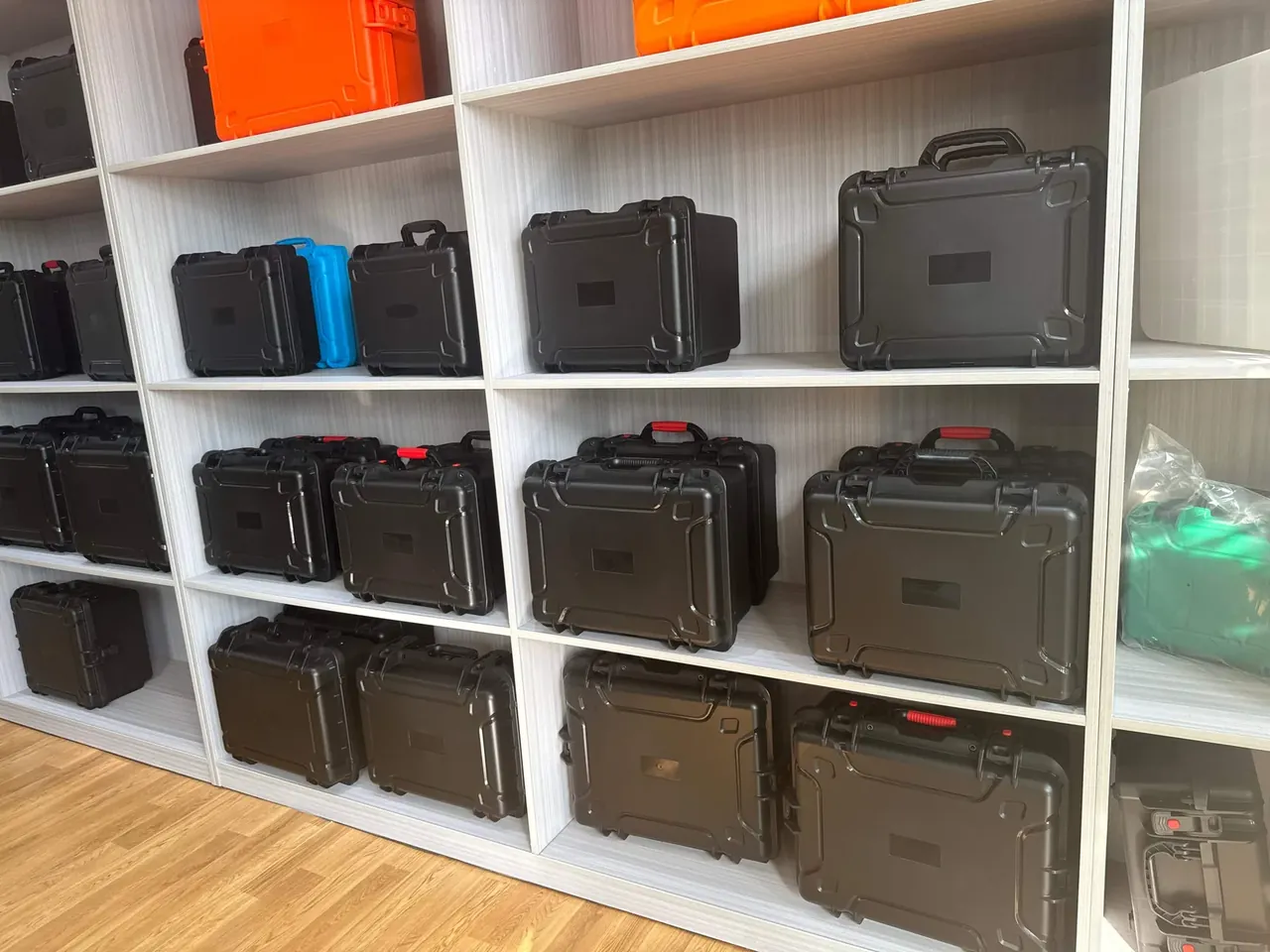
Quick answer: A saso case order needs two SABER papers: a product certificate valid 1 year, plus one shipment certificate per bill of lading.
Table of contents
- Two certificates answer two different questions
- The three-working-day inspection window
- Six Arabic fields on a 50 × 30 mm label
- Energy classes A to G belong to the accessory, not the shell
- Ten digits, one GCC mark, four rework traps
- FAQ
1. Two certificates answer two different questions
Forty-five cases, three working days, one booking. Whether it ships depends on the gap between two documents that look identical on a desk.
The product certificate covers a model and the factory that moulds it, for 1 year from issue. The shipment certificate covers one consignment and one bill of lading, and it can only be signed while the first paper is alive.
| Certificate type | Trigger | Issue time | Validity | Binds |
|---|---|---|---|---|
| Product, first issue | New model | 10 working days | 1 year | Model, factory, report |
| Product, renewal | 60 days early | 5 working days | One more year | Report still valid |
| Shipment, first issue | Before loading | 3 working days | Single lot | Bill, case count, invoice |
| Shipment, reissue | Bill amended | 2 working days | Single lot | New bill, original certificate |
Expiry follows the issue date, not the calendar year: a factory issued on 12 March loses every shipment certificate signed after 11 March next year. Certificates are counted per bill, so two buyers sharing one box need two.
2. The three-working-day inspection window
Three working days and a 10% sample fix the production schedule. A 200-case lot gets 20 opened, a 60-case lot gets 6, and anything under 20 cases falls back to a floor of 2. The sample caps at 20, so lots above 300 get 20 full checks plus a 5% visual sweep.
Cases are pulled every other one along the loading sequence, never three neighbours from one pallet, so a fault confined to one cavity cannot hide. The certificate is signed only when the record and its photographs are attached.
| Lot size | Cases opened | Checks | Retention |
|---|---|---|---|
| 1 to 20 | 2 | All 6 | 1 case, 90 days |
| 21 to 100 | 10%, minimum 3 | All 6 | 1 case, 90 days |
| 101 to 300 | 10%, maximum 20 | All 6 | 1 case, 90 days |
| Above 300 | 20 plus 5% visual | 6 plus appearance | 1 case, 90 days |
Six checks are fixed: lid gap, latch spring-back, handle rivets, insert fit, label position and shell colour, each pass or fail.
3. Six Arabic fields on a 50 × 30 mm label
A label 50 mm wide and 30 mm tall splits into two 24 mm columns with a 2 mm rule between them, Arabic reading right to left and English left to right.
Cap height sits at 2 mm with 1.6 line spacing and a 3 mm margin. Arabic carries more weight at the same nominal size, so the Latin column can go to 2.2 mm and the two scripts still look balanced.
| Label field | Arabic wording | English counterpart | Cap height |
|---|---|---|---|
| Product name | Meaning, never transliterated | Protective case | 2 mm |
| Model | Character-for-character with the certificate | Same | 2 mm |
| Registration number | 10 digits, unbroken | Same | 2.5 mm |
| Origin | Matching the origin certificate | Made in China | 2 mm |
| Manufacturer | Full factory name | Same | 1.8 mm |
| Importer | Saudi registered name | Same | 1.8 mm |
The GCC mark sits in the lower left corner as a 6 mm circle, and clipped marks are the most common rejection, so cap height gives way before the mark does. Heat is the other limit at 60 °C: a lid in a July yard reaches 62 °C, and the adhesive must hold 30 days at 60 °C. Two labels beat one cramped label when the die allows it.
4. Energy classes A to G belong to the accessory, not the shell
An unpowered shell has nothing to rate. The label describes the electrical accessory inside it, whether a lighting module, a charging port or a thermostatic unit, across 7 classes from A, the lowest draw, to G.
Swap the accessory and the label is reissued while the shell needs no new test. Write that boundary into the quotation.
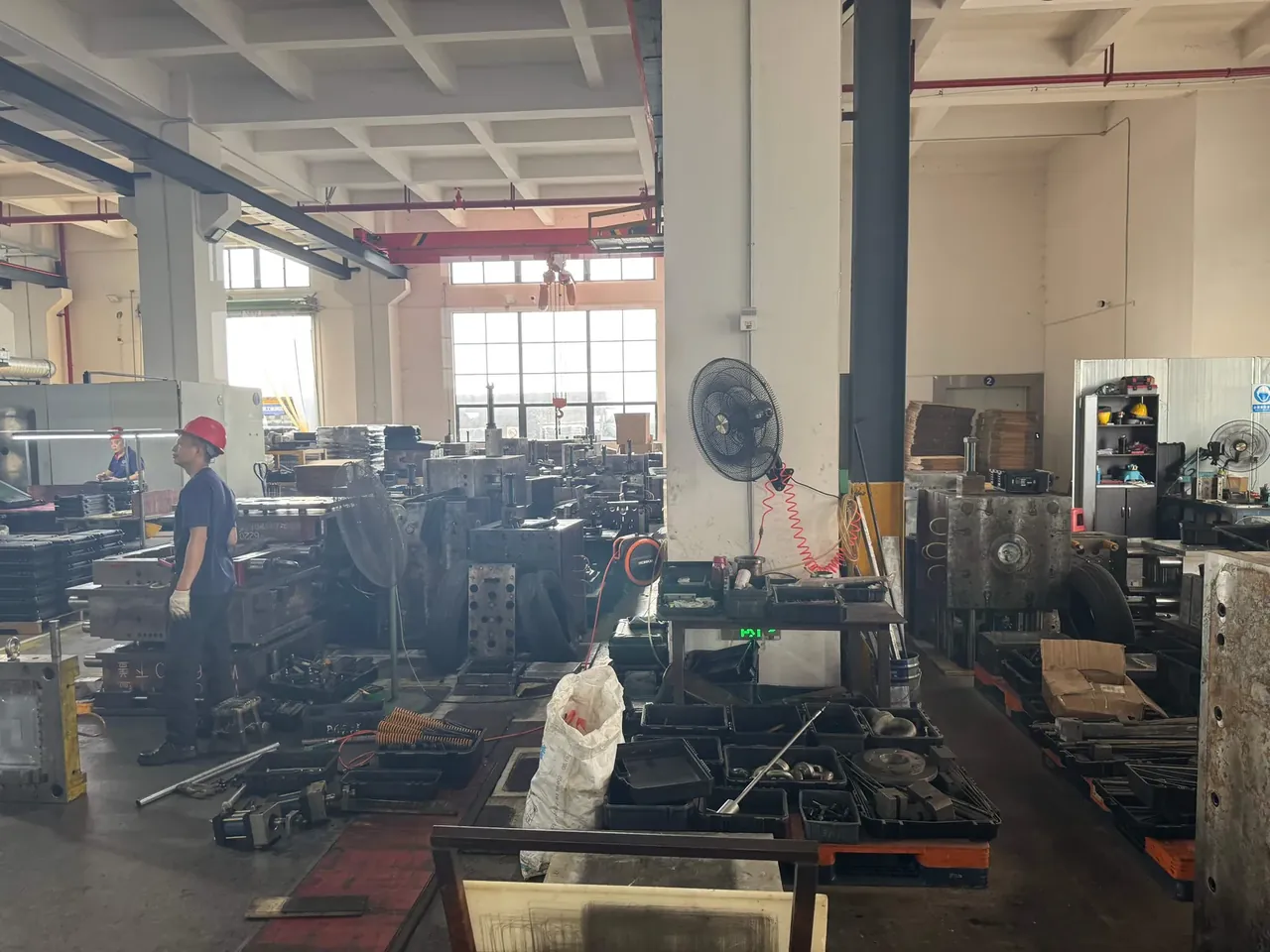
Batch consistency decides if one artwork stays in use. The same mould, colour code and resin batch hold colour difference within ΔE 1.5; changing resin while keeping the mould pushes it past ΔE 3, and the label background no longer matches the shell. Shop records are kept 3 years: injection parameters, resin batch numbers, masterbatch ratios.
5. Ten digits, one GCC mark, four rework traps
The registration number is 10 digits on one line, never wrapped. At 2.5 mm the digits just fit across 50 mm, and a prefix pushes them into the Arabic column.
| Rework trap | What shows up | Verdict | Fix |
|---|---|---|---|
| Column order | Arabic starts left | Whole lot relabelled | Artwork right-aligned |
| Registration number | 1 digit missing | Single case relabelled | 2.5 mm, one line |
| GCC mark | Edge trimmed | Rejected | Die tolerance 0.3 mm |
| Label bubble | Corner lifted 0.5 mm | Rework | Warm to 40 °C |
Two are artwork errors, one is die drift, one is a cold morning.
Conclusion
A saso case programme is governed less by the mould than by the calendar shared between two certificates and one label: renewal 60 days early, one shipment certificate per bill, six Arabic fields inside 50 × 30 mm. Schedule around the 3 working days, the 10% sample and the 60 °C adhesive limit, and relabelling stops being a recurring cost.
This article covers case-side specifications only and does not address any handling, loading or use of the contents.
Related Reading
- Saudi export compliance under SASO
- Certification set for one export unit
- Label elements and placement for export packaging
- Pre-shipment inspection: process and verdicts
Related Products
- 8 Series — Gun Cases; Military Equipment Cases; Camera Equipment Cases; Drone Cases; Watch Cases; Knife Cases; First Aid Cases; Electronics Equipment Cases
- WL8-2812 PP Gun Case — model WL8-2812
- All protective cases and toolboxes: 7 series, 158 models