

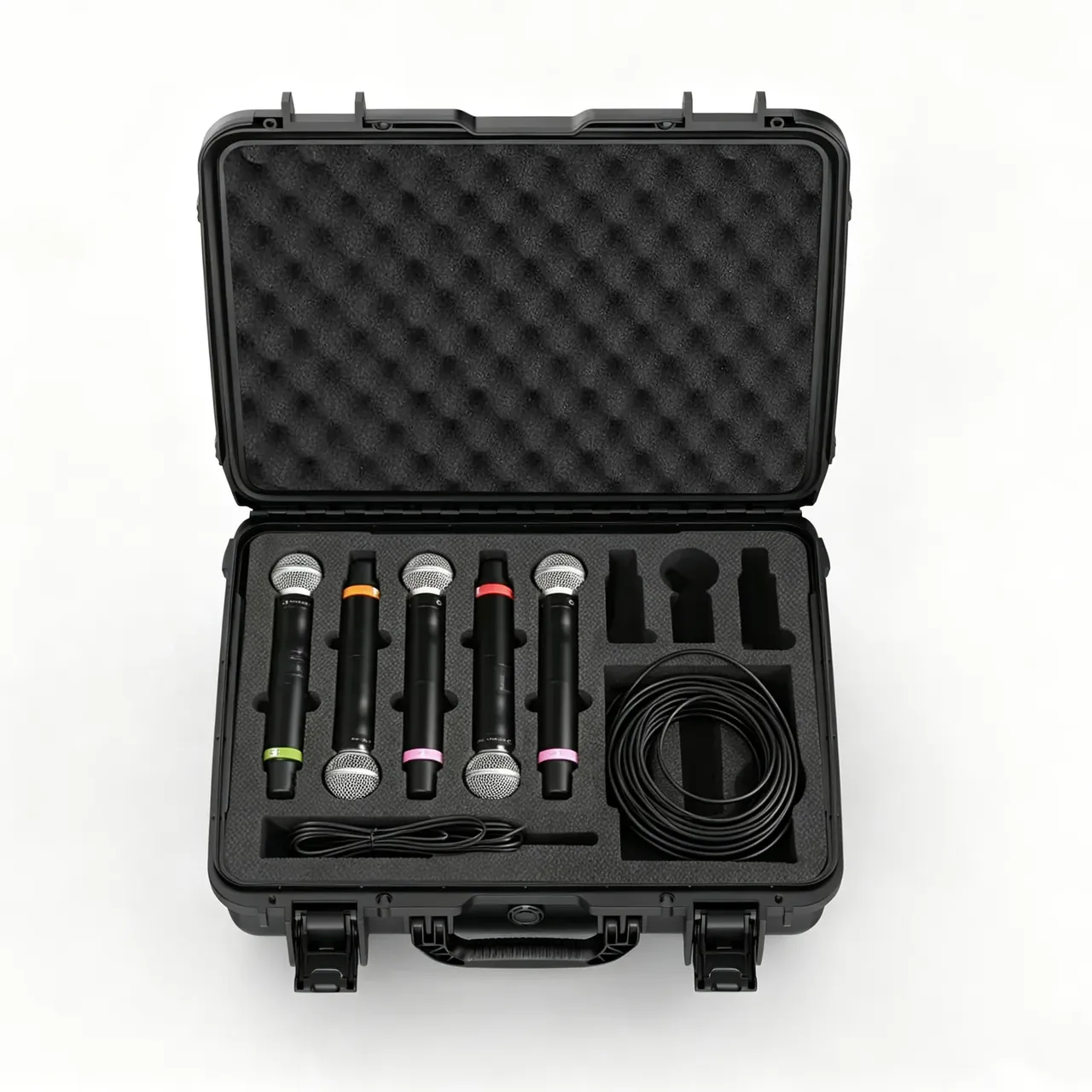
Quick answer: Case oem process totals 68 days: drawings 5, tooling 25, T1 3, T2 7, a 200-unit batch 8, production 20. Only 28 days sit on a machine.
Table of contents
- Seven Nodes, 68 Days: How the Calendar Breaks
- Drawing Confirmation: 5 Days, Frozen on Day 5
- Tooling at 25 Days and T1 at 3 Days
- T2: 7 Days and the Last Change Window
- A 200-Unit Batch and 20 Days of Production
- Parallel and Serial: Where 10 Days Come From
- FAQ
1. Seven Nodes, 68 Days: How the Calendar Breaks
The 68 days are six blocks and seven handovers. Drawings run D1–D5 for 5 days, tooling D6–D30 for 25, T1 trials D31–D33 for 3, T2 rework D34–D40 for 7, a 200-unit batch D41–D48 for 8, and production D49–D68 for 20.
Split by nature and the picture changes: the tool goes from steel block to a mould that can yield a good part in 28 days, tooling 25 plus T1 3. Of the other 40, twenty are production and twenty sit in drawings, rework, batch and scheduling.
Only 12 of those days are real waiting: review, sign-off, batch report, and that is the part front-loading compresses.
| Stage | Window | Days | Cumulative |
|---|---|---|---|
| Drawing confirmation | D1–D5 | 5 | 5 |
| Tooling | D6–D30 | 25 | 30 |
| T1 trial | D31–D33 | 3 | 33 |
| T2 rework | D34–D40 | 7 | 40 |
| Batch of 200 | D41–D48 | 8 | 48 |
| Production | D49–D68 | 20 | 68 |
Each node ends with something signed: a freeze sheet, a tool acceptance sheet, a trial report, a sample approval, a release note. When case oem process slips, nine times out of ten the previous sheet was never signed.
2. Drawing Confirmation: 5 Days, Frozen on Day 5
The 5 days are internal review 2, customer sign-off 2, flow analysis 1. The freeze sheet must exist by the afternoon of day 5, because steel is cut on day 6 and a day lost here shifts everything.
Four items freeze: outer dimensions, wall thickness, draft angle, parting line. Change any of them after day 5 and the 25 days of tooling are re-sequenced, turning 68 days into 70 or more.
Two signatures, two lines. The customer signs appearance and assembly, the factory signs manufacturability. Contracts with one line always produce an argument at T1, where the look passes and the tool cannot run, or the reverse.
The usual delay is physical comparison: an old sample posted back and forth for colour and touch costs 2–3 days. Confirm on day 1 with photos and a colour code and those 3 days leave the critical path.
Freezing does not forbid changes, it forces a change note stating which dimensions move and whether the tool opens. Most case oem process rework traces to a cavity size added after the freeze.
3. Tooling at 25 Days and T1 at 3 Days
The 25 days split into 12 for the mould base, 8 for cavity finishing and 5 for assembly and fitting. They run in series: no base, no cavity work. Steel arriving 3 days late moves the whole chain 3 days with nothing to compress.
T1's 3 days run by the hour: 4 h to mount, 30 consecutive shots, a day of measurement, half a day of reporting. The spread between shot 1 and shot 30 must stay under 0.2 mm; wider means uneven cooling.
Three deliverables close T1: a dimensional report on the first part, the 30 cosmetic parts, the process parameter sheet. Saying it ran is not a deliverable.
A failed T1 goes straight back to rework and consumes T2's 7 days, so the 68-day figure is optimistic: about 60% of projects pass at the first trial and the other 40% add 7 days.
4. T2: 7 Days and the Last Change Window
Seven days means strip 1, rework 3, polish 1, re-measure 1, trial 1. Three changes fit in 7 days, four to five need 10, and beyond five the sensible move is to re-run T1: stacked changes leave stress nothing can predict.
T2 closes with a sample approval, after which the tool is frozen. This is the last window where structure changes cost nothing; afterwards only colour, insert, printing and packaging are open.
Split the signatures: the customer signs appearance and fit, the factory signs dimensions and process window; dropping the factory line turns sink marks at production into a blame exchange.
Re-measure everything at T2, not five key dimensions: the costliest case oem process rework starts with the sixth failing in production.
5. A 200-Unit Batch and 20 Days of Production
200 units in 8 days is 25 a day, including colour change cleaning and first-article approval. The batch runs the tool 8 straight days and watches the drift between unit 1 and unit 200 against the 0.2 mm limit.
Record three sets: cycle time, scrap rate, first-to-last dimensional spread. Pass all three and production has a basis; scale straight from 30 T1 shots and the risk lands on the back end.
Production's 20 days are scheduling 3, moulding 12, finishing 5. At an estimated 2 min per shot, work out what 12 days actually yields before a delivery date goes into a contract. Finishing covers trimming, inserts, hardware and labels, and is the step most often left out of the plan.
6. Parallel and Serial: Where 10 Days Come From
Three moves can overlap: rough machining the mould base starts before the freeze once outer dimensions are fixed, saving 4 days; batch scheduling overlaps T2 re-measurement for 2; printing overlaps production for 5. Together they save 11 days, turning 68 into 57.
Four links must stay serial: freeze to tooling, T1 to rework, T2 to batch, batch to production. Pull any of them forward and the result is not speed but scrap.
| Move | Relation | Days saved | Condition |
|---|---|---|---|
| Early mould base machining | Parallel with drawings | 4 | Outer dimensions locked |
| Early batch scheduling | Parallel with T2 re-measure | 2 | Sample dimensions passed |
| Carton printing | Parallel with production | 5 | Artwork and barcode fixed |
| Freeze to tooling | Serial | 0 | None |
| T2 to batch | Serial | 0 | Sample approval signed |
Conclusion
Memorise the 68 days as 5, 25, 3, 7, 8 and 20. What matters more are the four serial gates between them: drawing freeze, T1 report, sample approval, release note. With all four signed the calendar holds; missing one and every later block restarts.
Draw the four serial links first, then stack the mould base, batch scheduling and packaging on top: that is where 57 days comes from, not from pushing the factory. Speed extracted by pressure is repaid as scrap rate.
Finally, put the case oem process calendar in a schedule both sides sign, listing a deliverable and signatory per node, not a single delivery date: projects that publish one date cannot explain which block ran late. The table below works as that annex.
| Node | Days | Deliverable | Signatories | Bottleneck |
|---|---|---|---|---|
| Drawing confirmation | 5 | Freeze sheet | Customer, factory | Physical comparison, 2–3 days |
| Tooling | 25 | Tool acceptance sheet | Factory | Steel 3 days late |
| T1 trial | 3 | Trial report, first-part data | Factory | 30-shot drift over 0.2 mm |
| T2 rework | 7 | Sample approval | Customer, factory | More than five changes |
| Batch of 200 | 8 | Batch report | Factory | First-to-last spread over 0.2 mm |
| Production | 20 | Release note, outgoing check | Customer, factory | Finishing left unscheduled |
This article discusses container-side specifications and design implications only, and does not cover any handling, loading or use of the contents.
Related Reading
- From sample to mass production: a 45-day case timeline
- Custom case MOQ: what 200 units and 2000 units change
- Custom moulded case specifications: fixing wall thickness first
- OEM custom cases: three ways to change logo, colour and insert
Related Products
- 8 Series — Gun Cases; Military Equipment Cases; Camera Equipment Cases; Drone Cases; Watch Cases; Knife Cases; First Aid Cases; Electronics Equipment Cases
- WL8-2812 PP Gun Case — model WL8-2812
- All protective cases and toolboxes: 7 series, 158 models