

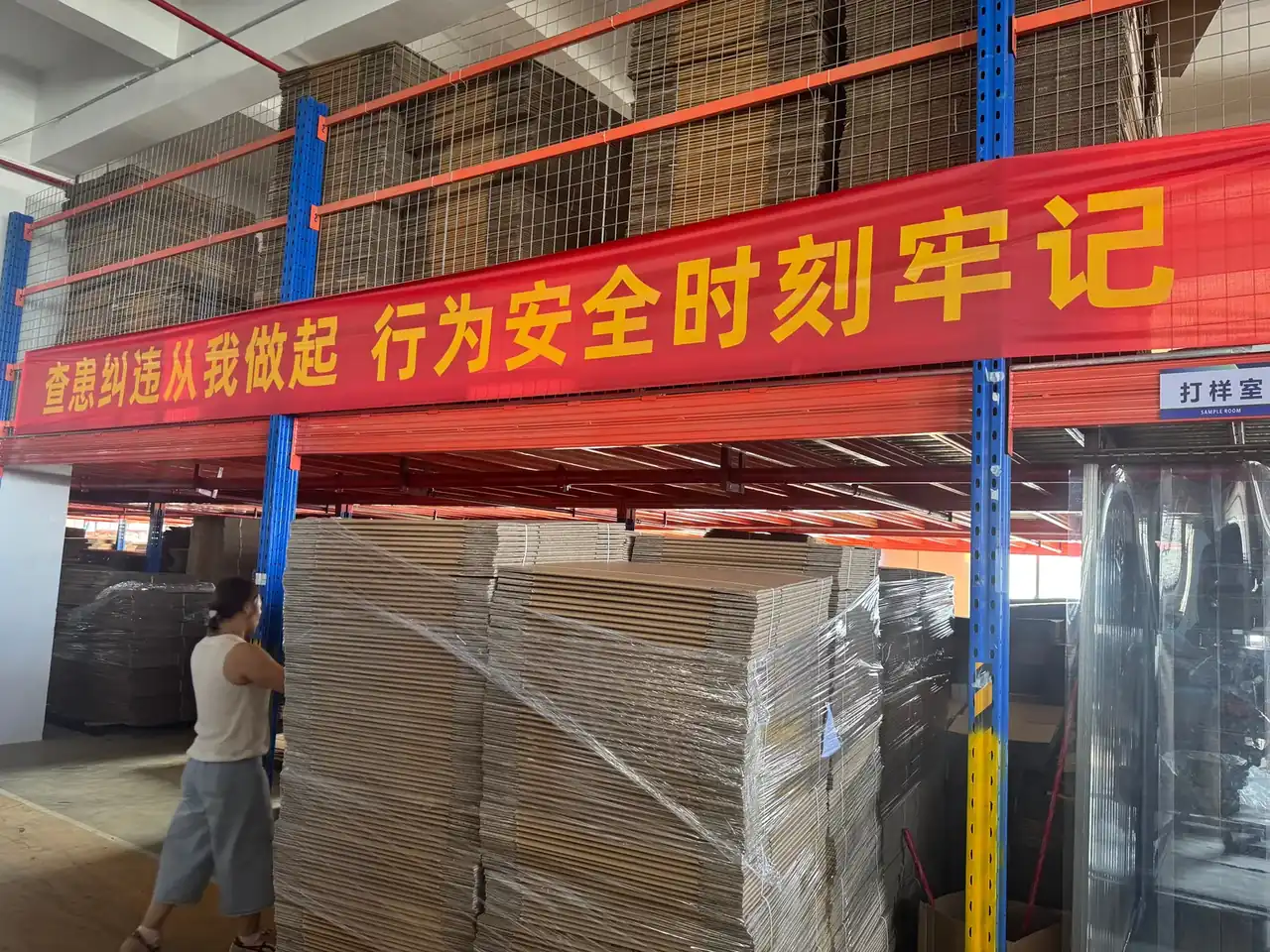
Quick answer: A 600 × 400 mm shipping carton gives 4 per pallet layer and 5 layers, 20 cartons at 2,150 mm; the 6th layer hits the 2,585 mm door.
Table of contents
- Carton footprint against the pallet module
- Flute grade and edge crush
- Units per carton and the foam share
- Layers per pallet and the door height
- Twenty pallets inside a 40HQ
- FAQ
1. Carton footprint against the pallet module
A 600 × 400 mm shipping carton base on a 1,200 × 1,000 mm pallet closes at four boxes. Two runs of 600 mm fill the length, two of 400 mm fill 800 mm, and 200 mm of deck stays bare, so each layer uses 80% of the deck.
A 500 × 400 mm base packs six: three runs of 400 mm fill 1,200 mm, two of 500 mm fill 1,000 mm. Volume falls from 96 L to 60 L, so the same order needs half again the box count.
Layer count is the second half of the shipping carton sum. Twenty boxes of 600 × 400 × 400 mm hold 1.92 m³; thirty-six of 500 × 400 × 300 mm hold 2.16 m³, 12% more cube from 80% more boxes.
| Base | Along 1,200 mm | Along 1,000 mm | Per layer | Deck used |
|---|---|---|---|---|
| 600 × 400 | 2 | 2 | 4 | 80% |
| 500 × 400 | 3 | 2 | 6 | 100% |
| 400 × 300 | 3 | 3 | 9 | 90% |
The bare 200 mm strip cannot be recovered: a third row of 400 mm would hang over the edge, and film pulls the overhang down until the bottom carton creases.
2. Flute grade and edge crush
Five-ply board wraps three liners around two flutes. AB pairs a 5 mm A flute with a 3 mm B flute and finishes at 7–8 mm; BC puts B outside and C inside at 6–7 mm, folding more willingly.
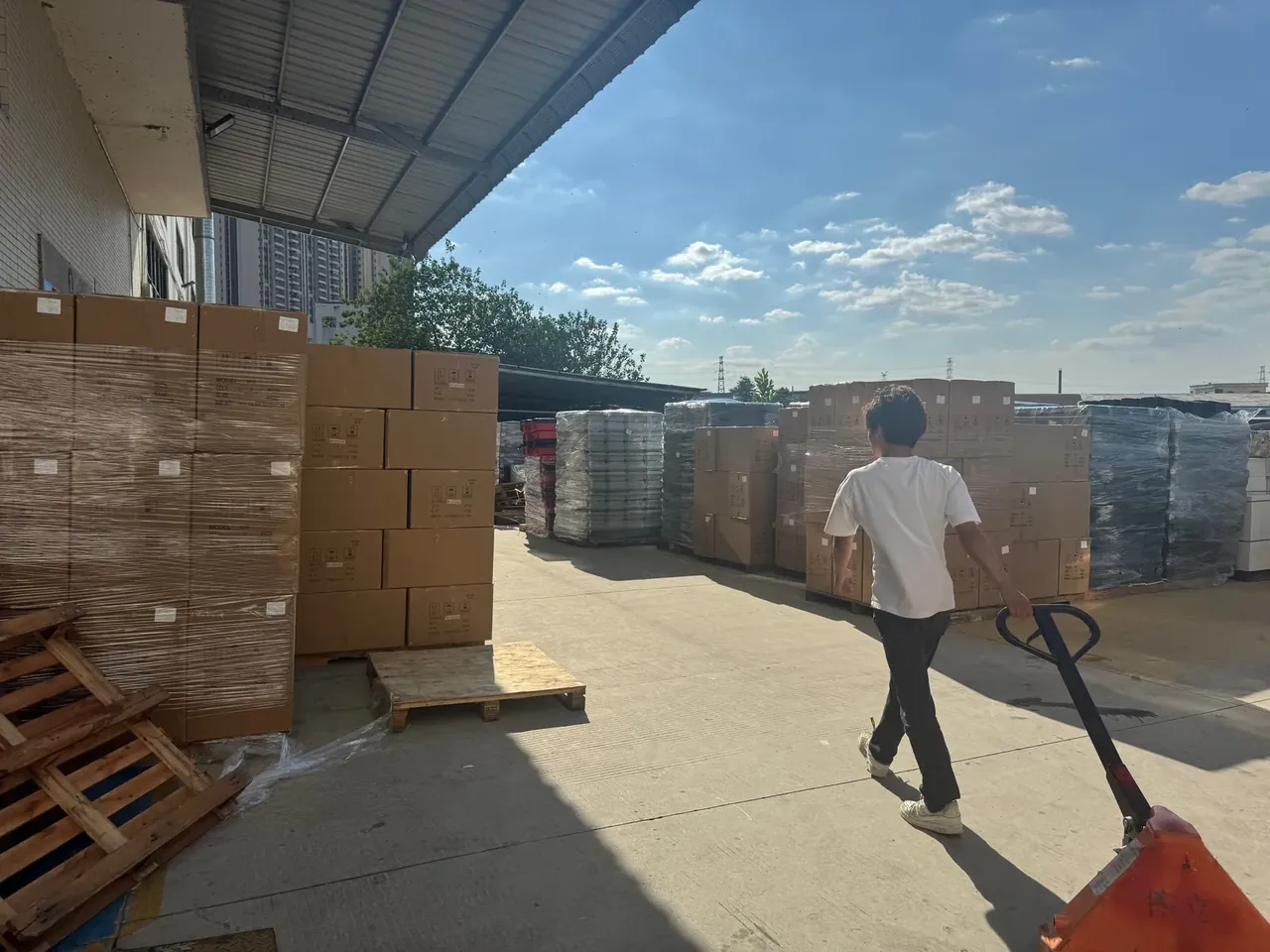
Edge crush on five-ply BC usually runs 8–12 kN/m, and AB gains 1–2 kN/m from the extra flute. ECT rates the board, never the finished shipping carton, so stack height needs one more step.
That step is the McKee estimate: BCT = 5.87 × ECT × √(caliper × perimeter). A 600 × 400 mm base measures 2,000 mm around; at 7 mm and 10 kN/m the root term is 118.3, so BCT lands near 6.9 kN, about 708 kgf.
Warehouse time takes 45%–60% of that away, and humidity takes more: at 90% RH board keeps roughly half its compression. Applying 0.45 turns 708 kgf into 319 kgf, the only figure worth stacking against.
| Board | Caliper | ECT band | Fold | Usual box |
|---|---|---|---|---|
| BC five-ply | 6–7 mm | 8–12 kN/m | Flat, low spring-back | Mid-size export box |
| AB five-ply | 7–8 mm | 9–13 kN/m | Stiff, high spring-back | Large heavy box |
| B three-ply | 2.5–3 mm | 4–6 kN/m | Folds easiest | Inner box |
A poor flute choice hides for weeks. BC bulges outward after roughly 20 days until the pallet column leans; AB still reads straight at 30 days. Standing a shipping carton on its side drops BCT to about 40% of the upright value, however neat the stack looks.
3. Units per carton and the foam share
One shipping carton carries 8 units at 1.9 kg, with 15 mm foam, dividers and a leaflet, for 19.6 kg gross. Units per carton follow the cavity, not the wish list.
Subtract 7 mm of board and 15 mm of foam on each side, 22 mm per face, and the cavity becomes 556 × 356 × 356 mm. Split 2 × 2 × 2 and each pocket is 276 × 176 × 176 mm for a 240 × 140 × 140 mm unit, leaving 6 mm per wall for impact travel.
Eight units fill 37.6 L of a 70.3 L cavity, so product takes 53% and foam, dividers and clearance take 47%. That share carries no cargo value but fixes the outer size and the pallet count.
Going from 8 to 10 units lifts gross weight to 24 kg. The bottom box then carries 96 kg across five layers, inside 319 kgf, yet the pallet reaches 495 kg and packing time grows from 12 min to 18 min.
4. Layers per pallet and the door height
Four boxes a layer at 400 mm, five layers, 2,000 mm of load, 150 mm of pallet: 2,150 mm against 2,698 mm inside the 40HQ.
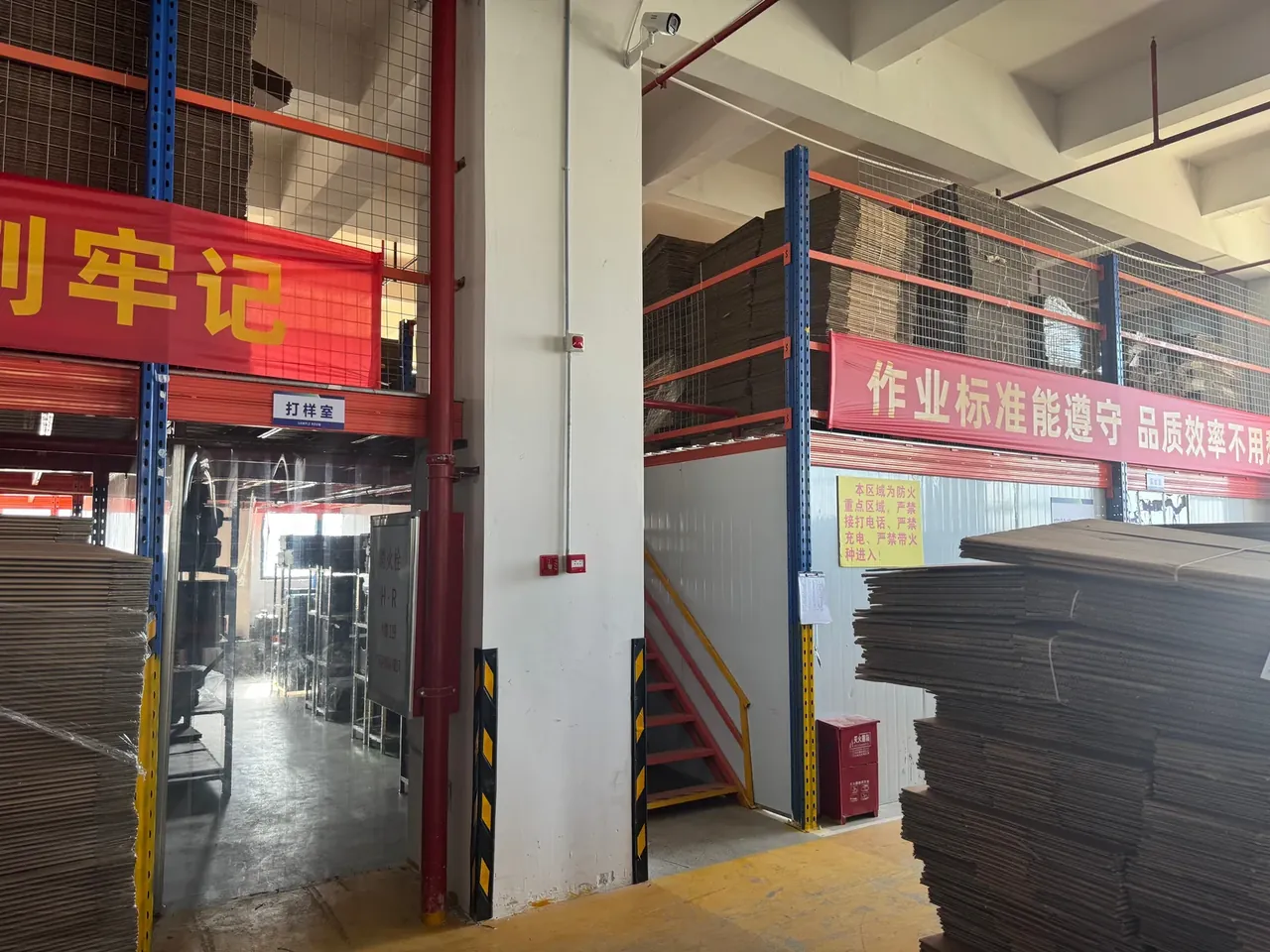
A sixth layer spends the margin. The load reaches 2,400 mm, the pallet 2,550 mm, and the door opening is 2,585 mm, leaving 35 mm. Forklifts carry loads 100 mm off the floor, so the shipping carton run stops at five layers.
| Layers | Load | With pallet | Clearance to 2,585 mm |
|---|---|---|---|
| 4 | 1,600 mm | 1,750 mm | 835 mm |
| 5 | 2,000 mm | 2,150 mm | 435 mm |
| 6 | 2,400 mm | 2,550 mm | 35 mm |
A shipping carton pallet weighs 20 × 19.6 + 15 = 407 kg, and the bottom box carries only 78.4 kg. The safety factor of 4.1 shows the five-layer limit comes from the door, not the board.
Two routes reach six layers: trim the box to 380 mm, giving a 2,430 mm pallet and 155 mm at the door, or fit a 140 mm pallet. Both need a fresh compression check.
5. Twenty pallets inside a 40HQ
Inside length is 12,032 mm, inside width 2,352 mm. Ten rows of 1,200 mm take 12,000 mm, two pallets across take 2,000 mm and leave 352 mm at the wall, so 20 pallets load without tricks.
The 352 mm strip holds nothing whole: turning the last shipping carton pallet 90 degrees brings a 21st unit and a 200 mm gap at the door for film and corner boards.
Twenty pallets hold 400 cartons and 3,200 units; twenty-one hold 420 and 3,360, a 5% gain confined to the door end, so loading runs backwards from there.
Weight never binds: 400 boxes at 19.6 kg plus 300 kg of pallets come to 8.14 t against a 26.5 t payload, 31% of the allowance.
Cube is not full either: 20 pallets of 2.58 m³ fill 51.6 m³ of 76.4 m³, 68%, and the missing 32% is the 548 mm of air above every pallet, about 24 m³ a sailing.
Conclusion
Fix base, count, layers and pallet number in that order and quotes compare: a 600 × 400 mm shipping carton gives 4 per layer, five layers give 20 boxes, 20 pallets give 3,200 units.
Height is the quietest lever. Trimming 400 mm to 380 mm returns 10 mm a layer, enough to move door clearance from 35 mm to 155 mm, while switching the base to 500 × 400 turns 4 boxes into 6 and resets the packing line pace.
This article discusses container-side specifications and design implications only, and does not cover any handling, loading or use of the contents.
Related Reading
- Case vs carton for e-commerce
- Writing export packaging specifications
- Footprint against the pallet module
- Running an ASTM D4169 distribution cycle
Related Products
- 8 Series — Gun Cases; Military Equipment Cases; Camera Equipment Cases; Drone Cases; Watch Cases; Knife Cases; First Aid Cases; Electronics Equipment Cases
- WL8-2812 PP Gun Case — model WL8-2812
- All protective cases and toolboxes: 7 series, 158 models