

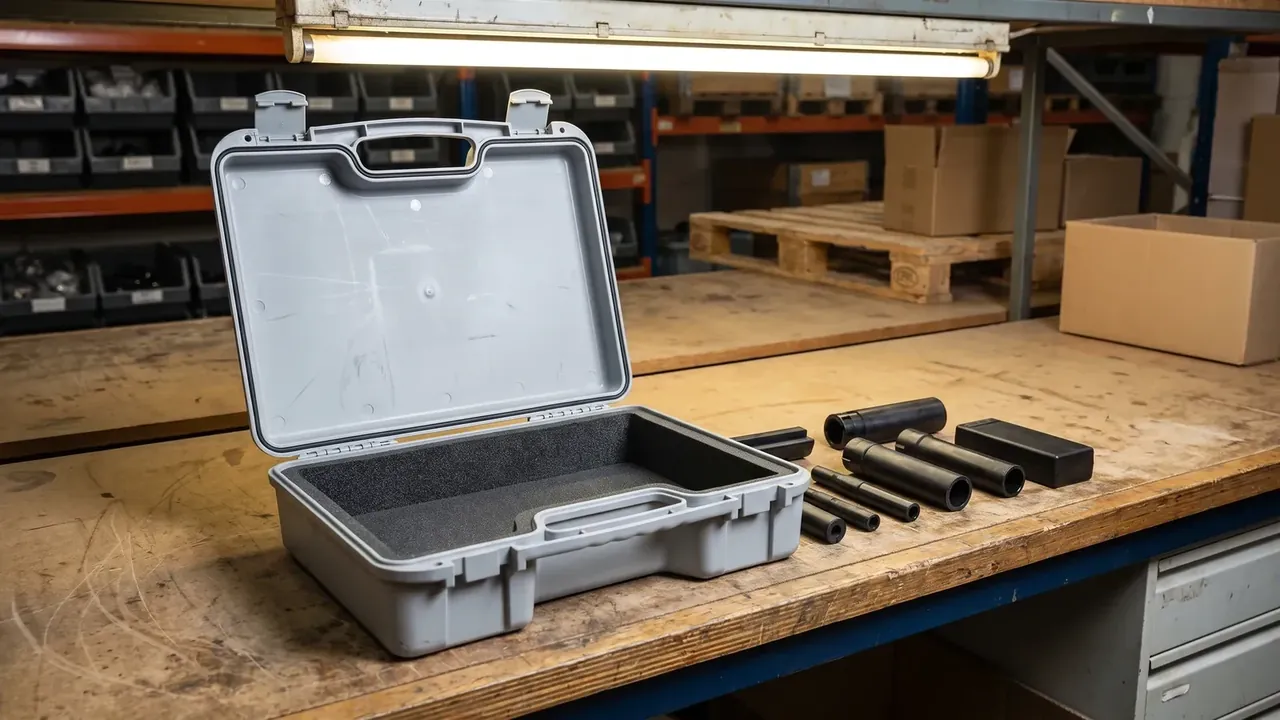
Quick answer: A shipping case works through five legs: line haul, plant transfer, subcontractor loops, staging before loading, and the sea-and-road handover. Change the leg and the liner and markings change first, then pallet fit and stack height.
Table of contents
- Five Shipping Case Scenarios and How They Differ
- Line Haul: Pallet Fit and Stack Height
- Plant Transfers and Subcontractor Loops: Numbers and Seals
- Staging Before Loading: Half an Hour on the Dock
- Sea and Road Handover: Humidity, Salt and Handling Count
- FAQ
1. Five Shipping Case Scenarios and How They Differ
A shipping case is used along three axes: dwell time, distance, and whether it changes vehicle. Those axes cut into five legs — line haul, plant transfer, subcontractor loops, staging before loading, and the sea-and-road handover. Configuration follows the leg: liner and markings shift first, pallet fit and stacking second. Four hours, three days and twenty-eight days at sea load the body differently.
| Scenario | Typical dwell | Main risk | Configuration focus |
|---|---|---|---|
| Line haul | 1–5 days | Stack crush, rubbing | Stacking step, pallet straps |
| Plant transfer | 3–10 days | Mixed loads, lost units | Numbers, colour codes, packing list |
| Subcontractor loop | 7–30 days | Empty case never returns | Removable liner, one-time seal |
| Staging | 30 minutes to a day | Forklift strike, rain | Dunnage, chocks, cover |
| Sea and road | 20–40 days | Condensation, salt, lifts | Desiccant, rust oil, corner guards |
2. Line Haul: Pallet Fit and Stack Height
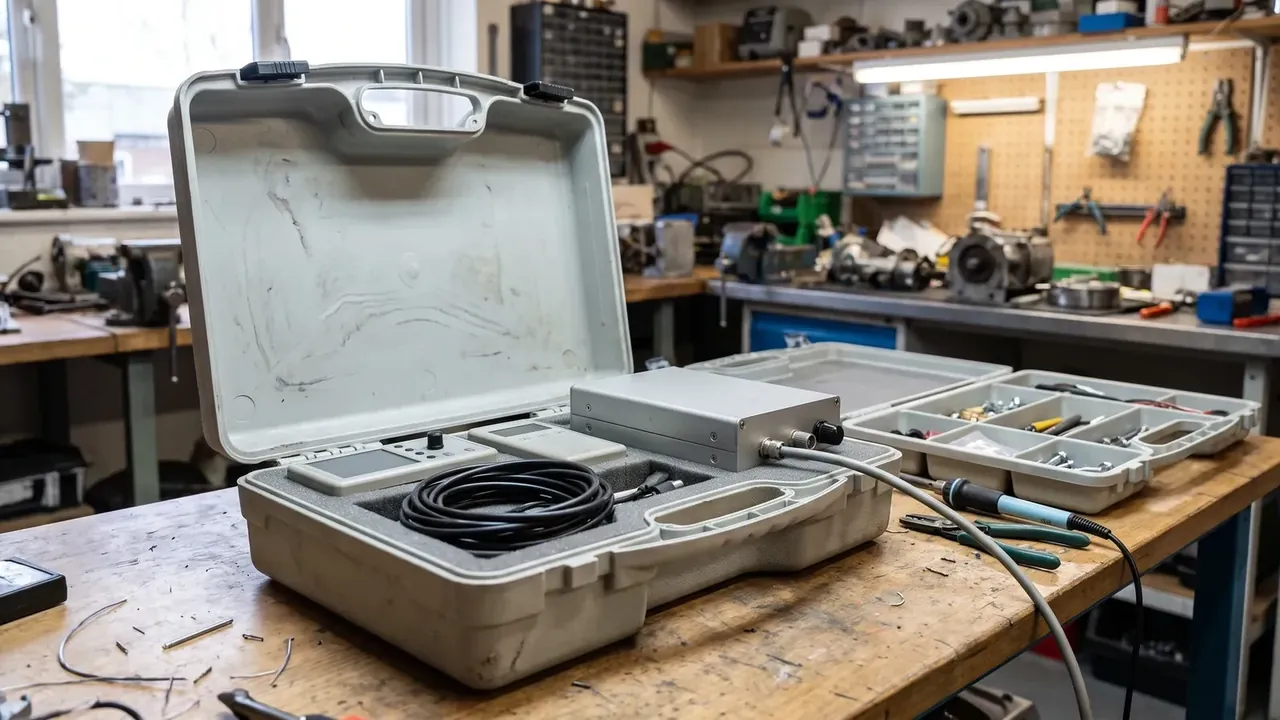
Line haul starts at the pallet. Trunk routes run 1,200 by 1,000 mm pallets, so the footprint follows that module: two 600 mm cases across, two 500 mm along the short side, 20 mm maximum overhang. Stack height follows the bottom case rather than the roof: at 40 kg loaded, three layers is the limit, and a 100 mm pallet with a base board brings the stack to 1.9 m inside a 2.4 m box van.
| Pallet | Case footprint | Cases per pallet | Stack |
|---|---|---|---|
| 1,200 × 1,000 mm | 600 × 400 mm | 4 | 3 high |
| 1,200 × 1,000 mm | 500 × 400 mm | 6 | 3 high |
3. Plant Transfers and Subcontractor Loops: Numbers and Seals
Plant transfers are where a shipping case turns over fastest, and the usual complaint is that one comes back missing. The number needs three parts — plant code, case type, serial — stencilled top right and on both ends at 40 mm character height.
Subcontractor loops add liability. A one-time seal goes on at dispatch, its eight-digit number matching the packing list; on return the seal is checked first, then the body for impact, and only then is the lid opened. Removable liners let the subcontractor change the layout, but they must travel inside the lid.
4. Staging Before Loading: Half an Hour on the Dock
Staging is the leg everyone forgets. Dock height is usually 1.1 m, the forklift drops the pallet and leaves, and the case waits there from half an hour to a full day, exposed to impact, rain and mis-picking.
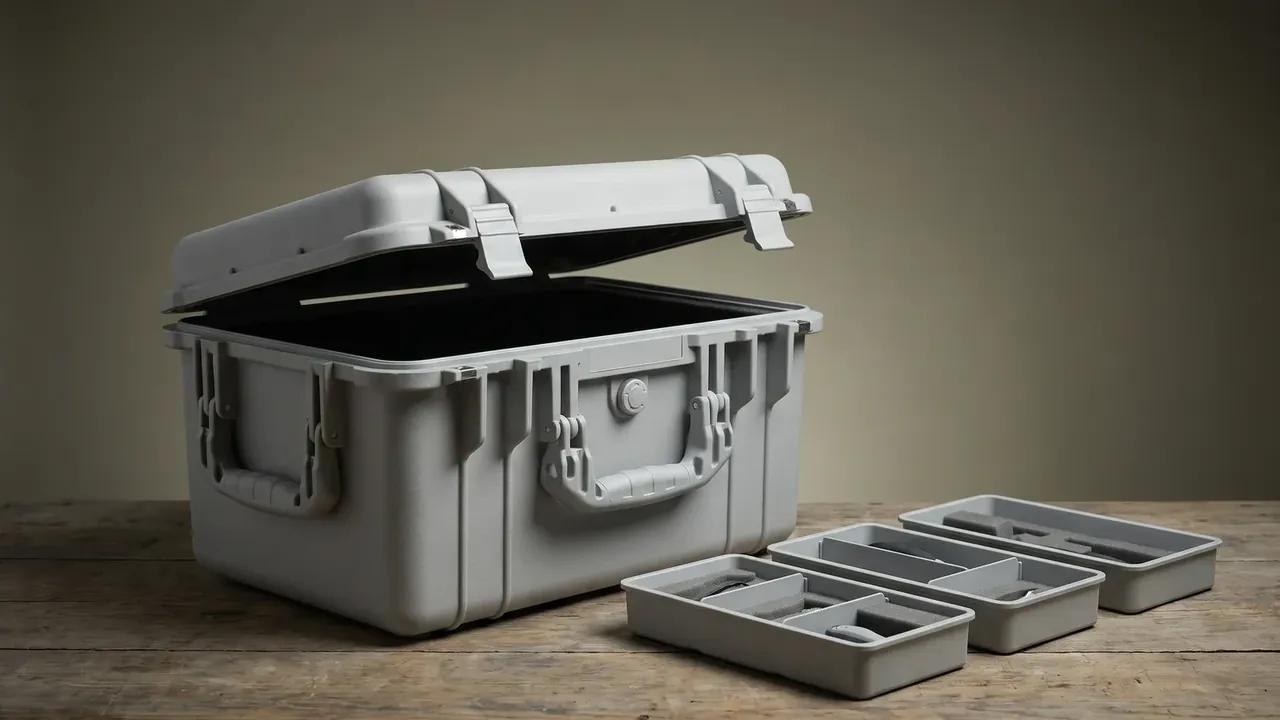
Three settings cover it: anti-slip mat under the pallet, stretch wrap binding the group into one block, and a 300 mm buffer strip along the dock edge. Past four hours the group moves under cover, because a wet carton can be replaced but equipment that takes water means the whole batch is opened up.
5. Sea and Road Handover: Humidity, Salt and Handling Count
The sea leg is about water, not impact. Inside a 40 ft box the air reaches 60 °C against 85 percent relative humidity, and the day-night swing drives condensation onto the case walls. The better the seal, the more that water collects inside and soaks the liner. Two 50 g desiccant packs per case, rust oil on machined surfaces, and an indicator card read at discharge.
| Segment | Condition | Action |
|---|---|---|
| Inland trunk | −10 °C to 45 °C | Stacking step, cross bars |
| Port storage | Above 85% RH | Desiccant, sealed wrap |
| 28 days at sea | Up to 60 °C in the box | Indicator card, rust oil |
| Final delivery | Four lifts | Corner guards, seal check |
Conclusion
The differences between shipping case scenarios come down to four settings: pallet fit, stack height, markings and seals, and how the liner is fixed. Fill those in for your own route, then choose the shipping case.
This article discusses only the container (case body) side of specifications and design intent, and does not cover any handling, loading or use of the contents.
Related Reading
- How logistics support boxes are used on the move
- Rules for pallet and case marking layout
- Transit case use in plant-to-plant movement
- How cases are stacked in warehouse storage
Related Products
- 8 Series — Gun Cases; Military Equipment Cases; Camera Equipment Cases; Drone Cases; Watch Cases; Knife Cases; First Aid Cases; Electronics Equipment Cases
- WL8-2812 PP Gun Case — model WL8-2812
- All protective cases and toolboxes: 7 series, 158 models