

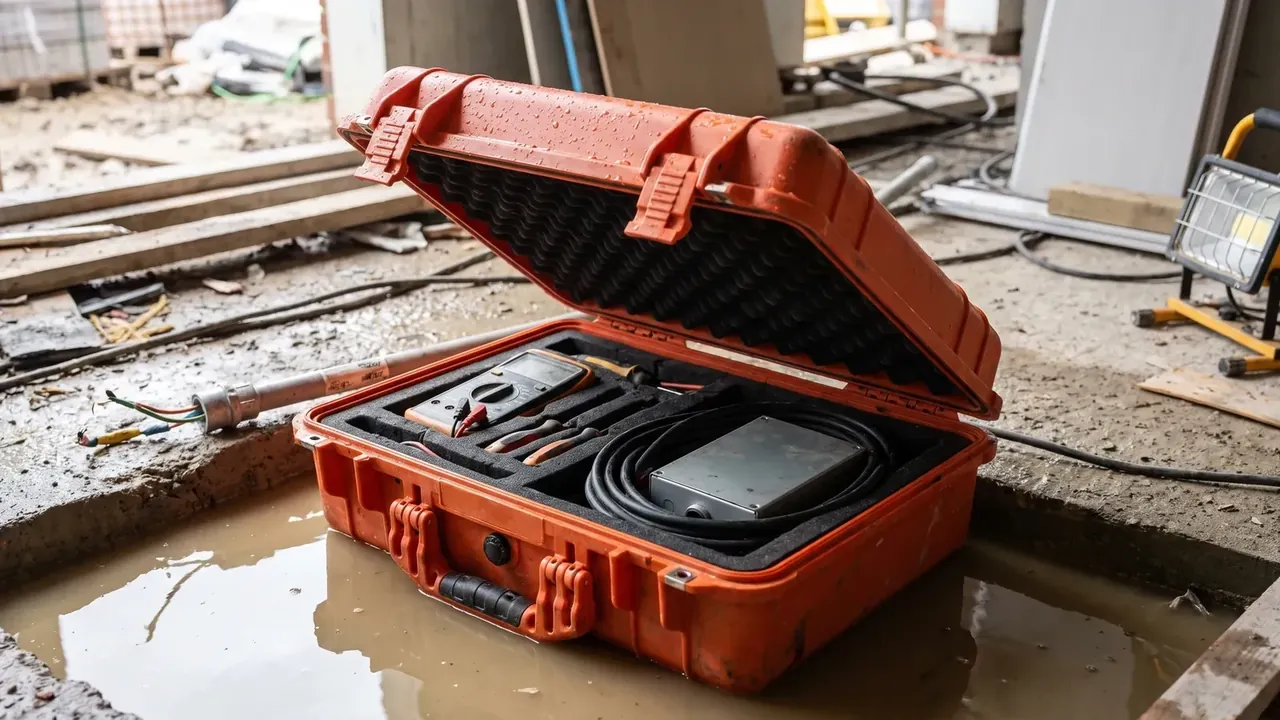
Quick answer: Eight checks, six minutes before loading. Replace a gasket at 30% compression set, a latch under 250 N, a pin past 0.4 mm clearance. The aim is not a clean case but a line you can judge.
Table of contents
- Pre-Departure Checks on a Shipping Case: Eight Points
- Gaskets and Latches: Where the Replacement Line Sits
- Hinges and Pins: Clearance, Torque and Grease
- Seal Numbers and Labels: The Last Pass
- Washing, Drying and Records: When to Retire It
- FAQ
1. Pre-Departure Checks on a Shipping Case: Eight Points
Eight items, six minutes, before loading: shell cracks, parting-line fit, gasket, latches, hinges and pins, handle, pressure valve, labels and seal holes. Each answers two questions: usable now, and how far from the replacement line.
| Item | Method | Limit | Action |
|---|---|---|---|
| Shell crack | Eye and torch | Over 30 mm, or through wall | Stop, assess |
| Parting-line fit | Feeler gauge | Local gap over 1 mm | Clear debris |
| Gasket | Eye and hand | Set over 30% | New ring |
| Latches | Force gauge | Under 250 N | New pair |
| Hinges and pins | Feeler gauge | Clearance over 0.4 mm | New pin |
| Handle | Hand load | Whitening or fine cracks | Replace |
| Pressure valve | Hand press | Sticks or weeps | Replace |
| Labels, seal holes | Eye | Lifted edge, oval hole | Re-label, repair |
The sheet stands on its limits, not its count; an entry reading looks fine tells an operator nothing.
Log each result against a case number and date; two overruns in a row on one item escalate.
2. Gaskets and Latches: Where the Replacement Line Sits
The gasket is the first part to degrade. It works by compression: a 6 mm groove and an 8 mm section land at 25% to 30% squeeze, and once lost the face no longer touches.
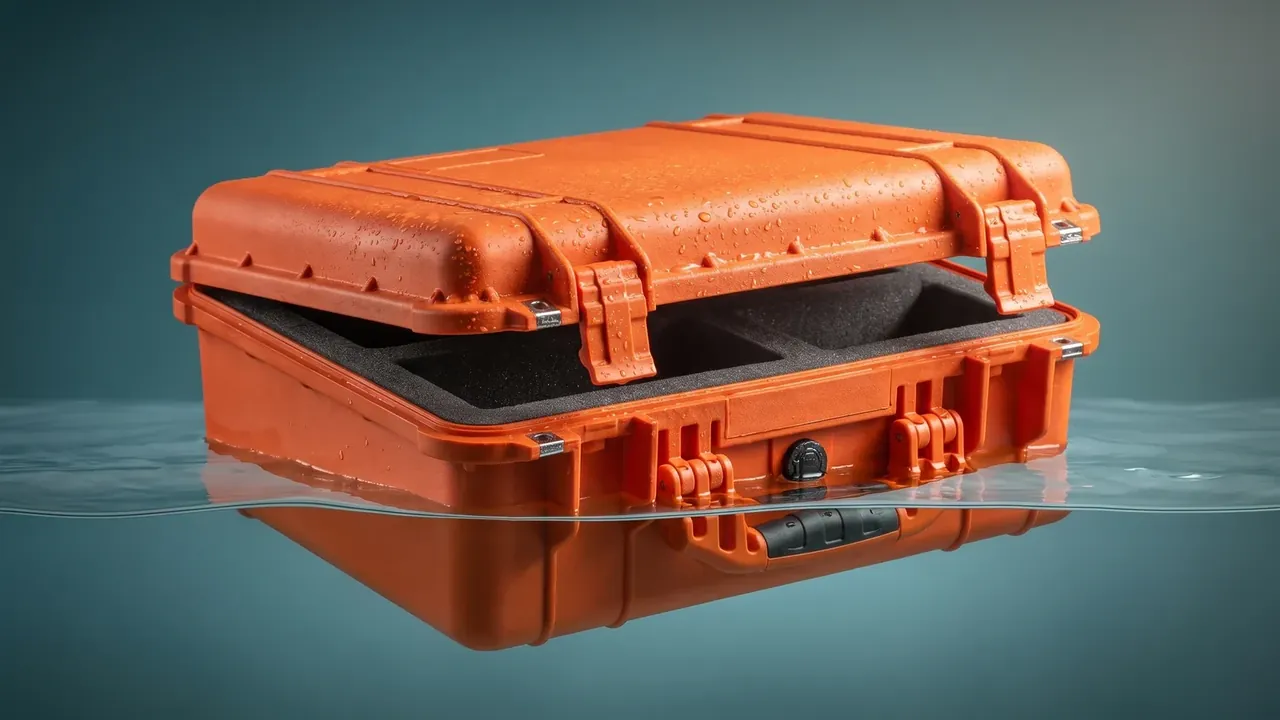
Three limits can be measured: set above 30%, a gasket lifted at the corner, or a surface gone hard. Silicone holds from -40 to 200 °C but swells in oils; EPDM takes weather and swells in mineral oil.
Latches on a shipping case are judged on force and feel. Under 250 N the lid lifts in vibration; one closing without a click has a rounded hook. Replace both.
3. Hinges and Pins: Clearance, Torque and Grease
Most hinge trouble sits in the pin. Past 0.4 mm clearance against 0.1 mm when new, the lid rocks, the gasket is sheared, and the corner splits.
Torque by value, not feel. Bosses creep and repeated tightening strips the thread. Six newton-metres suits M6 with a metal insert; four without.
Grease only the pin and latch hook, every six months, then wipe the excess. Grease collects dust and turns into lapping paste.
4. Seal Numbers and Labels: The Last Pass
Before handover on a shipping case, confirm three things match: seal number, label content and case number. A seal is twelve digits, read aloud and written down, so a failed scanner still leaves a number.
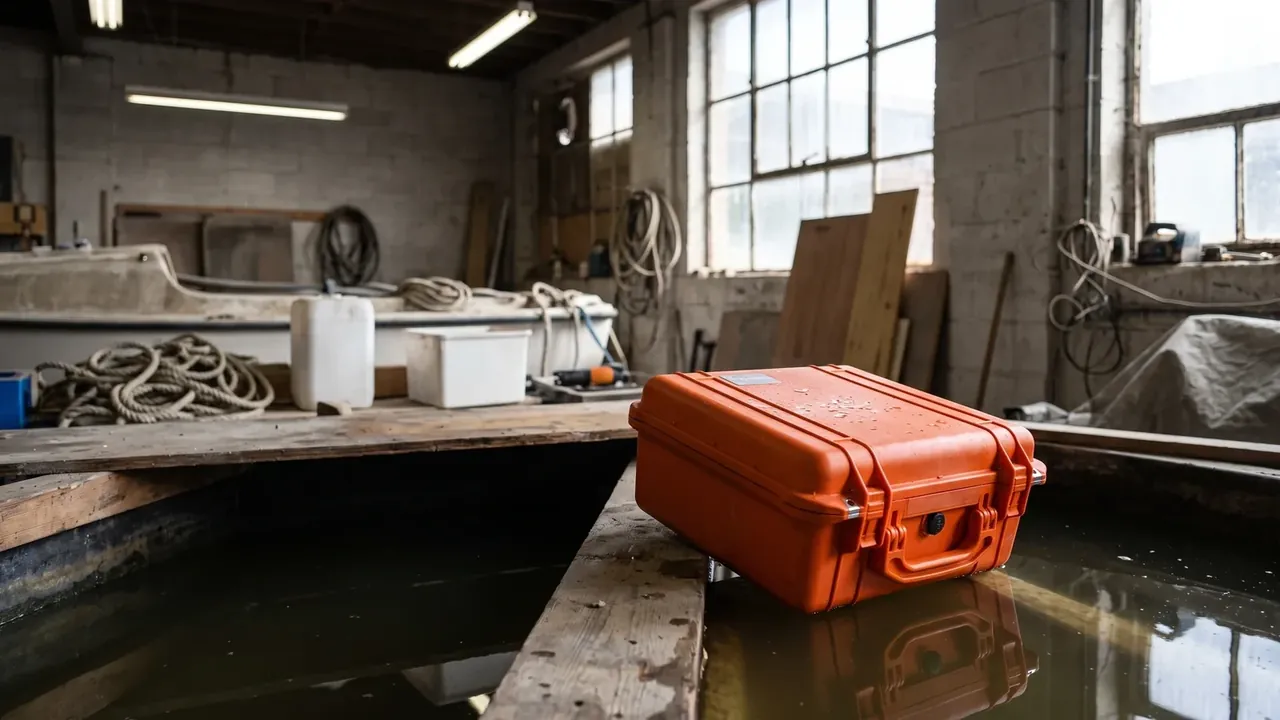
Labels have to survive the lane. Put them on a flat face, clear of ribs and the parting line, rated from -20 to 80 °C. One that lifts cleanly can be swapped at re-inspection; one that leaves adhesive will not stick again.
The seal hole is a check item too. Plastic wears oval and the seal then slides out whole; move to the spare position and note it.
5. Washing, Drying and Records: When to Retire It
Wash a shipping case at or below 40 °C with a neutral cleaner at pH 6 to 8. Never point a jet at the parting line or the valve; it lifts the gasket.
Drying is the step most often skipped. Stand the case open four hours in moving air and close it only below 60% humidity; water in the foam returns as condensation.
Keep five fields in the repair log: case number, date, part replaced, reason, cumulative cycles. With a running count, the table becomes a decision.
| Retirement criterion | Value |
|---|---|
| Remaining wall | Under 80% of nominal |
| Crack | Over 30 mm and through |
| Sealing face flatness | Out by over 1 mm |
| Cumulative cycles | Over 1200 |
| Latch boss hole | 0.5 mm oversize |
Conclusion
Maintenance turns usable into numbers: eight checks, three gasket limits, 0.4 mm of pin clearance, six newton-metres of torque, four hours of drying. Put them on the check sheet with a repair log, and replacement stops depending on memory. Whether a shipping case reaches its design cycle count depends on that line being held.
This article discusses only the container (case body) side of specifications and design intent, and does not cover any handling, loading or use of the contents.
Related Reading
- Common Shipping Case Problems and How to Handle Them
- Day-to-Day Care for Rotationally Moulded Cases
- Preventing Case Damage in the Warehouse
- Maintenance Checks for Wheeled Protective Cases
Related Products
- 8 Series — Gun Cases; Military Equipment Cases; Camera Equipment Cases; Drone Cases; Watch Cases; Knife Cases; First Aid Cases; Electronics Equipment Cases
- WL8-2812 PP Gun Case — model WL8-2812
- All protective cases and toolboxes: 7 series, 158 models