

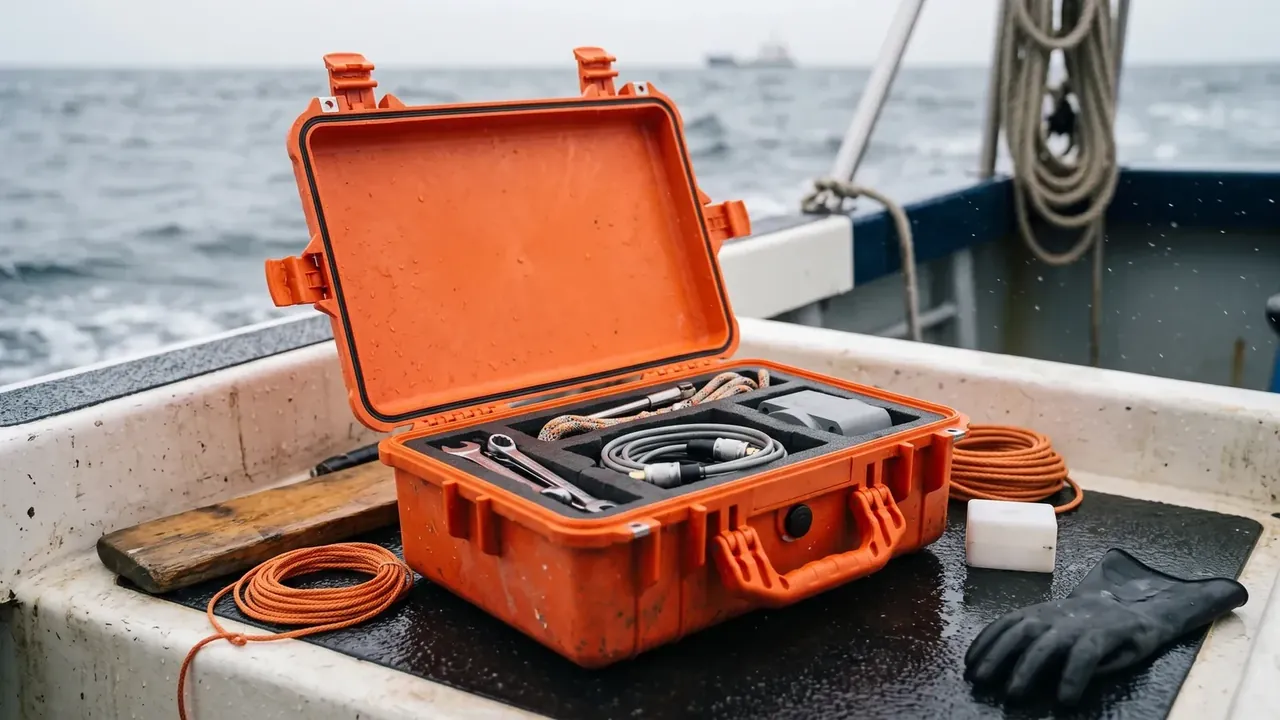
Quick answer: Set a Shipping Case inside out: fix the cavity from the pallet module and part outline, add wall and ribs to reach the envelope, check the base at rated load, then write seal grade and fork pockets as repeatable numbers.
Table of contents
- Setting Shipping Case Outer and Inner Dimensions
- Wall Thickness and Rib Layout
- Rated Load and Stacking Layers
- Writing a Seal Rating That Can Be Tested
- Pallet, Fork Pockets, Seal Tags and Label Pads
- FAQ
1. Setting Shipping Case Outer and Inner Dimensions
The cavity comes first. Lay parts as they actually sit, measure the widest outline and tallest point, then add 10 to 20 mm per side for gloved hands.
The envelope follows the pallet module: an 800 by 600 mm footprint tiles two across and one along a 1200 by 1000 mm pallet with under 40 mm of waste, while a 700 by 500 mm footprint seats two more but shortens every cavity by 100 mm.
Subtract both walls, the rib fillet and the lid recess and 20 mm per side disappears, so the 800 by 600 mm envelope gives a 760 by 560 mm cavity. Tolerance is plus or minus 3 mm, read 20 mm below the rim. Write that down, or purchasing takes off one wall and orders a case that fits neither.
| Item | Value | Note |
|---|---|---|
| Outer length and width | 800 x 600 mm | Two across on a 1200 x 1000 pallet |
| Outer height | 540 mm | Includes lid and 60 mm feet |
| Inner length and width | 760 x 560 mm | 20 mm per side for wall and ribs |
| Envelope tolerance | Plus or minus 3 mm | Three stacked stay within 9 mm |
| Base flatness | 2 mm | Stack stability |
2. Wall Thickness and Rib Layout
Thickness follows load path. A 4.5 mm wall resists squeeze, a 6 mm base takes payload and set-down shock, a 5 mm lid only carries stacking marks; keep neighbours within two to one or the thick zone sinks and the thin one starves.
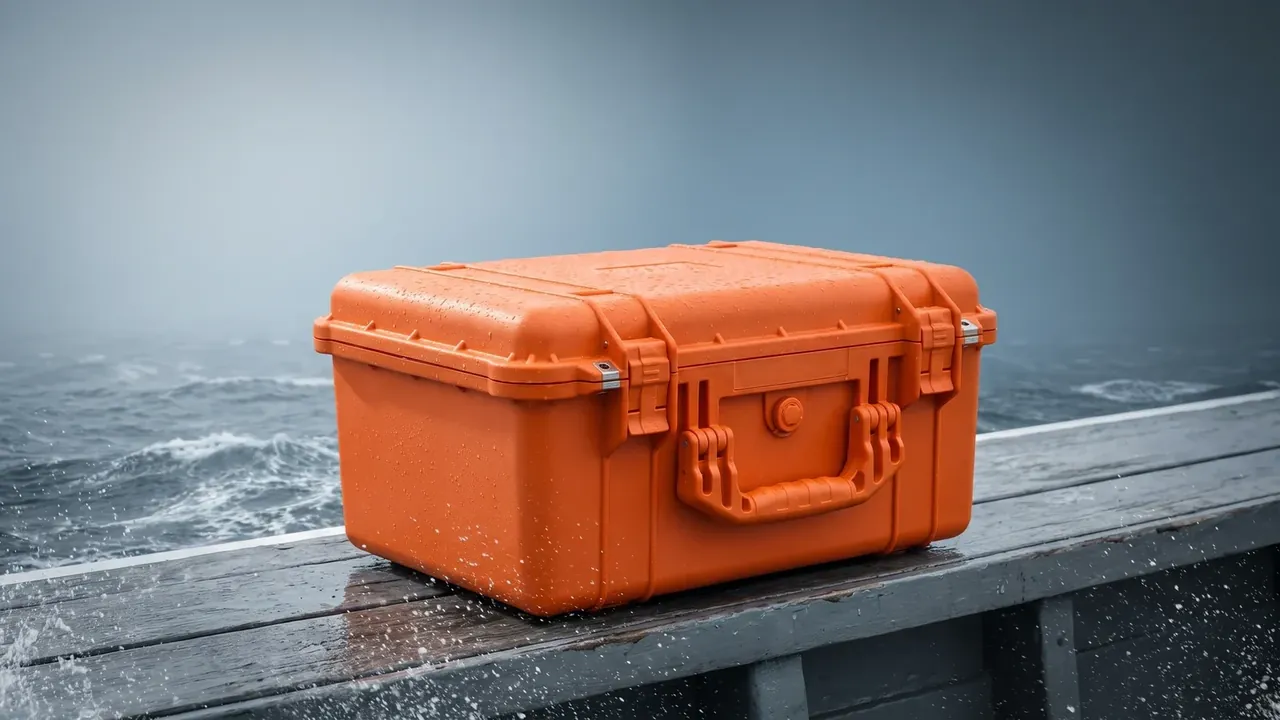
Ribs keep that wall thin: 8 mm high on a 120 mm pitch, root radius 1.5 mm. Widen the pitch past 150 mm and the panel bulges at 60 degrees Celsius; pack them closer and the melt stalls, tearing white on ejection. Lid ribs also carry the unit above, spreading pressure onto a few crowns.
3. Rated Load and Stacking Layers
Rated load is not peak load. A Shipping Case rated 25 kg means two cycles a day for two years without permanent set; the peak may be double but survives a handful of trips.
Dynamic layers cover truck and forklift at 1.5 g, static layers cover the warehouse. Vibration doubles the bottom load, so three dynamic against five static travel as a pair.
| Rated load | Dynamic | Static | Bottom load |
|---|---|---|---|
| 12 kg | 5 | 7 | 84 kg |
| 25 kg | 3 | 5 | 95 kg |
| 40 kg | 2 | 4 | 96 kg |
4. Writing a Seal Rating That Can Be Tested
Never accept watertight. Write what repeats: IPX5, 6.3 mm nozzle, 12.5 litres per minute, 3 m standoff, 3 minutes, absorbent paper inside, no watermark afterwards.
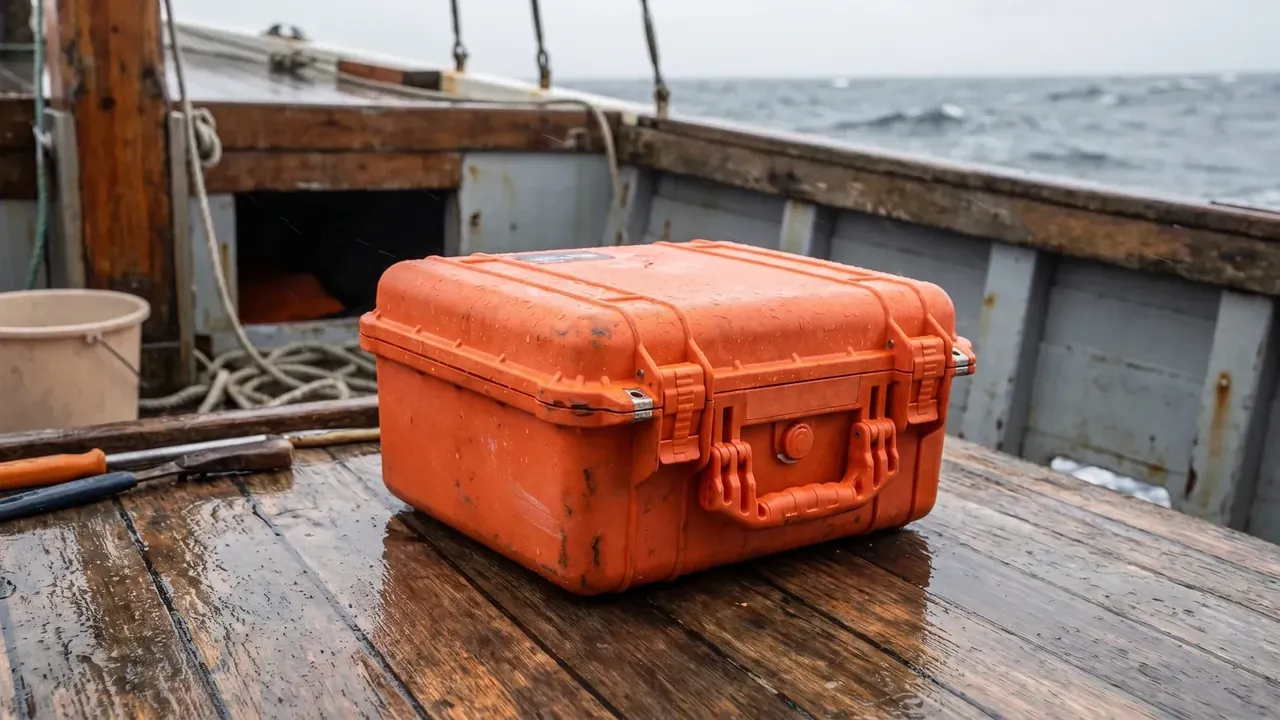
Sealing is gasket section plus latch pressure: an 8 by 6 mm EPDM foam gasket compresses 30 percent at closure, about 1.8 mm. Under 20 percent it leaks, over 40 percent the latches stiffen shut.
5. Pallet, Fork Pockets, Seal Tags and Label Pads
Two numbers define the fork interface: 90 mm pocket height, 200 mm depth through both sides, 400 mm between centres; under 80 mm the tines will not enter. Feet at 60 mm keep the base out of water.
Seal and label features belong in the tool. An 8 mm hole through each latch pair defeats opening once a one-time seal is fitted; a 120 by 80 mm pad recessed 0.8 mm outlasts a flat label.
| Interface | Value | Note |
|---|---|---|
| Fork pockets | 90 x 200 mm | 400 mm centres, both sides |
| Foot height | 60 mm | Under 40 mm invites water |
| Seal hole | 8 mm diameter | One per latch pair |
| Label pad | 120 x 80 mm | 0.8 mm deep |
Conclusion
A Shipping Case specification is a chain of numbers: cavity for payload, envelope for the pallet, wall and ribs for strength, layers for truck height, seal grade for the route. One drawing with tolerances keeps a Shipping Case in service for years instead of retiring it over 3 mm of drift.
This article discusses only the container (case body) side of specifications and design intent, and does not cover any handling, loading or use of the contents.
Related Reading
- Shipping Case selection: load, stacking and forklift fit
- Warehouse storage and pallet loading for cases
- How waterproof hard cases state ingress protection
- Storing Shipping Case units without damage
Related Products
- 8 Series — Gun Cases; Military Equipment Cases; Camera Equipment Cases; Drone Cases; Watch Cases; Knife Cases; First Aid Cases; Electronics Equipment Cases
- WL8-2812 PP Gun Case — model WL8-2812
- All protective cases and toolboxes: 7 series, 158 models