

Quick answer: Case shipping marks run 7 fields by sea, 9 by air and 12 on a courier label, the extra ones covering routing, chargeable weight and signature.
Table of contents
- Why three field sets exist
- Sea freight main marks in 7 fields
- Air waybill number and piece count
- Courier label with 12 fields
- FAQ
1. Why three field sets exist
One run of 60 cases at 620×440×280 mm carries 7 fields if it sails, 9 if it flies and 12 by courier. The case does not change; the reader does, whether that is a tally clerk, a shed handler or a sorting machine.
Case shipping marks are sized by the sorting nodes behind them. A sea consignment is read twice, at berth and in the yard. A courier parcel passes 3 to 5 hubs, so the label must carry routing and chargeable weight, or the scanner has nothing to hand on.
| Channel | Fields | Core items | Reader |
|---|---|---|---|
| Sea | 7 | Consignee, port, case number, gross weight | Tally clerk |
| Air | 9 | Master AWB, house AWB, pieces, volumetric weight | Shed handler |
| Courier | 12 | Tracking, routing code, phone, chargeable weight | Sorter |
The field count mirrors how often a person intervenes. Two interventions fit on 7 fields; five need 12. Send a case by courier with the sea template and the first hub stalls, because the routing box is empty.
2. Sea freight main marks in 7 fields
The main mark measures 100×80 mm and goes on two adjacent sides, 60 mm below the lid line and 40 mm from the vertical edge. Both sides get a copy, since a forklift can lift from either side and stretch wrap always hides one.
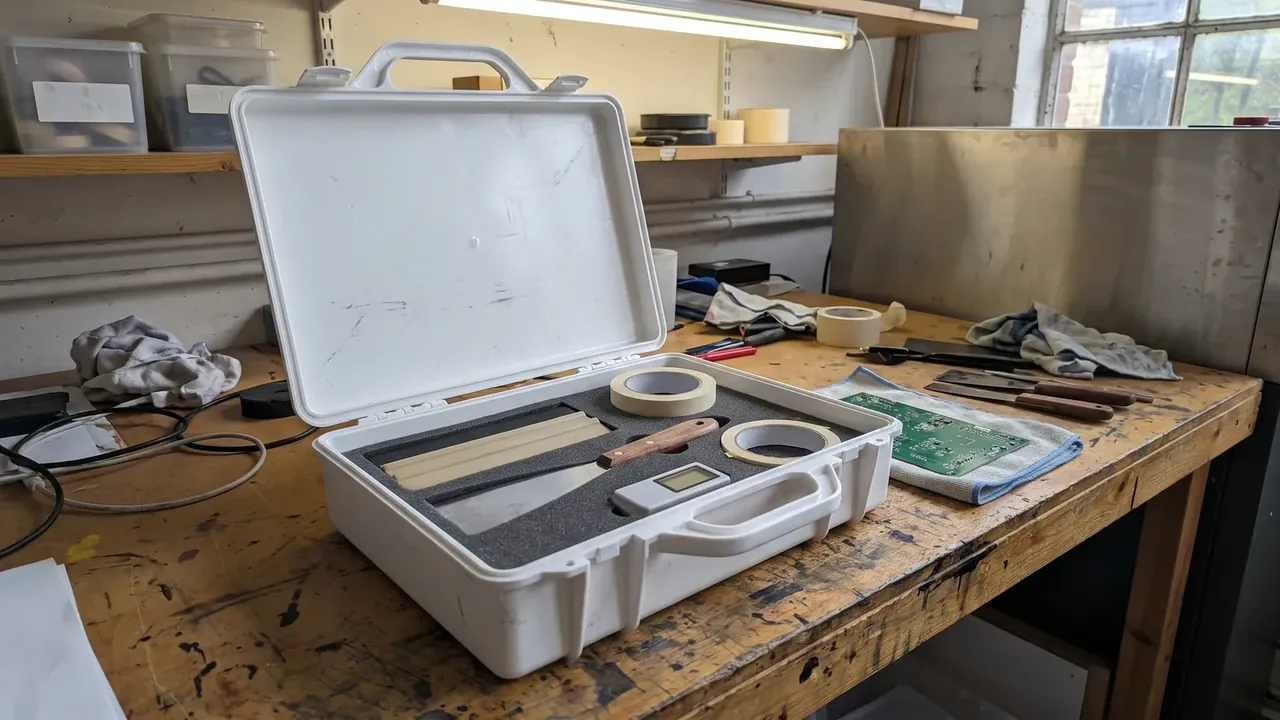
The 7 fields sit in four lines with 4 mm leading: a 4-letter consignee code, a 5-character port code, the case number over the total as 12/60, then three cells for gross weight, outer size and origin.
| Field | Characters | Cap height | Example |
|---|---|---|---|
| Consignee code | 4 | 12 mm | KRSA |
| Port | 5 | 12 mm | SGSIN |
| Case number | 6–8 | 10 mm | 12/60 |
| Gross weight | 6 | 6 mm | 11.8 KG |
| Outer size | 12 | 6 mm | 620×440×280 |
The smallest cap height is 6 mm, which keeps the first two lines readable at 1.5 m. Drop below it and a clerk bends over the label in the rain, misreads one letter, and the lot is pulled for a recount.
Side marks sit on one face at 80×50 mm with description and batch only. The main mark answers who and which case; the side mark answers what and which batch, so a batch can be traced without cutting the wrap.
Ink has to be waterproof: 3 days of yard rain is normal, a water-based ink feathers in 2 h, and an oil resin ink stays legible after 24 h immersed at 25 ℃, holding 50 double strokes under 500 g.
3. Air waybill number and piece count
The master air waybill is 11 digits: 3 for the carrier, 7 of serial, 1 check digit. One master per consignment, house bills beneath it, but the case carries the master and the piece count only, because the shed builds the pallet from the master.
Pieces are written as a fraction, 3/24, matching the build sheet. One piece out and the pallet is reweighed, which takes 40 min for 800 kg and usually costs a flight.
Volumetric weight is unique to air: 620×440×280 mm divides out to 12.7 kg against 9.4 kg actual, so billing follows 12.7 kg. Leave it off the case and the shed bills actual weight, then the destination station collects the gap.
Dangerous goods marks stay separate. Lithium cells take a 4-digit UN number and a diamond of 100 mm sides, laid out beside the 7 or 9 fields rather than inside them. A mark error can be hand-corrected; a missing diamond sends the consignment back.
Air labels use 80 g coated stock with laminate, trimmed to 100×70 mm. The belly hold leaves about 15 mm at the door, and a 100×80 mm label creases going in, which is enough to kill the barcode.
4. Courier label with 12 fields
A courier label is 100×150 mm thermal paper in 5 zones: tracking barcode on top, name and phone in the middle, routing and sort codes lower left, chargeable weight and service lower right, reference and signature strip at the foot.
Print quality is graded to ISO/IEC 15416, and grade B at 3.0 is the floor for an automated sorter. A grade C symbol on a line running 600 parcels an hour misses on first read about 8% of the time, which costs 48 parcels an hour.
Thermal paper fades from heat and moisture. Past 6 months in store, or a spell above 50 ℃ in transit, the symbol whitens in patches. Scratch it with a fingernail before dispatch and change the roll when ink lifts.
Water matters less here than crush. Stack 5 parcels and the label lands on a corner; a crease across the symbol drops the read rate to 70%. Centre it on the largest flat face, clear of latches, and the problem mostly goes away.
Conclusion
Three templates, three checks in order: confirm the channel, confirm the field count and sheet size, then confirm barcode grade and that hazard marks sit outside the block. The third step gets skipped because it is not on the field list, yet it decides whether the goods move at all.
Keep the checks on a sheet that travels with the goods: sea stock at 100×80 mm with 80×50 mm side marks, air stock at 100×70 mm with a corner reserved for the UN diamond, and a 40×25 mm clear zone at the centre of every courier label. Change channel, change template, never change content.
| Element | Sea | Air | Courier |
|---|---|---|---|
| Fields | 7 | 9 | 12 |
| Main size | 100×80 mm | 100×70 mm | 100×150 mm |
| Core fields | Port, case number | Master AWB, pieces | Tracking, routing |
| Cap height | 6 mm | 6 mm | 5 mm |
| Barcode rule | None | Master scannable | Grade B or better |
| Separate mark | None | UN diamond | None |
This article discusses container-side specifications and design implications only, and does not cover any handling, loading or use of the contents.
Related Reading
- English labels for protective cases
- Marking and acceptance rules for transit cases
- Export packing workflow and batch control
Related Products
- 8 Series — Gun Cases; Military Equipment Cases; Camera Equipment Cases; Drone Cases; Watch Cases; Knife Cases; First Aid Cases; Electronics Equipment Cases
- WL8-2812 PP Gun Case — model WL8-2812
- All protective cases and toolboxes: 7 series, 158 models