

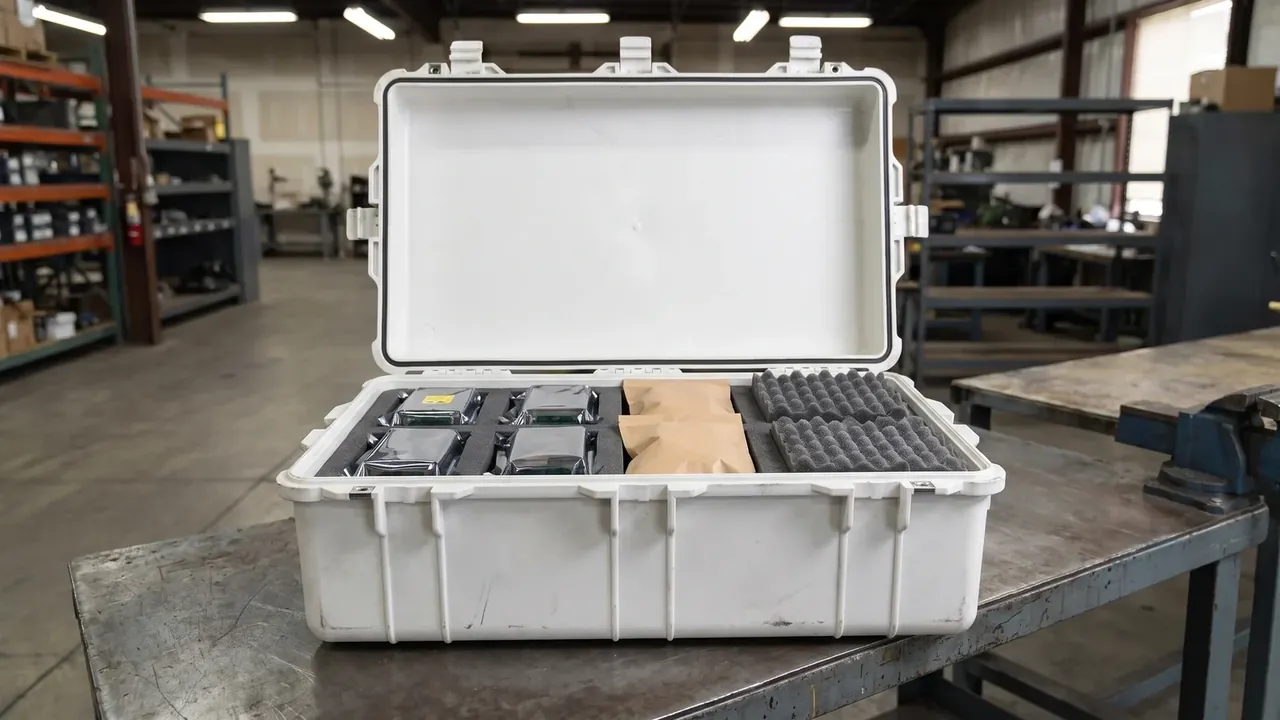
Quick answer: Pull 125 samples from a 3,000-piece Small Plastic Case lot at general inspection level II, apply six visual readings and four hard stops, and judge major defects at AQL 1.5. When the count crosses the limit, reject the lot.
Table of contents
- Four Hard Stops for a Small Plastic Case
- Six Visual Readings That Decide a Batch
- Sampling and the Three AQL Layers
- Cavity Consistency and Nonconformance Handling
- FAQ
1. Four Hard Stops for a Small Plastic Case
Most disputes do not come from missing standards. They come from judgement lines written as adjectives, so two inspectors look at one surface and reach different verdicts.
A Small Plastic Case in this size class leaves the moulding shop at about USD 2.3. One rejected lot costs over USD 1,100 in return freight and re-inspection, so a loose hard stop trades the delivery window for sorting time.
| Hard stop | Reading | Action |
|---|---|---|
| Colour difference | ΔE above 1.5, D65 | Reject the lot |
| Flash | Above 0.10 mm per edge | Trim every piece |
| Sink mark | Depth above 0.15 mm | Concession or scrap |
| Latch retention | Below 160 N | Rework the lot |
Colour sits at the top because it blocks no assembly step and is easy to wave through. Yet it is what a buyer sees first, and half a shade between shipments is enough for a return. Past a hard stop, only three routes remain: reject, screen one hundred percent, or accept by concession.
2. Six Visual Readings That Decide a Batch
The six readings follow visibility: sink marks, flash, colour, weld lines, flow marks and scratches. The first four are judged beside the machine; the last two arrive with handling.
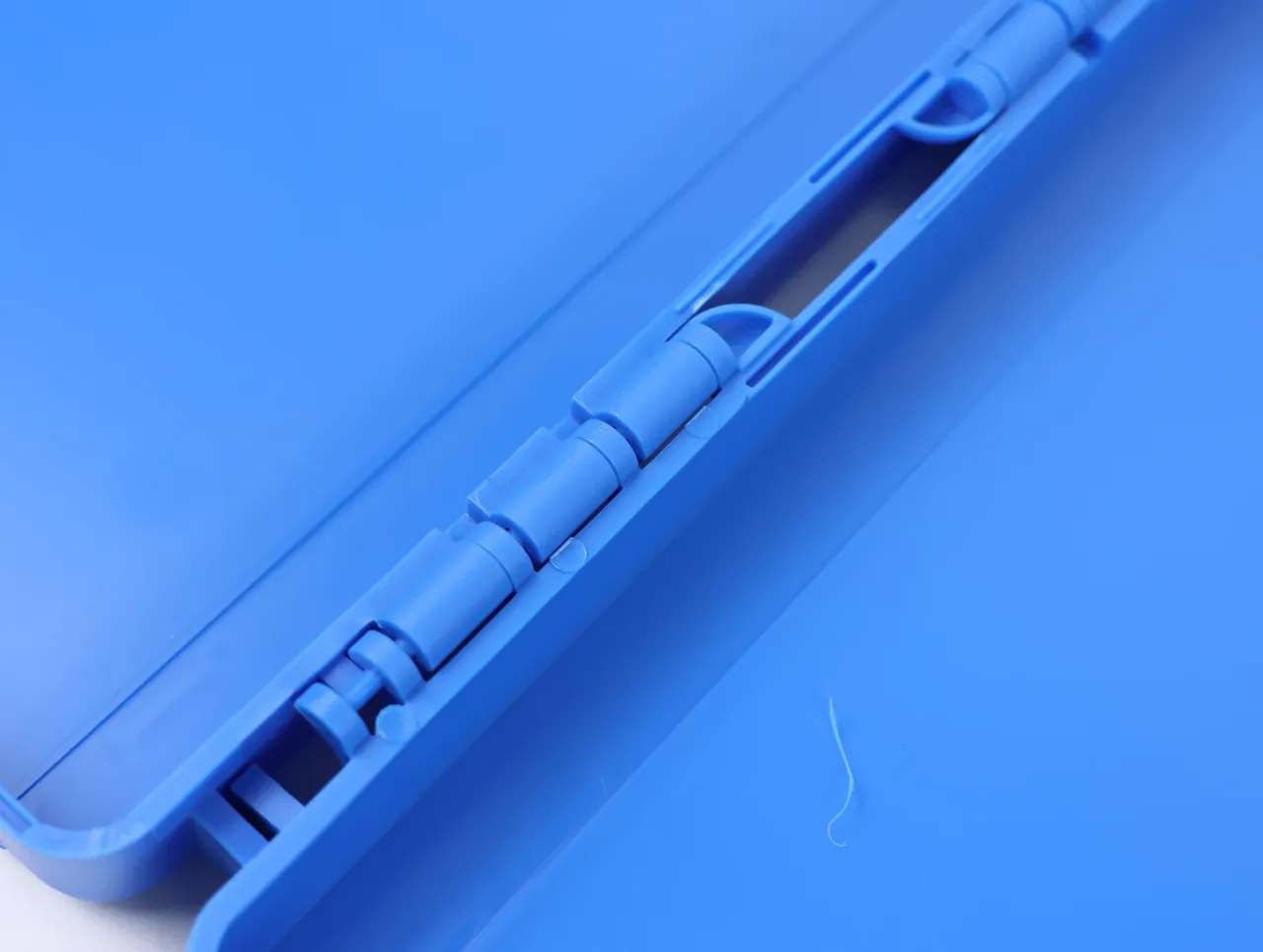
Sink marks live on flat faces. The lid is a plate with a stiffening rib, and the rib root is where the surface pulls in. Lay a bridge plate across the depression and read the deepest point with a dial gauge; 0.15 mm passes. Beyond that, a 0.2 mm gap opens between lid face and gasket.
Flash lives on the parting line. A 0.10 mm feeler gauge that enters the gap marks a fail, because the leftover film pushes the latch tongue sideways.
| Item | Method and limit | Sampling |
|---|---|---|
| Sink mark | Bridge plate, under 0.15 mm | 5 per carton |
| Flash | Feeler gauge 0.10 mm, no-go | 3 per cavity |
| Colour | D65 meter, ΔE under 1.5 | 12 first article |
| Weld line | 300 mm at 800 lx, under 6 mm | 5 per carton |
| Flow mark | No silver streak, no burn | 5 per carton |
| Scratch | Under 0.08 mm wide, one per face | Whole carton |
Only three rows depend on instruments. The sheet must state viewing distance and illuminance, or one weld line passes at 500 lx for the supervisor and fails at 1,000 lx for the buyer.
3. Sampling and the Three AQL Layers
Full inspection of a 3,000-piece Small Plastic Case order is unrealistic, and casual spot checks miss the drift that matters. The workable method is a sample size code from the lot range plus three defect layers.
- Lot band: 1,201 to 3,200 pieces gives code letter K, which at general inspection level II means 125 samples.
- Critical defects: AQL 0, so one cracked body or broken latch fails the whole lot.
- Major defects: AQL 1.5, acceptance 5 and rejection 6.
- Minor defects: AQL 4.0, acceptance 10 and rejection 11; light flow marks fall here.
- Spread: 3,000 pieces pack into 75 cartons, and sampling must touch 12 cartons, no more than 15 pieces each.
- Order: critical, then major, then minor; once critical fails, counting stops.
Put those six lines on the sheet and the phrase we usually accept it leaves the dock. The commonest error is merging layers: a 125-piece sample might hold 4 major and 9 minor defects, judged separately both pass, merged into 13 they cross the rejection number.
4. Cavity Consistency and Nonconformance Handling
An eight-cavity tool on a 32-second cycle makes 3,000 pieces in about 375 shots, just over three hours. More cavities mean more differences to read separately.
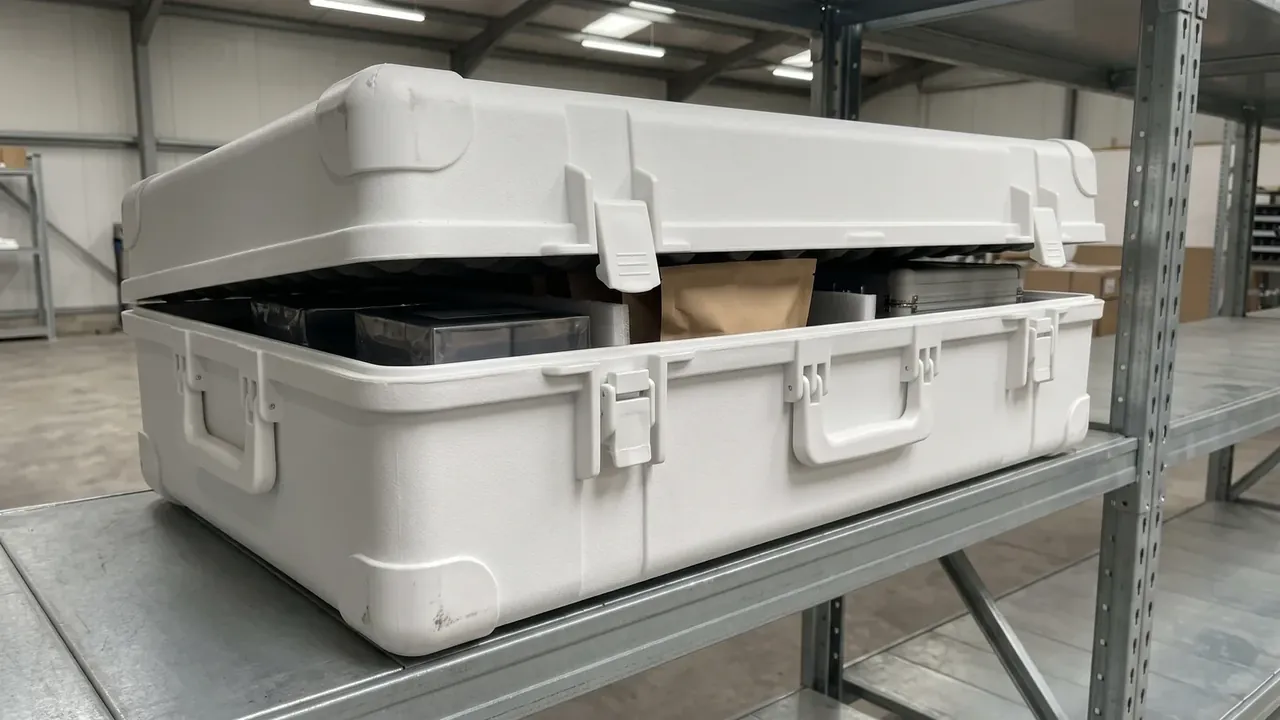
Cavity temperatures are never equal. Those near the sprue run 2 to 3 °C hotter, cool half a second later, sink a little less and read a little darker. Mark every cavity, pull five first-article pieces from each, and hold cavity-to-cavity colour to ΔE 0.8. Fail that and the fault is in the water circuit, not the process settings.
Lid flatness is separate: no more than 0.3 mm across 300 mm, or the latches need force to close.
Handling has four levels and the order cannot be shuffled. Quarantine within two hours, keeping parts from the same shot and cavity under a red tag. Rework covers trimming only, never sanding the lid rim, because sanding changes the flatness of the sealing face. Concession needs engineering and purchasing signatures. A return needs records and photographs, with an 8D report inside 48 hours.
Conclusion
The hard part of inspecting a Small Plastic Case is not the instrument but turning adjectives into readings. Four hard stops hold the floor, six readings hold the appearance, 125 samples expose a drifting lot, and eight cavities decide the return rate.
This article discusses only the container (case body) side of specifications and design intent, and does not cover any handling, loading or use of the contents.
Related Reading
- Storage and upkeep criteria for multi-cavity moulds
- How to write a moulding work instruction
- Inspection items for small-calibre ammunition boxes
Related Products
- 8 Series — Gun Cases; Military Equipment Cases; Camera Equipment Cases; Drone Cases; Watch Cases; Knife Cases; First Aid Cases; Electronics Equipment Cases
- WL8-2812 PP Gun Case — model WL8-2812
- All protective cases and toolboxes: 7 series, 158 models