

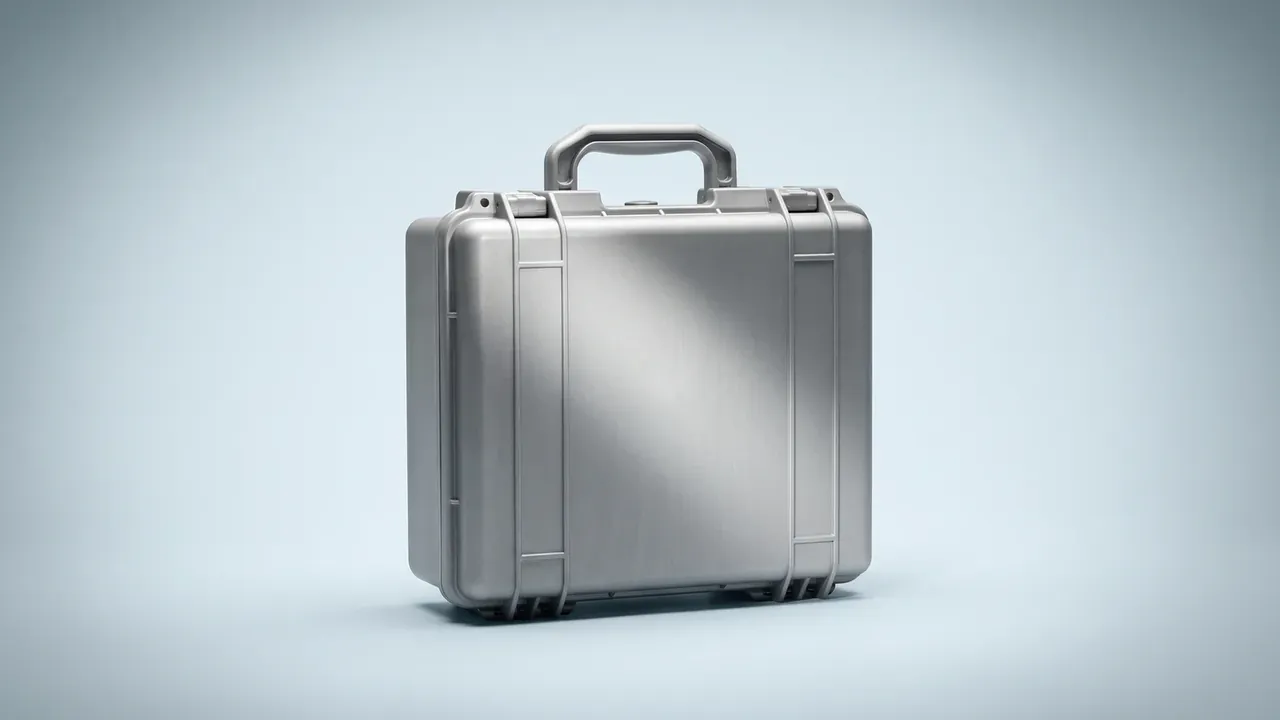
Quick answer: Choose a small plastic parts organizer box by five things you can measure at goods-in: cell clearance, divider gap, divider pull force, latch force and the cold drop result. Cavity count is an output, not a starting point. Run those five against a cold-store duty and most boxes that crack or leak parts drop away.
Table of contents
- Criteria for a small plastic parts organizer box come before data
- Cavity count has to be derived from cell volume
- Three checks for a removable divider
- Static, cold and the material's real behaviour
- Lid type and stacking stability
- FAQ
1. Criteria for a small plastic parts organizer box come before data
A catalogue gives dimensions, cavities and a material code, none of which answers the shop-floor question. At minus eighteen, a gloved operator fishing out one M6 nut is stopped by three things: whether three fingers fit, whether dividers stay put, whether the latch pops.
| Check | Method | Pass line |
|---|---|---|
| Cell clearance | Caliper inside | 45 by 45 by 35 mm or more |
| Divider gap | Feeler gauge on the seam | 0.8 mm or less |
| Divider pull | Spring scale | 8 to 15 N |
| Latch force | Spring scale on the tab | 25 to 35 N |
| Cold drop | 4 h at -18 °C, 1 kg from 1 m | No crack |
Cold drop and pull force get skipped most, and are hardest to fix later: a cracked box is a replacement, a loose divider a reworked batch.
2. Cavity count has to be derived from cell volume
Work back from cell volume. An M6 by 20 bolt occupies about 3 cm³, so thirty plus voids come to roughly 90 cm³; at seventy percent fill the cell needs 130 cm³, which lands on 45 by 45 by 65 mm.
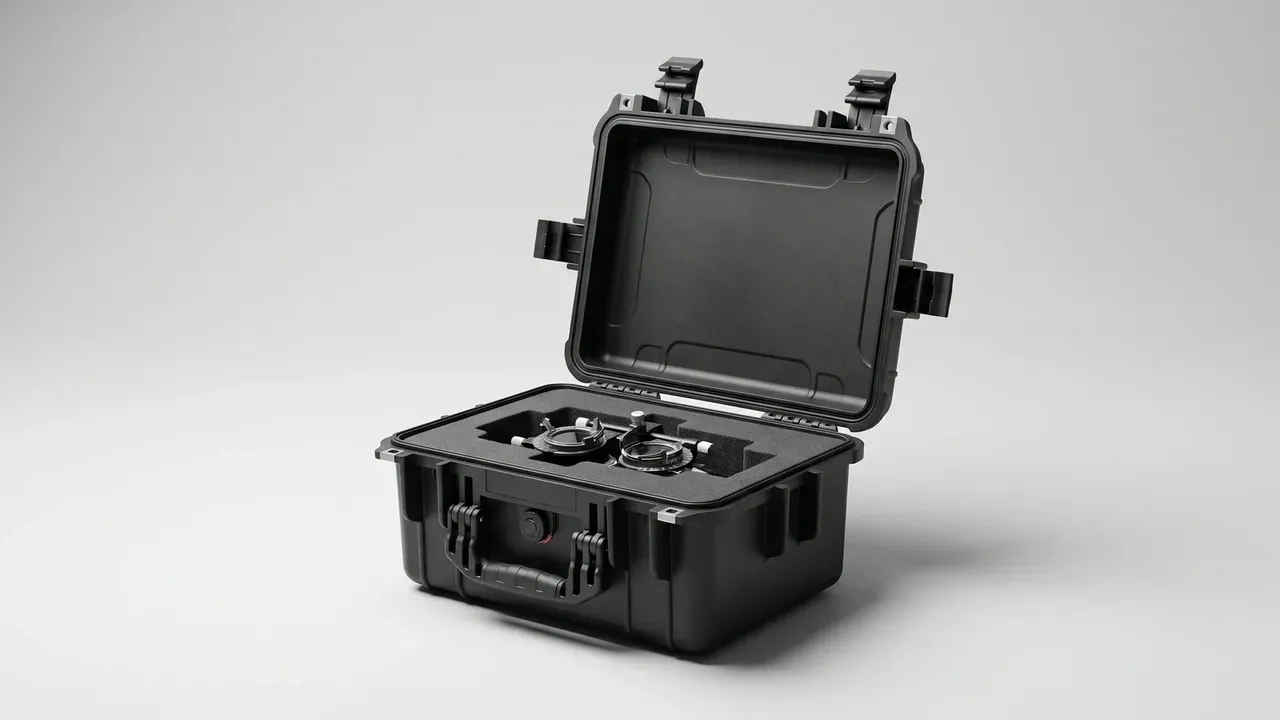
Three widths cover most kits: 45 mm for bolts and nuts, 60 mm for washers and clamps, 80 mm for bearings and fittings, mixed 2 to 5 to 3 because washers vary most and come in the smallest quantity per type.
| Cells | Cell size | Fits | Misuse |
|---|---|---|---|
| 6 | 80 by 80 by 60 mm | Bearings, fittings, seals | Bolts poured in |
| 12 | 60 by 45 by 55 mm | Washers, clamps, pins | Two sizes in one cell |
| 24 | 45 by 45 by 35 mm | Bolts, nuts, washers | No label room |
As cavity count rises the cell face shrinks. On a 24-cavity box that face is 45 mm wide, two lines of 8 mm characters will not fit, and operators remember position instead. Past 70 mm deep, a gloved finger cannot reach the bottom, so deep cells suit only long items such as a 100 mm pin.
3. Three checks for a removable divider
A removable divider earns its keep at changeover and fails there too. Below 8 N it climbs out; above 15 N nobody reconfigures it.
First check is pull: hook a spring scale on the divider top and pull vertically. 8 to 15 N passes, and no more than 3 N between sides shows symmetrical detents. Second is gap: with the divider seated, run a 0.8 mm feeler gauge along the seam; if it enters, powder and small washers travel through.
Third is shake: fill to seventy percent, tilt fifteen times each way, then open the lid. One shake exposes loose dividers, a warped base and a lid with no compression. Divider and body should share a material, since 0.4 points of shrinkage difference goes slack within three months. A 1.5 mm locating groove at the base is the visible divide: load travels through the groove, not friction.
4. Static, cold and the material's real behaviour
Half the cold-store duty is low temperature, half the swing between store and picking. Frozen four hours at minus eighteen and struck by 1 kg from 1 m, three homopolymer polypropylene boxes in ten cracked at a corner; copolymer only whitened.
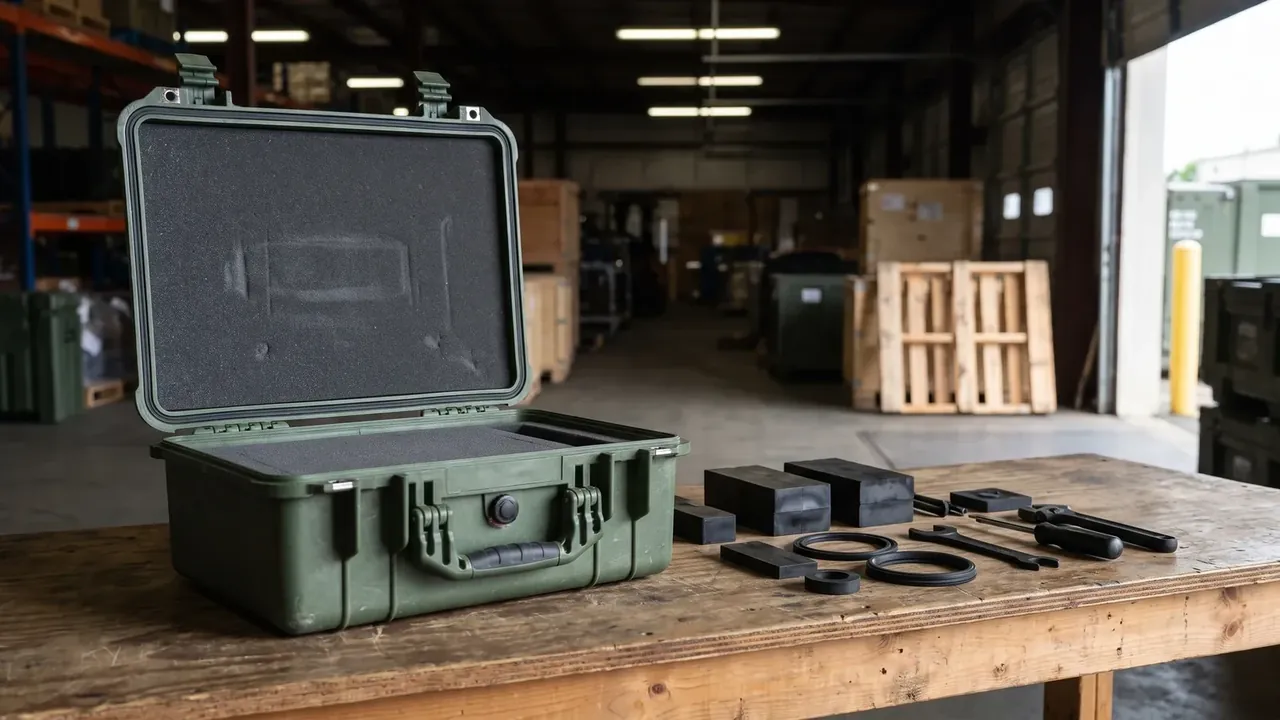
Static is a resistance question, not a colour question. Carbon black used only as pigment leaves resistance above 10 to the fourteenth ohm; conductive carbon or an antistatic additive lands between 10 to the sixth and 10 to the ninth. Meter three spots at goods-in.
Temperature swing brings condensation: from minus eighteen to twenty-two degrees, a water film forms within thirty minutes and paper labels lift within two hours, so specify polyester labels. Cold also drops notched impact to about forty percent, which is why latch force belongs in the 25 to 35 N band.
5. Lid type and stacking stability
Three lid types map onto picking frequency. A latch lid at 25 to 35 N seals well for spares opened monthly. A hinged lid swings in two seconds but needs a crack check after five thousand cycles. A sliding lid saves height but traps dust.
Stacking is rated at three tiers: 15 kg total, no slip on a 10 degree incline, at least 3 mm of engagement between lid recess and feet. At seventy percent fill, a 50 N push moves the box under 5 mm. Shelf pitch is fixed, so mixing 100 mm and 120 mm heights wastes about thirty percent of the shelf.
Conclusion
Selecting a small plastic parts organizer box means translating bench actions into measurable criteria: clearance for a gloved hand, seam gap for cross-cell travel, pull and latch force for usability, drop and resistance for cold survival. Cavity count, colour and material code are outcomes, not inputs. A well-chosen small plastic parts organizer box removes hundreds of searches a day.
This article discusses only the container (case body) side of specifications and design intent, and does not cover any handling, loading or use of the contents.
Related Reading
- How automotive plastic parts move through a plant
- Kitting compressor spares in a service bay
- Storing farm machinery spares in a field depot
Related Products
- 8 Series — Gun Cases; Military Equipment Cases; Camera Equipment Cases; Drone Cases; Watch Cases; Knife Cases; First Aid Cases; Electronics Equipment Cases
- WL8-2812 PP Gun Case — model WL8-2812
- All protective cases and toolboxes: 7 series, 158 models