

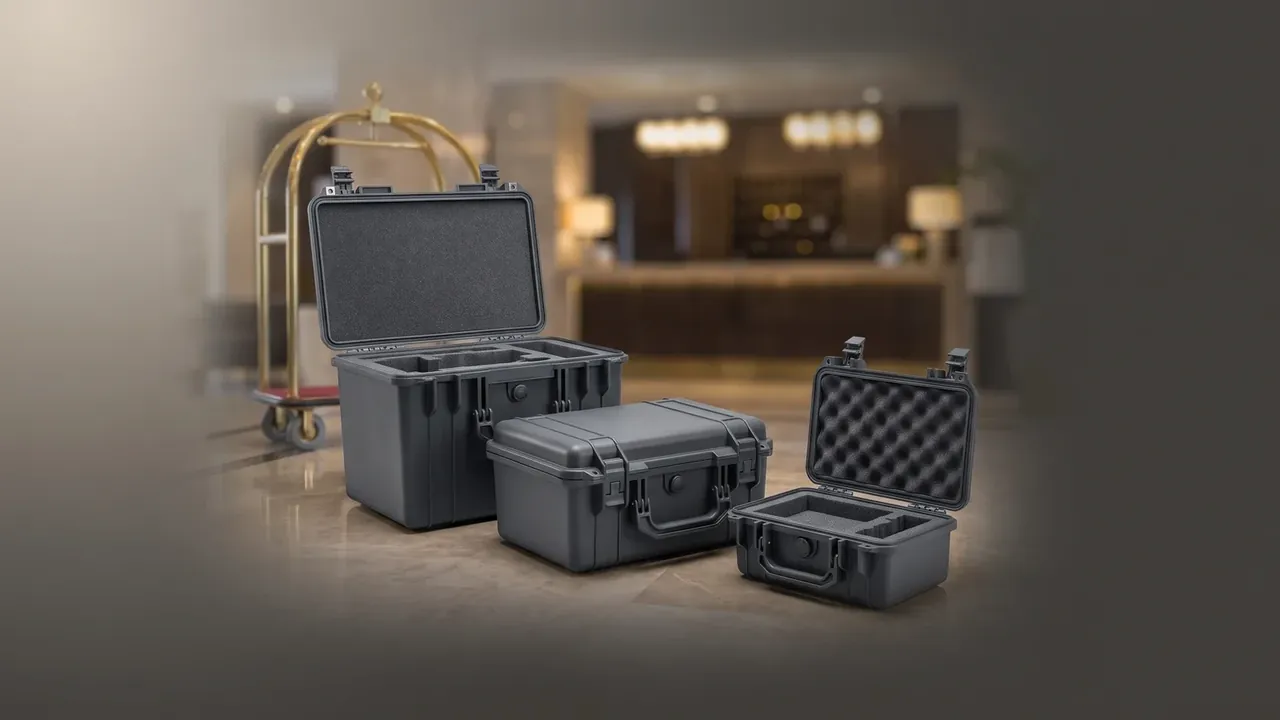
Quick answer: Most of the gap between two sniper rifle case quotes is not the plastic. It sits in tooling ownership, latch and valve brands, how the foam is cut, and how tooling cost is spread. Split both quotes into six lines and thirty percent usually collapses into one or two of them.
Table of contents
- Breaking the Sniper Rifle Case Quote into Six Lines
- MOQ and Tooling Title: Who Pays, Who Owns
- Lead Time and Payment Terms: Writing Down the Unknowns
- Quote Traps: Four Lines That Slip Through
- FAQ
1. Breaking the Sniper Rifle Case Quote into Six Lines
Two quotes land: 1,180 against 860, a gap near thirty percent. Split them and the shell explains forty of it. The rest hides in hardware, foam and amortisation.
| Line | What suppliers write | What to ask | Spread per unit |
|---|---|---|---|
| Shell | Per unit, abbreviated material | Grade, shot weight, wall | 20 to 60 |
| Hardware | Bundled as imported | Latch and valve part numbers | 30 to 90 |
| Foam | Per set | Die-cut, thermoformed, routed | 25 to 70 |
| Tooling | One line, no owner | Title and amortisation | Sets first price |
| Packing | Pallet included, vague | Dividers and stretch wrap | 8 to 15 |
| Terms | Tax included only | Term length, interest | 10 to 30 |
Once the six lines are level, the gap has an address. On a sniper rifle case the shell is rarely the driver; a different valve brand moves the price by forty with no visible change.
2. MOQ and Tooling Title: Who Pays, Who Owns
Tooling is where this category gets vague. A rotational mould set costs CNY 62,000. Over 500 units that is CNY 124 each, over 5,000 it is CNY 12.40, same mould, same case, and the first-order price moves by more than a hundred.
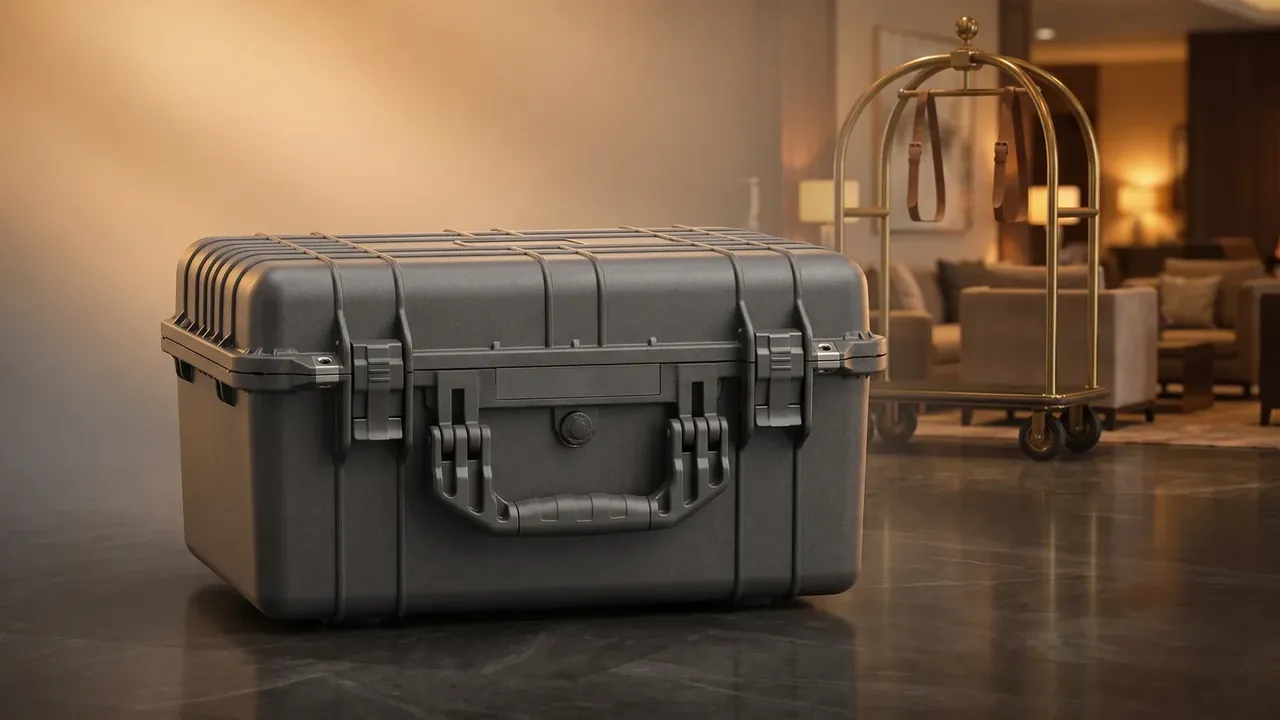
Who pays depends on volume. Under 2,000 units a year, let the supplier carry the tooling and amortise it, since you do not want cash in a mould you never use twice. Above 5,000, pay for it and hold the title, because the mould travels with you when you change supplier. Four sentences decide whether that money was well spent: title, storage, liability, and how long after a production stop you may collect it. Leave them out and a supplier can change entity or move premises without your consent.
3. Lead Time and Payment Terms: Writing Down the Unknowns
Read the schedule as a rate, not a promise. Rotational moulding runs a fifty-five minute cycle, so one mould yields about twenty units a day; 500 units need twenty-five days of moulding alone, and forty days delivered is realistic. Anyone quoting twenty-five has a spare mould or plans to subcontract.
- Moulding: derive from cavitation and cycle, never a round number.
- Hardware: imported latches and valves add four weeks, and this line is often dropped.
- Foam: seven days for a new die, three days less for routed.
Payment terms are a separate trade. Ninety days is common, but the quote already carries the financing cost, and the same supplier will usually give up two or three points for cash on delivery. The question is not how long the term runs, but which of the two is worth more at your volume.
4. Quote Traps: Four Lines That Slip Through
Traps live in the unit of measure, not in the number.

Tooling charged twice comes first: a mould line plus amortisation folded into the unit price. Foam quoted per set with no thickness is second, and 8 mm against 15 mm is close to half the cost. Hardware sold as imported without a part number is third, since a domestic equivalent fits the same pocket. Freight on volumetric weight is fourth, where a light empty case bills above its actual mass.
| Trap | How it reads | Clause that closes it |
|---|---|---|
| Double tooling | Mould fee plus amortisation | One-time, title to buyer |
| Foam by the set | No thickness or density | Both stated in writing |
| Unnamed hardware | Imported, no number | Part number and brand |
| Volumetric freight | Rate per volume only | Basis and ceiling fixed |
One cost hides behind all four: rework. A latch fitted in the wrong position means stripping the case, about twenty minutes each plus broken clips, and thirty or more per unit on top. Five percent rework in a batch cancels every point you negotiated.
Conclusion
Buying a sniper rifle case is not price negotiation, it is levelling six lines: shell, hardware, foam, tooling, packing and terms. Once the bases match, the gap lands somewhere specific and the conversation has a target. The real savings sit in tooling title and rework rate rather than unit price, and a sniper rifle case bought without those two clauses gets bought twice.
This article discusses only the container (case body) side of specifications and design intent, and does not cover any handling, loading or use of the contents.
Related Reading
- Sniper rifle case use in duty and transport
- Sniper rifle case specifications: cavity, supports and damping
- Supplier scorecard: criteria and weighting
Related Products
- 8 Series — Gun Cases; Military Equipment Cases; Camera Equipment Cases; Drone Cases; Watch Cases; Knife Cases; First Aid Cases; Electronics Equipment Cases
- WL8-2812 PP Gun Case — model WL8-2812
- All protective cases and toolboxes: 7 series, 158 models