

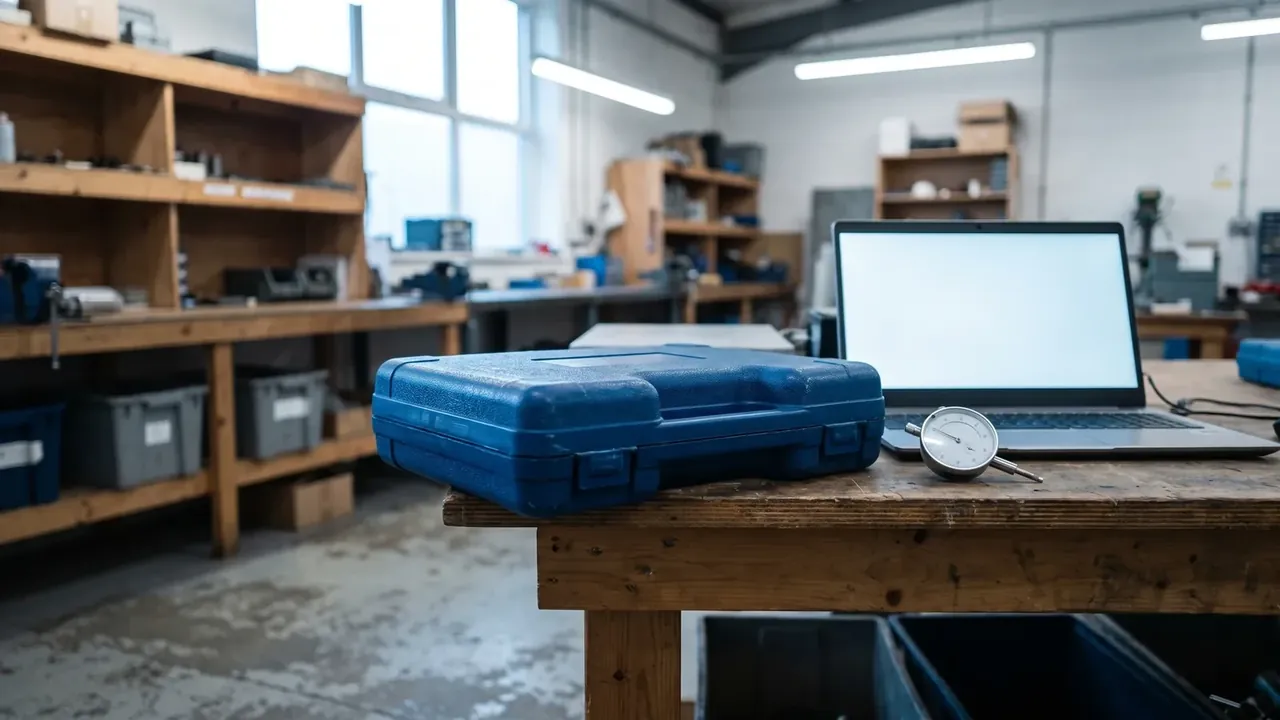
Quick answer: A solar PV testing equipment case splits host, probes and records into three zones, with a 180 × 110 mm window, a 25 mm hood and screen rise under 6 K.
Table of contents
- Instrument Zones Inside a Solar PV Testing Equipment Case
- Display Window and Sunshade Overhang
- Probe Ports and Cable Slack
- Screen Temperature Under Direct Sun
- Resetting Between String Tests
- FAQ
1. Instrument Zones Inside a Solar PV Testing Equipment Case
Module surfaces reach sixty degrees at noon, and the screen inside the case suffers more than the module does. A solar PV testing equipment case holds the host, the probe cables and the paperwork at once, and the three tolerate heat differently: the host fears screen temperature, the cables fear folding, paper fears damp.
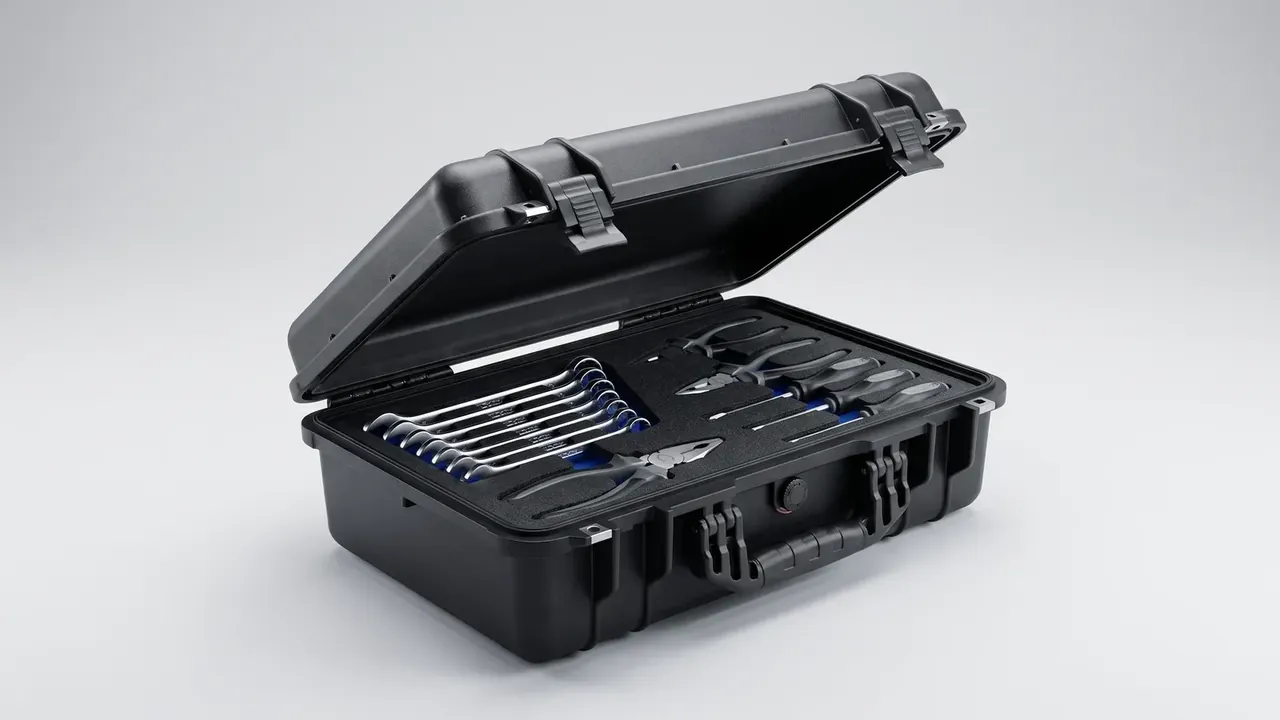
The zones follow the order of use. The host sits at the back centre, screen facing the lid; probes and cables take one long side; records go in front. Dividers in a solar PV testing equipment case stand 12 mm high, below the host, so fingers can grip the body.
In the 460 × 350 × 190 mm format the cavity runs about 420 × 310 × 150 mm, leaving a host zone near 240 mm wide after the 20 mm EVA liner. The wall is 4.0 mm, the empty case 3.6 kg, and cavities are cut 1.5 mm larger than the instrument.
2. Display Window and Sunshade Overhang
The window of a solar PV testing equipment case is 180 × 110 mm, sized for a 7 inch screen with an 8 mm border to hide the bezel. Three millimetres of air sit between window and screen, enough to slow heat transfer and keep the pane off the glass. The pane is 3 mm PMMA at over 90% transmission.
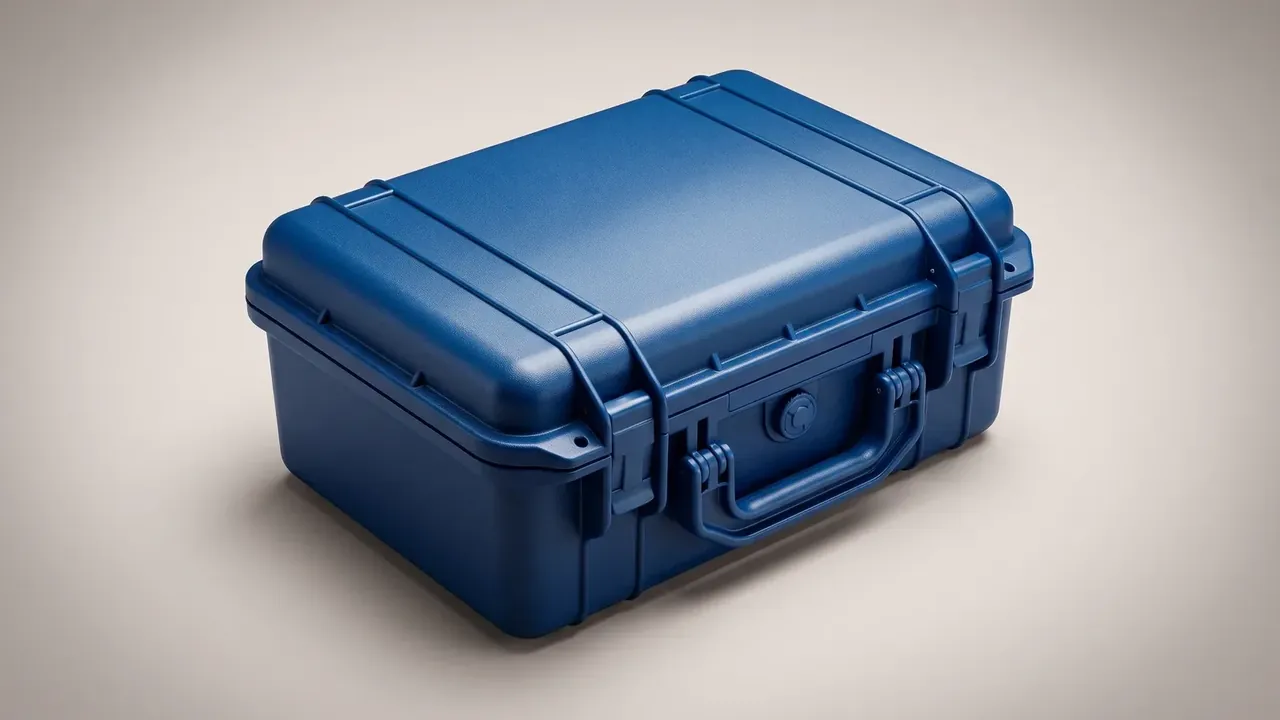
The sunshade of a solar PV testing equipment case projects 25 mm from the top edge and 15 mm at the sides. Near the zenith that overhang shades the whole pane; below 30° of solar altitude the shadow shortens and direct light reaches the screen. A longer hood would cover the keys and hit the ground first.
| Window class | Hood overhang | Duty |
|---|---|---|
| Flat | None | Overcast, indoor |
| Short | 12 mm | Morning, late afternoon |
| Long | 25 mm | Continuous noon testing |
The pane beds on a 2 mm silicone gasket at 30% compression: loose, rain seeps in at the lower edge; tight, hairline cracks start at the border. An anti-glare finish scatters noon light instead of returning a white sheet.
3. Probe Ports and Cable Slack
Four ports of φ18 mm sit along the lower edge of a solar PV testing equipment case, taking an M18 gland that clamps 5 to 10 mm for the irradiance and backsheet probes. The panel hole is 18 to 18.3 mm, and the gland seals on its O-ring to the same IP65 class as the shell.
The four ports are irradiance, backsheet temperature, string voltage tapping and one spare. The spare is closed with a blanking plug carrying the same O-ring, so an unused hole is not a weaker hole. Each cable leaves with a 30 mm service loop, so a tug does not reach the solder joint.
| Cable exit | Sealing | Rewiring |
|---|---|---|
| Plain hole | Rubber plug, tape | New plug each time |
| Cable gland | M18 gland on O-ring | Nut off, cable out |
| Bulkhead | Flanged socket | Liner out first |
Cable length is 5 m, the usual run to a combiner. Inside, 300 mm coils in the side pocket with a loop no tighter than 80 mm; run cables along the wall, never across the host zone where the lid pinches them.
4. Screen Temperature Under Direct Sun
Thirty minutes in direct sun is the test point. A closed case at noon is a small greenhouse: the wall absorbs heat and passes it inward while the backlight adds its own. A solar PV testing equipment case holds the screen rise within 6 K, the difference between pane and ambient.
Drift of 0.05%/K in a solar PV testing equipment case belongs to the measuring circuit and is a separate matter. A hot screen is hard to read and the last digit gets misread; a drifting circuit shifts the whole reading. The first is handled by window and hood, the second by cavity stability and a warm-up.
| Drift band | Offset (full scale) | Action |
|---|---|---|
| ≤0.05%/K | ≤0.5% | Use as read |
| 0.05 to 0.1%/K | 0.5 to 1% | Warm up 10 min |
| >0.1%/K | >1% | Re-test or swap |
The -10 to 50 °C rating is what shell and liner allow together, not a comfort range. A pale grey shell absorbs less radiation than a dark one, which passes its heat into the air layer above the window.
5. Resetting Between String Tests
Eight string positions in a morning means eight open, unplug, close and carry cycles. On a solar PV testing equipment case the order is fixed: release the glands, coil the cable, close the lid. Reverse it and the cable is pinched by the lid edge.
The reset list has five items: wipe the window, coil the cable into the pocket, return the blanking plugs, flatten the dividers, latch the case. A smeared window turns fingerprints into haze in backlight; a missing plug lets the next site in through that hole.
Between tests is when a solar PV testing equipment case gets into trouble: during a test someone watches, between tests someone hurries. Check the bottom corners after each set-down; a white mark becomes a crack.
Conclusion
A solar PV testing equipment case turns on how the zones are laid out, how the window is shaded, how the cables leave. A 180 × 110 mm window behind a 25 mm hood, four φ18 mm ports for 5 m cables and a screen rise under 6 K make the display readable at noon.
Related Reading
- Shipping Calibration References at Stable Temperature
- Reading Limits of the Bubble Test
- Measuring Usable Cavity Volume
Related Products
- 8 Series — Gun Cases; Military Equipment Cases; Camera Equipment Cases; Drone Cases; Watch Cases; Knife Cases; First Aid Cases; Electronics Equipment Cases
- WL8-2812 PP Gun Case — model WL8-2812
- All protective cases and toolboxes: 7 series, 158 models