

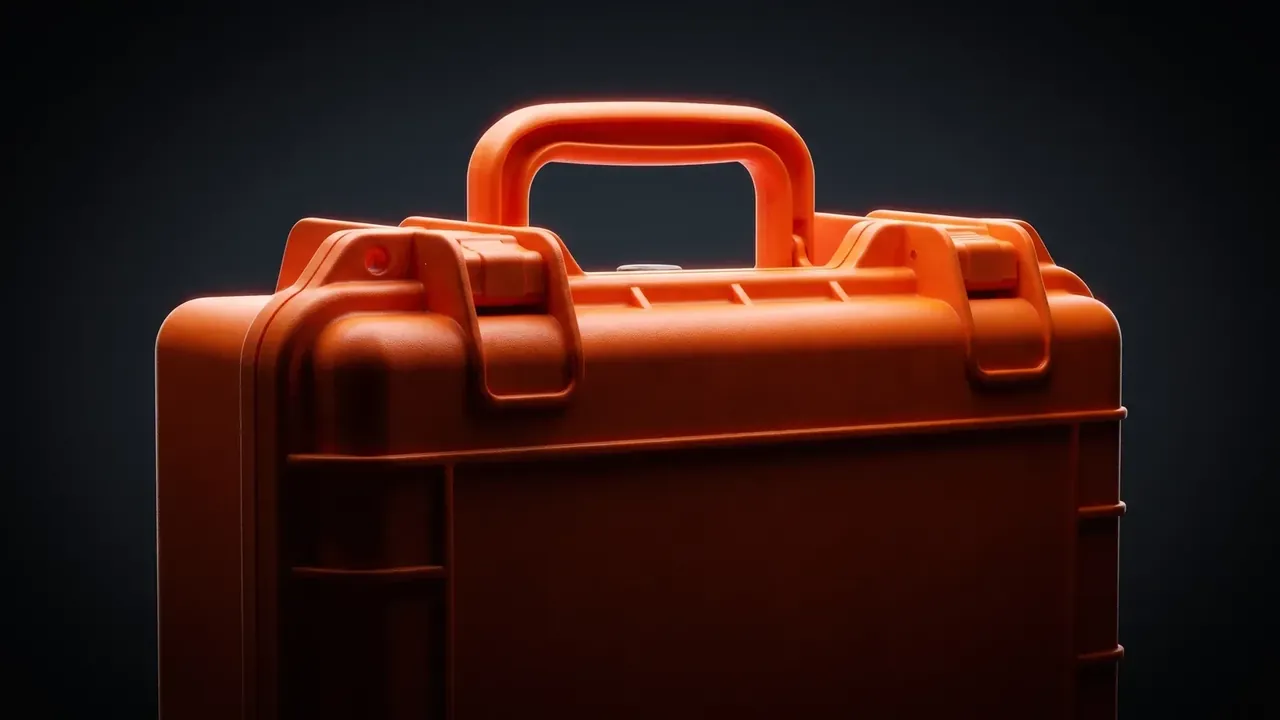
Quick answer: A Calibration Equipment Transport Case fixes a 38 mm slot pitch; tilt the shell to 20 degrees for 48 h and top-edge drift must stay below 0.52 mm.
Table of contents
- Divider Slot Pitch in a Calibration Equipment Transport Case
- How Flat the Base Really Is
- Top-Edge Drift After Two Days on a Tilt
- Slot-Root Gap After the Load Comes Off
- One Pitch for the Whole Metrology Batch
- FAQ
1. Divider Slot Pitch in a Calibration Equipment Transport Case
Prop the body up at twenty degrees, leave it loaded for two days, and a height gauge swept along the top edge shows which way the divider leans and whether the slot roots have opened.
A Calibration Equipment Transport Case with a 545 x 370 x 180 mm cavity keeps its divider upright on moulded floor slots. At 38 mm pitch each side of the board holds under 1 mm of clearance; at 42 mm the gap grows to 1.6 mm and the divider tips toward the low side on a slope. A wider pitch is not looser, since it sits on the same load path as top-edge drift.
The shell measures 610 x 430 x 240 mm outside with a 4.6 mm wall, and the slot root is where stress piles up. A 15 kg load presses through the board into that root; once it gaps, top-edge drift will not come back. Trying all three pitches before the tool is cut beats patching finished shells with extra liner.
| Slot pitch grade | Nominal pitch | Board side clearance | Behaviour on the tilt rig |
|---|---|---|---|
| Narrow | 34 mm | 0.4 mm | Little sway, board binds on insertion |
| Middle | 38 mm | 0.9 mm | Drift still inside 0.52 mm after 48 h |
| Wide | 42 mm | 1.6 mm | Root gap passes 0.16 mm, layout rejected |
2. How Flat the Base Really Is
Floor flatness is held to 0.30 mm on a Calibration Equipment Transport Case to give the slots a level start. If the floor bows, one row of slots ends up at uneven depths: some boards seat, others hang, and the tilt load lands on the hanging few.
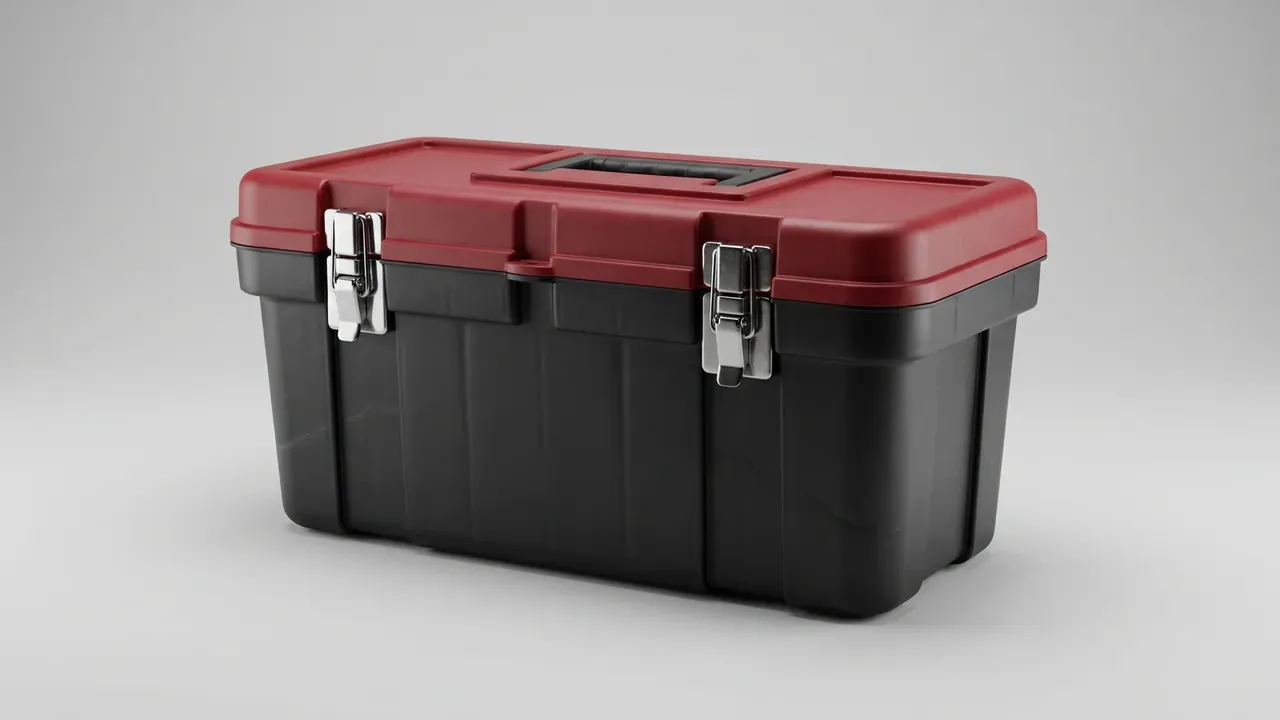
The inspection rig runs a straightedge across the base; 0.30 mm is the largest ripple allowed. Past it, slot depths are compensated on the drawing, or the plate is re-cut. A Calibration Equipment Transport Case carries a ring of ribs under the floor, and cooling sinks on their reverse side are where flatness is usually lost.
Flatness and slot pitch are separate accounts: one decides whether the board sits level, the other whether it stays standing, and both are cut into the same tool.
3. Top-Edge Drift After Two Days on a Tilt
When a Calibration Equipment Transport Case goes on the rig, the body is set at 20 degrees with 15 kg aboard for 48 h, with no unloading or turning in between. The divider top edge creeps outward on the downhill side, and the gauge reads displacement from the moment the load went on.
| Tilt interval | Top-edge drift | Slot-root gap | Reading step |
|---|---|---|---|
| Load-on, 0 h | 0.00 mm | 0.00 mm | Gauge zeroed on the top edge |
| Mid, 24 h | 0.31 mm | 0.09 mm | Sweep the downhill edge once |
| Full, 48 h | 0.47 mm | 0.14 mm | Still under 0.52 mm to keep the grade |
The 48 h span is not arbitrary. Resin creeps under sustained load, fast in the first 24 h and flat in the second; a curve that never flattens means the slot roots are still loosening. What a Calibration Equipment Transport Case needs is the residual drift after that curve settles, not a flattering mid-run number.
The rig also runs the empty 6.3 kg shell: lid weight and latch preload change how the floor is stressed. Four latches at 405 N each press the lid down; the tighter they hold, the less the base twists on the slope.
4. Slot-Root Gap After the Load Comes Off
Let the body rest flat once the load is removed, then measure the residual gap at the slot roots. A mouth that springs back was still elastic; one that stays open rules the pitch out.
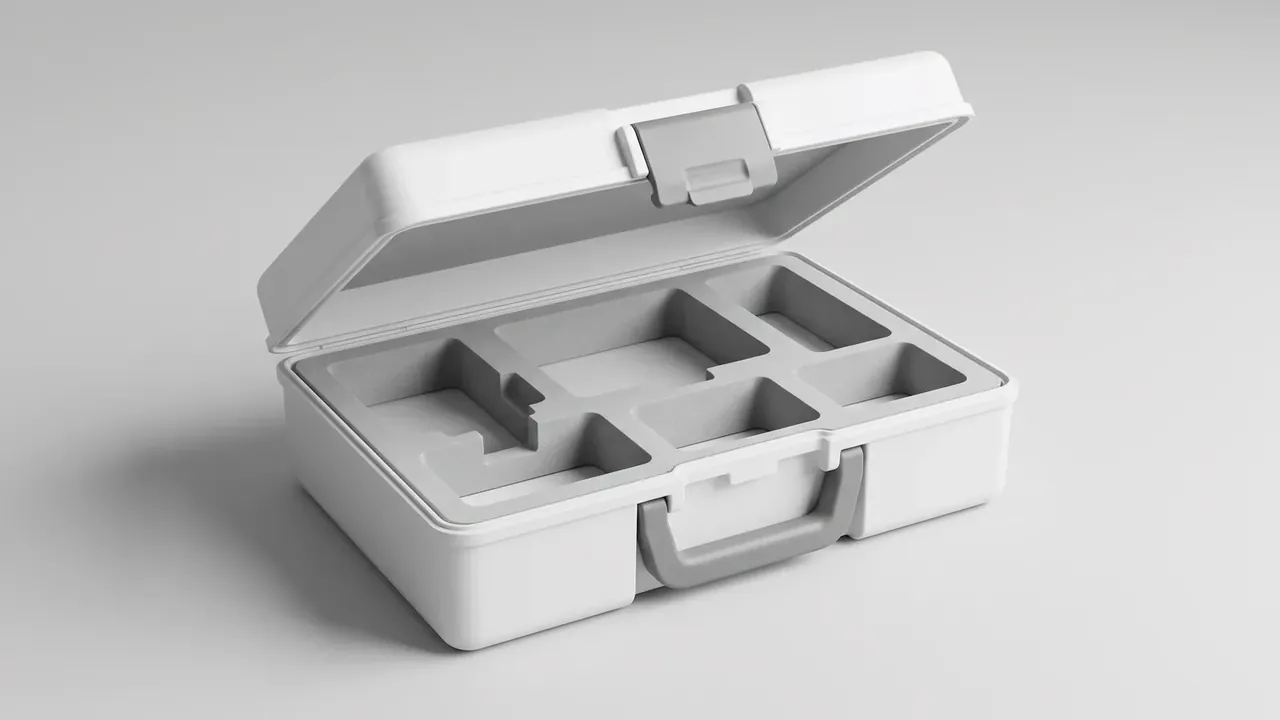
On a Calibration Equipment Transport Case the root gap is capped at 0.16 mm, checked cell by cell with a feeler gauge. Root gap and drift are a pair: drift says how far the board leaned, root gap how far the slot was pried, and both must stay inside the line before a grade advances.
| Drift reading | Matching pitch | Re-measured root gap | Tool decision |
|---|---|---|---|
| 0.28 mm | 34 mm | 0.08 mm | Too tight, kept as a static sample |
| 0.47 mm | 38 mm | 0.14 mm | Set as the metrology-batch value |
| 0.61 mm | 42 mm | 0.21 mm | Sent back to re-cut the slot tool |
5. One Pitch for the Whole Metrology Batch
A metrology batch wants one gauge for every unit, not a pitch picked per case. With three grades tested, the 48 h drift, unloaded root gap and post-cycling re-check are lined up, and a single grade goes onto the drawing.
The pitch is locked to the narrowest grade whose top-edge drift at the forty-eighth hour still reads under 0.52 mm; any wider layout goes back for a fresh slot tool.
After 4250 open-close cycles the top edge is swept again, since wear at latches and hinges adds into the drift. Two seal rings at 21 percent compression and an IP67 target are logged apart from the pitch value. At JUNZHIJIA, trial records for the slot tool travel with each Calibration Equipment Transport Case, so the rig numbers show which grade a given body used.
Conclusion
The slot pitch of a Calibration Equipment Transport Case is bought with drift from a 20 degree, 48 h tilt and the root gap after unloading. Pitch, floor flatness and latch preload sit in one tool, so changing any means another rig pass. Lock those readings into the drawing and every later Calibration Equipment Transport Case answers to the same gauge.
Related Reading
- Measuring Instrument Case Applications: Lab, Field, Cleanroom
- What Foam Should a Protective Case Insert Use? EVA vs EPE vs XPE vs PU Compared
- Plastic vs Wood Crate: Plastic Case vs Wooden Crate
- Microscope Equipment Transport Case
- Shockproof Case for Precision Equipment
Related Products
- 8 Series — Gun Cases; Military Equipment Cases; Camera Equipment Cases; Drone Cases; Watch Cases; Knife Cases; First Aid Cases; Electronics Equipment Cases
- WL8-2812 PP Gun Case — model WL8-2812
- All protective cases and toolboxes: 7 series, 158 models