

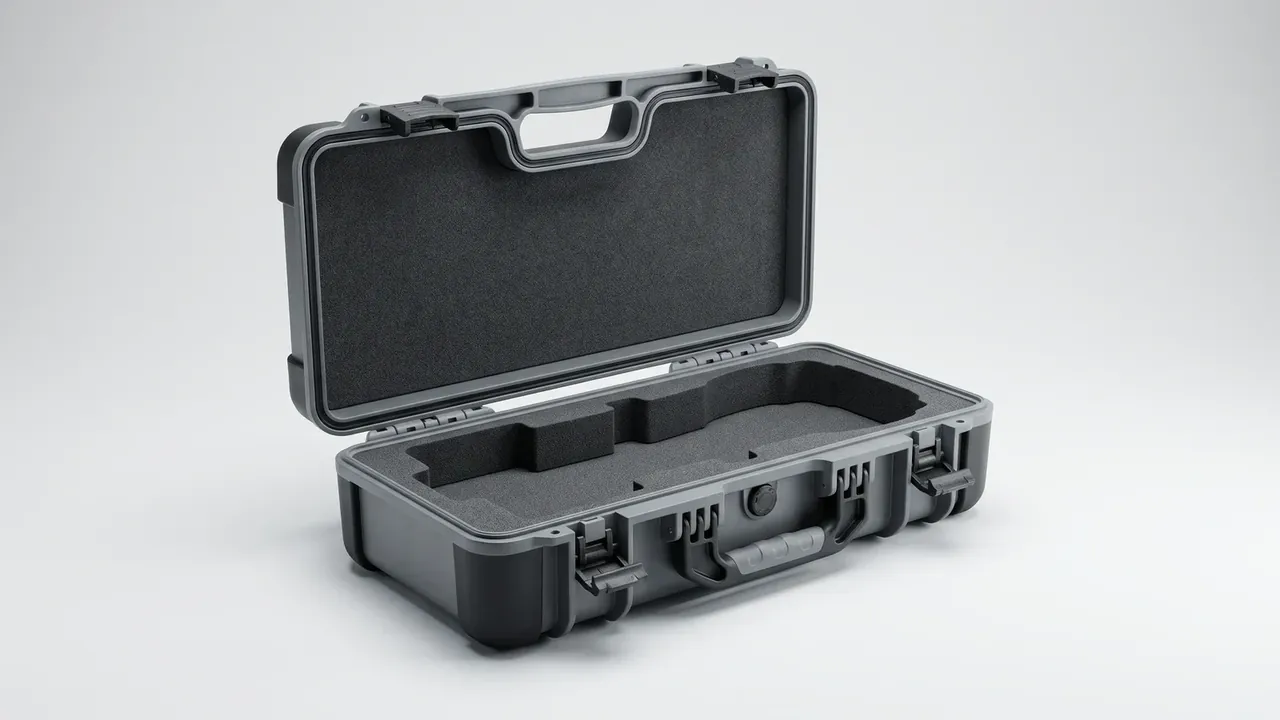
Quick answer: Moving a wall from 4 mm to 5 mm adds about 20 CNY of material, yet drops the corner-drop crack rate from one in ten to 1.2 percent, and the rework avoided outweighs the resin. On a Special Forces Case the cheaper option is not the thinner one.
Table of contents
- From load case to wall thickness
- Cavity size: kit list first, then divide
- Wall thickness and rib pitch: where unit cost moves
- Stacking and load: where bases differ
- FAQ
1. From load case to wall thickness
Two Special Forces Case quotes with the same outer dimensions can sit 110 CNY apart, and resin explains only part of it. Most of the gap traces to one choice — 4 mm wall or 5 mm wall — which then drags cavity, rib pitch and base along with it.
Run the chain backwards instead of haggling: fix the load, size the cavity, let the cavity set the wall, the wall set rib pitch, stacking set the base.
| Step | Input | Intermediate | Output |
|---|---|---|---|
| Load case | 34 kg loaded, 1.2 m drop, 5-high stack | 120 g peak | 40 kN design load |
| Cavity | Longest item 780 mm, 8 mm cushion | 150 L net | 800 × 520 × 360 mm |
| Wall | Design load, cell size | Section modulus | 5.0 mm |
| Rib pitch | Panel and wall | Cell edge | 120 mm |
| Base | 5-high stack | 165 kg base load | Double wall, grid |
Buyers usually ask for a wall number and hear rivals use it, but rivals sized their own load case.
2. Cavity size: kit list first, then divide
A cavity is not a box drawn first and filled later. Measure the kit, divide the space, then derive the shell; five millimetres short can force a long item in at an angle, costing two cells.
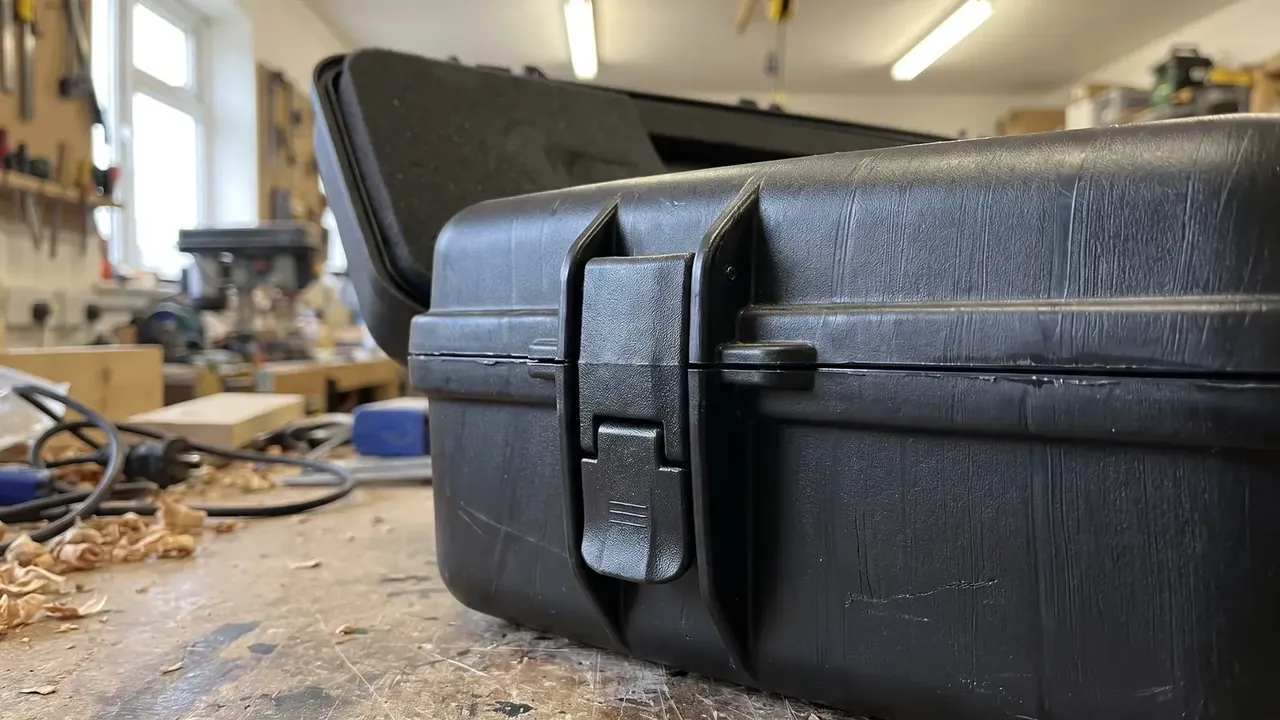
- Longest item 780 mm with guard, so the cavity runs 800 mm with 8 mm cushion each end.
- Heaviest item 6.5 kg, off-centre, so that divider gains 2 mm.
- Items taken at once rarely exceed four, capping the layout at four cells, not six.
- Cushion: 8 mm at the walls, 12 mm at the lid, where compression happens most.
- Tolerances: cavity ±1.5 mm, divider 15 mm, pocket ±0.8 mm, written on the drawing.
This layout lands near 60 percent utilisation. Under 50 percent the dividers are poorly planned; over 70 percent the cushion is too thin.
3. Wall thickness and rib pitch: where unit cost moves
Wall thickness both raises and lowers cost: it raises resin and lowers rework. Read only resin and the answer is always thinner.
| Wall | Material | Corner-drop crack rate | Rework share | Unit total |
|---|---|---|---|---|
| 4.0 mm | 90 CNY | 10.0% | 26 CNY | 116 CNY |
| 5.0 mm | 110 CNY | 1.2% | 3 CNY | 113 CNY |
| 6.0 mm | 132 CNY | 0.3% | 1 CNY | 133 CNY |
Rework is priced at 260 CNY a unit, covering strip-down, new shell, refitting and reshipment. Across 90 samples from three trial runs, the 4.0 mm shell cracked nine times, the 5.0 mm once, the 6.0 mm never.
Resin at 14.5 CNY a kilogram makes the 1.4 kg step worth 20 CNY, buying a fall from ten percent to 1.2 percent, or 23 CNY a unit. The next step costs 22 CNY for 0.9 of a point.
Rib pitch carries the other half: 120 mm to 100 mm adds 7 percent weight and 40 percent dent resistance, but dense ribs starve the draft angle. A 5.0 mm wall on 120 mm pitch with 6 mm ribs is the usual compromise.
4. Stacking and load: where bases differ
Stack height sets the base, not the wall. A thick side wall will not stop a base sagging: the wall bends, the base compresses and bends.
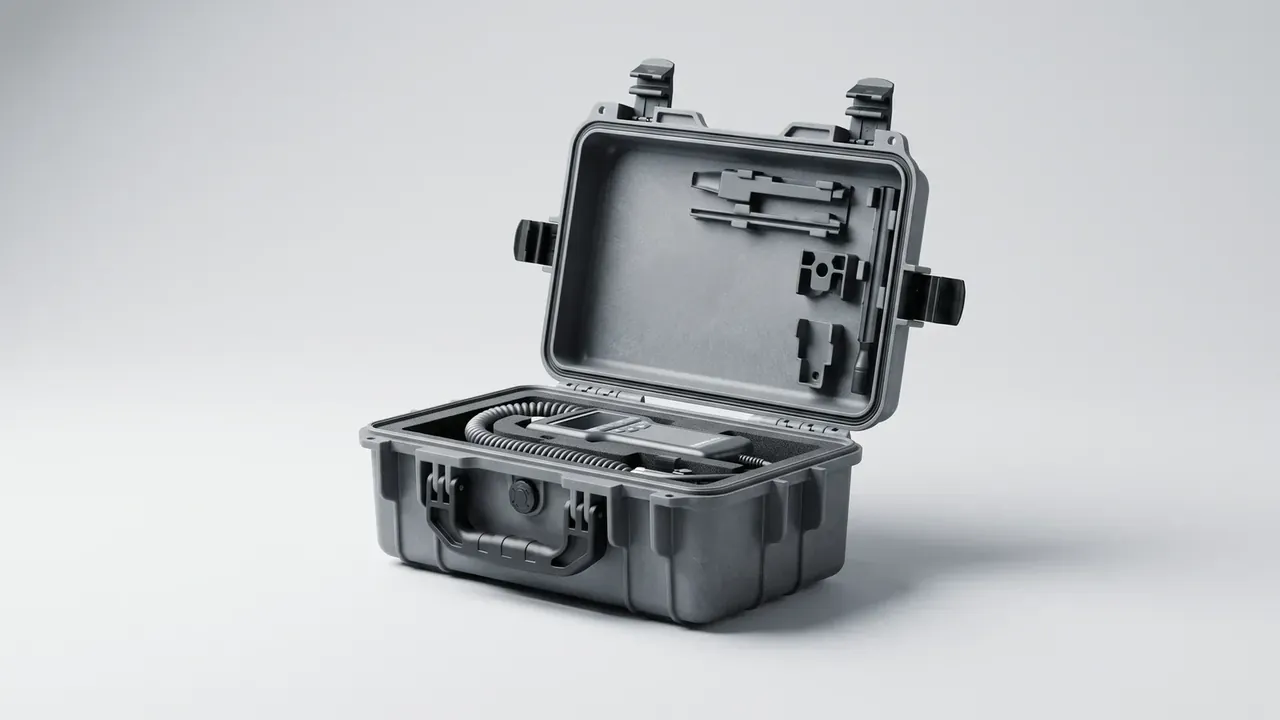
| Stack | Base structure | Base load | Added weight | Added cost |
|---|---|---|---|---|
| 3 high | Single wall, 5 mm | 82 kg | Baseline | Baseline |
| 5 high | Double wall, grid | 165 kg | 0.9 kg | 13 CNY |
| 7 high | Double wall, corner inserts | 245 kg | 2.4 kg | 35 CNY |
At five high the bottom unit carries four cases: 4 × 34 kg is 136 kg, times a 1.2 safety factor gives 165 kg. Three high gives 82 kg, seven high 245 kg, same formula.
A double wall with grid adds under a kilogram and 13 CNY, and lifts the stack ceiling from three to five. At 24 cases a truck, one extra layer removes a trip, so freight saved per unit passes 13 CNY quickly. A double-wall base under a two-high stack is the opposite error: strength nobody uses.
Conclusion
A specification chain turns one experienced number into five defensible ones. Load sizes the cavity, the cavity sizes the wall, the wall sets rib pitch, stacking sets the base. Reading a quotation alone keeps you comparing the last digit; reading the chain tells you which millimetre deserves the money. Most of the cost gap in a Special Forces Case sits in the wall thickness the buyer never calculated.
This article discusses only the container (case body) side of specifications and design intent, and does not cover any handling, loading or use of the contents.
Related Reading
- How one Special Forces Case is configured for three scenarios
- Judgement criteria for choosing a Special Forces Case
- How cushioning structure maps to shockproof case specifications
Related Products
- 8 Series — Gun Cases; Military Equipment Cases; Camera Equipment Cases; Drone Cases; Watch Cases; Knife Cases; First Aid Cases; Electronics Equipment Cases
- WL8-2812 PP Gun Case — model WL8-2812
- All protective cases and toolboxes: 7 series, 158 models