

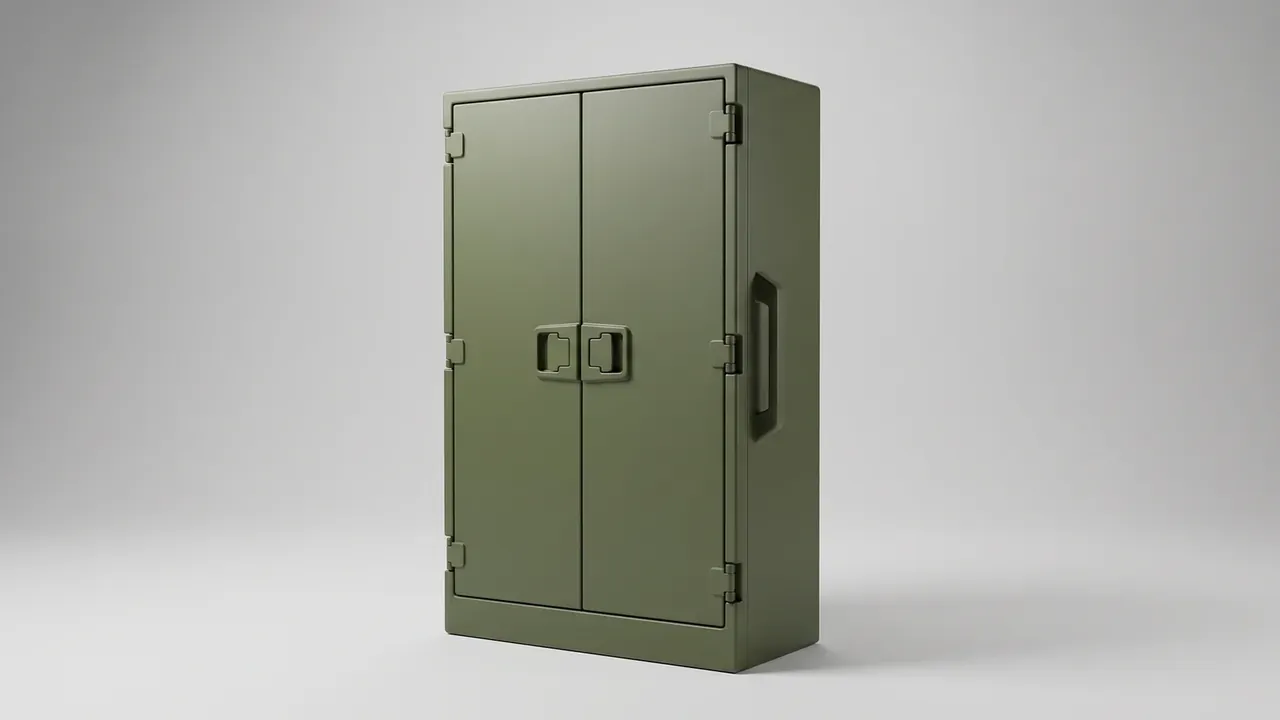
Quick answer: Split upkeep into three intervals: a 3-minute visual check before each shift, a 15-minute measurement each month, and an annual rain and cold-rebound test. Every replacement limit should be a number, not a feel.
Table of contents
- Interval Levels for a Specialized Shipping and Storage Container
- Gasket Compression and Replacement Limits
- Latch and Hinge Pin Wear
- Liners, Cleaning and Disinfection
- Spare Parts and the Annual Schedule
- FAQ
1. Interval Levels for a Specialized Shipping and Storage Container
Maintenance starts with scheduling, not repairing. A specialized shipping and storage container is checked at three intervals: 3 minutes before a shift, 15 minutes a month, one full verification a year.
The split puts labour where it pays: latches seated, gasket not rolled over and no debris in the groove catch about 70% of field failures in three minutes, while callipers stay for the monthly round.
| Level | Frequency | Items | Time | Criterion |
|---|---|---|---|---|
| Pre-shift | Once per shift | 5 | 3 min | Pass or fail by eye |
| Monthly | Once a month | 12 | 15 min | Measured size and force |
| Quarterly | Once a quarter | 6 | 40 min | 30 min rain test |
| Annual | Once a year | 9 | 2 h | Immersion and cold rebound |
2. Gasket Compression and Replacement Limits
The gasket looks fine long after it stops working: a new 8.0 mm cord compresses 2.2 mm, about 27%, and by year three often falls to 1.4 mm, which only rain reveals.
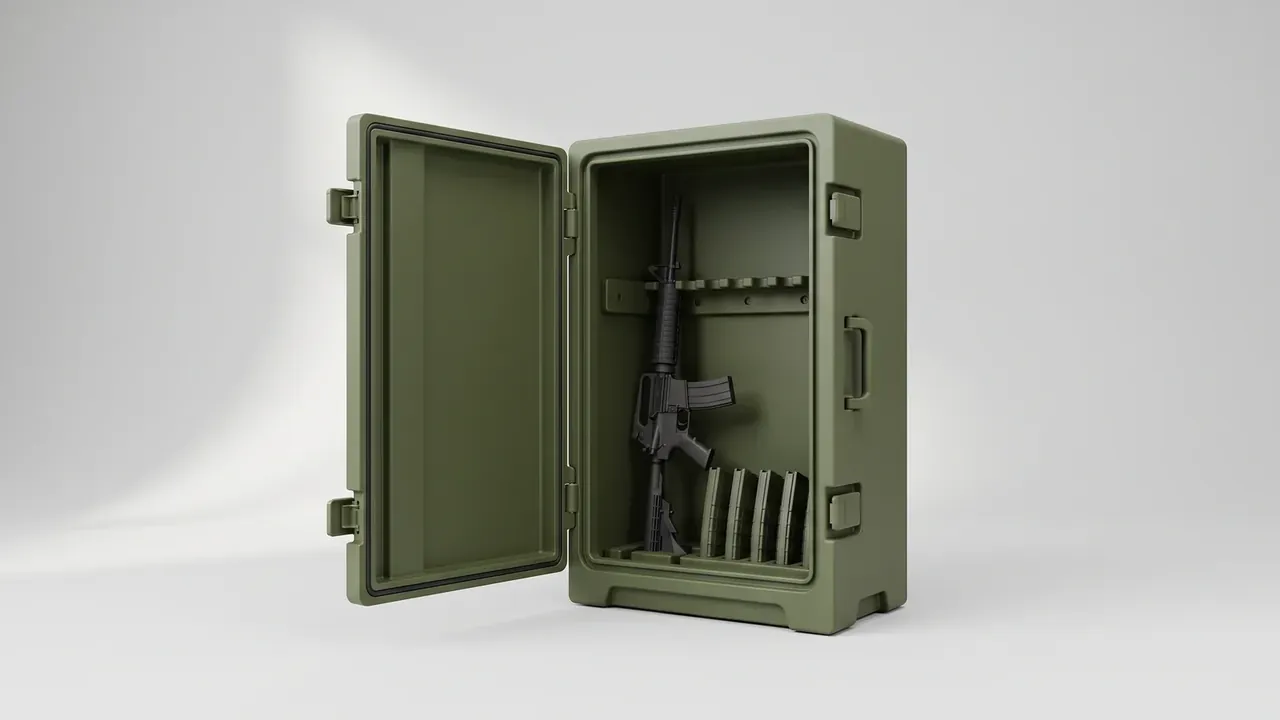
The limit is two numbers: residual compression below 1.2 mm, or 15%, and permanent set beyond 1.5 mm. Hardness adds a third: Shore A rising from 55 to 70 means plasticiser has migrated.
| Criterion | New | Warning | Replace |
|---|---|---|---|
| Compression | 2.2 mm | 1.6 mm | 1.2 mm |
| Permanent set | 0 mm | 0.8 mm | 1.5 mm |
| Shore A hardness | 55 | 62 | 70 |
| Surface | Unbroken | Chalking | Cracks or nicks |
Fitting a gasket on a specialized shipping and storage container matters too: clean the groove with ethanol, place the joint opposite the hinges, cut at 90 degrees and cure for 30 minutes.
3. Latch and Hinge Pin Wear
A latch does not fail overnight: force climbs from 55 N to 80 N over six to eight months, the operator starts prying, and the crack begins at the pry point.
| Part | Measure | New | Replace |
|---|---|---|---|
| Latch | Opening force | 55 N | Above 80 N or below 30 N |
| Latch seat | Crack length | 0 | Over 2 mm |
| Hinge pin | Pin diameter | 5.0 mm | 4.6 mm |
| Hinge bore | Bore diameter | 5.2 mm | 5.5 mm |
Pin wear needs callipers: at 4.6 mm from 5.0 mm the lid of a specialized shipping and storage container moves 0.6 mm side to side, and after four hours at -25 °C opening force rises 30%.
4. Liners, Cleaning and Disinfection
Liner criteria on a specialized shipping and storage container are dimensional. A milled EVA pocket grows with use; past 1.5 mm the item shifts and impact returns to point contact.
Cleaning uses a neutral detergent at pH 7, water under 60 °C and spray under 60 bar; blasting gaskets and pins drives water where it does not belong.
Disinfection follows: 0.1% quaternary solution, ten minutes, a water wipe and a dry cloth. Mould that will not wipe off means replacement.
5. Spare Parts and the Annual Schedule
Spares are sized by fleet: 8% of the installed base in gaskets, 5% latches, 3% pins, 4% liners. A higher ratio points to heavy use, not to more stock.
| Spare | Share of fleet | Service life | Fitting time |
|---|---|---|---|
| Gasket | 8% | 3 years | 20 min |
| Latch | 5% | 5 years | 10 min |
| Hinge pin | 3% | 6 years | 25 min |
| Liner | 4% | 4 years | 30 min |
Schedule by use: at 150 trips per case the annual check lands near trip 140. A slow mover can run every two years, but the rain test stays, since a specialized shipping and storage container ages its gaskets with time.
Conclusion
The hard part is not replacing parts but turning “when to replace” into numbers. Three intervals, four limits and four spare categories give a specialized shipping and storage container a schedule that does not depend on one technician. Replace on the curve, and maintenance cost becomes predictable.
This article discusses only the container (case body) side of specifications and design intent, and does not cover any handling, loading or use of the contents.
Related Reading
- Custom specifications and acceptance points
- Maintenance points for rotomoulded cases
- Preventing damage during storage
- Where a specialized shipping and storage container is used
Related Products
- 8 Series — Gun Cases; Military Equipment Cases; Camera Equipment Cases; Drone Cases; Watch Cases; Knife Cases; First Aid Cases; Electronics Equipment Cases
- WL8-2812 PP Gun Case — model WL8-2812
- All protective cases and toolboxes: 7 series, 158 models