

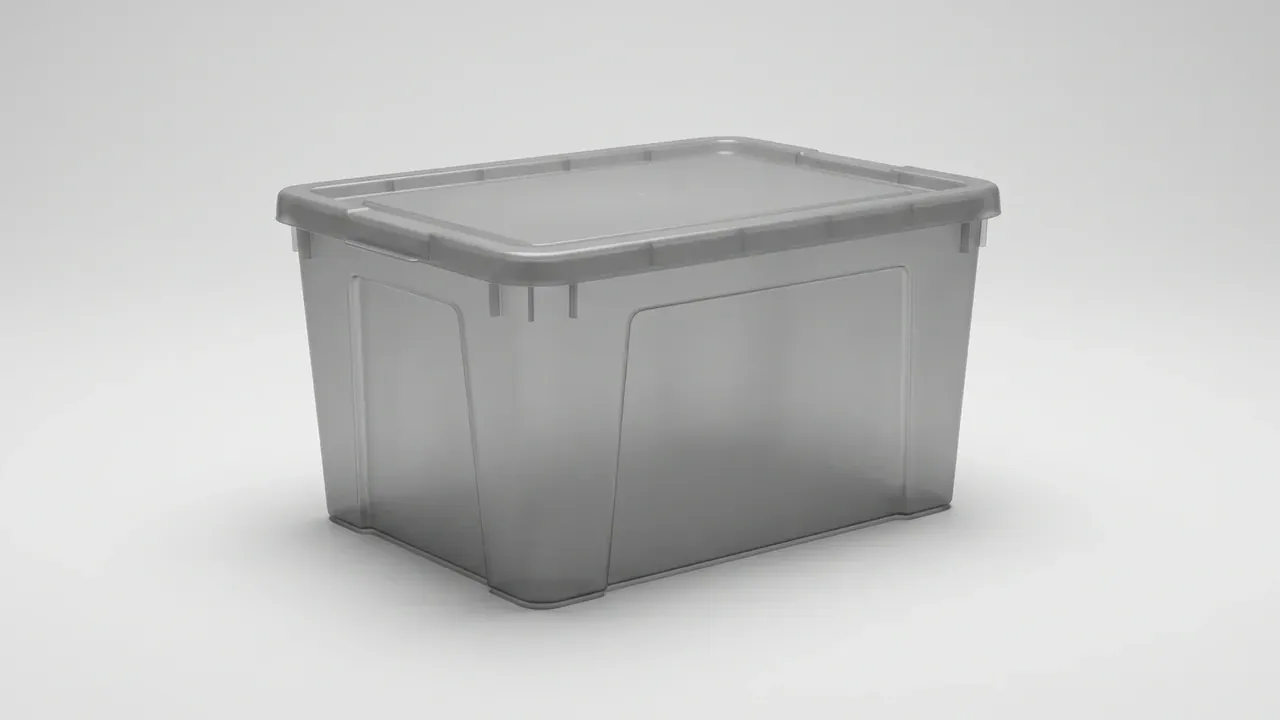
Quick answer: Acceptance of a Specialized Shipping and Storage Container rests on numbers: resin grade and colour at incoming, wall thickness and rim flatness in process, air-tightness, rain spray, drop and stack at final, then a sampling verdict and a traceable lot record.
Table of contents
- The Inspection Checklist for a Specialized Shipping and Storage Container
- Sampling Dimensions and Wall Thickness
- Sealing and Rain Test Release
- Drop and Stack Test Conditions
- Verdicts, Nonconformity and Traceability
- FAQ
1. The Inspection Checklist for a Specialized Shipping and Storage Container
Acceptance runs as three gates: incoming, in-process and final. One table carries all three, each line giving an item, a method, a sample size and a numeric limit, so a lot signs off in twenty minutes.
Incoming checks resin grade, colour batch and insert metal; in-process checks thickness, rim flatness and rib position; final checks air-tightness, spray, drop, stack and latch cycling. One lot number links the gates, so a failure anywhere freezes the lot.
| Gate | Item | Method | Sample | Limit |
|---|---|---|---|---|
| Incoming | Resin grade | Certificate and melt index | Once per lot | Reject on mismatch |
| In-process | Wall thickness | Ultrasonic, 12 points | 3 of every 50 | No point below 4.0 |
| Final | Air-tightness | Charge and hold | 5 per lot | 30 kPa, 60 s, 1 kPa drop |
| Final | Drop | 1.2 m per face | 2 per lot | No crack, latch holds |
2. Sampling Dimensions and Wall Thickness
Dimensions of a Specialized Shipping and Storage Container split into assembly and envelope. Assembly covers latch hole spacing, hinge seat position and internal clear size; envelope covers length, width, height and stack feet. Both need tolerance bands, not nominal values.
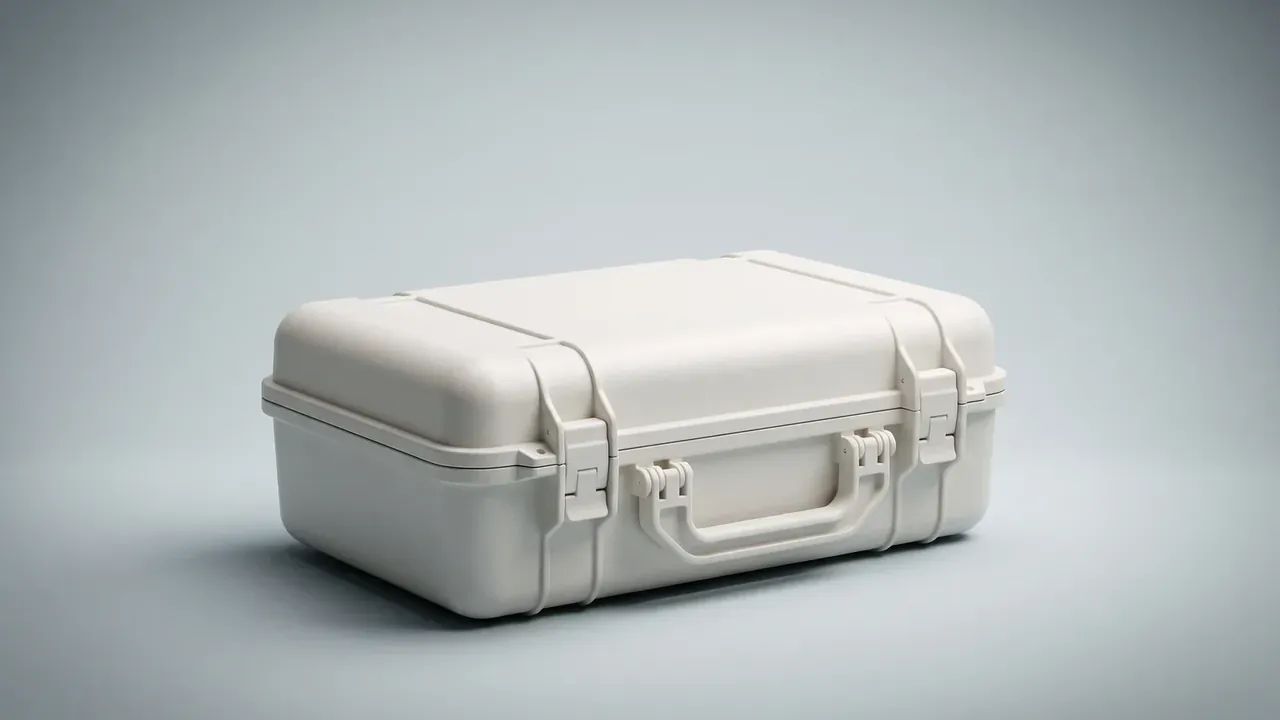
Thickness is judged point by point: on a 600 mm body, 12 points, four on the base, one per wall, one per corner, each read three times on a 5 MHz probe. Deviation is plus or minus 0.8 mm, and any point under 4.0 mm fails.
Sample size follows lot size: 8 units under 500, 13 up to 2000, 20 above. Dimensions run at AQL 1.0, appearance at AQL 2.5, and one failure doubles the sample.
3. Sealing and Rain Test Release
Air-tightness first, because it is fast: charge to 30 kPa and hold 60 s, and a drop of 1 kPa or less passes. If it fails, check gasket compression, which should sit between 25 and 35 percent on a gasket of Shore A55. Low compression usually means the rim is out of flat.
Rain spray follows: 100 mm per hour from nozzles 1.5 m away, five minutes per face, 30 minutes total, with absorbent paper and a humidity card inside. A damp trace fails.
Order matters: a leaking case pushes water into the seal groove and ruins later readings. For a Specialized Shipping and Storage Container, that order is part of the verdict.
4. Drop and Stack Test Conditions
Drop needs height, attitude and count: 1.2 m on six faces, then three edges and one corner at 0.9 m, after 4 h at minus 20 °C and within 5 minutes of removal.
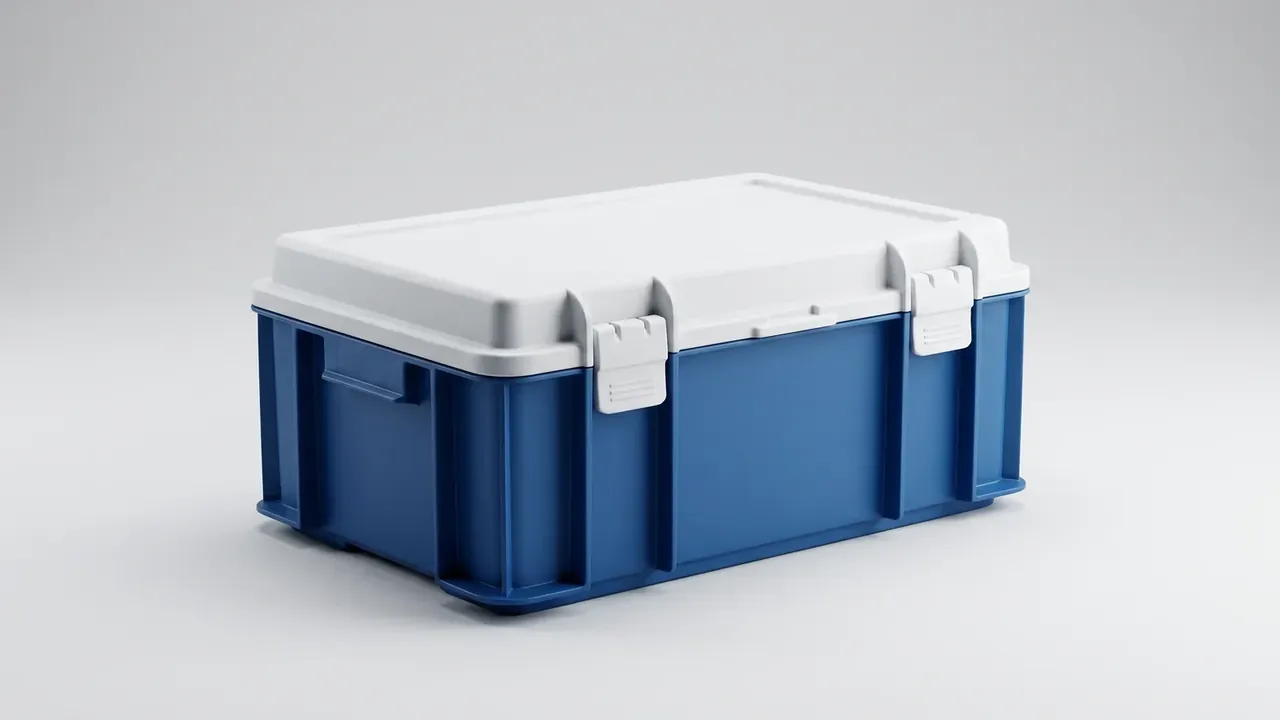
A through crack, a released latch or an open rim fails the unit, and so does a latch that keeps 70 percent or less of its opening force.
Stack at service height plus one layer: three layers at 45 kg for 24 h, unload, wait an hour, measure. Over 3 mm fails; the base unit is checked against 60 kg.
5. Verdicts, Nonconformity and Traceability
Defects are critical, never accepted; major, accepted only by written concession; minor, trimmed and released.
| Class | Typical items | Disposition |
|---|---|---|
| Critical | Wall under 4.0 mm, latch release, pressure drop | Reject, no concession |
| Major | Rim gap 0.5 to 0.8 mm, colour shift, sink marks | Rework, or 5 percent concession |
| Minor | Flash over 0.5 mm, label offset, flow lines | Trim and accept |
A Specialized Shipping and Storage Container lot with more than 4 percent major defects is handled as critical.
Keep two units per lot for 12 months with resin batch, thickness readings, pressure curves and stack photos. Traceability means lot number back to resin batch inside 4 hours; if that path breaks, the verdict has nothing behind it.
Conclusion
Acceptance turns a vague question about quality into three answers: what to measure, how many units to pull, and where the line sits. Gates own the stages, limits guard the failure modes, defect classes make the verdict stick. That sheet is the practical core of Specialized Shipping and Storage Container acceptance.
This article discusses only the container (case body) side of specifications and design intent, and does not cover any handling, loading or use of the contents.
Related Reading
- Specification setting for this case family
- Where these cases are used in service
- Incoming inspection for military supply cases
- Maintenance checks for reusable case bodies
Related Products
- 8 Series — Gun Cases; Military Equipment Cases; Camera Equipment Cases; Drone Cases; Watch Cases; Knife Cases; First Aid Cases; Electronics Equipment Cases
- WL8-2812 PP Gun Case — model WL8-2812
- All protective cases and toolboxes: 7 series, 158 models