

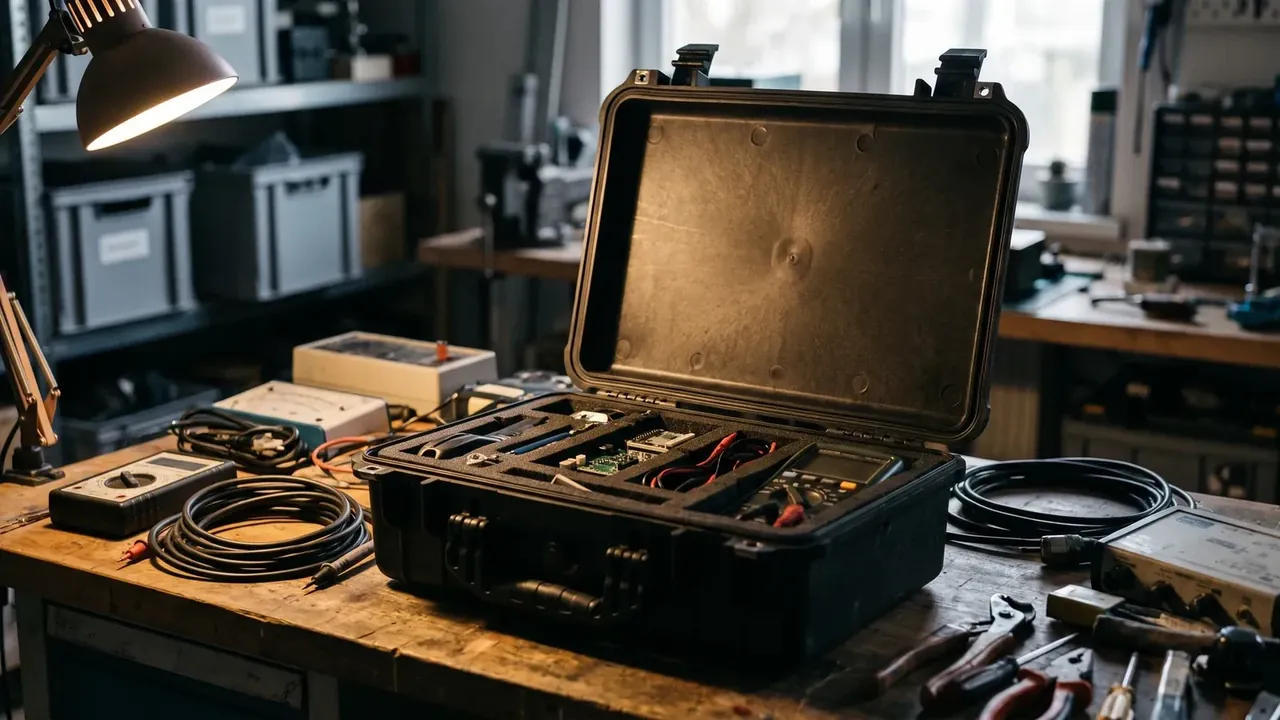
Quick answer: Sites differ by three variables, not outer shape: how many high, what locates the unit, and which compound survives temperature and static. Line-side work wants pick height, cold rooms want toughness, clean zones want a wipeable surface.
Table of contents
- Six Roles, Three Variables
- Line-Side Loops and Finished-Goods Racking
- Cold Chain and Clean Zones
- Chemical Segregation and Field Storage
- Cross-Border Consolidation and the Matrix
- FAQ
1. Six Roles, Three Variables
One Stackable Container, footprint 600 × 400 × 280 mm, in a line-side cell and then in a freezer: three lines on the drawing change, namely stack height, locating feature and wall compound. The footprint matters least.
Height is squeezed three ways. The bottom lid carries the column, the pick face caps the reach, the shift decides how fast the pile comes down. Hand picking keeps the top rim under 1.4 m, four high at most.
| Role | Batch per turn | Stack | Location | Dominant variable |
|---|---|---|---|---|
| Line-side loop | 20 to 60 units | 4 high | Corner cones | Pick height |
| Finished-goods store | 300 units and up | 3 high on pallet | Flat base, stops | Pallet fit |
| Cold room buffer | 40 to 120 units | 3 high | Rim step | Cold toughness |
| Clean-zone transfer | 10 to 30 units | 2 high | Flat step | Surface roughness |
| Chemical bay | 15 to 40 per bay | 2 high | Flat base, sump | Segregation |
2. Line-Side Loops and Finished-Goods Racking
A line-side Stackable Container turns over with the shift, about 12 times a day. Four corner cones, 8 mm tall on a 15° flank, drop into lid recesses. Under 6 mm the column shears at a nudge; over 10 mm the operator lifts higher. At 5 mm of wear the lock is friction, not geometry.
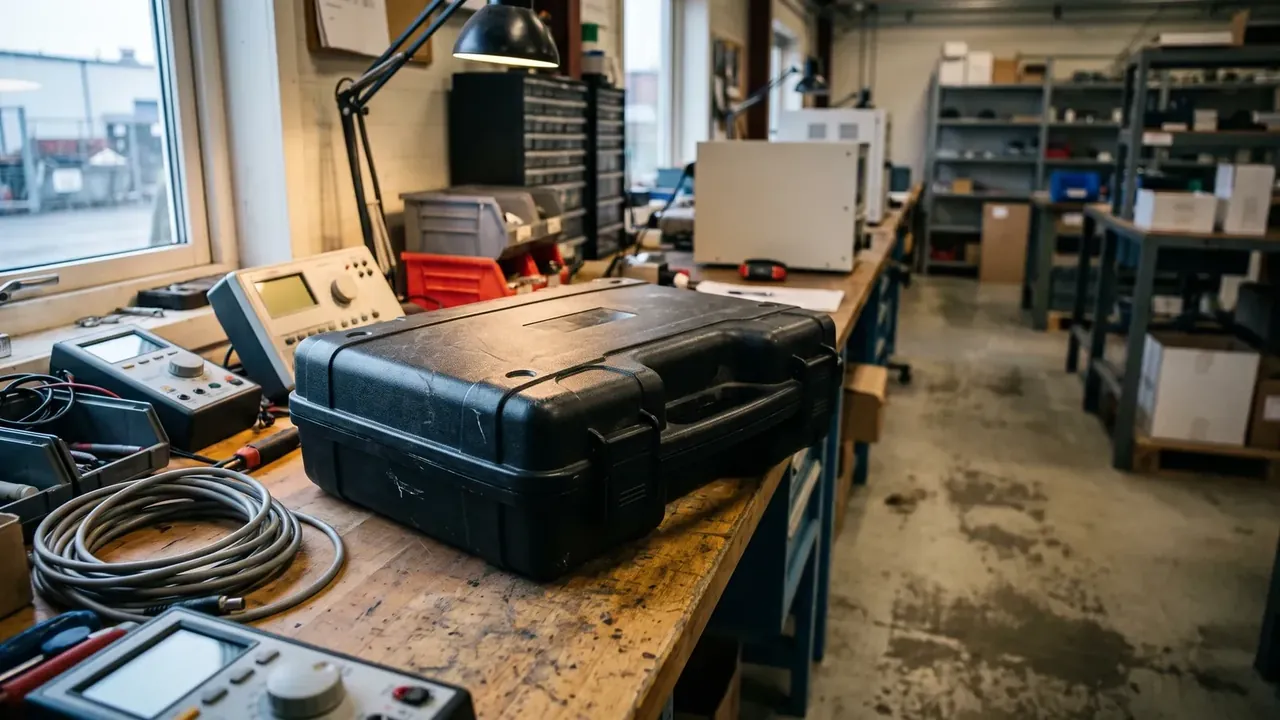
Finished goods run the other way: beams at 1.8 m, six units on a 1200 × 1000 mm pallet, three loads high, a cross rib crossing the boards. Cones are dead structure here and foul the boards.
3. Cold Chain and Clean Zones
Homopolymer polypropylene loses impact strength around -20 °C, and after 48 hours at -25 °C cracks start at the corners. Copolymer PP or HDPE, R10 corners and a 3.5 mm wall bring the rate down; two ribs inside the lid hold warp within 1.5 mm.
Clean zones change the surface, not the strength of a Stackable Container: below Ra 0.8 µm an alcohol wipe leaves no film, R8 corners clear in one pass, screw heads sit sunk. Static is held between 10^6 and 10^9 ohm with carbon black, never a migratory additive.
4. Chemical Segregation and Field Storage
Segregation precedes stacking. Three blocks by compatibility, three colours of Stackable Container mapped to them, no borrowing. Bund volume at 110 per cent of the largest unit, a 25 mm upstand as a sump with no drain, since a drain routes the spill past the bund. Two high, because the upper tier must clear in under a minute.
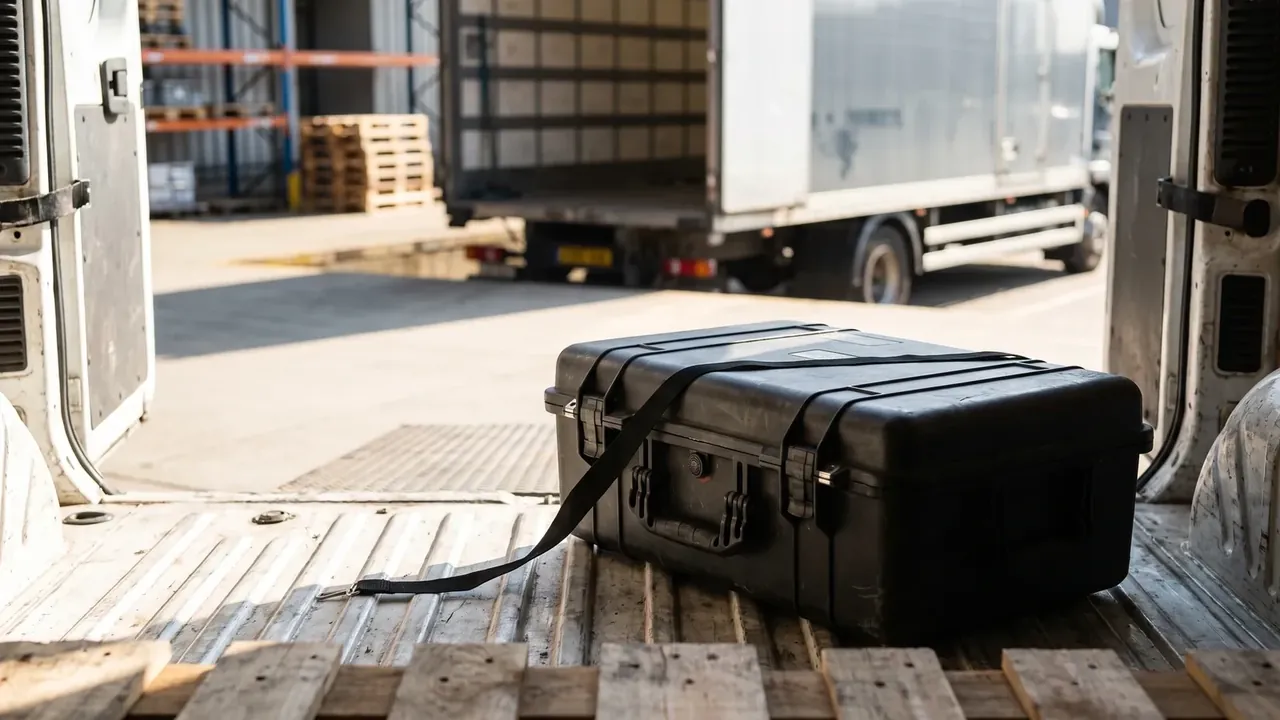
Field storage is governed by wind: two high at 30 kg per unit, a force 8 wind of 17.2 m/s already tips the column. A 3° lid sends water off the back edge instead of into the gasket.
5. Cross-Border Consolidation and the Matrix
Cross-border work puts the value in the return leg. 280 mm open against 90 mm folded is 1:3.1; a 40-foot high cube takes 480 folded units against 156 open ones. A 100 × 50 mm SSCC label goes on four faces, a 20 × 20 mm laser code 40 mm down from the rim.
| Role | Stack | Location | Compound and special requirement |
|---|---|---|---|
| Line-side loop | 4 high | Corner cones, 8 mm | Copolymer PP, 8 mm step |
| Finished-goods rack | 3 high on pallet | Flat base, stops | Copolymer PP, cross rib |
| Cold room buffer | 3 high | Step widened to 12 mm | Cold-grade copolymer |
| Clean-zone transfer | 2 high | Flat step | Virgin PP, Ra 0.8, R8 |
| Chemical bay | 2 high | Flat base with sump | Antistatic, 25 mm upstand |
| Cross-border | 8 high folded | Nesting | Copolymer PP, laser code |
Read the matrix right to left: compound, then location and height, then volume.
Conclusion
Six roles converge on one table: height, location, compound. Line-side work caps height at the pick face, finished goods hands location to the pallet, cold rooms change compound, clean zones change the surface, chemical bays add a sump. Site before drawing is the cheapest habit in a Stackable Container programme.
This article discusses only the container (case body) side of specifications and design intent, and does not cover any handling, loading or use of the contents.
Related Reading
- Stack height design and load limits for stackable containers
- Why stacked containers collapse and how to stop it
- Scenario configuration for specialised shipping and storage containers
- The role of logistics support boxes in a turnaround loop
Related Products
- 8 Series — Gun Cases; Military Equipment Cases; Camera Equipment Cases; Drone Cases; Watch Cases; Knife Cases; First Aid Cases; Electronics Equipment Cases
- WL8-2812 PP Gun Case — model WL8-2812
- All protective cases and toolboxes: 7 series, 158 models