

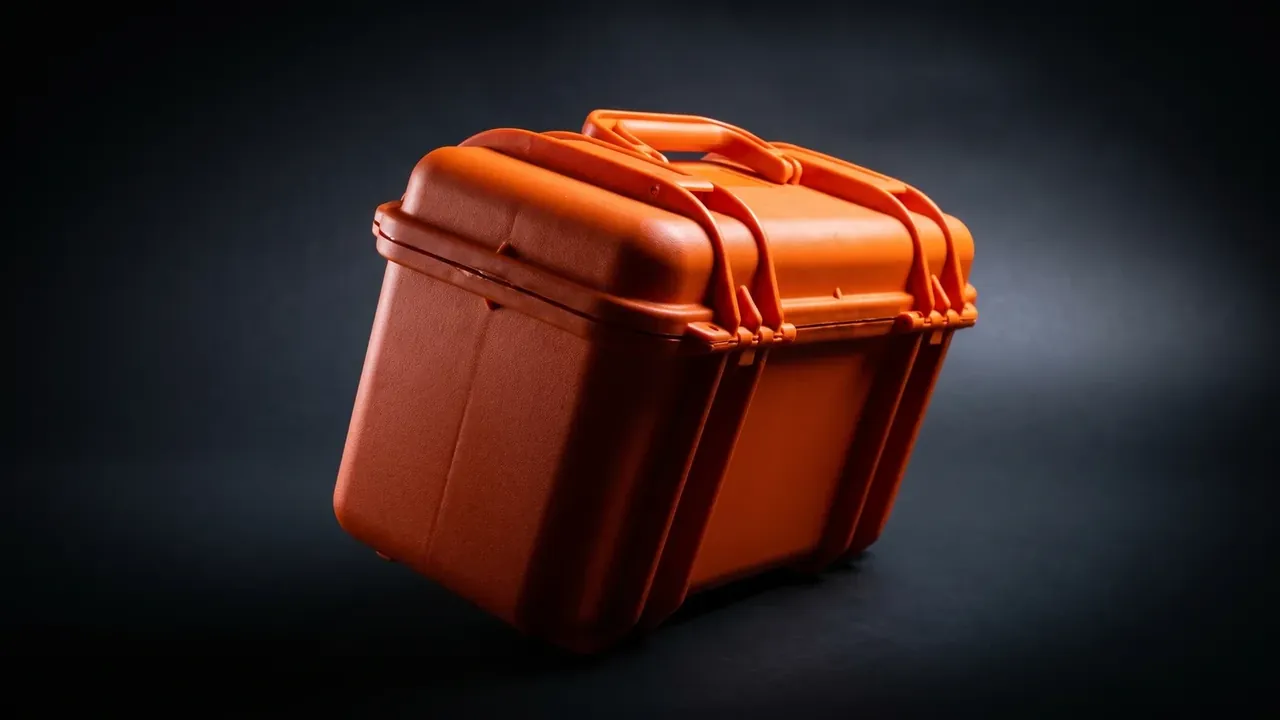
Quick answer: A Stackable Container price is five blocks added together: resin, tool amortisation, machine time, decoration and packing. Fix weight, wall thickness and resin grade before arguing MOQ, then split lead time into four stages before comparing quotes.
Table of contents
- What a Stackable Container Quote Is Made Of
- MOQ and the Mould Amortisation Break-even
- Tonnage, Cycle Time and the Unit Price
- Lead Time Breakdown and the RFQ Fields
- Trade-in and Scrap Credit
- FAQ
1. What a Stackable Container Quote Is Made Of
Two Stackable Container bodies of 600 × 400 × 300 mm can weigh 3.2 kg and 3.8 kg. At 11 yuan a kilo for impact copolymer PP that 0.6 kg gap is 6.6 yuan per unit.
| Cost block | Basis | Typical share |
|---|---|---|
| Resin | Shot weight times price, 3% sprue | 38 to 45% |
| Tool | Tool cost divided by quantity | 8 to 15% |
| Machine | Hourly rate, cavities, yield | 20 to 26% |
| Colour, print | 2% masterbatch, per plate | 5 to 8% |
| Packing | Station hours, pallet, film | 10 to 14% |
Two things hide in a quote. Regrind at 20% gives up 15% of falling-dart strength at virgin price, and ribs for four 45 kg units need a slide that adds 12% to the tool.
2. MOQ and the Mould Amortisation Break-even
A single-cavity tool costs about 280,000 yuan. At 1,000 units it carries 280 yuan each, at 5,000 units 56 yuan, at 20,000 units 14 yuan; the curve flattens after 3,000.
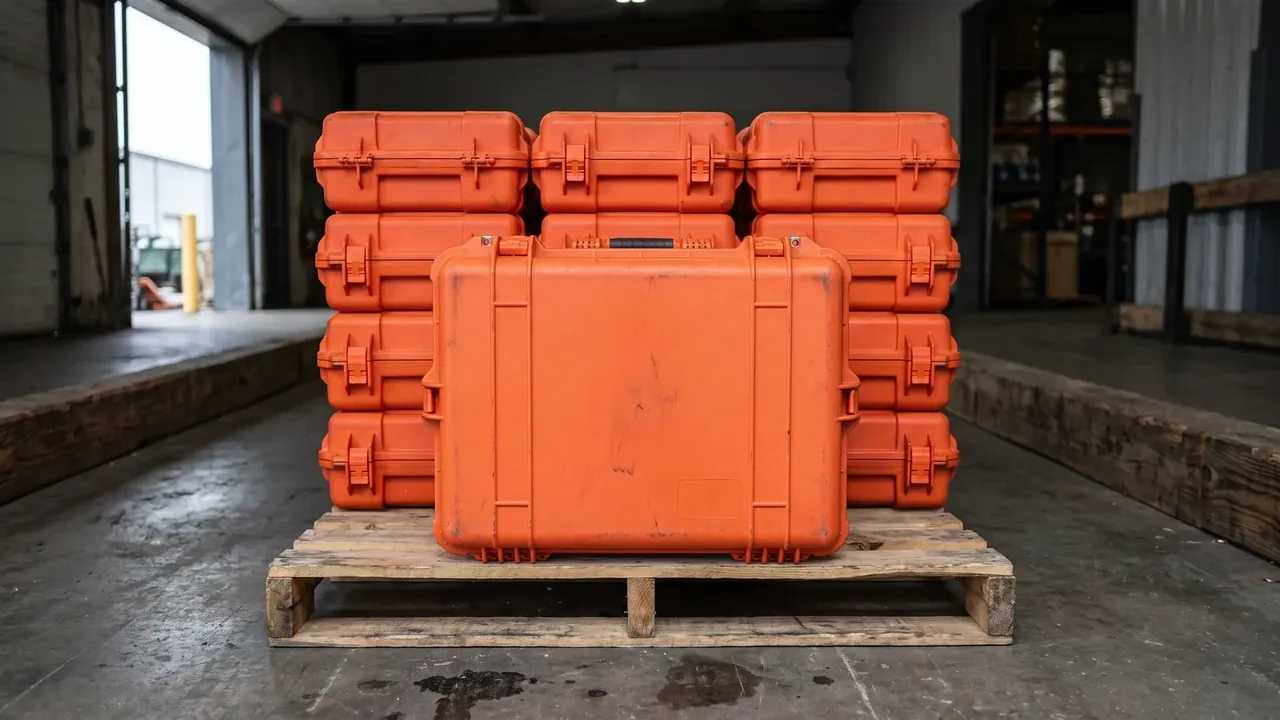
MOQ has two meanings. The tooling MOQ is the smallest run that pays for a set-up: PP dries two hours at 80 °C and a mould change takes four to six hours. The economic one is where price stops falling, above 2,000 units.
| Batch (units) | Tool share (yuan/unit) | Relative price |
|---|---|---|
| 500 | 560 | 100 |
| 1,000 | 280 | 88 |
| 3,000 | 93 | 79 |
| 5,000 | 56 | 76 |
| 20,000 | 14 | 73 |
3. Tonnage, Cycle Time and the Unit Price
Tonnage follows projected area. A 600 × 400 mm Stackable Container has 2,400 cm²; at 0.4 t/cm² and a 1.2 safety factor that is 1,150 t, so a deep body runs on a 1,300 t press. On 800 t, flash and short shots arrive together.
Cycle time follows wall thickness on a Stackable Container: 95 seconds at 2.8 mm, 118 seconds at 3.3 mm, which lifts machine time 24%. Masterbatch runs at 2% with drift held to ΔE 1.5, and each print plate adds 0.35 yuan per unit.
4. Lead Time Breakdown and the RFQ Fields
A supplier quoting 45 days and one quoting 70 differ on tooling. Split it: five days of design, 20 of machining, two for T1, five for sample approval, 15 for the first batch, then 20 days per 5,000 units.
| Field | Example | What goes wrong without it |
|---|---|---|
| Envelope | 600 × 400 × 300 mm, plus or minus 2 mm | Stack misses the pallet |
| Weight, wall | 3.8 kg, wall 2.8 mm | Cheap quote, thin part |
| Resin | Impact copolymer PP, MFI 8 | Cold dart failure |
| Stack load | Four high, base carries 180 kg | Ribs creep and bow |
| Colour | Reference chip, ΔE 1.5 | Batch mismatch |
| Two-colour, artwork attached | Plate cost added later | |
| Hardware | Four latches, stainless rivets | Salt spray failure |
Payment belongs here too: 30% deposit, 60% before shipment, 10% after acceptance, AQL 2.5 sampling.
5. Trade-in and Scrap Credit
Scrap credit follows weight and virgin price, not purchase price. Clean regrind is worth 55% of virgin; mixed colour or metal inserts drop it to 30%.
| Condition | Route | Credit basis |
|---|---|---|
| Same grade, clean | Direct regrind | 55% of virgin, 6 yuan/kg |
| Mixed colour | Downgraded regrind | 30% of virgin, 3.3 yuan/kg |
| Metal rivets | Strip, then regrind | 1.5 yuan/kg deducted |
| Cracks, distortion | No reuse | Scrap plastic, 2.2 yuan/kg |
Trade-in is usually a 6 to 10% credit against the new price, with 300 units of one grade per batch, otherwise sorting absorbs it. Credit settles per delivery batch, never as cash, and a take-back clause for 80% of volume adds 3.2 yuan per unit.
Conclusion
Buy a Stackable Container by opening five cost blocks: weight and wall for resin, cavities and tonnage for machine time, quantity for the tool, plate count for print. Fill the RFQ fields first, and a Stackable Container purchase puts money where it can be seen.
This article discusses only the container (case body) side of specifications and design intent, and does not cover any handling, loading or use of the contents.
Related Reading
- Stack load design: compression, interlock and stability
- Why stackable units topple, and how to stop it
- What a supplier qualification audit should cover
- Delivery and picking for mixed orders
Related Products
- 8 Series — Gun Cases; Military Equipment Cases; Camera Equipment Cases; Drone Cases; Watch Cases; Knife Cases; First Aid Cases; Electronics Equipment Cases
- WL8-2812 PP Gun Case — model WL8-2812
- All protective cases and toolboxes: 7 series, 158 models