

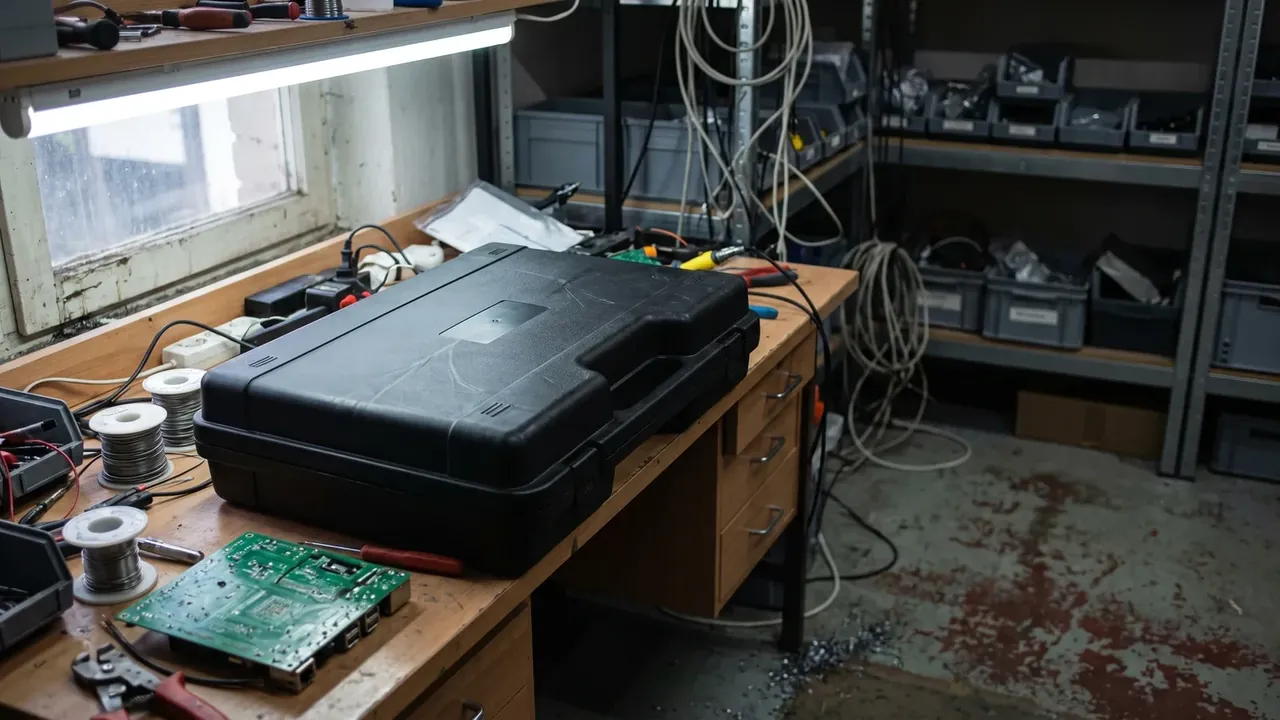
Quick answer: Choose a Stackable Container by settling five things in order: tier count, drop method, handling interface, internal height and pallet module, and fold ratio last.
Table of contents
- How Many Tiers a Stackable Container Can Take
- Picking the Alignment Feature by Drop Method
- Lifting and Fork Interfaces at Full Load
- Internal Height and Pallet Module
- Fold Ratio and the Return Trip
- FAQ
1. How Many Tiers a Stackable Container Can Take
Tier count comes from load per tier. Put 25 kg in each tier and stack four: the bottom lid of a Stackable Container carries 75 kg from the three tiers above, not the 100 kg of the stack. Tare lands on the pallet.
Pressure sits on the rim band. A 600 × 400 mm case with a 6 mm rim land gives about 12000 mm², so 75 kg becomes 0.06 MPa. Polypropylene allows 0.4 MPa long term at 23 °C and 0.2 MPa at 60 °C, so the same stack turns marginal in a hot store.
| Tiers | Load on bottom lid | Rim pressure | Set after 3 months at 60 °C | Verdict |
|---|---|---|---|---|
| 2 | 25 kg | 0.02 MPa | 0.4 mm | fine anywhere |
| 3 | 50 kg | 0.04 MPa | 0.9 mm | fine at room temp |
| 4 | 75 kg | 0.06 MPa | 1.7 mm | needs a pad |
| 5 | 100 kg | 0.08 MPa | 2.8 mm | not advised |
Time counts too: 24 hours shows nothing, three months separates cases.
2. Picking the Alignment Feature by Drop Method
The alignment feature follows the drop method: hand placing gives about 3 s to line up, so the entry must swallow a 15 mm error, which a 90 degree taper opening 10 mm wider does.
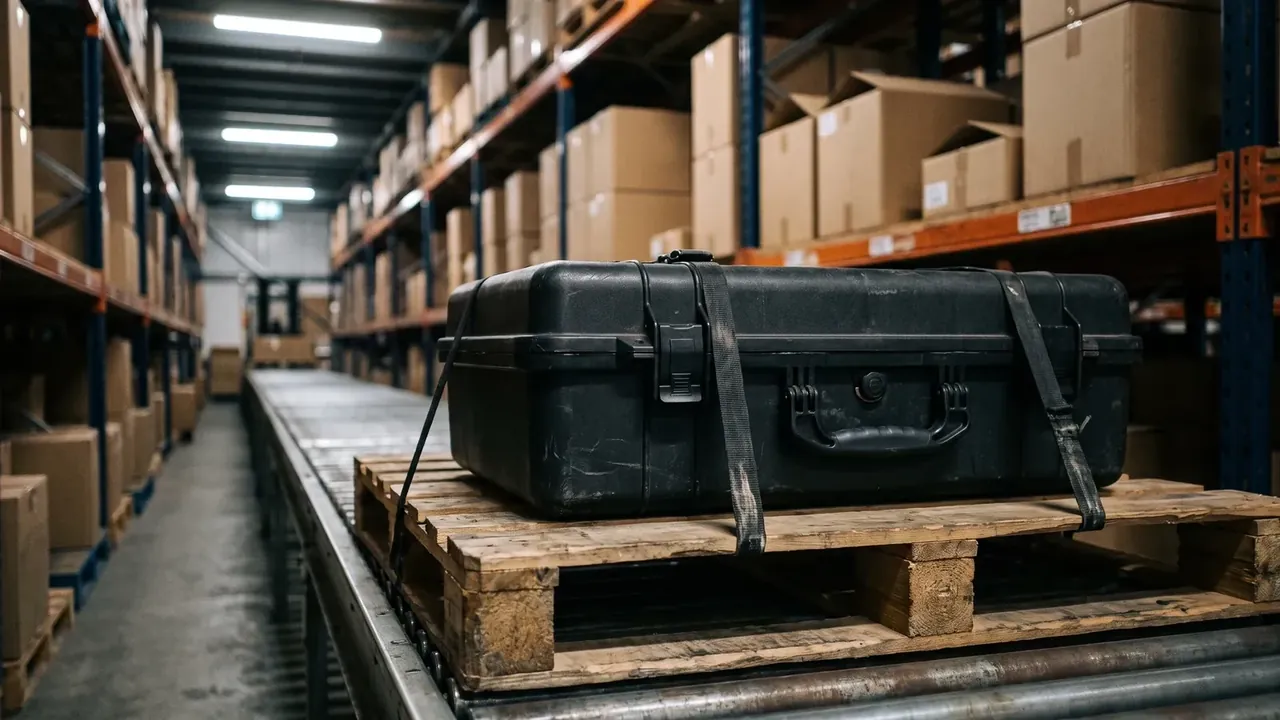
Forks stop within 50 mm and land within 30 mm, so a 10 mm rim with a lead-in chamfer keeps the upper case inside. A crane swings 100 mm and needs a large cone. Where all three occur, size for the loosest.
3. Lifting and Fork Interfaces at Full Load
Forks need a pocket. A 100 × 200 mm pocket leaves 20 mm around an 80 mm tine, and a pocket in a base skid outlasts a slot in the body: at 380 kg the slot dents 1.5 mm and cracks within a few dozen moves.
Crane work needs rated eyes. Four at 1.2 kN each, with sling angle at 60 degrees, put 1.07 kN on each leg, a 12 percent margin. At 90 degrees each leg sees 1.33 kN, past the rating.
| Handling | Interface | Full load limit | Commonly missed |
|---|---|---|---|
| Hand carry | side grips 25 mm deep | 20 kg per case | grips near centre of gravity |
| Forklift | base pocket 100 × 200 mm | 380 kg | forks over two thirds of length |
| Four point lift | four eyes at 1.2 kN | 300 kg at 60 degrees | derate above 60 degrees |
| Pallet load | pallet plus stretch film | 700 kg | film holds shape, not weight |
Interface marks belong on the same face as stack marks, or forks go in backwards.
4. Internal Height and Pallet Module
Internal height is subtracted from outside height, never added up from inside. A 320 mm case spends 35 mm on the lid and 8 mm on base plus stack boss, leaving 285 mm; a 20 mm EVA liner brings usable height to 245 mm.
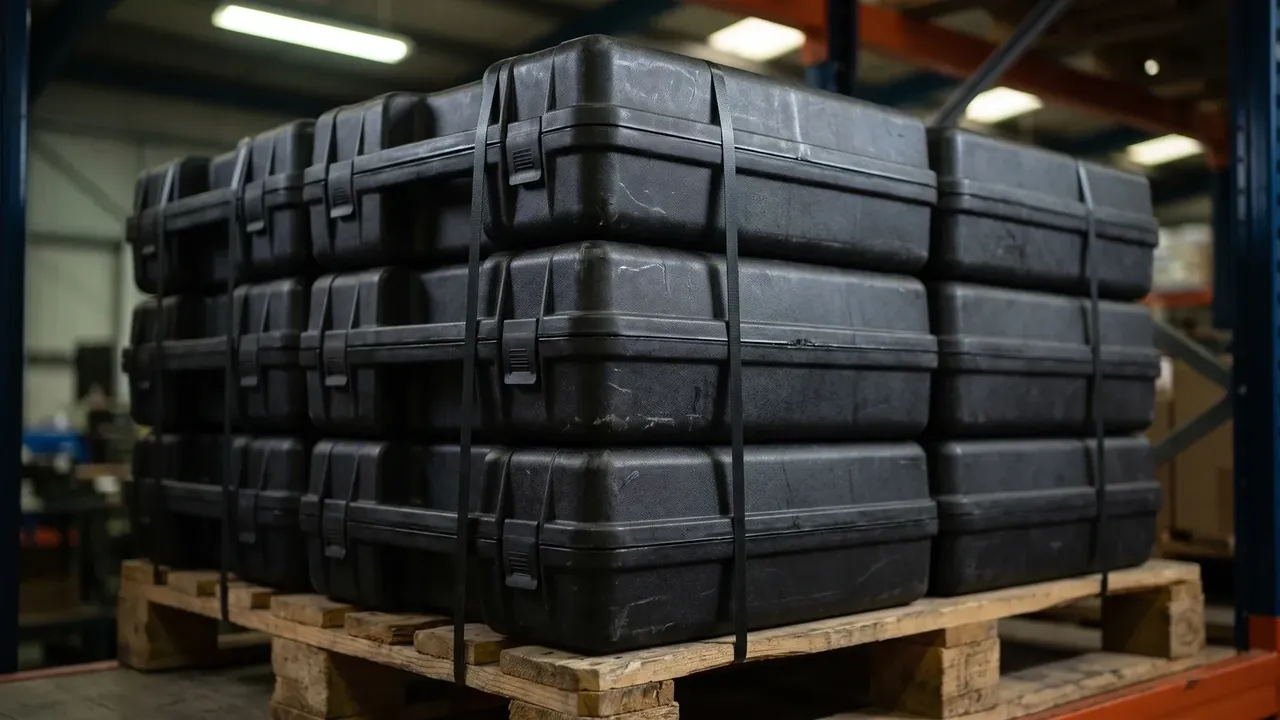
The module is set by the pallet: four 600 × 400 mm cases fit 2 × 2 on 1200 × 800 mm at 92 percent area use, five fit on 1200 × 1000 mm at 88 percent. Change the internal height and the outside follows, so lock both first.
5. Fold Ratio and the Return Trip
Fold ratio comes last. A 305 mm case folding to 95 mm gives 1:3.2, so a return load goes from 240 to 720 units and saves a couple of yuan each, but only if empties travel far back.
Folding costs something: the crease runs 0.3 mm thinner and whitens after 500 cycles, a folded stack is one tier less stable, and price is 18 percent higher. On one way traffic no fold is needed; returns over 300 km twice a month clear the premium in a year.
Conclusion
Tier count fixes rim pressure, drop method the entry, full load the pockets and eyes, then height and module lock, and fold ratio trades last. Hold the order and the Stackable Container you pick survives the floor.
This article discusses only the container (case body) side of specifications and design intent, and does not cover any handling, loading or use of the contents.
Related Reading
- How to read stacking specifications for a stackable container
- Why stackable containers collapse and what to do
- Marking standards for pallets and cases
- How cases are stored in a warehouse
Related Products
- 8 Series — Gun Cases; Military Equipment Cases; Camera Equipment Cases; Drone Cases; Watch Cases; Knife Cases; First Aid Cases; Electronics Equipment Cases
- WL8-2812 PP Gun Case — model WL8-2812
- All protective cases and toolboxes: 7 series, 158 models