

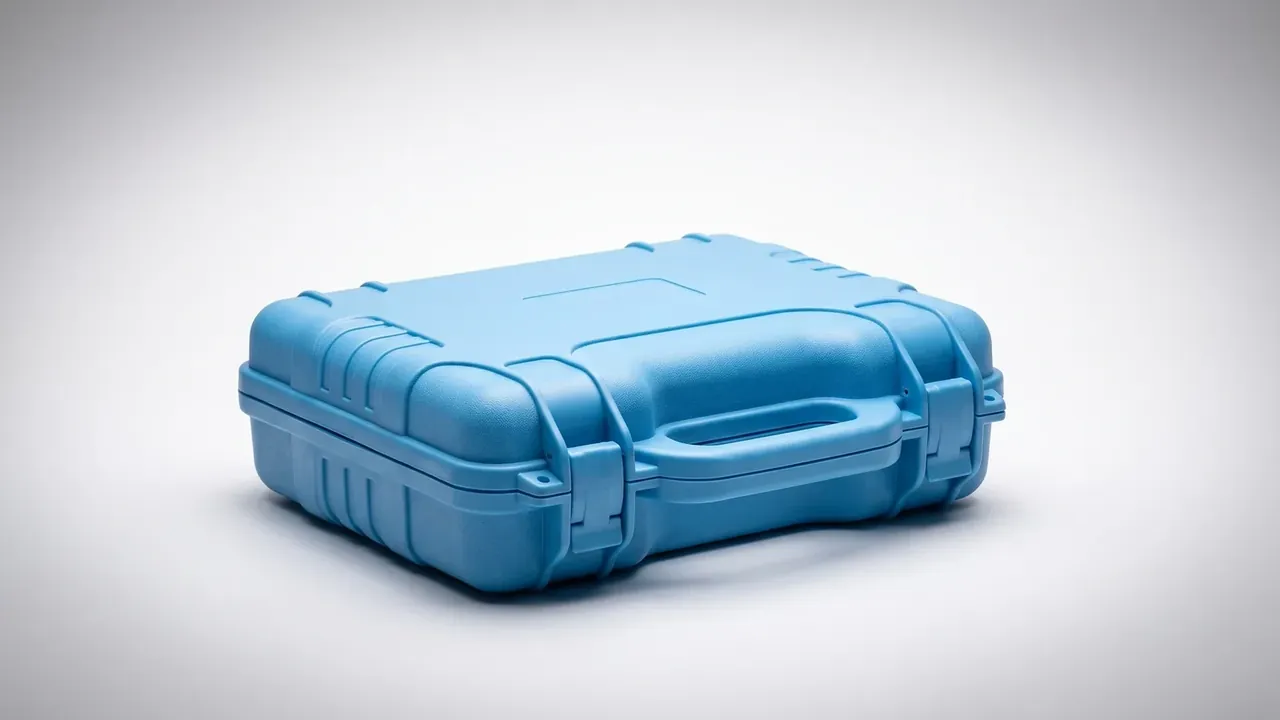
Quick answer: A cleanroom box is chosen on three tests at once, a surface that wipes clean, a body that sheds no particles and a structure that survives sterilization; a stainless tool box wins the first two, plastic keeps the weight and the price.
Table of contents
- Three Hard Requirements for a Cleanroom
- Surface Finish: Ra 0.8 μm Against a Molded Skin
- Sterilization: Steam, VHP and Wiping
- Particles and Ion Release
- Weight, Handling and Static
- Cost and a Mixed Layout
- FAQ
1. Three Hard Requirements for a Cleanroom
Whether a stainless tool box belongs in a cleanroom has nothing to do with the label on the steel; three requirements must hold at once. Cleanability: every wiped surface must be reachable by the disinfectant, with no groove, rivet hole or rolled edge as a hiding place. Low shedding: the body releases no particles when moved, opened or knocked. Sterilization: repeated steam, vaporized hydrogen peroxide or chlorine leaves dimensions and appearance intact.
The room class sets how tight they are. Under ISO 14644-1, an ISO 5 area allows 3,520 particles per cubic metre at 0.5 μm and above, ISO 7 relaxes to 352,000 and ISO 8 to 3,520,000. A wipe is itself a dust event, so stricter classes put more weight on cleanability.
Plastic struggles on the first two: molded texture and parting lines hold residue, a crystalline PP skin sheds fines under rubbing, and static pulls particles onto the wall.
2. Surface Finish: Ra 0.8 μm Against a Molded Skin
Roughness turns requirement one into a number. A 316L sheet mechanically polished reaches Ra 0.4 μm, electropolishing delivers Ra 0.8 μm, and a mirror grade goes to Ra 0.2 μm, while a molded PP body stays between Ra 1.6 μm and Ra 3.2 μm even from an SPI A-2 tool.
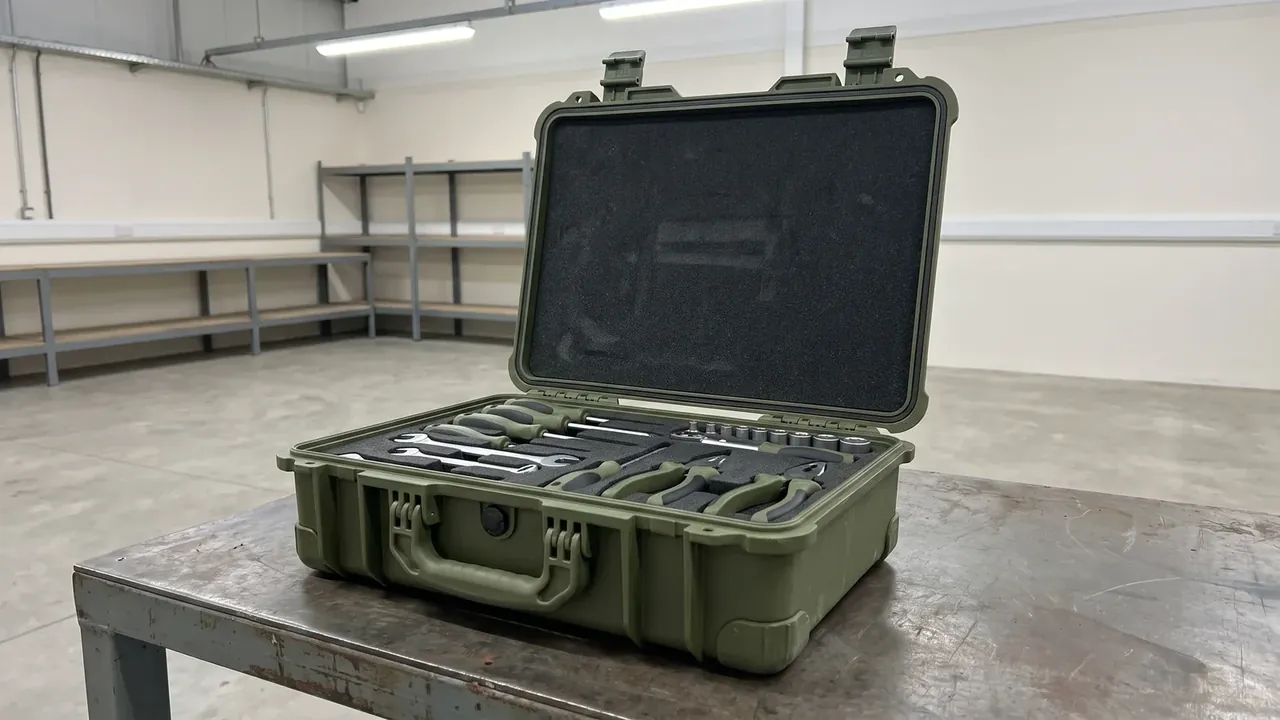
Over a 100 mm by 100 mm area, Ra 0.8 μm needs three wipe passes to reach every micro-valley, while Ra 3.2 μm needs five.
Welds are harder than parent metal: an intermittent weld leaves a 0.2 mm gap, wide enough for disinfectant and too narrow to wipe, so a settle plate above it grows colonies. The answer is a continuous weld, reinforcement ground under 0.3 mm, then electropolishing. Plastic corners come from geometry: an R2 molded radius, but rib roots and latch seats stay grooved unless the tool goes to R3 and adds 0.4 mm of wall.
| Surface item | 316L electropolished | 316L mechanical | Molded PP |
|---|---|---|---|
| Roughness Ra | 0.8 μm | 0.4 μm | 1.6–3.2 μm |
| Inner corner | Polished weld | Polished weld | R2 in tool |
| Wipe passes | 3 | 3 | 5 or more |
| Residue risk | Weld, screw hole | Weld, scratch | Rib root, latch seat |
3. Sterilization: Steam, VHP and Wiping
Sterilization is the harder divide. Saturated steam at 121 °C for 15 min, repeated 50 times, moves a 316L body under 0.1% and keeps hinge and latch clearance under 0.5 mm; a molded PP body warps around cycle 20, with the lid closing 1.2 mm out of line.
Vaporized hydrogen peroxide takes another route. At 400 ppm for 30 min it barely touches the passive film of 316L, while PP whitens and chalks by round 15. Chlorine is blunter: 200 wipes at 1000 ppm sodium hypochlorite leave 316L open to pitting, and PP loses over 15% of its gloss.
The weak point of a stainless tool box is the fittings, not the body. Silicone gaskets reach 22% compression set after 50 steam cycles and a galvanized spring rusts at cycle 30.
4. Particles and Ion Release
Shedding is hardest to self-check because nothing shows: in an ISO 5 area one 0.5 μm particle trips a live counter, and fines from opening and pushing land upstream of the airflow.
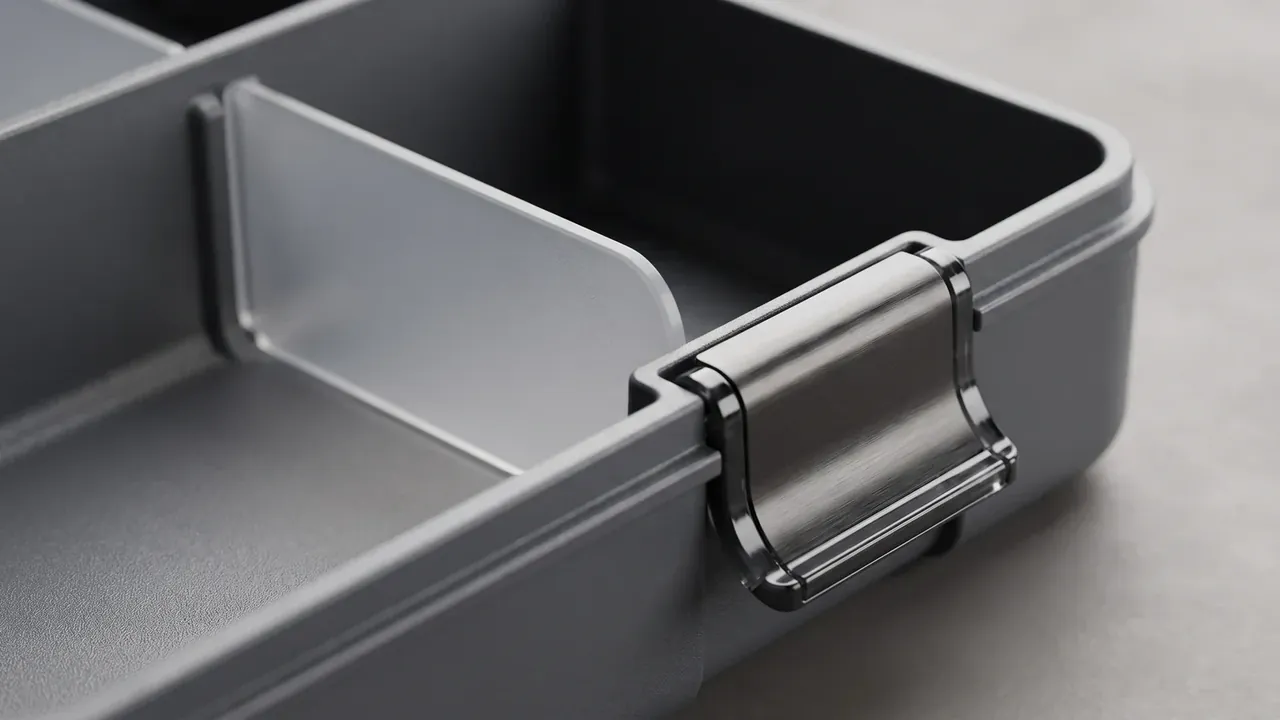
316L relies on its passive film. With 16% to 18% chromium and 2% to 3% molybdenum, the surface regrows a 2 to 3 nm oxide layer in air and wear is measured in nanometres; a particle counter 100 mm away for 1 min stays within 3 counts of background.
PP sheds two ways: abrasion grinds out 1 μm to 10 μm fines, and low-molecular additives migrate to the skin, where one alcohol wipe lifts them off.
Ion release is quieter: a passivated 316L body holds chloride release under 0.1 μg/cm², while PP carries no halogen itself but picks up additives from flame retardant and antistatic packages.
5. Weight, Handling and Static
At the same 60 L usable volume, a stainless tool box weighs 22 kg and a molded PP body 6.5 kg, a 15.5 kg gap. Cleanroom access adds gowning and air showers, so body weight decides whether one person carries it.
Load runs the other way: a 316L body in 1.2 mm sheet with two folded edges holds 120 kg static without distortion, while a PP body deflects 2 mm at the same load.
Static is where plastic hurts. Plain PP sits near 10¹⁴ Ω and holds a sheet of dust, so an electronics area needs a grade between 10⁶ Ω and 10⁹ Ω at 20% more cost; a stainless body only needs a ground strap under 10 Ω.
6. Cost and a Mixed Layout
At 60 L a stainless tool box runs 2200 CNY against 420 CNY for molded PP, a factor of 5.2; over 8 years against 3, the annual figure falls to 275 and 140 CNY.
| Zone class | Main body | Liner | Reason |
|---|---|---|---|
| ISO 5 | 316L stainless tool box | Stainless trays | No shedding, sterilizable |
| ISO 7 | 316L or electropolished stainless | Modified PP trays | Cost and cleaning balanced |
| ISO 8 | Modified PP body | None | Surface resistance is enough |
| Perimeter | Standard PP body | None | Never enters the core |
A mixed layout often beats either choice. A stainless trolley stays at a fixed station, tools ride in PP trays that lift out as a unit and pass through the hatch after disinfection, so the steel rarely moves and the plastic covers transfers only.
Conclusion
The order in a cleanroom is zone class first, sterilization method second, weight and cost last. In ISO 5 a stainless tool box holds Ra 0.8 μm, continuous welds and a 316L passive film at once; in ISO 8 a modified PP body is cheaper as long as surface resistance lands between 10⁶ Ω and 10⁹ Ω. Neither 22 kg against 6.5 kg nor 2200 CNY against 420 CNY goes away, so most plants keep steel fixed and plastic on the transfer route.
This article discusses only the container (case body) side of specifications and design intent, and does not cover any handling, loading or use of the contents.
Related Reading
- Cleanroom equipment cases: material, sealing and cleaning
- Stainless and plastic tool boxes outdoors
- Aluminium against stainless steel tool boxes
Related Products
- 8 Series — Gun Cases; Military Equipment Cases; Camera Equipment Cases; Drone Cases; Watch Cases; Knife Cases; First Aid Cases; Electronics Equipment Cases
- WL8-2812 PP Gun Case — model WL8-2812
- All protective cases and toolboxes: 7 series, 158 models