

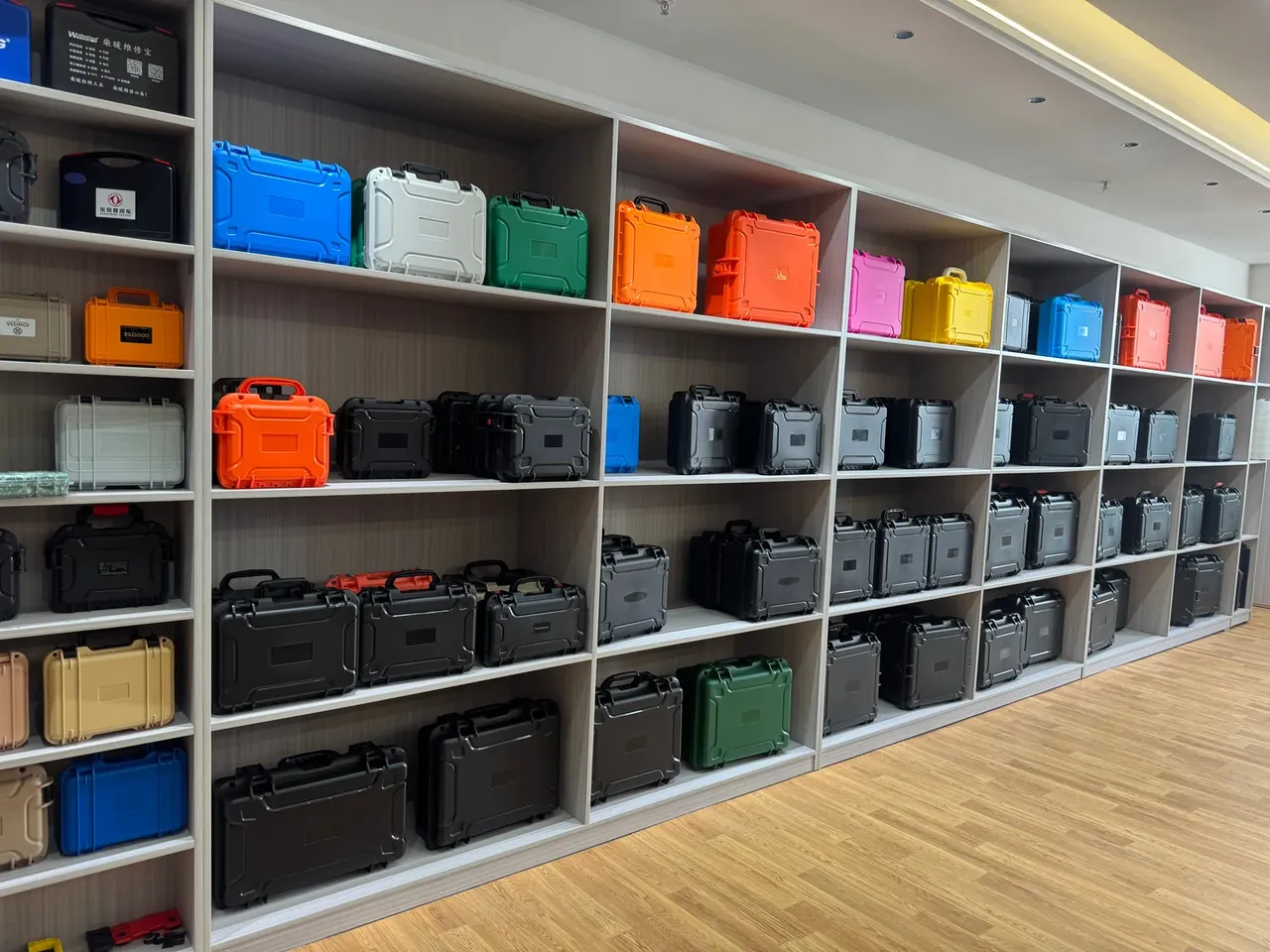
Quick answer: High-Strength PP Boxes and 0.8 mm steel cases fail in different places: rust at folded edges, cracks at -20 °C, and weight is only the first number.
Table of contents
- Weighing the Difference
- Rust: Powder Coat Failure and Water Absorption
- Impact: Dents versus Spring-Back
- Cost and Replacement Cycle
- Where Steel Still Wins
- FAQ
1. Weighing the Difference
Steel fails at the rust line, plastic at the brittle line, and the two carry different repair bills.
Weigh the same way every time: empty case, latches and handle fitted, no liner. A 0.8 mm cold-rolled shell, folded with a rim frame and two hinge pairs, reads 4.2 kg. The same 24 L envelope in moulded High-Strength PP Boxes, 3 mm wall with ribs formed in the same shot, reads 3.1 kg.
The number that matters is repetitions: forty metres from store to bench, twenty lifts a day, 250 days, 5.5 t of extra load a year.
| Item | Steel case | High-Strength PP Boxes |
|---|---|---|
| Shell and wall | 0.8 mm cold-rolled, folded | 3 mm moulded PP wall |
| Empty weight | 4.2 kg | 3.1 kg |
| Sound when set down | metallic ring | dull thud |
| Grip with wet hands | slick, gloves needed | textured, one hand |
Steel cannot be lightened by thinning without losing a third of its sectional stiffness, and the side wall then bows when carried. High-Strength PP Boxes trade wall thickness or rib depth instead, with 3 mm the usual compromise against ball-drop performance.
2. Rust: Powder Coat Failure and Water Absorption
Cold-rolled sheet has no corrosion resistance of its own, so the powder coat is the entire barrier, at 60 µm to 90 µm over a degreased, phosphated and dried surface.
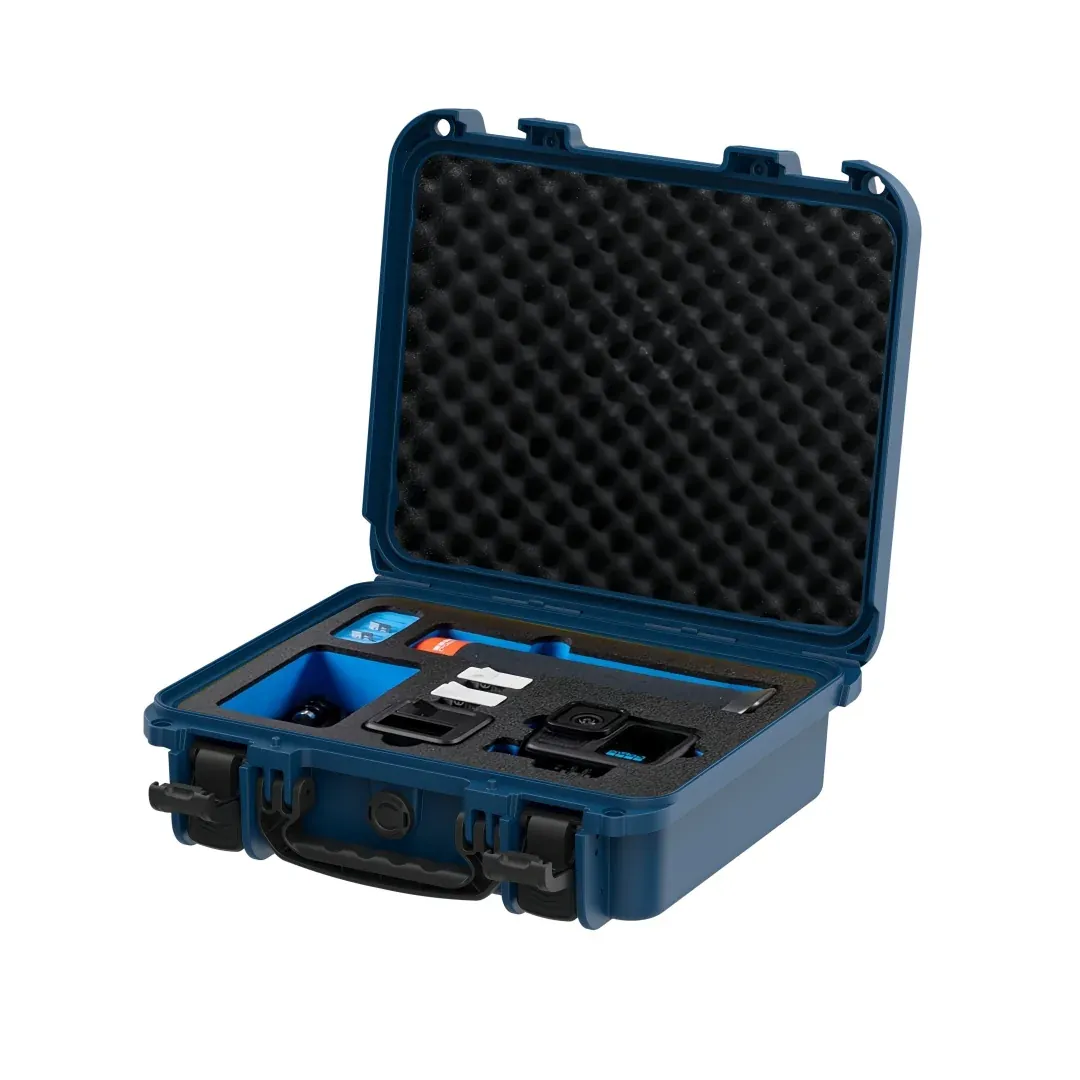
Rust does not start on the flat panel. It starts at folded edges, latch seats, weld seams and sheared lips, where powder lands thinnest and water sits longest. Neutral salt spray, 5% sodium chloride at 35 °C, is the usual check, and 48 h is the entry gate for indoor hardware. A panel that passes 48 h often pits after 200 h on a quay.
High-Strength PP Boxes have no rust path but another number to read: water absorption. PP takes under 0.03% in 24 h, near 0.02% in practice, so a soaked case can be wiped and returned to service without dimensional drift. That is not an ingress rating: water enters at the lid land and latch cut-outs.
| Failure path | Starting point | When it shows |
|---|---|---|
| Coating blister | incomplete phosphate film | within 24 h of spray |
| Edge rust line | thin powder at folded radius | around 48 h |
| Seized latch seat | water in rivet gaps | one rainy season |
| Sheared edge bloom | unsealed cut lip | three months after dispatch |
3. Impact: Dents versus Spring-Back
A steel shell dents, a plastic shell springs back, and the two outcomes cost different money.
Strike a 0.8 mm panel with a 1 kg ball from 1 m and the dent lands at 8 mm to 12 mm. The deformation is permanent: the hollow pushes into the liner, the lid stops seating, the latches stop lining up. It can be hammered out, but the coat cracks along the hammer marks. High-Strength PP Boxes deform elastically first, store energy in the ribs and release it, leaving a white streak instead of a hollow; cracking begins past the yield point, at rib roots and corner radii.
Low temperature draws the line. Homopolymer PP keeps about a third of its room-temperature notched impact at -20 °C, so a 1 kg ball from 1 m is enough to crack it, while copolymer grades still spring back. Impact resistance is a property of grade, wall and rib layout, not of a word on the data sheet.
| Failure mode | Steel case | High-Strength PP Boxes |
|---|---|---|
| Shape after impact | 8–12 mm hollow | elastic return, white streak |
| Secondary damage | cracked coat after hammering | crack at rib root |
| Cold behaviour | fold splits | homopolymer cracks |
| Field repair | hammer and paint | lid or case swap |
4. Cost and Replacement Cycle
On one quotation the gap runs 18%, with steel lower, and that gap reverses across a five-year cycle.
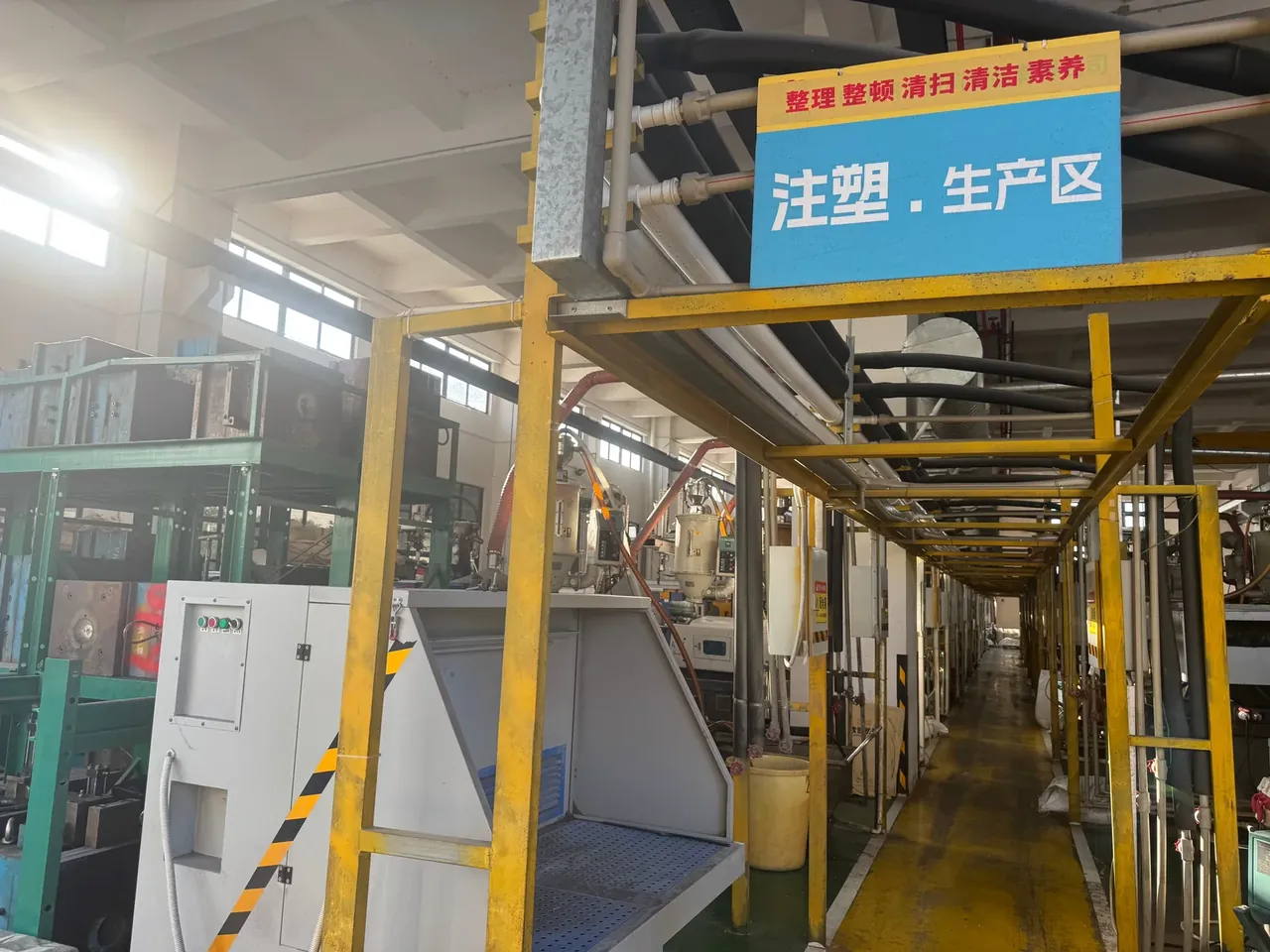
Against an index of 100 for steel, High-Strength PP Boxes sit at 118. In a damp bay the replacement cycle runs 5 years against 8, so annual cost is 20.0 against 14.8, or 26% cheaper per year. Steel rarely fails by perforation; it fails when rust seizes the latch, and repainting plus re-riveting costs more than the case is worth.
Repair routes differ too. Steel can be hammered, patched and re-latched; plastic means a new lid or a new case. At a remote site without a sheet-metal worker, the dent stays until the lid refuses to close.
| Cost item | Steel case | High-Strength PP Boxes |
|---|---|---|
| Purchase index | 100 | 118 |
| Replacement cycle | 5 years | 8 years |
| Annual cost index | 20.0 | 14.8 |
| Repair route | repaint, re-latch | lid or full swap |
The 18% holds for the same envelope and latch set; as the case grows, the gap narrows toward 10%.
5. Where Steel Still Wins
None of this makes plastic the universal answer. Four duties still belong to steel.
Heat is first: sparks from welding and grinding land on the lid, PP softens and pits, and a 3 mm wall burns through in time, while cold-rolled sheet takes an oxide mark. Earthing is second: one bolt bonds a metal case to the bench earth, which plastic cannot do. Point loading is third: a sharp casting resting on the floor plate deflects steel without splitting it. On-site repair is fourth: a workshop with a sheet-metal hand can extend a steel case past its nominal life.
The reverse holds in wet, salty, frozen or washed-down duty, where the rust path never stops. Selection rule: if red rust covers more than 5% of the cold-rolled surface after 48 h of salt spray, or a PP case cracks in a -20 °C ball drop, the material is wrong for that duty.
Related Reading
- Steel, wooden and plastic crates: choosing the outer pack
- Case or carton for e-commerce: where the cost line falls
- Injection-moulded case bodies: wall, ribs and sink marks
- Rotomoulded versus injection-moulded case life
Related Products
- 8 Series — Gun Cases; Military Equipment Cases; Camera Equipment Cases; Drone Cases; Watch Cases; Knife Cases; First Aid Cases; Electronics Equipment Cases
- WL8-2812 PP Gun Case — model WL8-2812
- All protective cases and toolboxes: 7 series, 158 models