

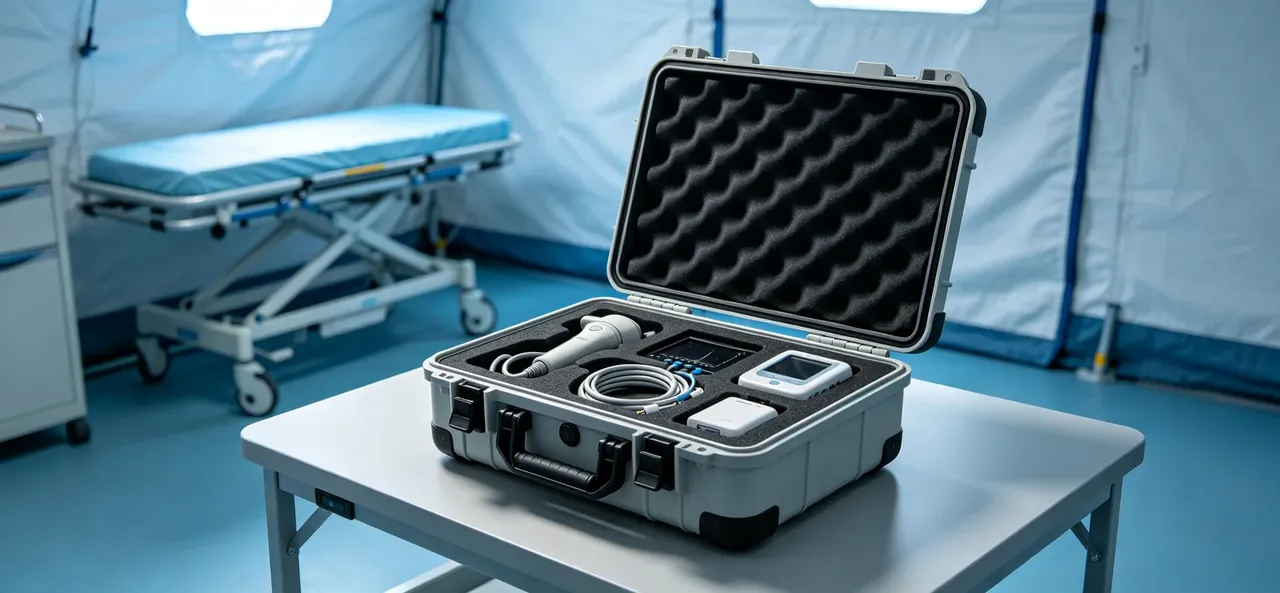
Quick answer: A sterilisation case seal recovers 96% when new, 75% after 120 cycles and 62% at 180, so replacement follows spring-back and latch force.
Table of contents
- Why the seal fails at cycle 180
- 121 ℃ versus 134 ℃ cycles
- Compression set and groove allowance
- Latch preload from 45 N to 28 N
- Opening within 30 minutes
- FAQ
1. Why the seal fails at cycle 180
Pulled from its groove after cycle 180, the seal recovered to 62% of its original height. Eight of twelve sterilisation cases in the batch needed a palm press to latch after cycle 150, with free travel at the second catch.
The loss is not linear: 96% when new, 88% at 60 cycles, 75% at 120, 62% at 180.
The cause is compression, not heat alone. Held at 20% compression, silicone chains rearrange above 121 ℃ and never return to full height, one step per cycle.
Failure shows as an inability to close. The surface stays intact with no crazing, the finger still feels rebound, but the profile is 1.2 mm short and the lid touches only in patches.
One sterilisation case takes several rounds a day: pressed to 80% height, held through the cycle, released 30 min, pressed again. That is 700 compressions a year, 200 of them above 121 ℃.
2. 121 ℃ versus 134 ℃ cycles
The two common cycles are 121 ℃ for 15 min and 134 ℃ for 4 min. The first runs 13 ℃ cooler but 11 min longer; the second drives the seal surface to 128 ℃ within 90 s.
| Cycle | Hold | Time | Peak seal temp | Set per cycle | After 200 |
|---|---|---|---|---|---|
| Low, long | 121 ℃ | 15 min | 118 ℃ | 0.08% | 16% |
| High, short | 134 ℃ | 4 min | 128 ℃ | 0.11% | 22% |
The high-short cycle adds 6 points of set, because relaxation at 128 ℃ runs about 1.4 times faster than at 118 ℃: 4 min does the work of 15. Plan 200 cycles on the low-long cycle and 160 on the high-short one.
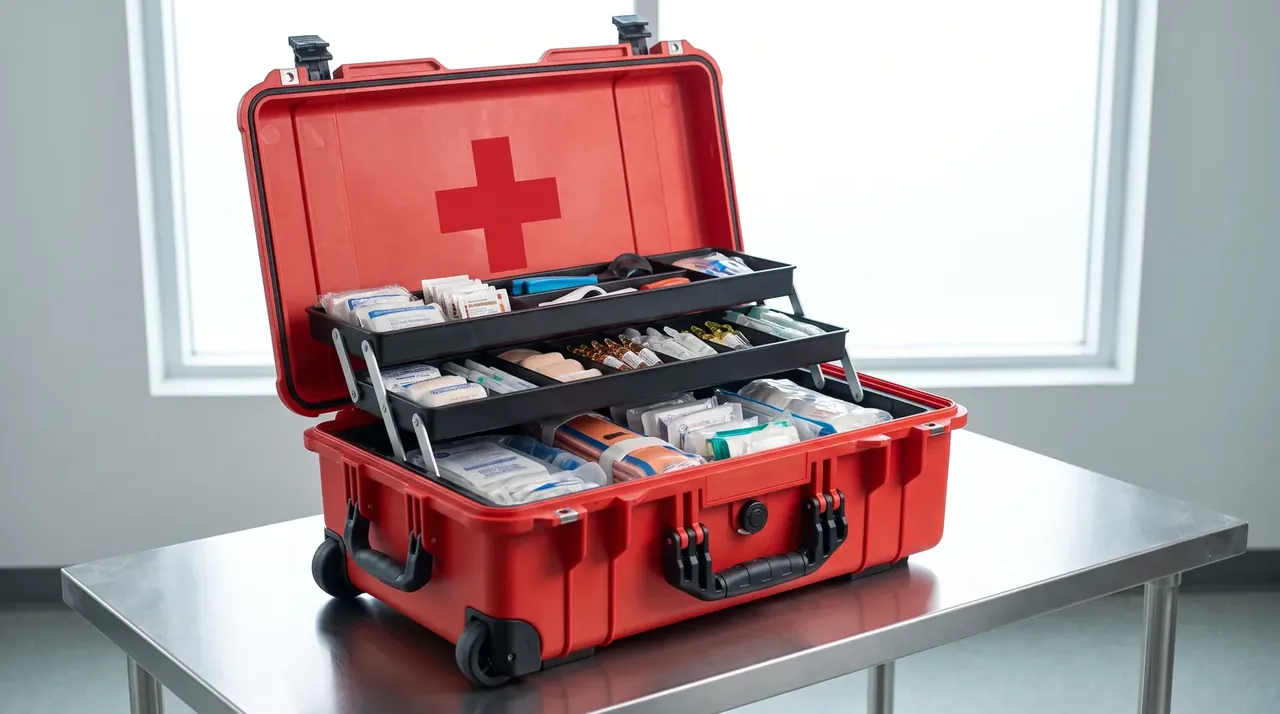
Changing the cycle means changing the groove: for 134 ℃ the depth goes from 4.8 mm to 5.2 mm, so the seal cannot bottom out and push compression past 30%.
3. Compression set and groove allowance
Compression set is measured the same way each time: compress 25%, hold 24 h at 70 ℃, release and cool 30 min, measure height. Set over compression gives the result, and the limit is 25%, which still leaves 1.0 mm of recovery at cycle 200.
The groove absorbs three changes at once: thermal expansion, compression set and assembly tolerance. Silicone expands at 2.4×10⁻⁴/K, so a 1.6 m seal grows 42 mm between 25 ℃ and 134 ℃. With both ends closed it bows in the middle, compression there rises from 20% to 34%, and that section dies first.
| Cycles | Spring-back | Compression set | Recovery time |
|---|---|---|---|
| 0 | 96% | 4% | 30 s |
| 60 | 88% | 9% | 1 min |
| 120 | 75% | 15% | 4 min |
| 180 | 62% | 21% | 12 min |
| 200 | 58% | 25% | 18 min |
Leave a 45 mm cavity at each end for the 42 mm of growth, with a 2 mm radius in the corner. A right-angle cavity pinches the profile.
Recovery time exposes the problem before spring-back does: 30 s when new, 12 min at 180 cycles. Groove width adds its share — at 0.4 mm wider than the profile the seal centres itself, at 0.1 mm it needs 15 N to push in and lifts out of the corners.
4. Latch preload from 45 N to 28 N
A new case measures 45 N at the midpoint of the latch handle at the second catch. Each of four latches covers about 400 mm of seal line, and preload falls to 38 N at 60 cycles, 32 N at 120 and 28 N at 200. Seal height loss accounts for seven tenths of the drop.
Below 30 N the sealing line pressure falls from 0.18 N/mm to 0.11 N/mm. That resists a temperature differential but not vibration: the lid works inside the latches and polishes the seal.
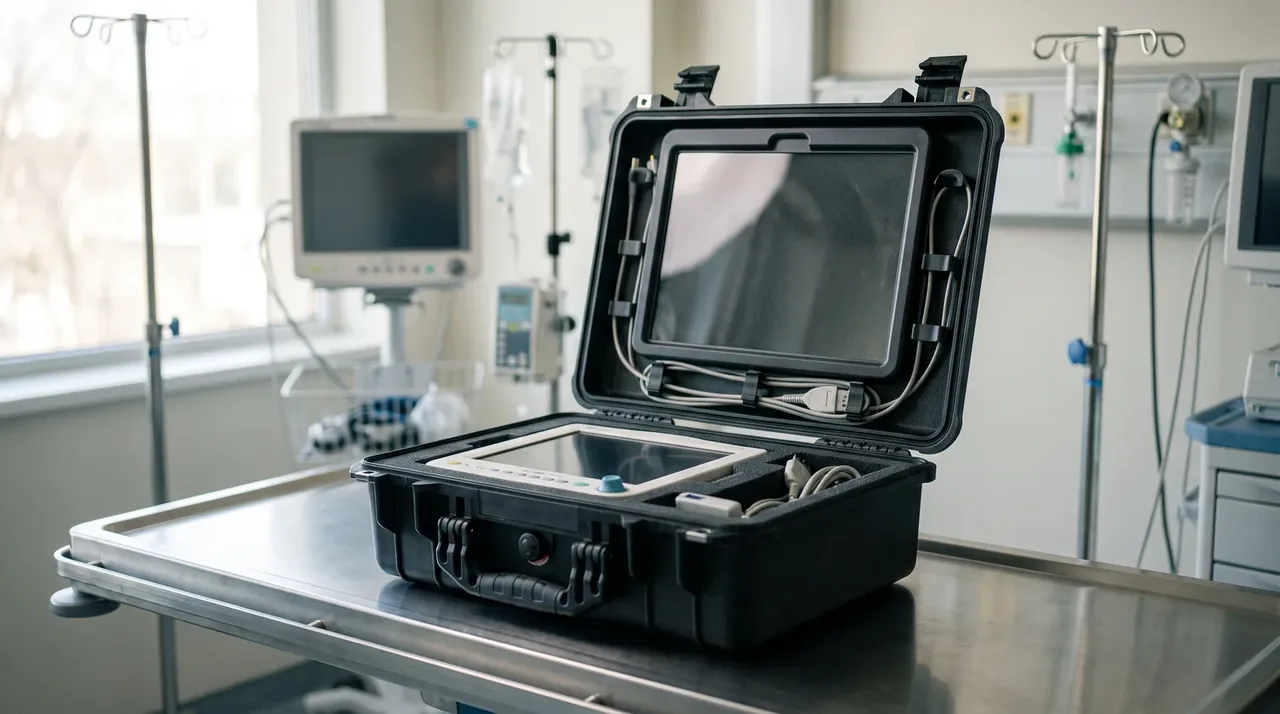
Measure preload with a push-pull gauge pressing vertically at the handle midpoint; the peak at release is the reading. Take the lowest of the four as the decision value, and replace the whole seal once one reads under 30 N.
Shimming the latch base does not help: a 1 mm shim returns 36 N but lifts compression to 26%, and set then runs faster than before.
5. Opening within 30 minutes
The cycle ends with the chamber at 134 ℃. Cooling to 60 ℃ takes 22 min and to 45 ℃ takes 30 min, and that wait decides whether the seal survives the next round.
Open above 80 ℃ and the seal surface contracts 0.9 mm in 20 s while its core is still over 100 ℃. The mismatch pulls the profile off the groove wall, the partial vacuum holds the lid, and breaking it takes 120 N.
The sequence: hold closed 22 min, open at 60 ℃ where contraction is 0.3 mm, unload and reset within 8 min, relatching while the seal sits at about 40 ℃.
Relatch after 30 min and the profile has set cold, needing 55 N, 22% more than when warm. That extra force is recorded as compression set. Split the window into 22 min of holding and 8 min of work, and write both into the cycle record.
Conclusion
Seal recovery comes down to two measurable numbers, spring-back and latch preload, sorted by cycle count.
| Cycles | Spring-back | Preload | Recovery | Action |
|---|---|---|---|---|
| 0–60 | 88–96% | 38–45 N | 1 min | Log every 20 cycles |
| 61–120 | 75–88% | 32–38 N | 4 min | Stock the spare |
| 121–180 | 62–75% | 28–32 N | 12 min | Inspect every 10 cycles |
| 181–200 | 58–62% | 28 N | 18 min | Replace now |
A sterilisation case seal does not have to leak before it is changed. Cycle 120 is the watch point, 180 the action point, 200 the hard line. Put those three in the equipment log and no post-mortem inspection is needed.
This article discusses container-side specifications and design implications only, and does not cover any handling, loading or use of the contents.
Related Reading
- Seal ageing and compression set in cases
- Gasket groove section design and tolerances
- Silicone versus EPDM seal materials
- Medical case series structure
Related Products
- 8 Series — Gun Cases; Military Equipment Cases; Camera Equipment Cases; Drone Cases; Watch Cases; Knife Cases; First Aid Cases; Electronics Equipment Cases
- WL8-2812 PP Gun Case — model WL8-2812
- All protective cases and toolboxes: 7 series, 158 models