

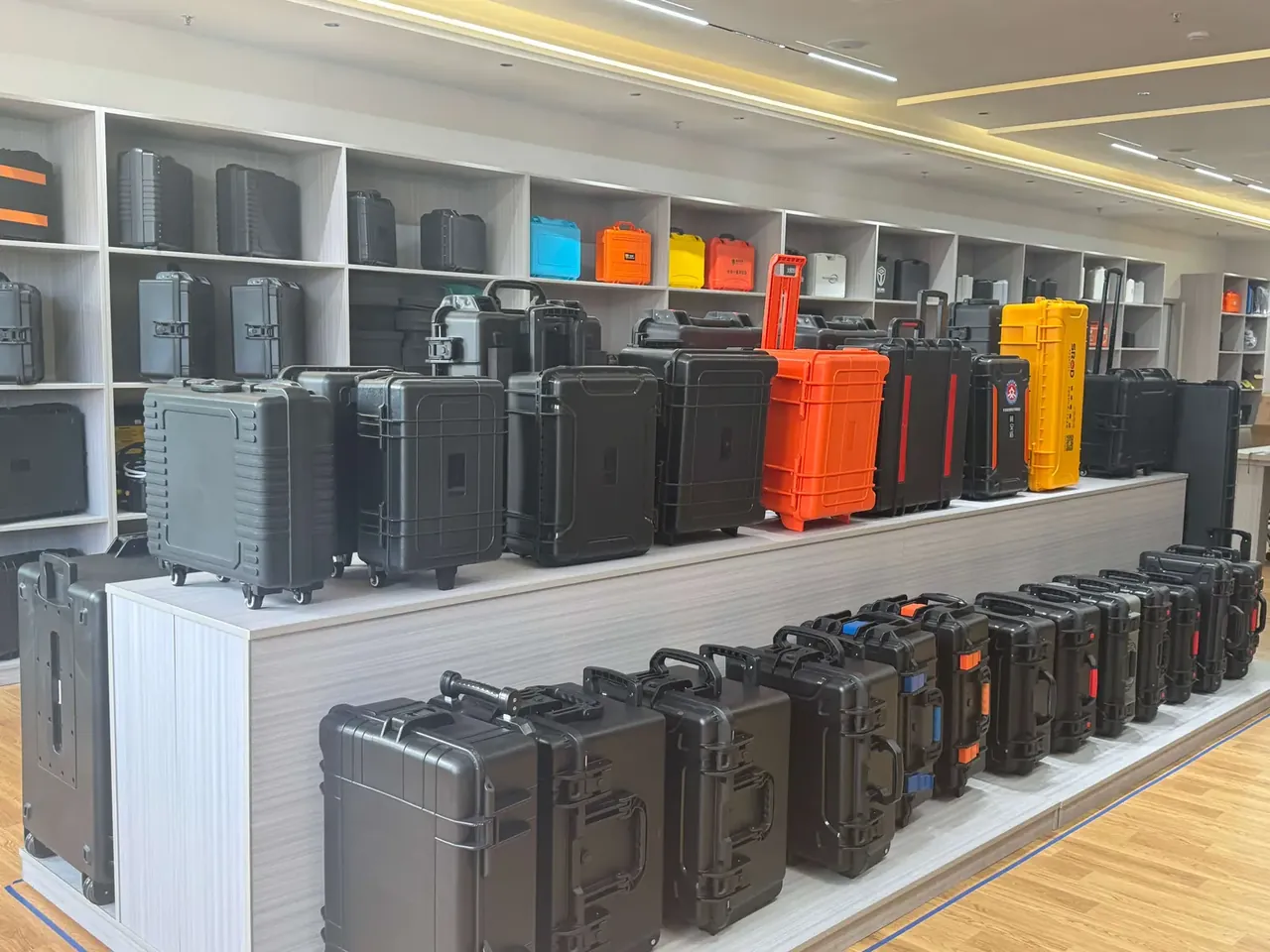
Quick answer: Set a submachine gun storage box beside a wooden crate, a steel chest, a soft case and open racking, and the gap is not purchase price. It sits in a seal that survives repeated opening, locking that can be tiered, and a liner that can be replaced.
Table of contents
- What Counts as an Alternative
- Wood and Steel: Cheap Up Front, Costly Later
- Soft Cases and Open Racking
- Five-Year Cost Arithmetic
- Three Tests That Separate Them
- FAQ
1. What Counts as an Alternative
Five options compete for the same floor: moulded plastic, steel, wood, soft cases and open racking. The first four are boxes, the fifth is furniture, and comparing them on unit price alone produces the wrong answer.
A submachine gun storage box wins on no single indicator. It wins because sealing, locking and lining are all serviceable at once.
| Option | Crush resistance | Resealable | Tiered locking | Replaceable liner |
|---|---|---|---|---|
| Moulded plastic | Medium to high | Yes | Yes | Yes |
| Steel chest | High | Yes | Yes | No |
| Wooden crate | Medium | No | Weak | No |
| Soft case | Low | No | Weak | No |
| Open racking | Not applicable | No | No | Depends |
The column most often skipped is the liner. It decides whether the box is an asset or a consumable: a swappable liner lets the body serve six or seven years, while a worn fixed slot scraps the unit.
2. Wood and Steel: Cheap Up Front, Costly Later
A plywood crate costs about a third of a moulded submachine gun storage box, and earns it: no compressible gasket, nail holes that loosen after a dozen openings, mildew in a wet season.
Steel is genuinely strong and genuinely heavy. At the same size it weighs 11.4 kg against 5.2 kg for moulded plastic, a 6.2 kg gap that turns a one-person carry into a two-person lift on stairs and tailgates.
Rust is the second bill. Condensation attacks seams first, and holding it back needs an internal coating plus powder coat, which erases the price advantage.
3. Soft Cases and Open Racking
A soft case folds and conforms, and resists nothing. Stack three and the bottom one carries everything, so long-term stacking leaves creases.
Open racking solves access, not storage conditions: no boundary, no seal, no locking tier, no standard counting unit. In practice the rack and the box divide the work — frequent items on the shelf, anything sealed or leaving the building in a box.
A submachine gun storage box is therefore a complement to racking, not a rival. Treating them as alternatives usually means only the purchase budget was counted.
4. Five-Year Cost Arithmetic
Add purchase, maintenance and replacement over five years, with the cheapest purchase indexed at 100.
| Option | Purchase index | Maintenance index | Replacements | Total index |
|---|---|---|---|---|
| Moulded plastic | 130 | 10 | 0 | 140 |
| Steel chest | 150 | 35 | 0.5 | 202 |
| Wooden crate | 100 | 20 | 2 | 160 |
| Soft case | 42 | 25 | 2.5 | 102 |
| Open racking | 180 | 15 | 0 | 195 |
The soft case scores lowest and still cannot do the job; it is here to show where the saving comes from. Wood is the reverse — cheap to buy, replaced twice in five years, by which point it has caught up.
5. Three Tests That Separate Them
Keep three indicators only: opening after a drop, hinge cycles, retained latch torque. All three can be checked on site.
| Indicator | Storage box | Steel chest | Wooden crate |
|---|---|---|---|
| Opening after 1.2 m drop | Normal, gasket reseats | Normal, paint chips | Corners split |
| Hinge life | 30,000 cycles | 20,000 cycles | 5,000 cycles |
| Retained latch torque | 2.5 N·m, under 15% loss | 2.5 N·m, about 25% loss | No rated latch |
Whether the submachine gun storage box still closes cleanly says more than the drop itself: a shifted gasket means low corner stiffness. Retained torque predicts the feel after three years — once a lid needs body weight, users add a strap and the seal exists on paper.
Conclusion
None of the five wins outright; they divide the work. Wood is single-use, steel is heavy and needs coating, soft cases carry no load, racking has no boundary. Moulded parts stay serviceable, so the five-year arithmetic moves the difference from invoice to ledger. Where long storage and off-site movement overlap, a submachine gun storage box is the least troublesome option.
This article discusses only the container (case body) side of specifications and design intent, and does not cover any handling, loading or use of the contents.
Related Reading
- How a submachine gun storage box is built
- Submachine gun storage box maintenance: checks and replacement
- Lockable storage boxes versus alternatives
- Pistol storage cases versus alternatives
Related Products
- 8 Series — Gun Cases; Military Equipment Cases; Camera Equipment Cases; Drone Cases; Watch Cases; Knife Cases; First Aid Cases; Electronics Equipment Cases
- WL8-2812 PP Gun Case — model WL8-2812
- All protective cases and toolboxes: 7 series, 158 models