

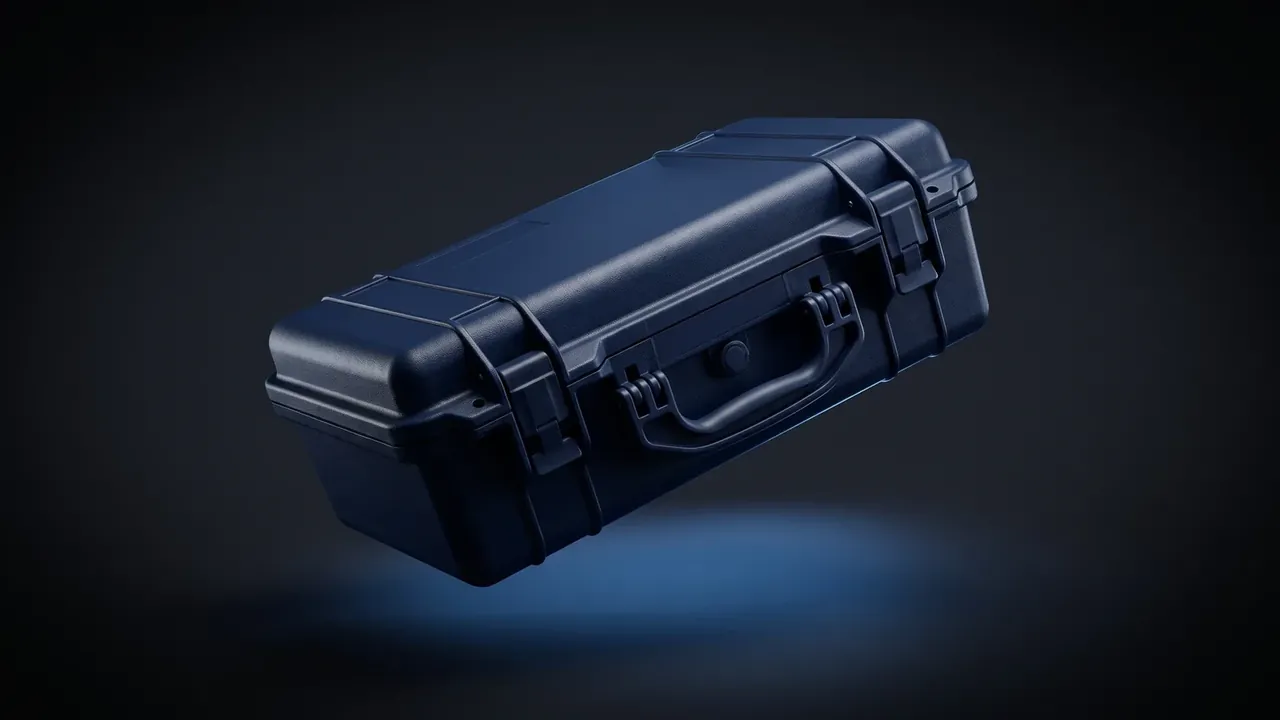
Quick answer: Order matters more than any single figure. In a Tactical Equipment Case, mounting decides which band of wall is thickened, the band eats into the interior, the interior sets where slots land, and slots set how many moves access costs.
Table of contents
- Five Selection Tests for a Tactical Equipment Case
- Mounting Method Sets the Load Path
- Quick Access and Opening Cadence
- Modular Inserts and Slot Control
- External Interfaces, Spares and the Check Sheet
- FAQ
1. Five Selection Tests for a Tactical Equipment Case
The tests are ordered by which one constrains the next. Mounting decides which band of wall carries thickness; that band takes interior volume; the interior sets where slots land. Interfaces and spares come last.
| Test | Question | Lands on |
|---|---|---|
| Mounting | What holds it | Pads, rail, thick band |
| Access | Moves to first item | Latch count, lid angle |
| Inserts | Variant changes case | Dividers, slot pitch |
| Interfaces | Where load travels | Rail, tie holes |
| Spares | Replace one part | Seal, pin, latch |
The order cannot be reversed: slots cut to the envelope mean recutting inserts and lid foam whenever the mount changes.
2. Mounting Method Sets the Load Path
A Tactical Equipment Case mounts three ways. Back pads bolt through four holes, so load radiates into the wall. A side rail turns bending into shear. Unsecured stacking leans on base and corners, and taller stacks work the lid harder.
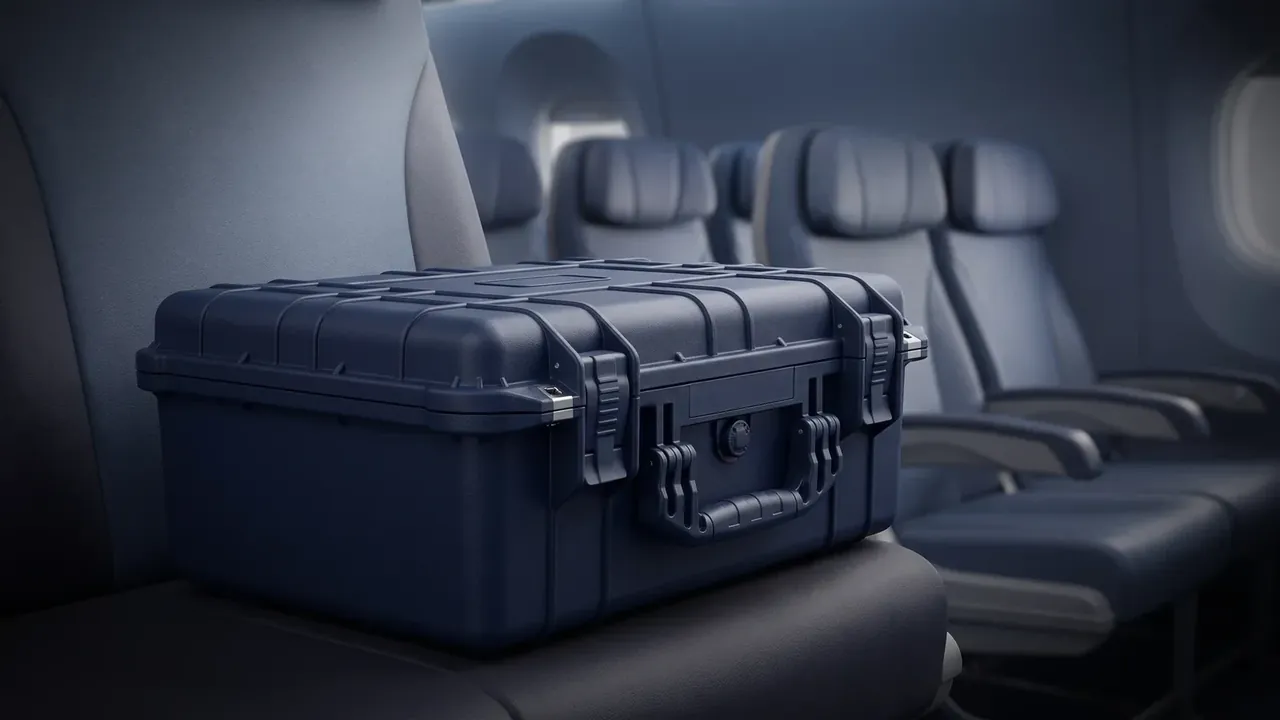
Holes should form a square: a 100 mm by 100 mm pattern with M8 inserts rated above 1.5 kN pull-out each, and a centre of gravity within ±15 mm of the pattern centre when weight sits to one side. Rail length should cover 60 percent of case height, and on a 4.5 mm wall the pads thicken to 6 mm.
3. Quick Access and Opening Cadence
Access on a Tactical Equipment Case is counted in moves: each extra thumb movement adds a beat, usually spent putting something down first.
| Access style | Unlatch moves | Trade-off |
|---|---|---|
| Single latch, assisted | 1 | Mid latch above 600 mm |
| Two opposed latches | 2 | Even clamp, one beat slower |
| Two plus a mid latch | 3 | Long lids seal evenly |
| Four latches all round | 4 | Best seal, slowest access |
| Quarter-turn locks | 2 | Fast, lower clamp force |
Latch travel of 18 mm is the dividing line: below 15 mm the arm cannot load the seal, above 22 mm one thumb cannot push it home. A single latch with spring assist opens one-handed in under 2 seconds, and a lid opening to 105 degrees holds at 100 degrees. Rim height matters: at 750 mm the eye falls on the slot labels, while above shoulder height every retrieval becomes a lift.
4. Modular Inserts and Slot Control
Modularity is not the presence of dividers but whether a slot can be numbered, repeated and replaced alone; numbering lets another person put an item back in place.
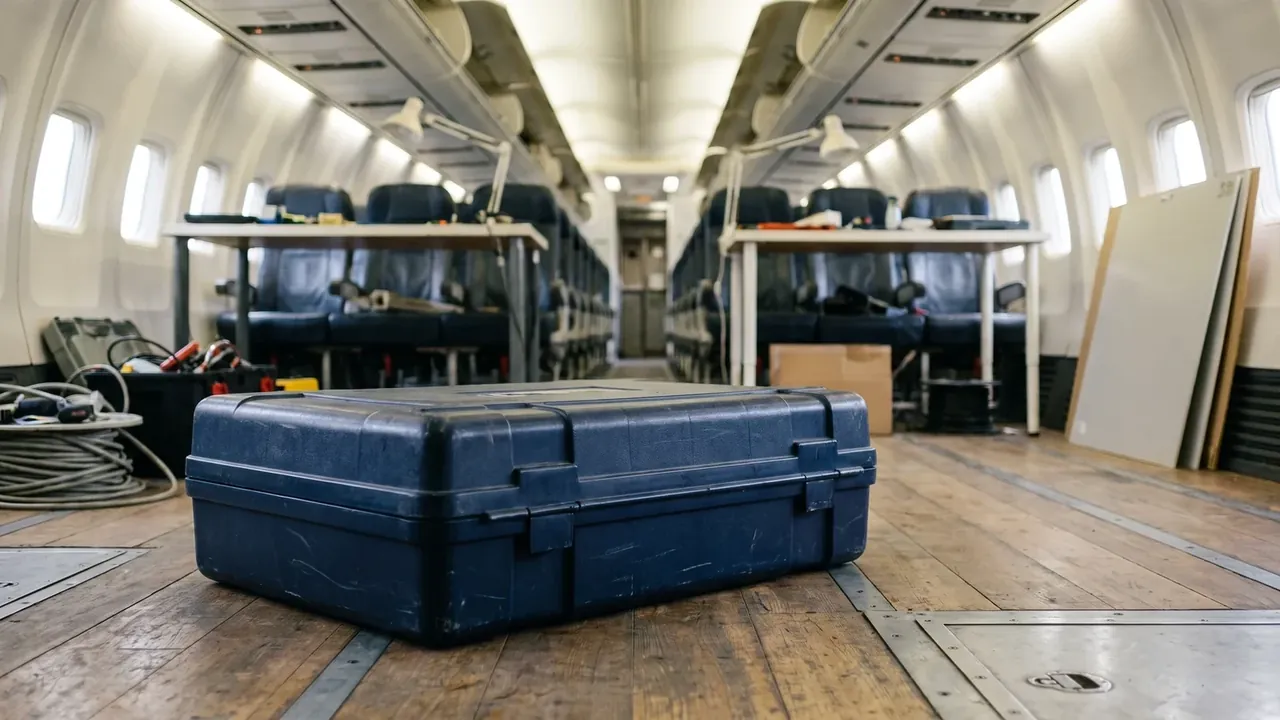
Three figures keep an insert in shape: 12 mm slot pitch, 5 mm rib walls, 8 mm dividers. Ribs below 4 mm creep inward, and dividers under 6 mm warp instead of pressing on contents. Print letters by row and numbers by column on the slot floor, and change dividers only, so one Tactical Equipment Case carries three or four sets.
5. External Interfaces, Spares and the Check Sheet
Interfaces are where load enters on a Tactical Equipment Case, so position beats quantity. A 20 mm rail, 15 kg per point and 4 mm by 25 mm tie holes at 50 mm pitch work if every point sits on the thickened band; a point on a bare panel tears the wall.
The spares window decides whether damage costs one part or the whole body. Seals change at 36 months, hinge pins draw out as a 2.5 mm stainless rod, and latches unbolt without touching the lid. A blank line in the check sheet is an open question, not a detail to wave through.
Conclusion
Five tests should mesh on one body: mounting fixes the band, the band yields volume, volume holds slots, slots order access, spares keep the unit in service. Skip one and the gap returns as rework, which is why the sequence matters for any Tactical Equipment Case.
This article discusses only the container (case body) side of specifications and design intent, and does not cover any handling, loading or use of the contents.
Related Reading
- Tactical hard case selection: ratings, latches and carry
- How case internal dividers are built and chosen
- What to check in a deployable hard case
- Selection criteria for special-forces cases
Related Products
- 8 Series — Gun Cases; Military Equipment Cases; Camera Equipment Cases; Drone Cases; Watch Cases; Knife Cases; First Aid Cases; Electronics Equipment Cases
- WL8-2812 PP Gun Case — model WL8-2812
- All protective cases and toolboxes: 7 series, 158 models