

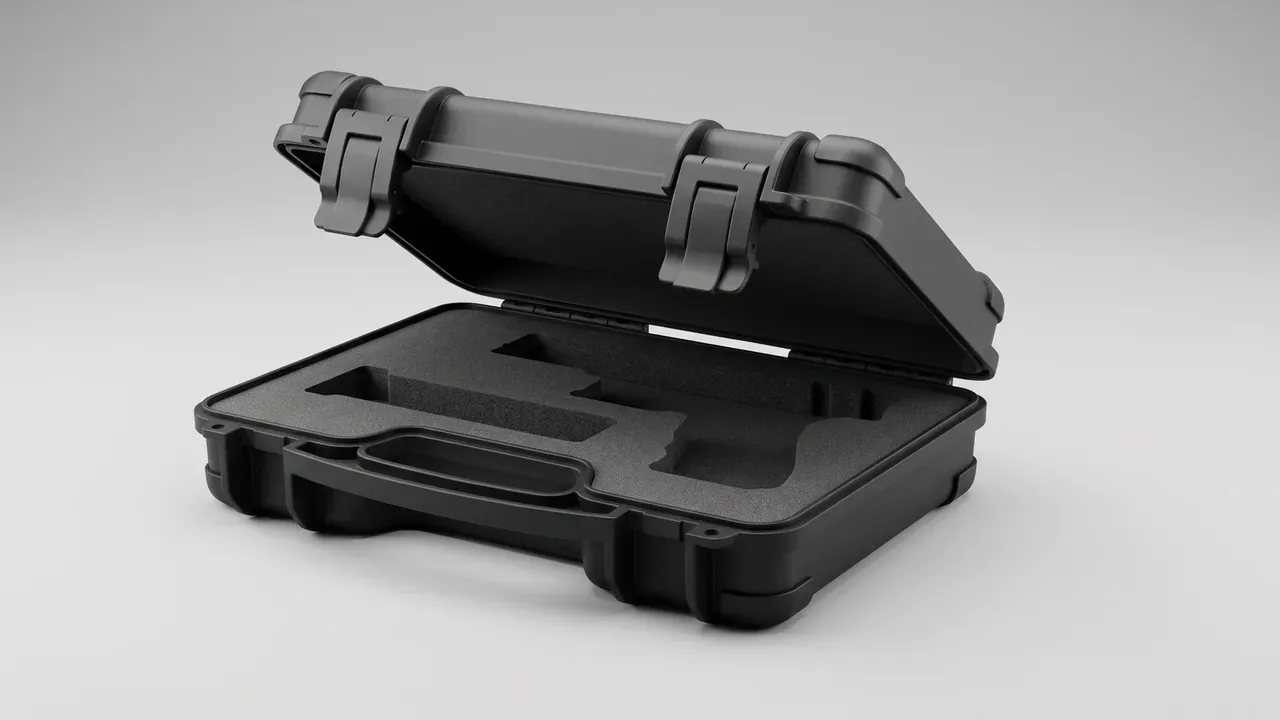
Quick answer: A tactical hard case is not the best answer everywhere. It is heavier than a tote but survives a 1.5 m drop, 2.7 kg lighter than a rotomolded case with less cold toughness, and three times a bag's weight yet stackable and sealable. Set the impact and sealing floor first.
Table of contents
- Where a Tactical Hard Case Sits Among Five Options
- Impact and Sealing, Option by Option
- Weight, Stacking and Volume
- Repair, Expansion and Spares
- Calculating Life-Cycle Cost
- FAQ
1. Where a Tactical Hard Case Sits Among Five Options
Five options solve one problem: moving equipment without damage. They differ in what absorbs shock: a stiff shell plus foam, a deforming bag, a thin tote wall, or steel.
Moulding sets wall consistency, wall sets the impact ceiling, weight decides who carries it, and repair decides whether a unit is fixed or scrapped.
| Option | Forming | Empty | Repair |
|---|---|---|---|
| Tactical hard case | injection, twin rim | 6.8 kg | weld, 30 min |
| Commodity tote | injection, thin wall | 4.1 kg | weld, 60% strength |
| Rotomolded case | rotomoulded, seamless | 9.5 kg | weld, 45 min |
| Soft bag | sewn fabric | 2.4 kg | sew, 20 min |
| Steel box | folded, welded | 7.6 kg | grind and paint, 2 h |
2. Impact and Sealing, Option by Option
Impact is drop height plus temperature. At 23 °C every option survives a 1.5 m corner drop. At -20 °C the field splits: the tote cracks in three places, steel dents 8 mm and weeps at a weld, rotomoulded and tactical cases take shallow marks, and a bag passes shock straight through.
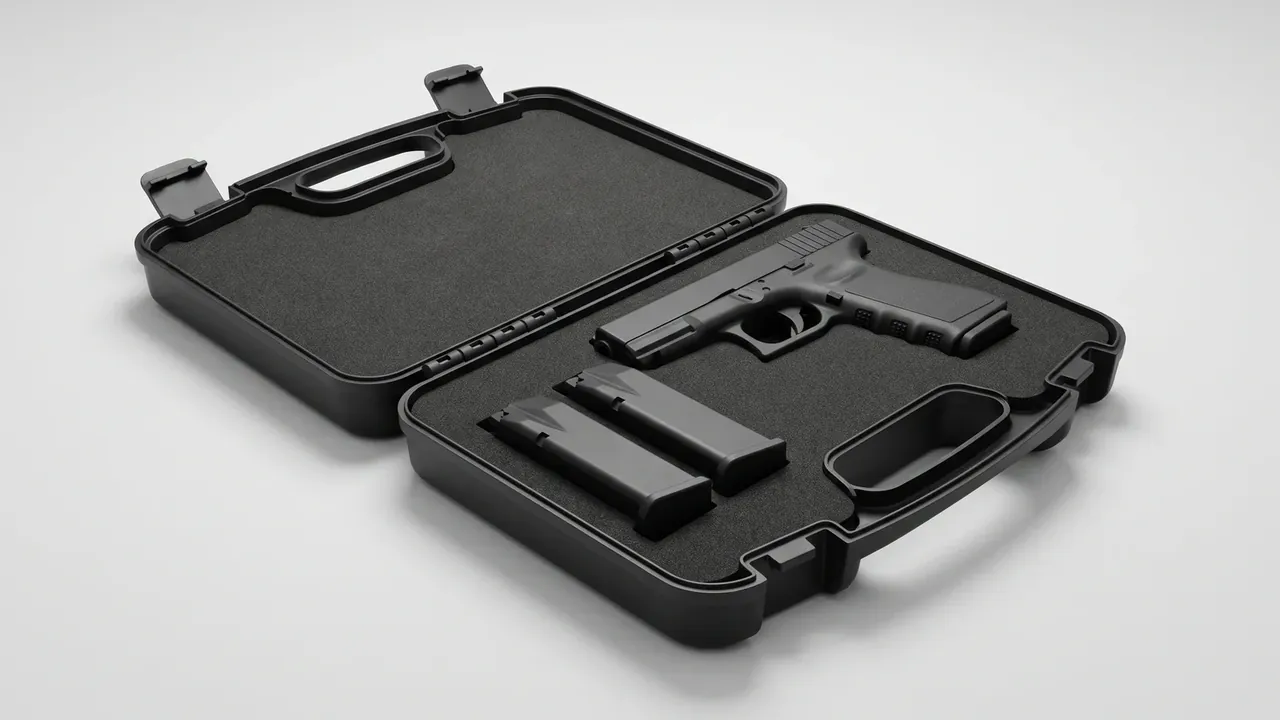
Sealing is the second divide. A double-lip gasket holds 1 m of water for 30 minutes; rotomoulding matches it with a thicker rim; the tote stops dust; welds leak on steel; coated fabric gives up in 30 minutes.
Sealing costs cycle time: four latches instead of two, eight seconds instead of three.
3. Weight, Stacking and Volume
Empty weight is the most under-estimated line. A 2 to 4 kg spread becomes 4 to 5 kg at a 20 kg payload, deciding whether one person carries the case 200 m.
Stacking runs opposite to weight: three high for hard and rotomoulded cases, four indoors for a tote, none for a bag, three on a level base for steel.
| Option | Empty | Stack |
|---|---|---|
| Tactical hard case | 6.8 kg | 3 high |
| Commodity tote | 4.1 kg | 4 high, indoor |
| Rotomolded case | 9.5 kg | 3 high |
| Soft bag | 2.4 kg | none |
| Steel box | 7.6 kg | 3 high, level base |
Volume matters one-way: an empty bag compresses 30%, an empty shell keeps its cube.
4. Repair, Expansion and Spares
Repair sets downtime, not price. Thermoplastics weld with the same material at 220 °C in 30 minutes and recover about 80% strength; a 4.5 mm rotomoulded wall needs 45 minutes; a thin tote recovers 60%.
Steel needs grinding, rust treatment and paint, two hours minimum, in a workshop rather than the field. A bag sews in 20 minutes, but the stitch line becomes the next failure.
Expansion: trays and new inserts add 30% without a new case; steel needs welding; a bag adds 20% in pouches and loses balance. Spares decide service life: a latch bought separately is the difference between a decade and a scrap.
5. Calculating Life-Cycle Cost
Life-cycle cost follows trips. At 40 trips a year over five years that is 200 trips: one hard case with two latch sets, three totes, two bags, two rust treatments.
Add purchase, repair, downtime and disposal; downtime is hardest to price and often the largest term.
| Option | Units in 5 years | Repairs | Downtime each |
|---|---|---|---|
| Tactical hard case | 1 | 3 | 30 min |
| Commodity tote | 3 | almost none | 0 |
| Rotomolded case | 1 | 2 | 45 min |
| Soft bag | 2 | 3 | 20 min |
| Steel box | 1 | 2 paint cycles | 5 days |
The tote is cheapest indoors. On a sealed, stacked trunk route the tactical hard case wins on total cost; in extreme cold, rotomoulding; where strength matters and weight does not, steel.
Conclusion
None of the five is universally better. Impact and sealing set the floor, weight and stacking set efficiency, repair and spares set service life. Run the comparison over five years and the ranking usually inverts. Choose a tactical hard case for sealing, stacking and repairability together, not because it looks tougher.
This article discusses only the container (case body) side of specifications and design intent, and does not cover any handling, loading or use of the contents.
Related Reading
- Hard case or soft bag
- How to choose a tactical hard case
- Rotomolded case versus the alternatives
- How an injection-moulded protective case is built
Related Products
- 8 Series — Gun Cases; Military Equipment Cases; Camera Equipment Cases; Drone Cases; Watch Cases; Knife Cases; First Aid Cases; Electronics Equipment Cases
- WL8-2812 PP Gun Case — model WL8-2812
- All protective cases and toolboxes: 7 series, 158 models