

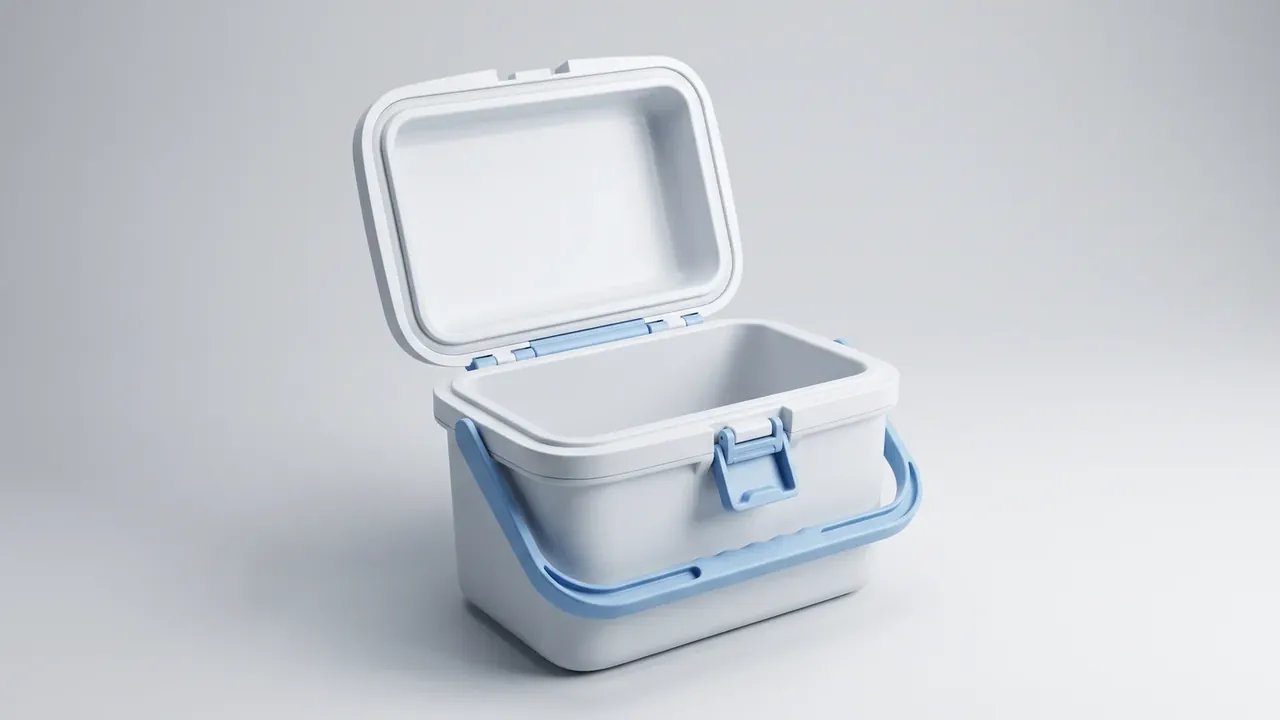
Quick answer: Maintenance here means measurement. Four lines decide it: gasket compression set, latch and hinge clearance, holdover hours and panel latent heat, logger accuracy and battery capacity. Each has a warning value and a replacement value, and whichever arrives first wins.
Table of contents
- Four Inspection Lines
- Gaskets: Compression Set and Hardness
- Latches and Hinges: Gaps and Pins
- Insulation and Panels: Hours and Heat
- Loggers and Batteries: Calibration
- FAQ
1. Four Inspection Lines
The question is where performance starts to fall away. Split it and four lines appear: sealing, latch and hinge, insulation and panels, logging and power. Each one has something measurable, so nobody argues from feel.
| Line | Interval | Tool | Pass |
|---|---|---|---|
| Gasket | each trip | eye and feeler gauge | no curl, no set mark |
| Latch and hinge | monthly | feeler, caliper | gap at or under 2.0 mm |
| Insulation, panels | quarterly | scale, logger | panel weight within 3% |
| Logging, power | yearly | bath, meter | within ±0.5 °C |
Checking by line beats checking by part: the lines hide each other. A gasket sitting half a millimetre light makes the panels give up about 12% more cold; it reads as a panel shortage, and replacing panels buys one trip only. On a temperature-controlled case, measure the seal first and the panels second.
2. Gaskets: Compression Set and Hardness
Compression set is the primary limit. After 70 °C for 24 hours, a set above 30% means replacement, even though the strip still looks whole.
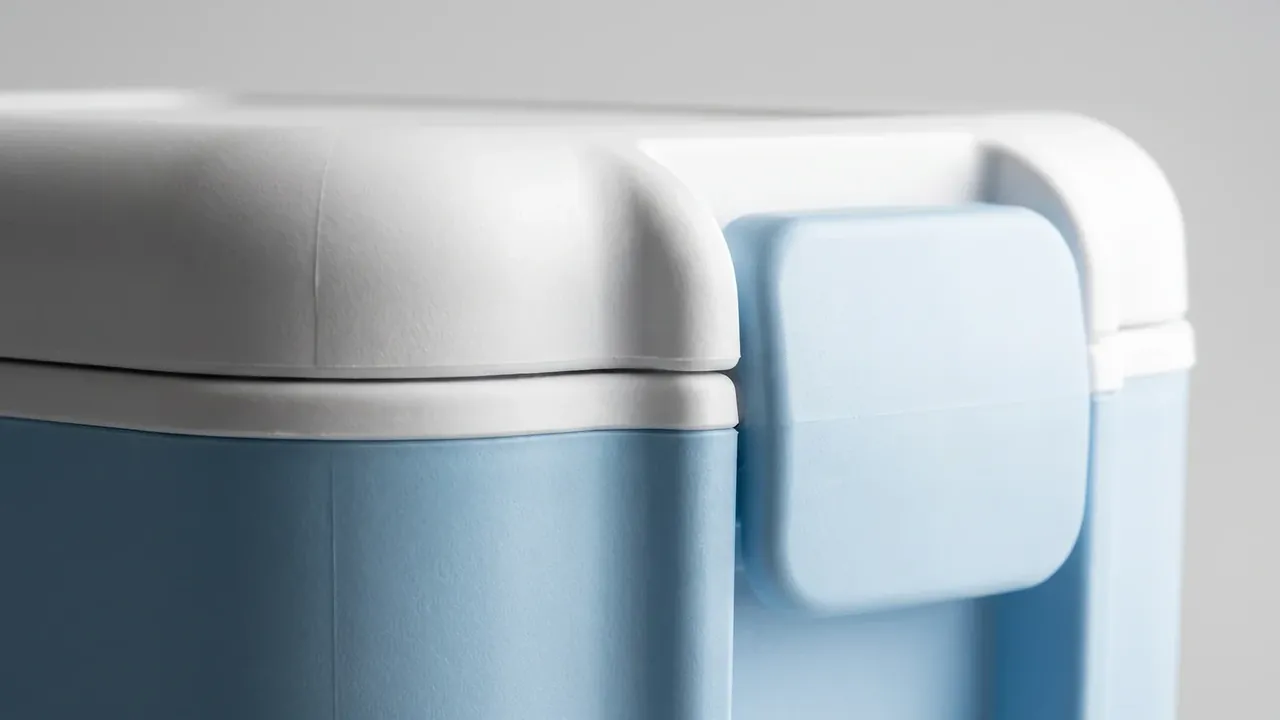
On a temperature-controlled case, hardness is the second signal: Shore A 58 when new, 68 when the plasticiser has migrated and rebound has slowed, so the lid no longer seats within three seconds. Replace at 1,200 openings or 24 months, whichever comes first; six openings a day gets there in about 200 days. Strip the old adhesive, let the new strip rest 24 hours, and warm it above 15 °C first.
3. Latches and Hinges: Gaps and Pins
A new closure gap reads 0.8 mm. Past 2.0 mm the gasket is compressed less than a third of its travel, and heat starts leaking at the latch side. The cause is usually a worn pin letting the lid sink, so a temperature-controlled case gets both measured together.
| Item | New | Warning | Replace |
|---|---|---|---|
| Closure gap | 0.8 mm | 1.5 mm | 2.0 mm |
| Hinge pin | 6.0 mm | 5.8 mm | 5.6 mm |
| Hinge boss crack | none | under 10 mm | over 10 mm |
| Handle pin | 8.0 mm | 7.7 mm | 7.4 mm |
A 3.2 kg lid on a 180 mm lever loads the pin well beyond its static share. Losing 0.4 mm off a 6 mm pin is 7% of the diameter, but the bearing face is already stepped. Silicone grease only, 0.2 g per hinge every six months; mineral oil swells the gasket.
4. Insulation and Panels: Hours and Heat
Insulation fails invisibly, so holdover becomes the proxy. A new temperature-controlled case runs 32 hours at a 25 K gradient and 70% load; at 24 hours it has lost a quarter, and the foam needs a moisture check. Water uptake of 2% lifts conductivity by roughly 15%.
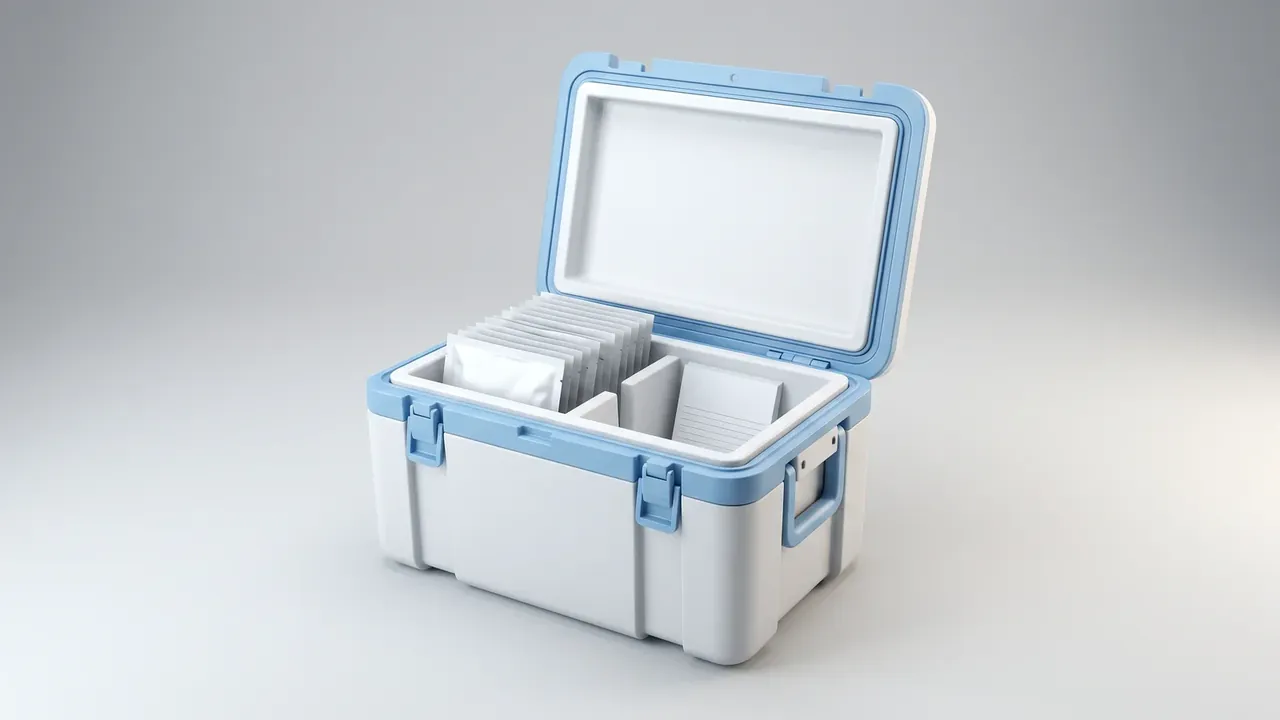
Panels are judged on latent heat and appearance: about 8% loss at 600 cycles, retirement past 10%, and an immediate end for a bulge over 3 mm or seam seepage. Leave 5 mm between panel and wall, stack no more than two layers.
5. Loggers and Batteries: Calibration
Calibrate every 12 months and replace a probe drifting past ±0.5 °C instead of hiding it in software. At a five-minute interval, 32,000 records cover 111 days, so export per voyage.
| Item | Interval | Pass | Replace |
|---|---|---|---|
| Probe | 12 months | within 0.5 °C | out of tolerance |
| Interval | each trip | 5 minutes | reset if changed |
| Battery | quarterly | 80% or more | below 80% |
| Seal face | 10 openings | clean, no frost | not applicable |
Capacity in a temperature-controlled case is the underrated item: a lithium pack at −20 °C delivers about 65%, and internal resistance at 1.5 times the initial value signals it earlier than capacity does. Clean the seal faces and the 3 mm drain hole with a soft rod; once blocked, water reaches the foam and every figure above degrades.
Conclusion
The hard part is not the work but the thresholds: knowing which line a part has reached matters more than repair skill. Four numbers, taken once and written down, keep a temperature-controlled case from failing at the worst moment.
This article discusses only the container (case body) side of specifications and design intent, and does not cover any handling, loading or use of the contents.
Related Reading
- Active versus passive temperature control
- Rotomolded case service intervals
- Seal and latch care for hard shells
- Service rhythm for reusable bins
Related Products
- 8 Series — Gun Cases; Military Equipment Cases; Camera Equipment Cases; Drone Cases; Watch Cases; Knife Cases; First Aid Cases; Electronics Equipment Cases
- WL8-2812 PP Gun Case — model WL8-2812
- All protective cases and toolboxes: 7 series, 158 models