


Quick answer: A temperature-controlled case quote is hard to compare because one number hides material, labour and fees. Split it into three sheets, fix MOQ and tooling ownership in writing, break lead time into four stages, and tie payment to operations rather than calendar dates.
Table of contents
- Three sheets before you compare prices
- MOQ and tooling ownership
- Lead time in four stages
- Quote traps: is the module inside the price?
- Payment and inspection milestones
- FAQ
1. Three sheets before you compare prices
Asking only for a unit price returns numbers built from different contents: one quote includes the temperature module and battery, another prices the empty shell; one spreads tooling into the unit price, another lists it separately. Unbundled, comparison becomes a test of nerve. Ask for the quote split into material, labour and fees, and the gap between two bidders points at a specific line.
| Sheet | Should contain | Usual form | Negotiation point |
|---|---|---|---|
| Material | Powder grade, foam density, latch and module spec | Per unit, packing excluded | Virgin instead of regrind moves 8–12% |
| Labour | Moulding, trimming, assembly, power-up test | Buried in unit price | Whether commissioning is billed hourly |
| Fees | Tooling, sampling, packing, freight, tax | Tooling once, rest per lot | Whether tooling is refundable |
Once split, comparison means something.
A supplier who quotes one total hides the most cuttable line inside an average.
2. MOQ and tooling ownership
MOQ follows from two facts: the effective moulding area of the machine and the minimum powder order. A temperature-controlled case with a 1.2 m cavity runs one cavity per mould at roughly 45 minutes a cycle, so two shifts produce under 30 units a day and 150 pieces is a normal threshold. Below that, the plant either shares a run or spreads changeover time into the price.
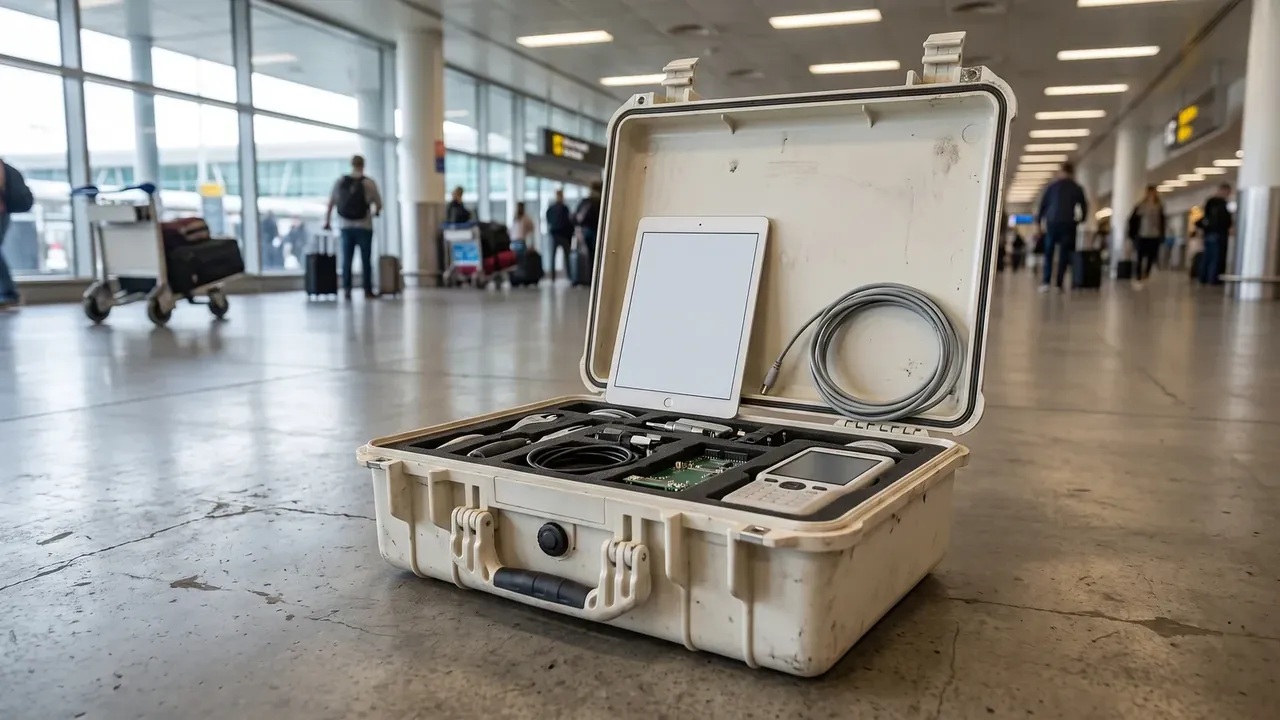
Tooling ownership needs three sentences in the contract: who pays, who holds, how it leaves. A mid-size rotomoulding tool runs near CNY 68,000 with a life close to 50,000 shots, paid half on order and half after a passed trial. Without a clause the tool defaults to the factory, and three years later you cannot take the drawings with you.
A mould without a stamp cannot be identified after three years.
Stamp the buyer code and year on a non-cosmetic face, and hand over a cavity measurement record with the tool.
3. Lead time in four stages
Forty days is four stages stacked, each with its own delay; write all four into the contract.
| Stage | Days | Typical blocker |
|---|---|---|
| Material | 5–7 | Powder grade change reopens colour approval |
| Rotomoulding | 12–15 | Changeover and trial runs take oven slots |
| Assembly | 10–12 | Temperature module or battery arrives late |
| Burn-in and packing | 7–8 | 24-hour power test holds floor space |
The delay rarely comes from moulding; it comes from bought-in parts at assembly. Modules, heater film and battery packs are usually outsourced, and any one arriving three days late parks the whole lot on the line. Where the buyer nominates the module model, a temperature-controlled case order should start its lead time from the day material reaches the plant.
Burn-in is the stage most often compressed and least safe to compress. Twenty-four hours of power-up reveals whether the controller's auto-tune settles and whether the heater film overheats locally. Skip it and the problem surfaces in the customer's hands.
4. Quote traps: is the module inside the price?
One module, three ways to write it: inside the unit price, where a failure returns the whole case; listed per piece, so the module is replaceable; or quoted as a set with probe and harness. All three are defensible, and the difference is where warranty responsibility lands.

For a temperature-controlled case the usual trap prices the module at zero and recovers it through commissioning fees later. The test is simple: ask for an empty-shell price and a complete price, and read the difference as the real module cost. A gap well under market rate means the model was swapped.
Parameters such as 60 W heater film and ±1 °C accuracy belong on the quote annex, not the brochure.
5. Payment and inspection milestones
Milestones hang on operations you can see, not on dates:
- 30% on order, releasing material, with purchase orders for powder and modules returned to you.
- 60% before shipment, released on a passed inspection held after assembly and before burn-in.
- 10% after acceptance, within 15 days of arrival with no appearance or function claim.
Inspecting before burn-in keeps problems inside the plant. Inspect afterwards and the supplier will call the damage transit.
Sixty-day terms are not harsh here, but longer terms add financing cost, typically 6% annualised into the unit price.
Conclusion
The hard part of buying a temperature-controlled case is not the bargain, it is turning a vague quote into a structure you can check. Three sheets make cost visible, four stages make delay attributable, milestones tied to operations remove half the disputes. Write tooling ownership and module model into the contract, and the unit price finally has room to move.
This article discusses only the container (case body) side of specifications and design intent, and does not cover any handling, loading or use of the contents.
Related Reading
- Temperature-Controlled Case Selection: temperature bands, hold time and power draw
- Temperature-Controlled Case vs Cooler Box: active and passive trade-offs
- Supplier Scorecard: scoring delivery, defects and response
- Gun Case Production Audit: equipment, process and records
Related Products
- 8 Series — Gun Cases; Military Equipment Cases; Camera Equipment Cases; Drone Cases; Watch Cases; Knife Cases; First Aid Cases; Electronics Equipment Cases
- WL8-2812 PP Gun Case — model WL8-2812
- All protective cases and toolboxes: 7 series, 158 models