

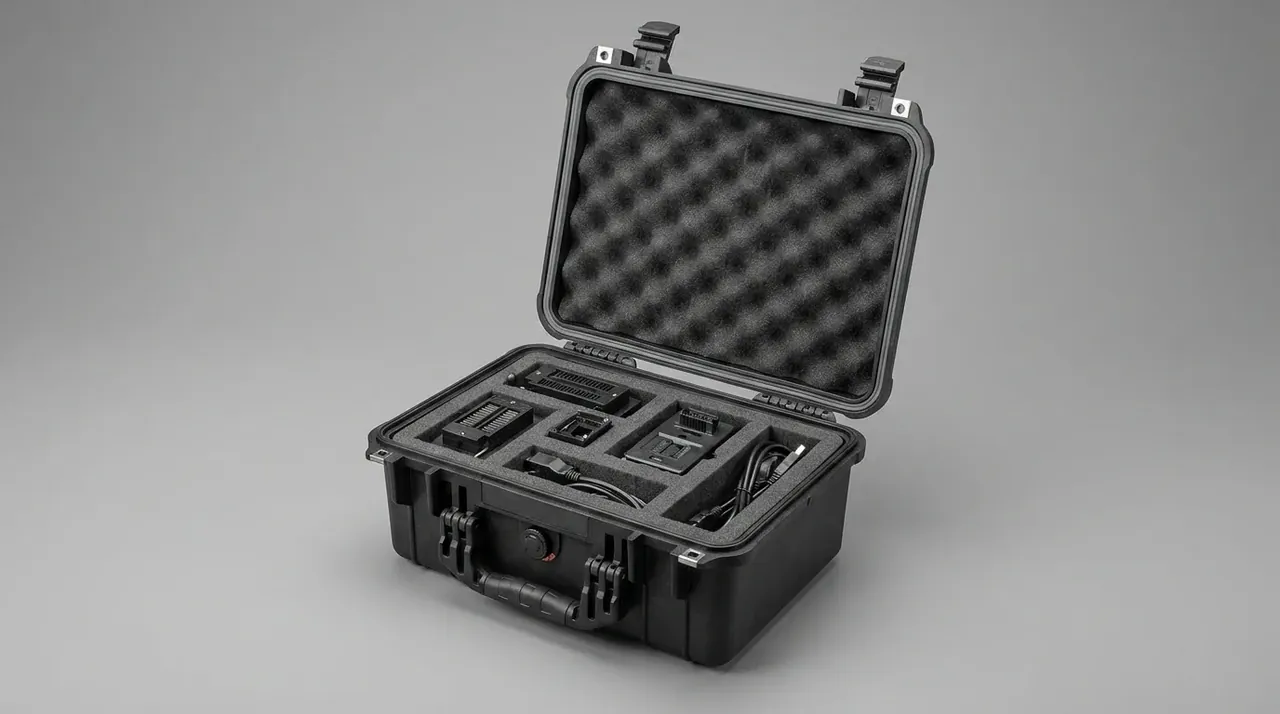
Quick answer: Case tender scoring splits 100 points into 45 technical, 35 commercial and 20 price, so the cheapest bid rarely wins and six items swing 12.
Table of contents
- The 45/35/20 split
- Cutting the technical 45 into six items
- Qualifications and track record
- The price benchmark formula
- Five disqualifiers, second bids and three days
- FAQ
1. The 45/35/20 split
Once the point table is signed, a case tender scoring exercise is effectively decided. Technical 45, commercial 35 and price 20 is the split used in most government and group purchasing rounds.
Price carries the least weight by design. Two bidders 10% apart on price land within roughly 2 points of each other, while a missing airtightness record costs 5 technical points outright.
| Block | Points | Basis | Spread |
|---|---|---|---|
| Technical | 45 | Six scored items | 12–18 |
| Commercial | 35 | Qual 15, record 12, service 8 | 6–9 |
| Price | 20 | Benchmark formula | 3–5 |
| Total | 100 | — | 21–32 |
Technical swings 12 to 18 points, commercial 6 to 9, price only 3 to 5. A three-day evaluation should therefore spend 1.5 days on technical review, half a day on commercial checks, half a day on price arithmetic and half a day writing the report.
The ratio is not arbitrary: above 35 price points the panel buys a quotation rather than a case, and below 10 technical scoring turns subjective enough that losing bidders win appeals. A range of 15 to 25 keeps both failures away, with 20 suppressing inflated quotes without letting cheap shells win on arithmetic.
2. Cutting the technical 45 into six items
Forty-five points have to become six checkable items, each tied to a document or a measurement.
| Item | Points | Deduction |
|---|---|---|
| Structure and wall plan | 10 | 4 if unlabelled |
| Seal and airtight layout | 8 | 5 if no test record |
| Latches and hinges | 8 | 4 if out of range |
| Lining and foam fit | 7 | 4 if it differs |
| Submitted sample | 7 | Zero if missing |
| Moulding and test capability | 5 | 3 if lists missing |
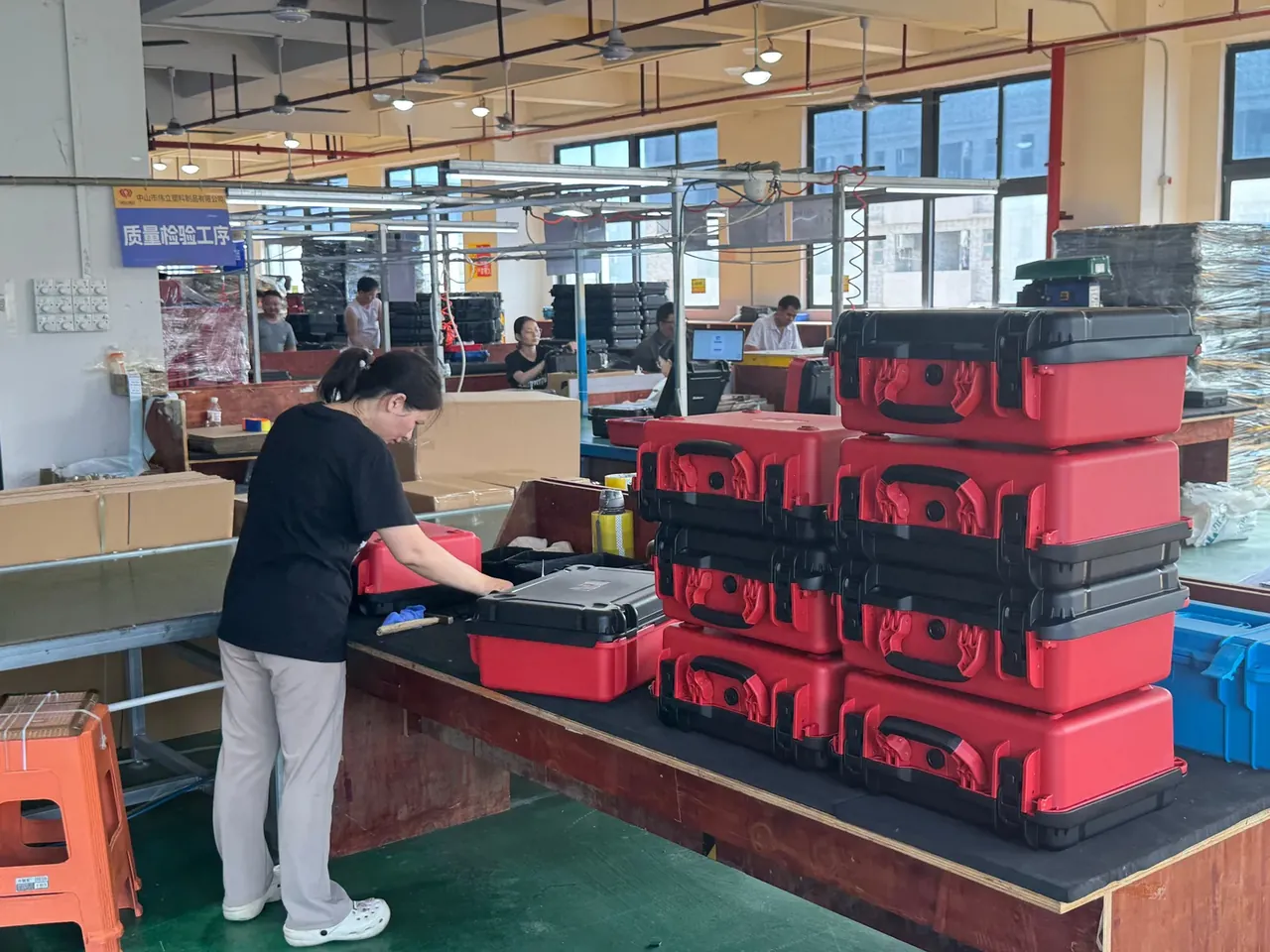
Structure and wall plan takes 10 points and looks at three things: wall thickness matching the drawing position by position, usually 2.5 mm to 3.5 mm; rib runs reaching the four corners; a doubled section under the base load area.
Seal and airtight layout takes 8 points and accepts test records only. IP54 resists splashing and IP67 tolerates brief immersion, so a bid claiming IP67 must attach the immersion curve or be scored at IP54.
Latches and hinges take 8 points and are measured on the spot. Three cases are pulled with a force gauge, and an opening force between 35 N and 55 N scores full marks; outside that band costs 2 points each way.
Lining and foam fit takes 7 points and is judged from the section drawing. EVA below 38 kg/m³ collapses after one compression cycle, removing 3 points immediately.
The submitted sample takes 7 points: one physical case, scored across the same six headings, zero if it arrives late. Moulding and test capability takes the last 5 across press tonnage, in-house tooling and test equipment, weighted 2, 2 and 1.
3. Qualifications and track record
The commercial 35 is where panels usually paste a list of certificates. A cleaner cut is 15 points for qualifications, 12 for track record and 8 for service, with no overlap.
Qualifications take 15 across four documents: licence and scope 3, ISO 9001 certificate 4, a CNAS or CMA test report 4, and sector admission 4. Validity is checked against the bid opening date, and a certificate one day out of date scores zero.
Track record takes 12 on quantity and value together. Five comparable projects in the last three years scores full marks, each missing project costs 2 points, and one contract above 2 million yuan adds 2 more. Contract copies and acceptance notes must be attached together; a contract without a note counts as half a project.
Service takes the remaining 8: response within 24 hours for 3, spare parts shipped within 48 hours for 3, on-site support with training for 2. Written this way, the block filters out low-priced traders with no service footprint.
Track record is the one block needing anti-fraud checks. The panel verifies whether the contract number appears in the buyer's system, whether the acceptance note carries the client's stamp, and whether the project covers this class of case. A mismatch voids the item rather than deducting points.
4. The price benchmark formula
Price carries 20 points, yet the formula decides the outcome. The common version sets the benchmark at the arithmetic mean of valid bids multiplied by 0.97, with the score equal to 20 minus the deviation rate times 40.
A worked example. Five bids at 1.76, 1.83, 1.90, 1.96 and 2.05 million yuan average 1.90 million, so the benchmark is 1.843 million. The bid at 1.90 million sits 3.1% above and scores 18.8; the bid at 1.76 million sits 4.5% below and scores 18.2.
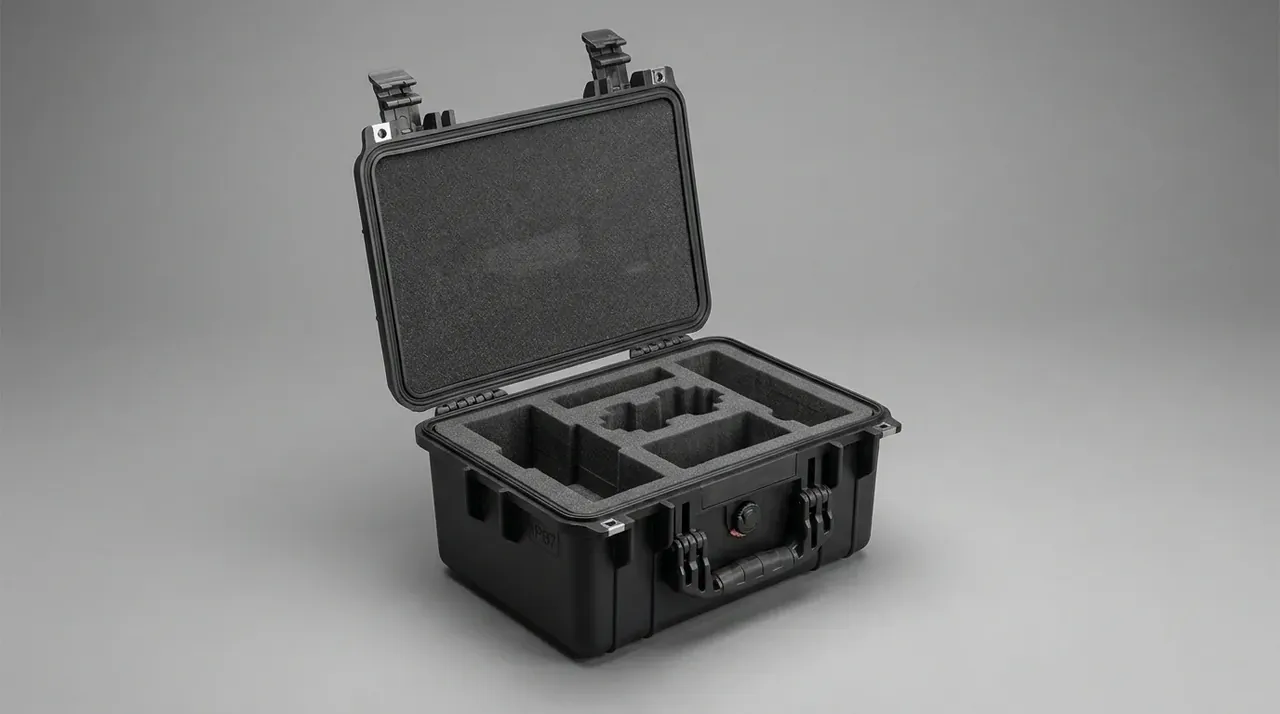
Bidding below the benchmark is penalised too, so cutting price buys nothing. A bid 140,000 yuan lower ends up 0.6 points behind, which is what the mean-based formula intends: it pushes bidders toward cost rather than toward the floor.
The other version benchmarks on the lowest bid, scoring 20 times lowest over quoted. On the same numbers, 1.76 million scores 20 and 1.90 million scores 18.5, a gap of 1.5 points.
Both stay within 2 points at a weight of 20, so technical scoring still decides the round. Two parameters belong in writing: whether fewer than three valid bids triggers a re-tender, and whether quotes include tax, freight and packaging.
5. Five disqualifiers, second bids and three days
Disqualification is the only route out of case tender scoring that ignores points, so the five clauses belong on the first two pages of the bid instructions.
| Clause | Stage | Outcome |
|---|---|---|
| Seal broken, packaging off spec | At receipt | Rejected |
| No power of attorney | Formality check | Disqualified |
| Quote above budget by 15% | After opening | Disqualified |
| Deviation sheet left blank | Technical review | Disqualified |
| Sample grade differs from bid | Sample check | Disqualified |
The third clause is the one bidders forget. On a package budgeted at 2 million yuan, a quote of 2.32 million is 16% over, and full technical marks cannot rescue it.
A second pricing round applies in one situation only: three or more technically qualified bidders whose first quotes all exceed the budget. The rules must be explicit — one round, 30 minutes to submit, no increase over the first quote.
Three days is standard. Day one covers formality and qualification, then compliance checks. Day two is technical scoring, six items in order, with the sample test placed in the morning. Day three handles commercial and price arithmetic, ranking and the report. Score sheets are sealed each evening and not reopened.
Conclusion
The point table has to be fixed before the tender is issued, and on paper it is one 100-point sheet: technical 45 split into structure 10, seal 8, latches 8, lining 7, sample 7 and capability 5; commercial 35 split into qualifications 15, track record 12 and service 8; price 20 converted through the benchmark formula. Add a spread column on the right — 12 to 18 technical, 6 to 9 commercial, 3 to 5 price — and the panel simply fills cells for three days while bidders know where to invest effort. Move any single cell down a notch and someone will exploit it, so the table should be signed once and left alone.
This article discusses container-side specifications and design implications only, and does not cover any handling, loading or use of the contents.
Related Reading
- Sourcing and comparing plastic box suppliers
- Evaluation angles for protective case suppliers
- Working with Chinese plastic case suppliers
- Comparing lockable plastic case suppliers
Related Products
- 8 Series — Gun Cases; Military Equipment Cases; Camera Equipment Cases; Drone Cases; Watch Cases; Knife Cases; First Aid Cases; Electronics Equipment Cases
- WL8-2812 PP Gun Case — model WL8-2812
- All protective cases and toolboxes: 7 series, 158 models