

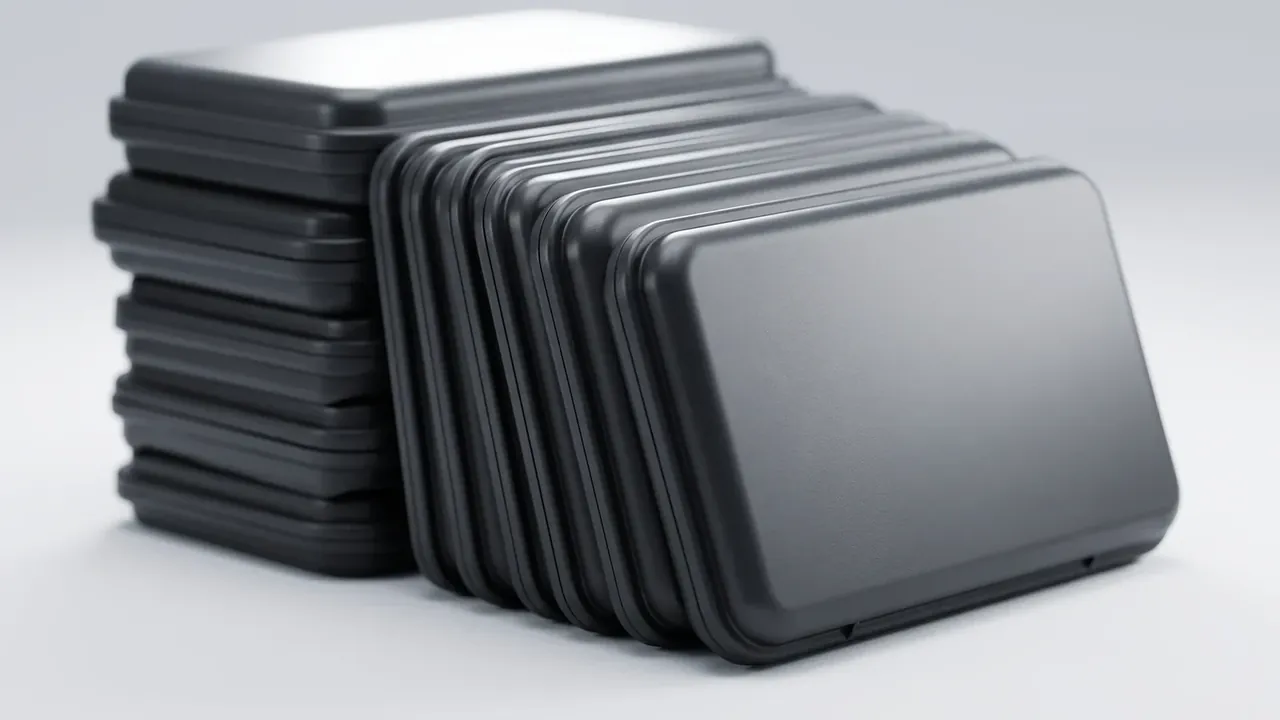
Quick answer: A box quote and a case quote are not comparable. A plastic box supplier prices a box per set, lid included, and a case per piece, so mould count, cavity pairing and MOQ all differ. Align the units and most of a 1.8x gap disappears.
Table of contents
- Why comparing unit price fails
- Two moulds, two trials
- Quoted per set or per piece
- MOQ rounds to the pair
- Mixed orders: three lost stages
- Sampling by set or by piece
- FAQ
1. Why comparing unit price fails
One factory can supply both and write two quotes: a box per set, a case per piece. The columns cannot be compared.
| Item | Box | Case |
|---|---|---|
| Unit | Per set, lid included | Per piece, complete |
| Moulds | Lid tool plus base tool | One or two |
| Part weight | 0.38 kg per set | 2.6 kg per piece |
| MOQ basis | Paired sets | Pieces |
| Sampling | Set | Piece |
| Driven by | Printing, assembly | Moulding, finishing |
A plastic box supplier earns on assembly and printing; a case earns on mould amortisation. Once you see that, a cheap box that ends up dear stops being a surprise.
2. Two moulds, two trials
Lid and base differ in wall and shrinkage, so one tool producing both fights itself at the mating face. A plastic box supplier that quotes a single tool is quoting a compromise. The route is two tools, two trials, then the pair checked as a set.
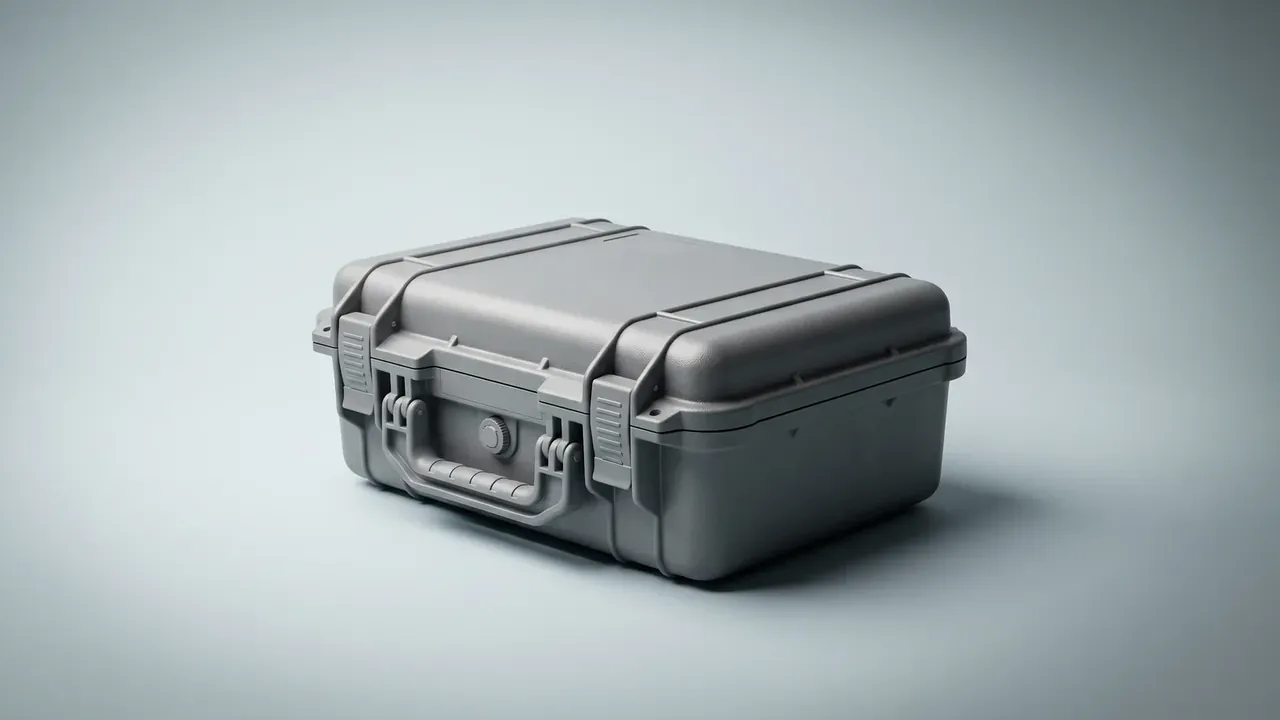
Two tools means two charges: 19,000 yuan for the lid, 23,000 for the base, 42,000 together. A single line reading 42,000 is honest; a line reading 20,000 invites the question where the second tool is. The lid tool trials first for flatness, the base second for spigot depth.
Shared tooling is the other trap. When a plastic box supplier says the mould exists and there is no fee, it has usually run for someone else, with worn cavities and their dimensions. Measure three samples first.
3. Quoted per set or per piece
The same box at 2.1 and at 3.8 yuan usually differs in scope, not greed.
| Basis | Wording | To match, add |
|---|---|---|
| Body only | 2.1 yuan per piece | Lid, 1.3 yuan more |
| Lid, no insert | 3.4 yuan per set | Insert, 0.4 yuan |
| One colour print | 3.6 yuan per set | Second colour, 0.25 yuan |
| Packed | 3.8 yuan per set | Carton and pallet |
The 1.8x sits between rows one and four. Add lid, insert, printing and packing and both suppliers land between 3.5 and 3.9 yuan, a gap under ten percent.
So the first move is a four-line sheet any plastic box supplier can fill in a day.
4. MOQ rounds to the pair
A box MOQ is not chosen by sales; it is the common multiple of the two cavity counts. A plastic box supplier running six lid cavities against four base cavities must ship sets in twelves.
| Cavities | Smallest run | Changeover | Shots for 900 sets |
|---|---|---|---|
| Lid 6, base 4 | 12 sets | 2.5 hours | Base 225, lid 150 |
| Lid 4, base 4 | 4 sets | 2 hours | 225 each |
| Lid 8, base 6 | 24 sets | 3 hours | Base 150, lid 113 |
Nine hundred sets is a common first order: the base tool runs 225 shots, one shift, while the lid tool runs 150 and the spare capacity absorbs rejects. Below that, changeover adds 0.6 yuan per set.
Three hundred sets works with natural resin, no colour change, no printing.
5. Mixed orders: three lost stages
An order holding both boxes and cases adds three stages that rarely reach the schedule. A plastic box supplier new to mixed orders discovers them late.
- Printing: three days for one colour, four for two; cases are unprinted and get merged away.
- Changeover: 2.5 hours for a box tool, four for a case tool with lifting, so two switches eat a shift.
- Assembly: inserts and lids are hand-fitted at 240 sets per shift; cases come off the tool complete.
Printing gets squeezed first. To keep the date attractive a supplier pushes print into the last two days, and one colour rejection blocks the batch at the door.
Mixed pallets waste about a tenth of the container.
6. Sampling by set or by piece
Boxes are sampled by set, cases by piece; getting this wrong doubles the count. Fifty sets is a hundred parts, fifty cases is fifty.
For a box, inspection sits at the mating face: gap within 0.5 mm, no corner lift when closed, latches firm after 5,000 cycles. For a case it sits on the whole: three-high stacking for 24 hours, corners intact after a drop. The two need different judgement, feeler gauges for boxes, instruments for cases. Run the gauge into all four corners, because one corner hides a warp. Stack one layer above the real storage height, since the bottom unit carries more. Drop corners, then edges, then faces. Put it in a judgement sheet and nobody argues at the table.
A plastic box supplier that asks what a sampling unit is has not run mixed orders.
Conclusion
Most gaps between plastic box supplier quotes are baseline problems, not price problems: sets against pieces, two tools against one, paired MOQs against round numbers. Align them and a 1.8x spread narrows to under ten percent. Do that first and a plastic box supplier becomes comparable.
This article discusses only the container (case body) side of specifications and design intent, and does not cover any handling, loading or use of the contents.
Related Reading
- How to score suppliers on one page
- Where rotomoulding stops working
- What a factory tour should confirm
- What to inspect on a showroom sample
- Storing and servicing moulds
Related Products
- 8 Series — Gun Cases; Military Equipment Cases; Camera Equipment Cases; Drone Cases; Watch Cases; Knife Cases; First Aid Cases; Electronics Equipment Cases
- WL8-2812 PP Gun Case — model WL8-2812
- All protective cases and toolboxes: 7 series, 158 models