

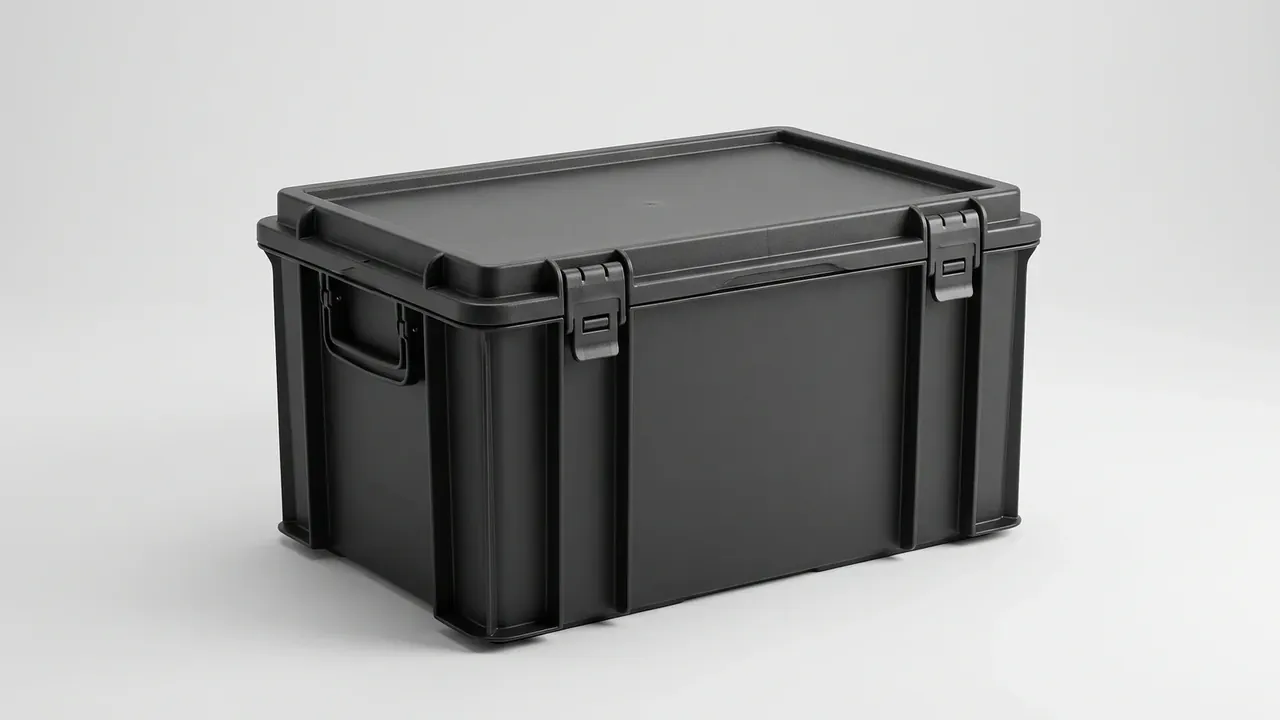
Quick answer: Split every quotation into mould, lock, latch hardware and packing before comparing suppliers, then pin the lock option down with three figures: bore, hole spacing and shackle diameter. An unsplit price hides where the saving came from, and an unwritten hole size guarantees a sample that will not take the customer's padlock.
Table of contents
- Four Cost Lines Behind One Quotation
- Padlock Hole Specs: Bore, Spacing and Shackle
- Coded versus Keyed Locks: Where the Difference Sits
- Inspection and Accessory Delivery
- Latch Material: Three Options and Their Trade-offs
- MOQ, Mould Ownership and Payment Terms
- FAQ
1. Four Cost Lines Behind One Quotation
A single unit price usually blends mould, lock, hardware and packing. A lockable plastic case supplier that will not break it down knows the comparison is won on whatever is easiest to shave.
| Cost line | Where it hides | What to pin down |
|---|---|---|
| Mould and amortisation | One-off fee, or spread into unit price | Ownership, amortised quantity, tooling changes |
| Lock option | Per-unit premium by lock type | Padlock hole, keyed, coded adds |
| Latch hardware | Inside the unit price or separate | Resin grade, salt-spray hours, pull-out force |
| Packing and accessories | Most often omitted | Keys shipped with cases, spare ratio |
The lock line moves first: between padlock-hole and coded versions of one shell, the gap runs 5.8 to 9.2 yuan per unit, and a single total hides it.
2. Padlock Hole Specs: Bore, Spacing and Shackle
On a lockable plastic case supplier drawing, the padlock hole is the only mechanical interface, and one size off blocks the customer's lock.
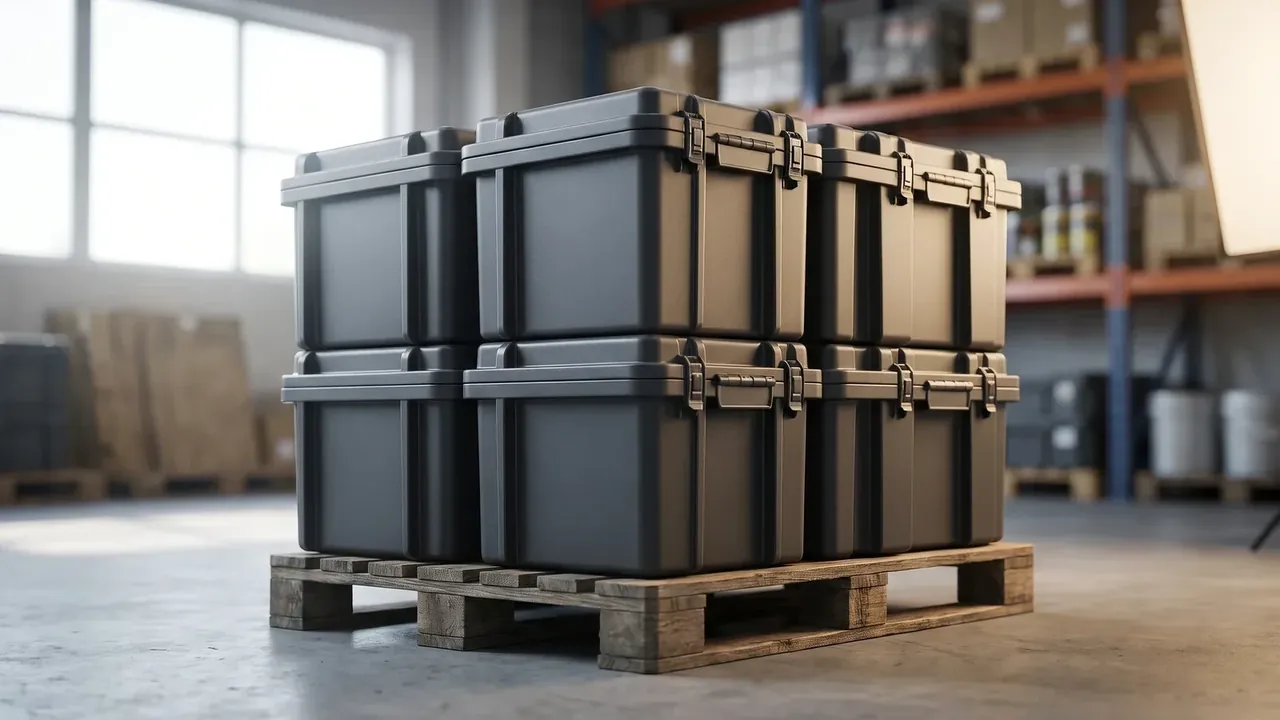
Bore 8.5 mm, leaving 1.5 mm around a 7 mm shackle, and a gloved hand still clears. Hole spacing of 30 mm sets how long the lock body can be: a 40 mm padlock sits flush, while a 60 mm long-shackle lock fouls the lid edge and keeps the lid from seating.
Keep 5 mm of wall around the bore and a 0.8 mm chamfer so the shackle cuts neither hand nor flash. Place the hole 12 mm from the lid edge; closer, and a drop cracks it.
Write all three figures on the drawing, and the lock option is finally fixed.
3. Coded versus Keyed Locks: Where the Difference Sits
The gap between coded and keyed locks on a lockable plastic case supplier quote is not in the lock body. It sits in assembly time and after-sales.
| Lock type | Per-unit premium | Replacement cost | Lead-time effect |
|---|---|---|---|
| Padlock hole, no lock | Baseline | Customer supplies | None |
| Keyed lock | 5.8 yuan | 18 yuan each | Plus 3 days |
| Three-dial coded lock | 9.2 yuan | 26 yuan each | Plus 7 days |
| Keyed lock with dust cover | 7.5 yuan | 21 yuan each | Plus 5 days |
Coded locks cost more because each dial pack is aligned by hand: 40 seconds per unit and roughly 2% rework.
Below 800 units, that premium never amortises.
4. Inspection and Accessory Delivery
Inspection at a lockable plastic case supplier runs in two tracks: sample shells, test every lock.
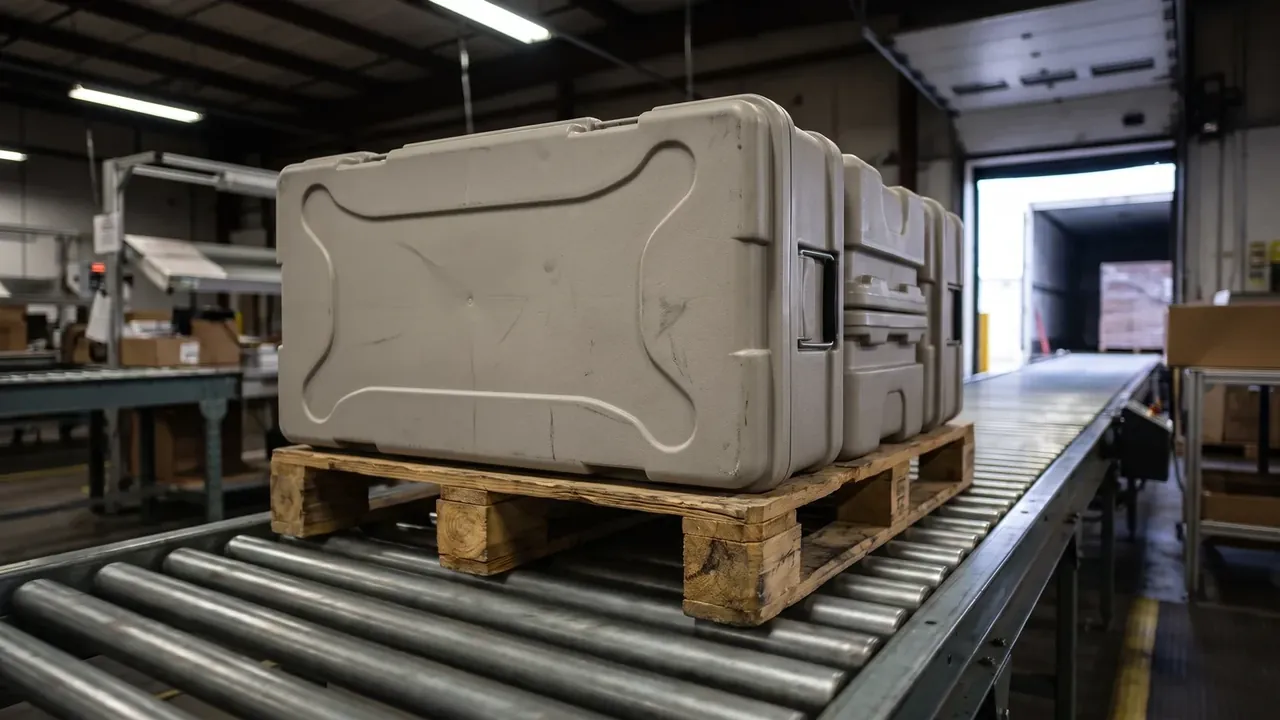
Sample shells at level II and AQL 1.0, watching hole drift and latch closure; open every lock, pair keyed sets once per 50 units, and scramble then reset each coded dial. Accessories need their own line: keys, spare latches and dust covers at 2%.
Without it, spares travel separately and cost more than the parts.
5. Latch Material: Three Options and Their Trade-offs
Latches carry load, so the material decides the failure mode rather than the price.
- PA66 with 30% glass fibre: pull-out force up to 1,400 N, no rust after 96 hours of salt spray, brittle in cold;
- POM: low friction and a smooth snap, weaker in impact than PA66, suited to smaller shells;
- 304 stainless overmould: best corrosion resistance at about 2.4 times the plastic cost and 0.3 kg extra per unit.
Each material has its own pricing basis: plastic per pair, stainless per piece with finishing separate, and mixing bases turns reorders into arguments.
A stainless bushing around the padlock hole slows bore wear, at 3.2 yuan per unit.
6. MOQ, Mould Ownership and Payment Terms
The minimum order from a lockable plastic case supplier and the mould belong in one conversation. Custom work usually starts at 300 units, on a four-cavity tool costing 28,000 yuan, paid outright or amortised across the first 1,500 pieces.
Lead time runs 32 days: 12 for the tool, 8 for moulding, 7 for assembly and lock setting, 5 for packing. Tooling slips most, and a drawing signed a week late pushes everything back. Moulding sits ahead of assembly, so a late lock shipment strands half-finished shells. Assembly is scheduled by lock type, at 55 seconds per coded unit and 30 seconds per keyed one. Payment is typically 30% deposit, balance before dispatch. Accounts older than two years can negotiate 60-day terms. Put lead time and terms in the same contract clause, or a delay leaves nothing to point at.
Conclusion
Choosing a lockable plastic case supplier is about how finely the price is broken down, not how low it lands. Once the four cost lines separate, a lock premium has nowhere to hide. Once the three hole figures reach the drawing, the sample takes a real padlock. Settle MOQ, mould ownership and payment terms early, and a lockable plastic case supplier comparison fits on one enquiry sheet.
This article discusses only the container (case body) side of specifications and design intent, and does not cover any handling, loading or use of the contents.
Related Reading
- Supplier scorecard: lead time and defect rate on one sheet
- Production audit: the check order from moulding to assembly
- Rotomoulded shells: how process maps to wall thickness
- Factory tour checklist: which corners of the shop to inspect
- Mould storage standards: ownership and maintenance records
Related Products
- 8 Series — Gun Cases; Military Equipment Cases; Camera Equipment Cases; Drone Cases; Watch Cases; Knife Cases; First Aid Cases; Electronics Equipment Cases
- WL8-2812 PP Gun Case — model WL8-2812
- All protective cases and toolboxes: 7 series, 158 models