

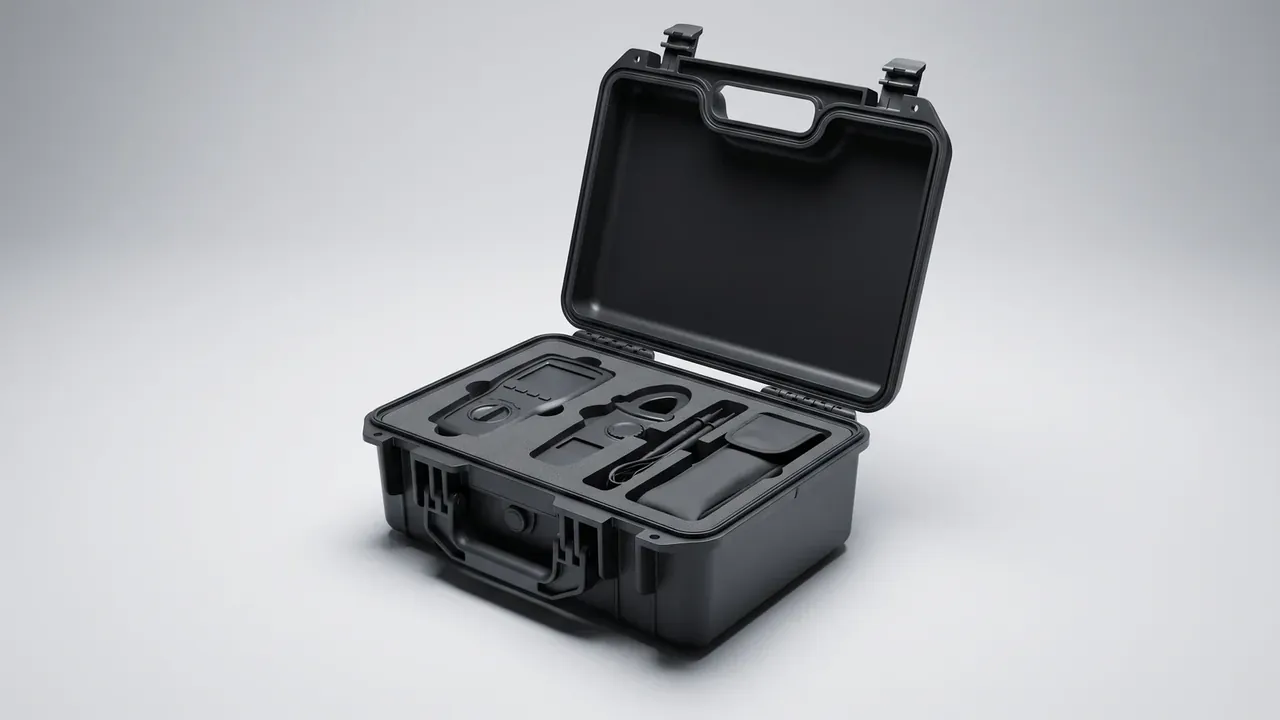
Quick answer: A testing equipment case is specified where it is opened, not where it is stored. Bench, calibration room, field sampling and spare stock pull on different requirements, and lid cycles, exposure and traceability decide the build.
Table of contents
- Where a Testing Equipment Case Is Used
- Bench-Side Checking on the Line
- Calibration Lab ID and Traceability
- Field Sampling and Cross-City Shipping
- Storage Turnover and Monthly Counts
- FAQ
1. Where a Testing Equipment Case Is Used
Four sites take most units: the bench beside a line, the calibration room, field sampling with shipping, and spare stock. Three variables set the build: lid cycles, exposure, and whether each unit must be traceable.
Sizing starts near a 520 by 380 by 165 mm cavity at 4.6 kg empty, holding one gauge, two probes and a coiled lead. A step up crosses 600 mm and 7 kg, where bench use stops paying.
| Site | Opens | Priority | Build |
|---|---|---|---|
| Production bench | 20 per shift | Speed, repeat location | Two latches, flanged foam |
| Calibration room | 2 to 5 daily | Identity, cleaning | Flat foam, label areas |
| Field sampling | 1 to 2 weekly | Sealing, drop | Gasket, four latches |
| Spare stock | Monthly | Stacking, dust | Ribs, dust cover |
One case across two sites is built to the stricter one, at 0.6 to 0.9 kg extra.
2. Bench-Side Checking on the Line
Beside a line the first requirement is cycle time, not protection. The operator works one-handed, so the lid must hold at any angle and the foam must seat the instrument first time. At 1.2 m between stations a lid at 90 degrees reaches 420 mm, clear of the shelf.
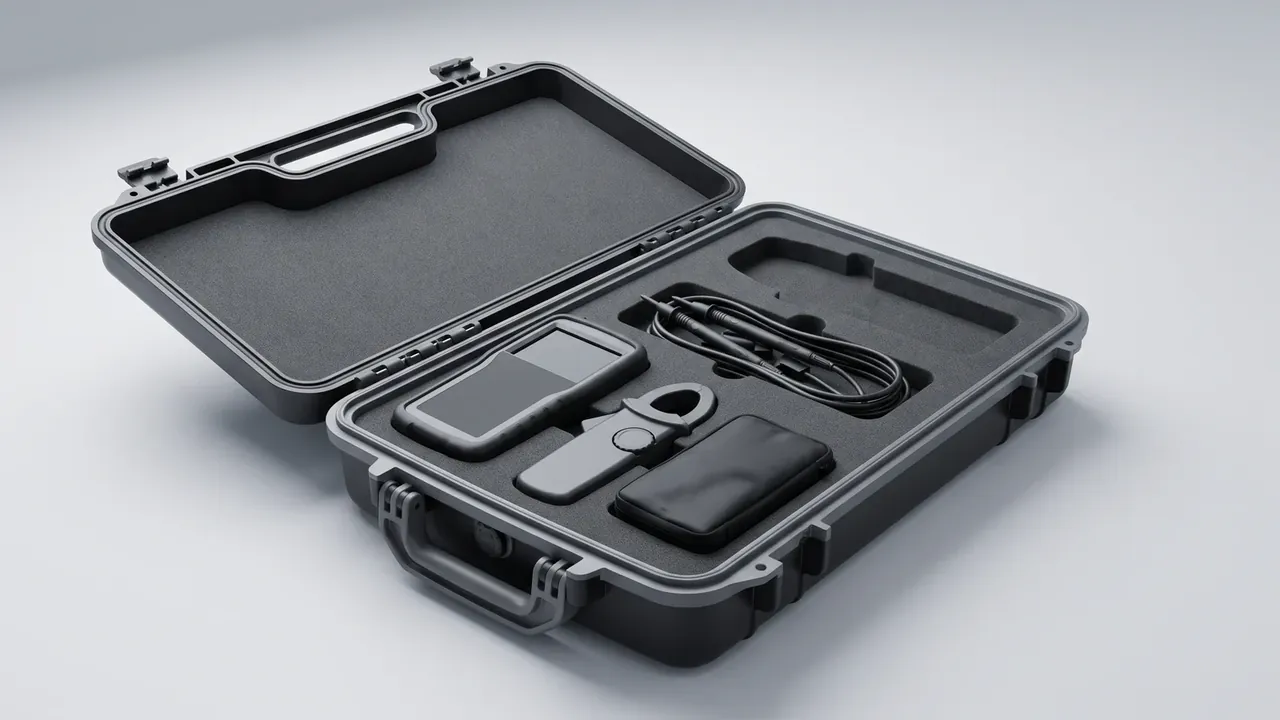
Cutouts run 1.5 to 2 mm under the outline, a light interference fit against conveyor vibration; four 2 mm pads stop the shell sliding, and a 12 mm channel holds the coiled lead.
3. Calibration Lab ID and Traceability
In the calibration room the testing equipment case becomes the management unit: one instrument per cavity, an ID on the shell, and a log carrying case and instrument numbers with both calibration dates. On a 12 month cycle the label shows the next due month.
Label areas are planned, not added later: 40 by 60 mm inside the lid or in the rear corner, clear of hinge rub.
Closed-cell foam wipes clean with alcohol; open-cell foam stains at the cut edge, and repeated wiping opens the cutout until the instrument shifts in about six months.
4. Field Sampling and Cross-City Shipping
In the field one trip carries a temperature swing and an impact. Left overnight at minus 20 C the gasket stiffens; back at 20 C the case should rest 40 minutes before the lid comes up, or the cavity fogs and the connectors take the moisture.
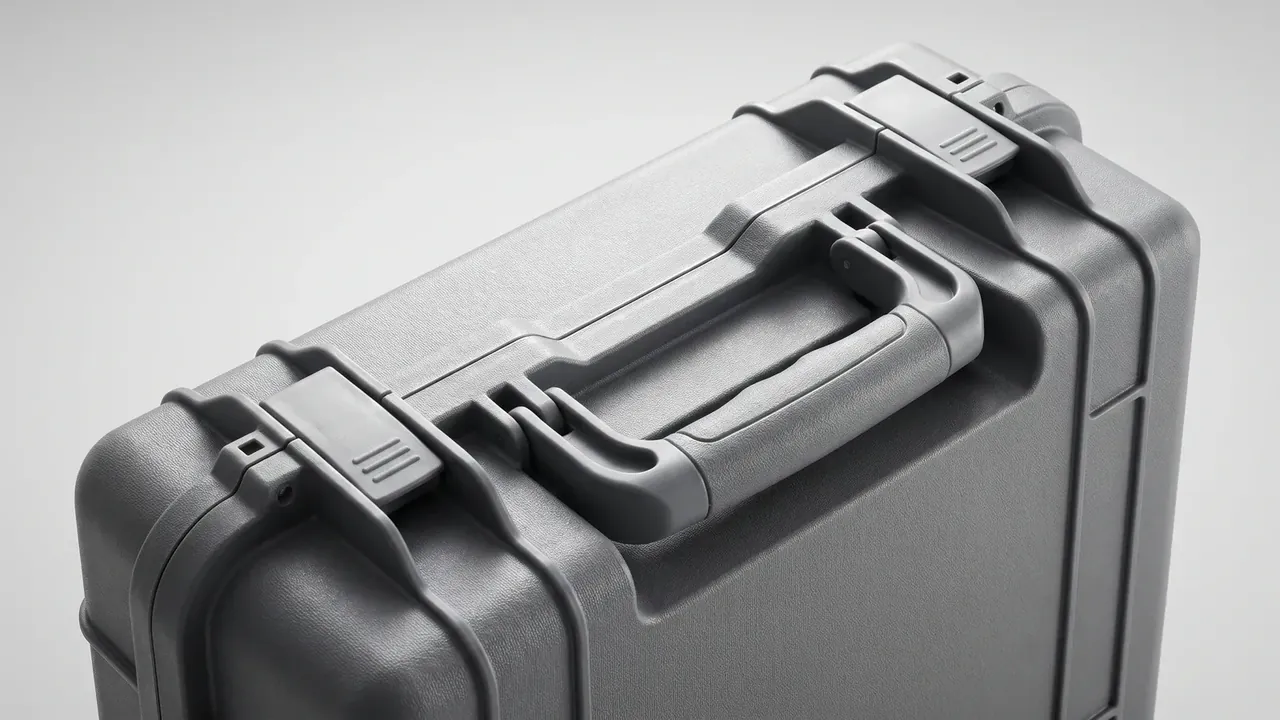
Sealing rests on a continuous gasket and four latches at 25 to 30 percent compression. Too little leaks, too much takes a set: close it, apply 30 kPa, hold 5 minutes, accept a 0.5 kPa drop.
For shipping, a five-ply corrugated box with corner protectors takes the damage that would otherwise reach the latches.
5. Storage Turnover and Monthly Counts
Between jobs the testing equipment case lives in a warehouse. Stack three high at most and keep loaded weight under 25 kg; past that the lower walls take a standing load and the ribs whiten within six months.
| Condition | Target | Note |
|---|---|---|
| Stack height | 3 layers | Load on lower walls |
| Loaded weight | 25 kg | Instrument included |
| Room humidity | 40 to 60 percent | Desiccant above 65 |
| Count interval | Monthly | With calibration log |
Counting should avoid the lid. With 68 cases a scan takes 3 seconds each and the count closes in 4 minutes, while reading numbers by hand takes over 40 minutes. Two exceptions surface, spent desiccant and loose foam, and both go into the log.
Conclusion
The sites differ in the order of three requirements: the bench reads cycle time, the calibration room reads identity, field work and shipping read sealing. One case across all four is built to the strictest and pays in weight; splitting bench from field keeps each build honest. Count lid cycles per shift and trips per year, and the answer follows from the testing equipment case build.
This article discusses only the container (case body) side of specifications and design intent, and does not cover any handling, loading or use of the contents.
Related Reading
- Instrument case versus testing case
- Reading instrument case specifications
- Shell structure and shielding
- Foam insert forming methods and tolerances
Related Products
- 8 Series — Gun Cases; Military Equipment Cases; Camera Equipment Cases; Drone Cases; Watch Cases; Knife Cases; First Aid Cases; Electronics Equipment Cases
- WL8-2812 PP Gun Case — model WL8-2812
- All protective cases and toolboxes: 7 series, 158 models