

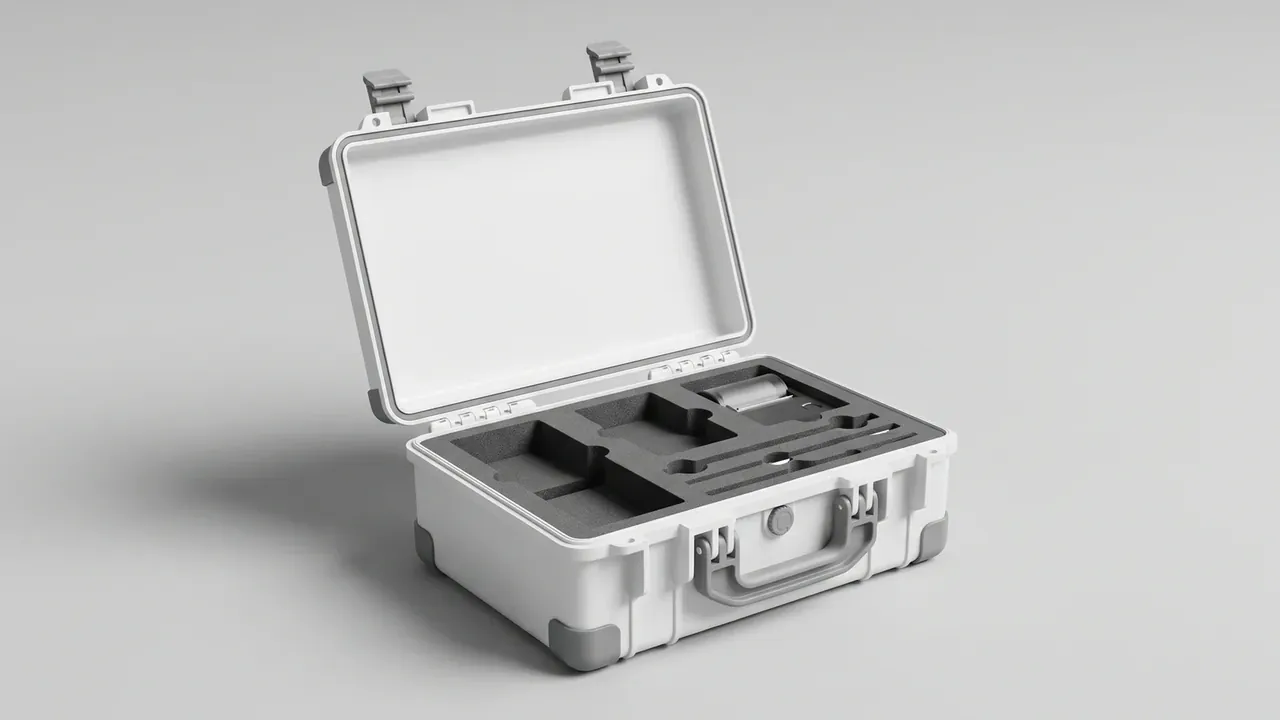
Quick answer: Thermal cycling pushes the gasket to two limits: at -40 °C it stiffens and cannot follow the shrinking case, at 70 °C it loses load to relaxation. Pass means 25 % set after 24 h at 70 °C and 0.5 kPa decay after ten cycles.
Table of contents
- Thermal Cycling Set Points: Temperature, Dwell, Transfer, Count
- Gasket Materials and Their Temperature Edges
- Cold Stiffening and the Pressure Decay Recheck
- Compression Set After 24 h at 70 °C
- Differential Expansion and Latch Preload at 110 K
- Condensation, Venting and Pass Criteria
- FAQ
1. Thermal Cycling Set Points: Temperature, Dwell, Transfer, Count
The set points are not random. 70 °C matches the air at the top of a closed van in summer, -40 °C matches winter storage in cold regions, and the 110 K gap puts wall, latch and gasket at their limits together.
Dwell is 2 h per set point. Transfer stays inside 5 min. A 3 mm PP wall equilibrates in about 1 min, so the 2 h belongs to the 40 L air volume and to the gasket relaxing its compression stress. Transfer is by hand or by ramping at 3 K/min. The two are not comparable. Cycles run 10 for storage, 20 for vehicle work and 50 on military contracts.
| Parameter | Value | Purpose |
|---|---|---|
| Upper set point | 70 °C | Van heat soak |
| Lower set point | -40 °C | Cold storage floor |
| Dwell | 2 h | Stress relaxation |
| Transfer | ≤5 min | Thermal shock |
| Cycles | 10 | Transport grade |
2. Gasket Materials and Their Temperature Edges
Heat ageing sets the top end, the glass transition the bottom; only a material clearing both survives thermal cycling.
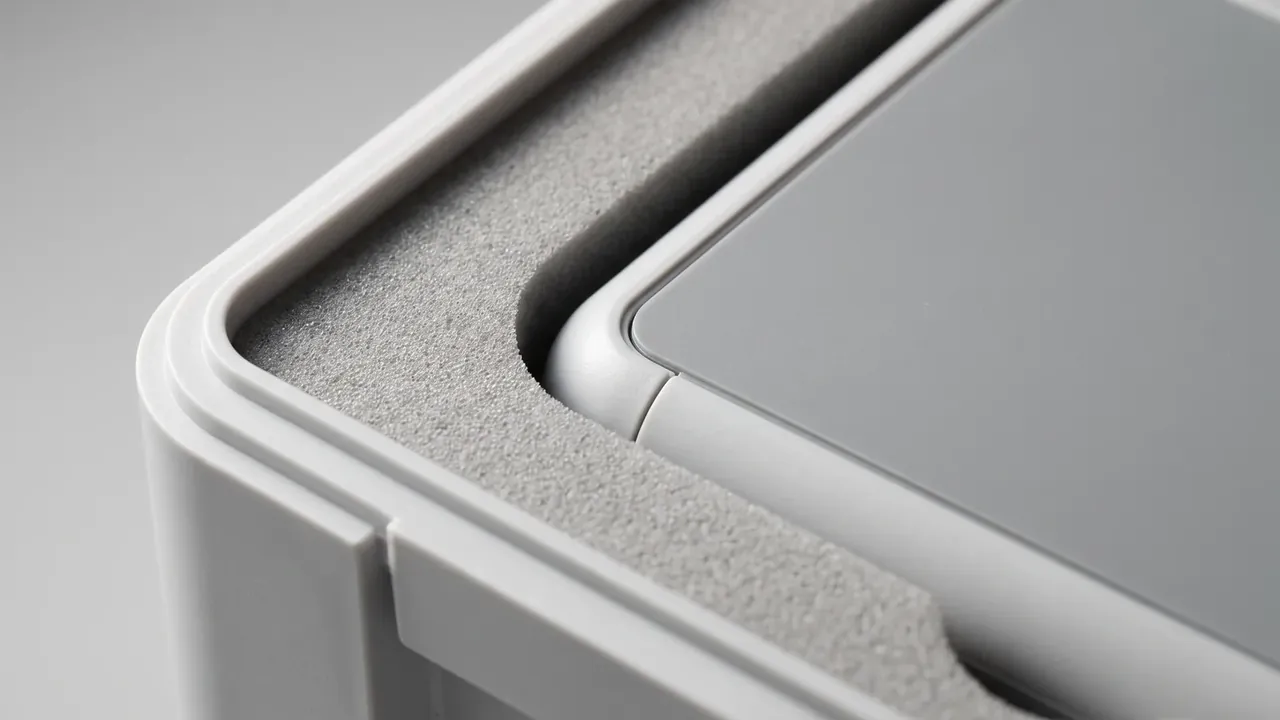
Silicone spans -60 to 200 °C with set near 12 % at 70 °C, costs 2.5 times EPDM and tears at a sharp groove corner. EPDM covers -40 to 120 °C, enough for most transport work, landing between 20 % and 24 %. Thermoplastic elastomer overmoulds onto the case and skips fitting, but its ceiling is 90 °C and load at 70 °C pushes set past 30 %.
| Material | Range | Set at 70 °C | Recovery force |
|---|---|---|---|
| Silicone | -60 to 200 °C | 12 % | 4.5 N/cm |
| EPDM | -40 to 120 °C | 22 % | 3.8 N/cm |
| Thermoplastic elastomer | -40 to 90 °C | 31 % | 3.0 N/cm |
At -40 °C silicone still behaves like rubber, EPDM sits on its floor, and thermoplastic elastomer takes over ten seconds to recover from a 30 % squeeze.
3. Cold Stiffening and the Pressure Decay Recheck
The cold failure in thermal cycling is not a crack but hardness. Silicone climbs from 50 to 75 Shore A and recovery stretches from 1 s past 5 s, so the lid latches before the gasket conforms and a gap stays at the corners.
Pressure decay is the main recheck: charge to 20 kPa, hold 60 s, accept 0.5 kPa or less. Temperature is where readings fail. A cold sample gains roughly 2.7 kPa as trapped air warms by 40 K, five times the limit, so every test passes. Give it 2 h at 23 °C ± 2 °C first.
Tooling causes the other false pass: a fixture clamping too hard flattens the gasket an extra 1 mm, hides the corner gap and returns a clean reading. Match the latch force, two at 60 N.
4. Compression Set After 24 h at 70 °C
Compression set turns thermal cycling ageing into a figure. GB/T 7759: squeeze 25 %, hold 24 h at 70 °C, release, wait 30 min, measure.
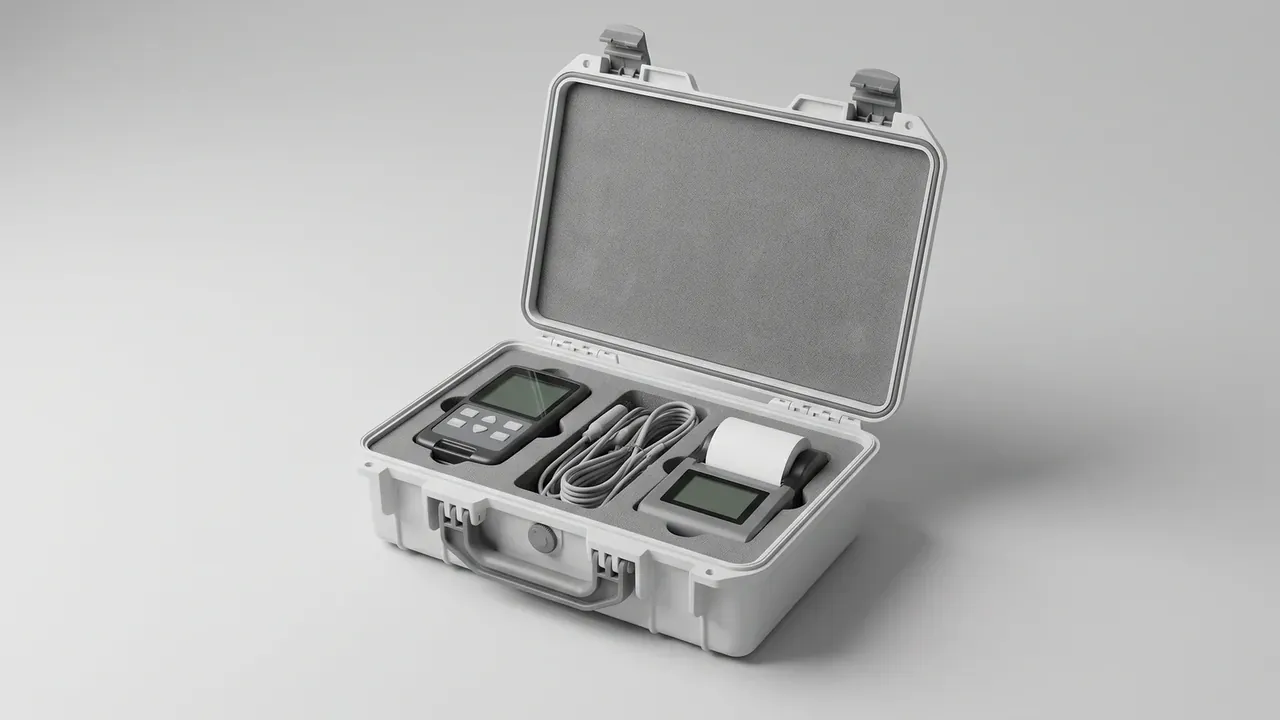
The denominator is where the arithmetic fails. A 10.0 mm cord limited by a 7.5 mm spacer sees 2.5 mm of squeeze; measured at 9.7 mm, set is 0.3 over 2.5, or 12 %, not over 10.
The line is 25 %. Silicone at 12 % and EPDM at 22 % stay inside; thermoplastic elastomer at 31 % takes a flat spot after one summer, and the next closure rests on the latch crushing it. Every 10 K doubles relaxation, so a cord passing at 70 °C reads above 30 % at 90 °C.
5. Differential Expansion and Latch Preload at 110 K
Under thermal cycling PP expands at about 1.5 × 10⁻⁴/K. Over the 110 K gap a 1200 mm rim grows 19.8 mm while a silicone gasket at 2.2 × 10⁻⁴/K grows 29 mm; the spare 9 mm goes to the corners. A 1.5 mm allowance in groove depth and radiused corners give it room, otherwise the corners lift and the leak starts there.
The latch side runs a different sum. At 70 °C PP flexural modulus falls from 1300 MPa to 550 MPa and preload drops from 120 N to 78 N, then returns on cooling, but the gasket has taken 0.2 mm of set. A 6.0 mm groove with an 8.5 mm cord gives 29 % squeeze cold and 33 % hot, inside the 30 % to 40 % band; start at 38 % and the hot value passes 42 %.
6. Condensation, Venting and Pass Criteria
Air inside the case carries moisture at 70 °C. Cool to -40 °C and it condenses in the groove and freezes; ice takes 9 % more volume than water and pries a 0.1 mm gap open. A vent with a 0.2 μm ePTFE membrane and 3 kPa cracking pressure lets air pass only above that differential. Without one, thermal cycling doubles pressure decay by the third round, from 0.2 kPa to 0.6 kPa, traced to a weld line at the vent seat.
| Check | Limit | Method |
|---|---|---|
| Visible cracks | None at 10× | Corners, groove floor |
| Pressure decay | ≤0.5 kPa | 20 kPa, 60 s hold |
| Compression set | ≤25 % | GB/T 7759, 70 °C × 24 h |
| Latch force | Change ≤15 % | Gauge, three closures |
Log the measured temperature within ±2 K of set point, transfer time and cycle number.
Conclusion
Thermal cycling does not test whether a case survives cold; it tests whether the gasket still carries load across a 110 K gap. Set points define the profile, material sets the ends. Silicone finishes with 12 % set, EPDM at 22 %, thermoplastic elastomer over the line at 70 °C.
This article discusses only the container (case body) side of specifications and design intent, and does not cover any handling, loading or use of the contents.
Related Reading
- How long a sample sits in a temperature and humidity chamber
- Silicone, EPDM and nitrile gasket materials compared
- Insulation thickness and heater sizing for temperature-controlled cases
Related Products
- 8 Series — Gun Cases; Military Equipment Cases; Camera Equipment Cases; Drone Cases; Watch Cases; Knife Cases; First Aid Cases; Electronics Equipment Cases
- WL8-2812 PP Gun Case — model WL8-2812
- All protective cases and toolboxes: 7 series, 158 models