

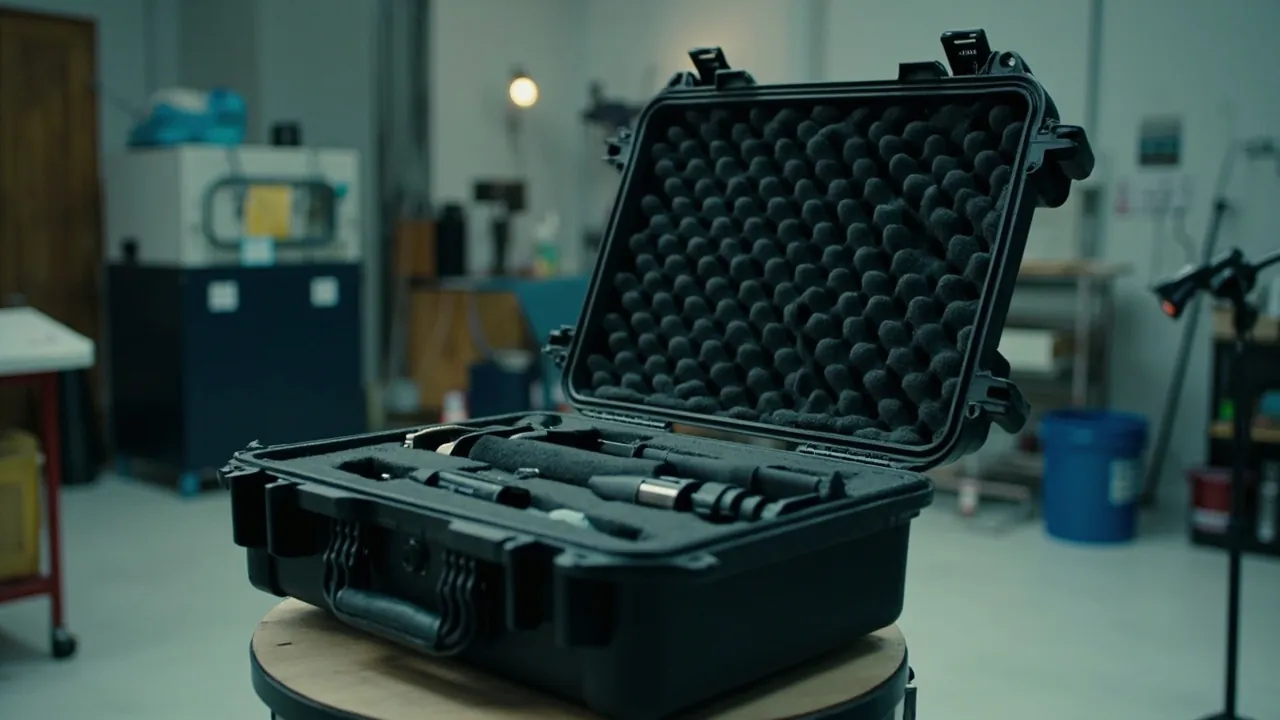
The refrigeration components and the sensing components of an environmental chamber are the two groups of parts that must never be shipped bare. A compressor, an expansion valve and a brazed plate heat exchanger are high-value, heavy, load-bearing parts. A Pt100 platinum resistance thermometer or a capacitive humidity sensor is a precision-critical part. Together they form the heart and the nervous system of a climatic test chamber. The conclusion is direct: these two categories require a purpose-built protective case with custom foam, controlled sealing and verified vibration resistance, not a factory carton wrapped in stretch film.
Environmental chambers, also described as temperature-humidity chambers, thermal cycling chambers, thermal shock chambers and rapid-rate chambers, are almost always partially disassembled for factory dispatch, site relocation, return-to-factory calibration or overseas project delivery. There are three reasons. First, the machine footprint and centre of gravity rarely suit a general-purpose container load. Second, the compressor and heat exchangers concentrate weight in a small volume with very few lifting points. Third, sensors and capillary tubing have no independent restraint inside the machine frame, so a long road leg followed by an ocean leg will produce displacement and fatigue damage. A single drift event can push an already-qualified chamber back into a full calibration and re-qualification cycle, and the lost time costs far more than a compliant case.
This article is written for chamber manufacturers, third-party testing laboratories, university and research institute equipment managers, and the engineering procurement staff who run equipment relocations. It breaks down the fragile points of chamber components, the selection of sealing levels, the trade-offs between liner materials, the transport test standards that apply, and an acceptance method that can be written straight into a purchase order.
Table of Contents
- 1. Why Chamber Components Need a Purpose-Built Case
- 2. Chamber Component List and Fragility Grading
- 3. Refrigeration Components: Compressor and Heat Exchangers
- 4. Refrigeration Components: Expansion Valves and Tubing
- 5. Sensing Components: Temperature, Humidity and Pressure Sensors
- 6. Electrical and Control Components: Controllers, Drives and Terminals
- 7. Choosing the Ingress Rating: IP65, IP67, IEC 60529 and GB/T 4208
- 8. Liner Design: EVA, PE and PU Foam Trade-offs
- 9. The Micro-Environment Inside the Case: Desiccant and Condensation
- 10. Vibration and Shock Testing: ISTA, ASTM D4169 and GB/T 4857
- 11. Case Structure: Walls, Ribs, Hinges and Latches
- 12. Pressure Equalization Valves and Cross-Climate Shipping
- 13. Marking, Traceability and Flammability Declarations
- 14. Selecting and Releasing an Environmental Chamber Component Case
- Frequently Asked Questions
- Conclusion & Related Reading
1. Why Chamber Components Need a Purpose-Built Case
Transporting environmental chamber components is fundamentally a precision-preservation problem, not a simple handling problem. Once a chamber has completed installation qualification and operational qualification, its temperature and humidity field uniformity and fluctuation figures are recorded and signed off. If a sensor receives a shock above its threshold, or if metal debris is generated inside a refrigerant circuit by vibration, re-verification becomes unavoidable.
Three screening tests will quickly tell you whether a given part needs a dedicated case:
- The value test. Is the unit price or lead time of the part significantly higher than the cost of a case? Imported scroll compressors, electronic expansion valves and high-accuracy humidity transmitters commonly run 8 to 16 weeks. Downtime while waiting is far more expensive than the case.
- The precision test. Does the part directly participate in measurement or flow regulation? Pt100 and Pt1000 sensors, capacitive humidity sensors and mass flow controllers are classic precision-critical parts.
- The scenario test. Will the part travel long distance over road, cross an ocean, move through multiple transport modes, or be unloaded somewhere without temperature and humidity control? An ocean container interior can sit above 50 degrees Celsius for extended periods while carrying high humidity, which is a genuinely severe environment.
If two of the three tests are triggered, the part belongs on the protective case list. Conversely, structural parts, sheet metal items and duct flanges can use simplified packaging to keep overall packaging cost under control.
The usual approach at JUNZHJIA for test equipment customers is to run a fragility grading pass over the component list first, and only then decide which parts go into cases, how many cases are needed, and how the liner should be zoned. That sequence avoids both failure modes: cost blowout from packing everything, and rework from shipping critical parts bare.
2. Chamber Component List and Fragility Grading
Component teardown lists differ between chamber models, but the core parts overlap heavily. The table below maps component category to failure mode, sensitivity and a recommended protection level. It can be used directly to draft a transport packaging work instruction.
| Component category | Typical parts | Primary failure mode | Sensitivity | Recommended protection |
|---|---|---|---|---|
| --- | --- | --- | --- | --- |
| Refrigeration drive | Scroll or reciprocating compressor | Casing cracks, oil migration, foot deformation | Medium-high | IP65 hard case plus vibration pads |
| Refrigeration heat transfer | Brazed plate exchanger, finned condenser | Fin collapse, braze leaks, plate displacement | Medium | IP65 hard case with zoned liner |
| Throttling control | Electronic or thermostatic expansion valve | Spool sticking, capillary kinking | High | IP67 hard case with individual pockets |
| Temperature measurement | Pt100 / Pt1000 platinum sensor | Lead breakage, sheath deformation, drift | Very high | Individual tube pocket plus ESD bag |
| Humidity measurement | Capacitive humidity sensor | Sensing film contamination, calibration drift | Very high | Sealed individual cavity plus desiccant |
| Pressure measurement | Pressure transmitter, differential switch | Diaphragm deformation, overload offset | High | Individual pocket plus port caps |
| Electrical control | Temperature controller, PLC, VFD | Terminal loosening, board moisture, ESD damage | High | ESD protection plus desiccant |
| Structural | Duct flanges, door gaskets, brackets | Deformation, scratching | Low | Simple wrap or shared case |
The critical action after grading is one drawing per case. For every protective case, produce a liner layout drawing that records the part name, quantity, weight limit and removal sequence for each pocket. That drawing is both a production document and the reference for unloading and traceability on site.
Note that parts graded very high sensitivity should not share a case with general hardware. Once the sensing film of a humidity sensor adsorbs organic vapour or dust, its calibration curve shifts permanently. The fine leads of a platinum sensor are the easiest thing in a mixed case to cut on the sharp edge of adjacent hardware.
3. Refrigeration Components: Compressor and Heat Exchangers
The compressor is the heaviest single component in an environmental chamber and the most frequent casualty of transport incidents. Failures cluster into three groups: deformation of the mounting feet, casing cracks during a drop, and oil migrating into the suction line because the transport attitude was wrong.
Compressor protection essentials:
- Attitude restraint. Most commercial scroll compressors require a vertical transport attitude, typically within 30 degrees of vertical, otherwise oil can enter the scroll set. The liner must provide a located seat for the compressor, with strap plates over the top where necessary.
- Foot protection. Transport blocks or rubber pads are usually fitted at the factory and must be removed after transport. The liner should provide relief pockets at the feet so the blocks are not crushed.
- Load bearing. The base of the liner needs a PE or high-density EVA load plate. Pocket depth should cover at least 40 percent of the height above the compressor centre of gravity to prevent roll-over under lateral shock.
- Sealing and moisture control. The electrical terminal box and the suction and discharge ports must be blanked. A sealed hard case is recommended; see the discussion of sealing architecture and pressure equalization in IP67 protective case design.
Heat exchangers fail in a completely different way. In a brazed plate exchanger, the plate pack can shift under lateral shock and open a leak path. In an air-cooled condenser, the fins are extremely soft and once crushed they permanently reduce heat transfer area.
Heat exchanger protection essentials:
- Fin area. Apply low-density PE foam or expanded polyethylene across the full face. Avoid materials that shed particles.
- Port protection. Cap and sleeve every connection to keep debris out and protect threads.
- Zoned placement. Do not put a plate exchanger and a compressor in the same pocket. The hardness mismatch means they will abrade each other under vibration.
- Corrosion control. Copper tubes and aluminium fins need a moisture barrier in a high-salinity ocean environment; a sealed case with desiccant is the practical answer. The material factors are covered in how seal materials affect long-term case performance.
For compressors fitted with vibration isolation, supply isolation pads of the same specification inside the case so the part is restrained but retains a small amount of movement. Fully rigid restraint actually transmits high-frequency vibration energy straight into the casing.
4. Refrigeration Components: Expansion Valves and Tubing
Electronic expansion valves, thermostatic expansion valves, capillary tubes and distributors share a profile: small volume, high precision, and a strong dislike of bending. They are slender, have very small internal clearances, and normally carry fine capillary tubing.
Three failures dominate in transport:
- Spool sticking. Vibration drives metal debris or seal material fragments between the needle and the seat, so the opening control becomes inaccurate.
- Capillary kinking or fatigue fracture. An unrestrained fine tube swings with vibration and creates a stress concentration at the braze joint.
- Bulb drift. If the sensing bulb of a thermostatic expansion valve is compressed or squeezed, the pressure-temperature relationship of the charge changes.
Corresponding design measures:
- Give the valve body its own pocket, sized roughly 1 to 2 mm larger than the body so it is held compliantly rather than crushed.
- The capillary route must be fixed. Cut a shallow dedicated channel in the liner and press the capillary into it with a low-tack tape, keeping any unsupported span under about 40 mm.
- Keep the sensing bulb in the same pocket as the valve but in a separated zone with a divider so the two cannot compress each other.
- Cap every port with an original or dedicated protective cap, and include a spares list inside the case.
For valve assemblies that move between climate zones, air tightness and humidity control inside the case matter just as much. Fit replaceable desiccant inside a sealed case, and consider a pressure equalization valve so that a large temperature difference at loading and unloading does not create a pressure differential that makes the case hard to open or sucks the gasket out of shape. The selection logic is explained in the role and selection of case pressure equalization valves.
Practical note: damage to expansion valves and capillaries is usually invisible at the visual incoming inspection. It only shows up during commissioning, as control overshoot or insufficient cooling capacity. Treat these parts as high-risk latent-damage items, record them separately, and keep photographic evidence from the unboxing.
5. Sensing Components: Temperature, Humidity and Pressure Sensors
Sensing components are the direct carriers of a chamber's metrological characteristics. In a temperature-humidity chamber, the uniformity, fluctuation and deviation of the internal field all rest on sensor accuracy. Once a sensor drifts, the metrological confirmation conclusion for the whole machine is invalidated.
Temperature sensors (Pt100 and Pt1000 platinum resistance):
- Accuracy classes such as Class AA and Class A correspond to defined tolerance bands. Mechanical shock during transport introduces lattice stress and therefore irreversible drift.
- The fine leads, commonly three-wire or four-wire, are the most fragile feature. Provide a dedicated lead storage channel inside the case so the leads cannot tangle.
- The sheathed probe must not carry axial compression. The pocket floor should be a flat support, not a point support.
Humidity sensors, mostly capacitive:
- The sensing film is highly sensitive to organic solvent vapour, dust and salt mist, and requires an individual sealed cavity.
- Place desiccant inside the cavity together with a humidity indicator card, and verify the state immediately on arrival.
- Do not store these sensors long term in the same closed space as rubber goods or foam debris. Volatile organic compounds will shift the reading.
Pressure transmitters and differential pressure switches:
- The diaphragm is the weak point. Fit port caps for transport so it is not pressurised.
- The terminal compartment should be separated from the measurement compartment so that moisture cannot enter through the cable entry.
The general principle is three isolations: isolate humidity with an individual sealed cavity and desiccant, isolate static electricity with ESD-shielded packaging as described in ESD shield case design points, and isolate mechanical shock with an individual pocket and low-density compliant foam.
For sensors that must be sent to a legal metrology institute or an accredited third-party calibration laboratory, the case should also make sealing and unboxing records easy. Many laboratories check packaging integrity on receipt, and a clear, traceable case shortens the receiving confirmation process. For a testing laboratory operating to ISO/IEC 17025, an environmental chamber is equipment that affects the validity of results, so its sensors should be checked under the intermediate check plan after transport. Their calibration can follow the applicable metrology calibration specification, that is the relevant JJF series document, or the applicable verification regulation in the JJG series; confirm the exact document with a suitably qualified metrology body.
6. Electrical and Control Components: Controllers, Drives and Terminals
Temperature controllers, PLC modules, variable frequency drives, solid state relays and terminal blocks that are removed from a control cabinet look robust but tolerate surprisingly little mishandling.
The main risks:
- Board-level moisture. A PCB that has absorbed moisture can leak or arc at the moment power is applied. Ocean freight makes this worse.
- Electrostatic damage. The gate oxide of a CMOS device can be punctured by a few hundred volts of static. The damage may appear immediately or as an intermittent fault weeks later.
- Terminal loosening and pin deformation. Connector pins rub against each other under vibration, the plating wears and contact resistance rises.
- Displays and touch panels. The glass cover is at risk of cracking and needs soft individual wrapping.
Protective actions:
- Bag every board individually in ESD-shielded packaging with a humidity indicator card.
- Cap or cover connectors with original dust caps so no pins are exposed.
- Use a zoned liner with heavy parts at the bottom, light parts above, and boards inserted vertically in dedicated slots rather than stacked.
- For drives with heat sinks, make sure the fin edges do not carry load.
When JUNZHJIA supplies OEM and ODM case sets for this category, the standard request is a component weight list plus centre-of-gravity positions. Those two inputs determine liner thickness and whether reinforcing ribs are needed. For control cabinet modules above 25 kg, the bottom of the case gains a load plate and a reinforced base structure rather than simply thicker foam.
7. Choosing the Ingress Rating: IP65, IP67, IEC 60529 and GB/T 4208
What chamber components actually meet in transit is not rainfall but condensation forming on the refrigeration coil and moisture reaching the temperature-humidity sensors. While the machine is switched off for transport, the coil can sit below the ambient dew point, and once the case seal is less than perfect, water settles on the coil and valve bodies and stays there; and once the sensitive element of a Pt100 or capacitive humidity sensor takes on moisture, its metrological behaviour drifts. The rating should therefore follow what form of water each refrigeration and sensing part actually fears.
In short: set the case rating from the moisture exposure of the route. Road-only shipments take IP65; ocean freight or cross-climate routes take IP67 together with a pressure equalization valve. The coil compartment and the control cabinet also need their own condensation and moisture control. The level-by-level IP classification and its test methods are set out in full in another article in this batch and are not repeated here; see the complete protection-level and standards reference.
Route-to-failure mapping, for chamber components specifically:
| Transport route | Dominant form of water or moisture | Real risk to these components | Rating |
|---|---|---|---|
| --- | --- | --- | --- |
| In-plant forklift, covered bay | None direct, ambient humidity only | Pt100 lead moisture, board absorption | IP54 |
| In-province road, covered loading | Occasional splash | Connector corrosion on sensors | IP65 |
| Inter-provincial road with a transfer hub | Brief rain exposure | Water ingress at the compressor terminal box | IP65 |
| Container ocean freight, including open port storage | Condensation cycles, salt mist, high humidity | Valve train corrosion, humidity sensing film contamination | IP67 |
| Air plus road, multi-modal | Pressure differential plus rapid temperature change | Gasket drawn out of shape, case hard to open | IP67 plus equalization valve |
Four selection rules, for refrigeration and sensing parts:
- If a container or open storage appears anywhere on the route, the compartment holding the refrigeration unit and heat exchangers should start at IP67 rather than trying to save cost at IP65.
- If the route moves from a cold loading area to a warm unloading area, fit a pressure equalization valve regardless of the rating, otherwise the differential across the coil compartment will suck the gasket out of shape.
- Where sensors already carry their own foil or vacuum pouch, the rating of the outer case may drop one level, but the desiccant inside that pouch must not be reduced.
- The control cabinet (controller, drive, terminal block) takes its rating from moisture and dust control, while the coil compartment takes its from condensation and salt mist control. The two need not share one rating; where necessary, build the cabinet as a separate lid-off bay.
What a rating does not cover. A rating answers only whether water and solids can enter; it says nothing about vibration and shock. Compressor feet, exchanger fins and sensor leads are all vibration sensitive and must be assessed separately against the ISTA series or GB/T 4857, as covered in section 10. Common misreadings of the levels are discussed in how to read IP ratings on waterproof cases.
8. Liner Design: EVA, PE and PU Foam Trade-offs
The liner inside a chamber component case has to do three things at once: carry the weight of the refrigeration parts, keep condensed water away from coils and valves, and give the temperature-humidity sensors their own low-outgassing isolated cavity. The third is often overlooked. The sensing film is extremely sensitive to organic outgassing, and the wrong liner material turns the whole cavity micro-environment against the sensor.
| Layer | Material | What it does for chamber components | What happens without it |
|---|---|---|---|
| --- | --- | --- | --- |
| Base load plate | High-density EVA or closed cell PE | Carries compressor and exchanger weight, isolates the case floor | Case floor bulges, heavy items settle |
| Located pocket layer | EVA, CNC routed | Gives valves, sensors and boards their coordinates | Items strike each other under vibration |
| Moisture take-up layer | Low-density XPE with a breathable non-woven facing | Absorbs small amounts of condensate instead of leaving it on metal | Metal surfaces stay wet and rust |
| Removable top liner | Thin PU or PE sheet on clips | Lifts out whole for cleaning and drying when the configuration changes | Foam traps dust permanently |
| Compression layer | Low-density PE | Limits vertical movement | Components shift during unboxing |
Four design moves for refrigeration and sensing parts:
- Coil-compartment condensation control. The zone holding the refrigeration unit, brazed plate exchanger and expansion valve should have a flat or slightly domed pocket floor with no dished puddles; condensate should run down the pocket wall to the take-up layer rather than sitting on the coil.
- Cushioning liner for compressor and exchanger. These heavy items first sit on a high-density EVA load plate, then have their corners wrapped in a resilient PU layer so vibration energy is spent crossing the liner. Never use a hardwood wedge against the compressor shell or the exchanger fins.
- Isolation for temperature-humidity sensors. Give the Pt100 and capacitive humidity sensor their own tube pocket or sealed cavity, lined with a low-outgassing, low-shedding grade, and fit desiccant with a humidity indicator card so they never share a closed space with foam outgassing.
- Top liner lifts out whole and the desiccant bay stays open. Remove the top liner whole, clean it and refit; keep the desiccant where air reaches it, not sealed under the compression layer.
Pocket clearance stays at 1 to 2 mm as a working figure. Too much and components swing inside their pockets; too little and loading becomes hard and compressive stress rises. Long-term material behaviour is compared in case foam material comparison, and the sampling process is described in the custom foam insert design guide.
9. The Micro-Environment Inside the Case: Desiccant and Condensation
A sealed case stops water getting in from outside, but the air already inside the case still carries moisture. For humidity sensors, circuit boards and optical windows, the internal micro-environment matters more than the outside weather.
Control measures:
- Desiccant. Silica gel or molecular sieve. As a rule of thumb, allow 20 to 50 g per 30 to 50 litres of internal volume; double it for long ocean voyages and use a higher-capacity molecular sieve.
- Humidity indicator card. Place it where it is visible as soon as the case is opened, so the receiving party can judge moisture exposure before or immediately at opening.
- Condensation control. When moving from a cold environment into warm humid air, do not open the case immediately. Let it stand in the unloading environment for two to four hours so that condensation does not form directly on cold component surfaces.
- Packaging cleanliness. Specify low-outgassing, low-particle-shedding liner material. Ordinary recycled foam releases organic compounds that are unfriendly to humidity sensors and optical parts.
A common site error: opening the case on the quay to inspect the goods. If the case has just come out of a cold hold, cold internal surfaces will condense moisture from humid air within seconds, and an invisible water film can contaminate a sensing film.
For parts returning to the factory for calibration, include a transport environment record sheet in the case, recording the temperature and humidity range at origin and destination and the transit duration, so the calibration body can assess whether an abnormal condition occurred.
10. Vibration and Shock Testing: ISTA, ASTM D4169 and GB/T 4857
Transport validation for chamber components starts from a point easily missed: these parts already survive temperature cycling inside the machine, but inside a carton they meet a completely different load spectrum. The test design therefore separates the mechanical load on the package from the hot-humid load inside it.
The mechanical line:
- Compressors and heat exchangers are heavy items, dominated by stacking load and drop energy, so testing concentrates on stack strength and low-height multi-attitude drops.
- Expansion valves and capillaries are fine tube items, dominated by fatigue under sustained vibration, so testing concentrates on random vibration spectra and resonance dwell.
- Sensors and boards are small light items, dominated by high-frequency vibration and static, so testing concentrates on vibration transmissibility and static field control inside the package.
The hot-humid line. Chamber components are usually expected to be installable on arrival, so internal humidity must still be under control when the case is opened. Record the humidity indicator card state and the desiccant take-up as part of testing; together they define the packaging shelf life. For electrical items such as controllers and drives, the IEC 60068 series adds component-level environmental test methods.
| Test intent | Suggested basis | Loading emphasis | Post-test check |
|---|---|---|---|
| --- | --- | --- | --- |
| Stacking and warehouse load | GB/T 4857 stacking part | Full-load case under sustained compression | Wall bulge, liner compression set |
| Handling drop | GB/T 4857 drop part | Corner, edge and face attitudes | Component displacement, fin condition |
| Long-haul vibration | ISTA or ASTM D4169 vibration | Random vibration plus resonance dwell | Capillary braze joints, lead strand breakage |
| Whole-route assessment | ASTM D4169 distribution cycle | Combined to the real chain | Overall judgement |
| Internal hot-humid load | Environmental test method, such as Method 507 humidity | Constant temperature-humidity cycling | Indicator card, desiccant condition |
On MIL-STD-810H. Citing its method parts, such as 507 humidity, 514 vibration or 516 shock, treats it purely as a source of environmental test methods. It does not mean the product holds any military certification or qualification, and phrases such as "military standard compliant" must not appear in quotations or technical documents.
Post-test re-measurement for chamber components. Sensors must be re-checked for zero and insulation resistance, expansion valves must be cycled through their full stroke, heat exchangers must be re-tested for tightness, and boards must complete a power-on self-test. A visual check alone is not sufficient for release.
11. Case Structure: Walls, Ribs, Hinges and Latches
Structural reliability shows up in three places: wall stiffness, hinge life and latch retention. Chamber components often weigh 20 to 60 kg, and a case is repeatedly carried, stacked and lifted at full load, so structural fatigue appears before material strength limits do.
Structural design points:
- Walls and ribs. High-density PE or PP rotationally moulded cases need longitudinal ribs across large flat areas to resist bulging. The mating face between lid and body needs enough width to give uniform gasket compression.
- Hinges. Full-load opening and closing is the main duty cycle. Choose metal pin hinges with pin diameters matched to case weight. For heavy cases, use double hinges or extended hinge mounts to spread stress.
- Latches. Snap latches need an anti-accidental-opening feature. Where tamper evidence is required, leave a padlock or seal hole.
- Gaskets. Material and compression set determine service life. Structural detail and common failure modes are covered in toolbox hinges, latches and seals explained.
- Lifting and carrying. Above 30 kg per case, fit handles. Above 50 kg, add castors or lifting eyes.
A frequent misconception is that thicker walls are always better. Excess thickness adds significant self-weight, which actually makes dropping more likely during handling. The sound approach is to reinforce the critical load paths rather than thicken everything uniformly.
12. Pressure Equalization Valves and Cross-Climate Shipping
The pressure equalization valve is the part of an equipment case most often overlooked, yet it shapes the real user experience. Its job is to let internal and external air pressure slowly equalise while blocking liquid water and dust.
Where it matters for environmental chamber components:
- Across climate zones, the temperature difference between inside and outside can exceed 40 degrees Celsius, and opening resistance on a sealed case rises sharply.
- In air freight, hold pressure changes rapidly; a case without a valve can have its gasket drawn in or the body distorted by the differential.
- On plateau rail or road routes, external pressure is markedly lower than at sea level, producing the same problem.
- Repeatedly prying a case open accelerates gasket ageing and shortens the service life of the whole case.
Selection notes:
- The valve should use a waterproof breathable membrane, commonly ePTFE, giving gas permeability while matching the case's IP rating.
- Avoid mounting it in the accumulation zone at the base of the case or in a position directly exposed to rain on top.
- For cleanliness-sensitive parts, choose a low-particle-release membrane.
Selection logic and test methods are covered in the role and selection of case pressure equalization valves. For long cross-climate routes, check the temperature range of the case material itself; see protective case design for extreme temperatures.
13. Marking, Traceability and Flammability Declarations
The three questions a commissioning engineer asks on site are: is this a refrigeration part or a sensing part, when was it last calibrated, and is the control cabinet fire-rating adequate. The marking system should answer all three at once.
Three marking layers, one job each:
- Layer one, outside for handling. Asset number, contents category, refrigeration unit, heat exchanger, temperature-humidity sensor or control cabinet, net and gross weight, stacking limit, upright and moisture symbols, plus a "contains refrigeration parts, do not invert" note. This layer lets a forklift operator or storekeeper move the case correctly without opening it.
- Layer two, inside for the job. Layout drawing pasted on the inside of the lid, removal sequence, the date the desiccant was last changed, and the disassembly orientation of the coil and valve bodies. This layer lets a technician restore the case to drawing.
- Layer three, batch traceability. Packaging batch number, liner material lot, inspection status, and the last calibration date and validity of the temperature-humidity sensors. This layer lets other cases from the same batch be traced if a problem appears.
Extra requirement for sensor calibration traceability. Pt100 platinum sensors and capacitive humidity sensors are key parts that affect the equipment qualification outcome. The case should carry the calibration certificate number or the last verification or calibration date of that batch of sensors, so the site can schedule the intermediate check on arrival. Their metrology may follow the applicable JJF series document or the JJG series document, and the exact document should be confirmed with a qualified metrology body.
Flammability requirement for the control cabinet. For cases carrying controllers or drives, the internal plastic trays, cable ties and label stock should carry a UL94 flammability classification. If the customer serves aviation or rail supply chains, confirm at sampling whether smoke density and toxicity data are needed; that data takes time to obtain and should not be requested just before dispatch.
On food-contact standards. Chamber components are industrial equipment parts, and the GB 4806 series of food-contact material standards does not apply here. Do not apply it at acceptance. If the same supplier also makes cases for the food industry, keep the two standard systems on separate tracks to avoid misapplication.
14. Selecting and Releasing an Environmental Chamber Component Case
Condensing the earlier sections into one workable chain, the sequence for a chamber component case reduces to five steps: split the cases by refrigeration versus sensing, set the rating from the route, design the liner per part, run a transport validation, then re-measure on arrival.
One: split the cases by refrigeration and sensing. Group by refrigeration-heavy, precision-sensing and electrical-control. Compressors, brazed plate exchangers and expansion valves are refrigeration-heavy; Pt100 and humidity sensors are precision-sensing; controllers and drives are electrical-control. The three groups do not share a case. Two: set the rating. Pick one of IP54, IP65 or IP67 according to whether the route includes a container and open storage, and add a pressure equalization valve for cross-climate or air legs. Three: design the liner. Draw the layout first, including the condensation-control zone for the coil, the isolated cavity for sensors, removal sequence, desiccant bay and forbidden contact faces, then sample and trial fit with real parts rather than wooden mock-ups. Four: validate. Run the load combination from section 10, with emphasis on stacking for refrigeration-heavy items and vibration for precision-sensing items. Five: re-measure and release. Work through the re-measurement list in section 10 before the case is allowed to ship (sensors re-checked for zero and insulation resistance, expansion valves cycled through their full stroke, heat exchangers re-tested for tightness, control cabinet put through a power-on self-test).
Arrival checks that differ for chamber components:
| Arrival check | Action | Release criterion |
|---|---|---|
| --- | --- | --- |
| Seal and external condition | Verify the seal number, look for impact marks | Number matches, no through cracks |
| Internal moisture evidence | Read the indicator card before opening | Card unchanged |
| Compressor attitude and feet | Check tilt, inspect transport blocks | Within the manufacturer's permitted tilt |
| Exchanger fins | Rake light across the fin block | No collapse, no compression marks |
| Valves and capillaries | Inspect routing channels, confirm no kinks by hand | No creases, no unsupported span |
| Sensors and boards | Check ESD bag integrity, connector condition | Packaging intact, no bent pins |
| Desiccant | Visual check for caking | Not caked |
A failed item should be recorded and traced back to the packaging batch rather than fixed on site by swapping foam.
Batch sampling, AQL. Cases delivered in the same batch should be sampled under the rules in custom case acceptance and AQL sampling, focusing on gasket compression, equalization valve breathing, spare humidity indicator cards and the strap pre-tension on refrigeration parts. A sampling failure should send the whole batch back into the liner revision loop.
Brand support. JUNZHJIA, the brand of Kexin New Materials (Guangdong) Co., Ltd., serves the test equipment industry with case selection, custom cases and liners, OEM and ODM branding, and delivery documents including batch inspection records and case specifications. For general supplier screening see how to choose a protective case OEM factory, and for batch sampling rules see custom case acceptance and AQL sampling.

Recommended packing sequence. Place base load items first, such as the compressor and transformer, then the mid-layer precision items such as expansion valves and sensors, then light items such as harnesses and accessories on top, finished with a compression foam layer. Photograph each completed layer.
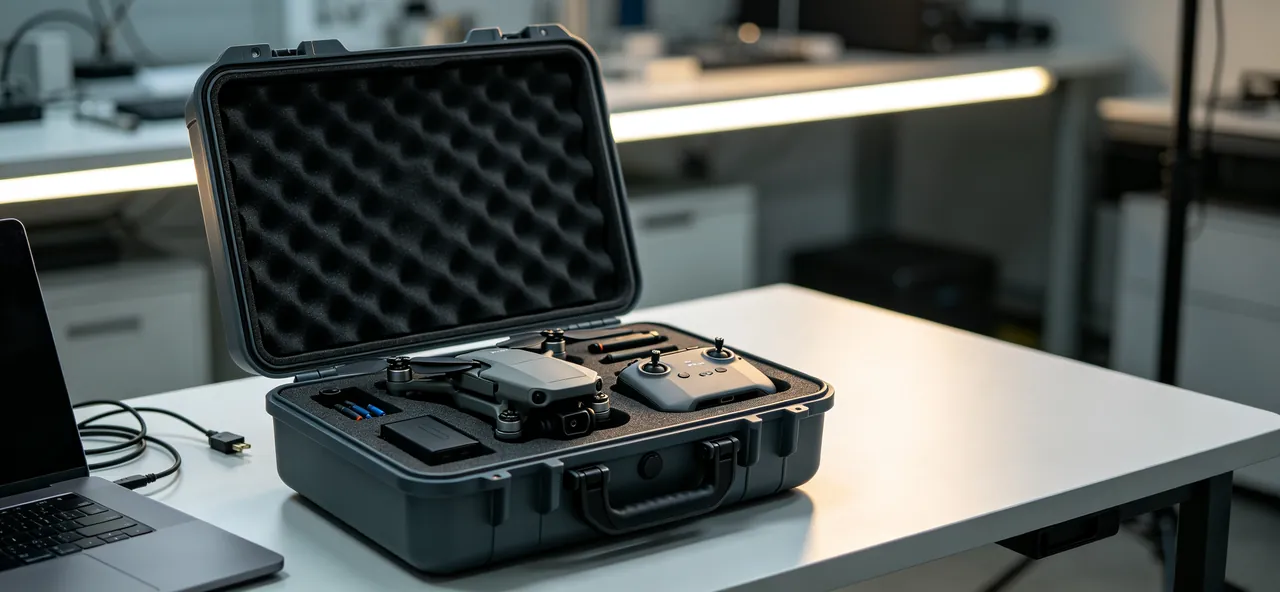
Sensor individual packaging. Give the platinum sensor and the humidity sensor separate pockets, each with an ESD bag and desiccant and a flat pocket floor. Label the humidity sensor pocket with a reminder to re-check zero within 24 hours of opening.
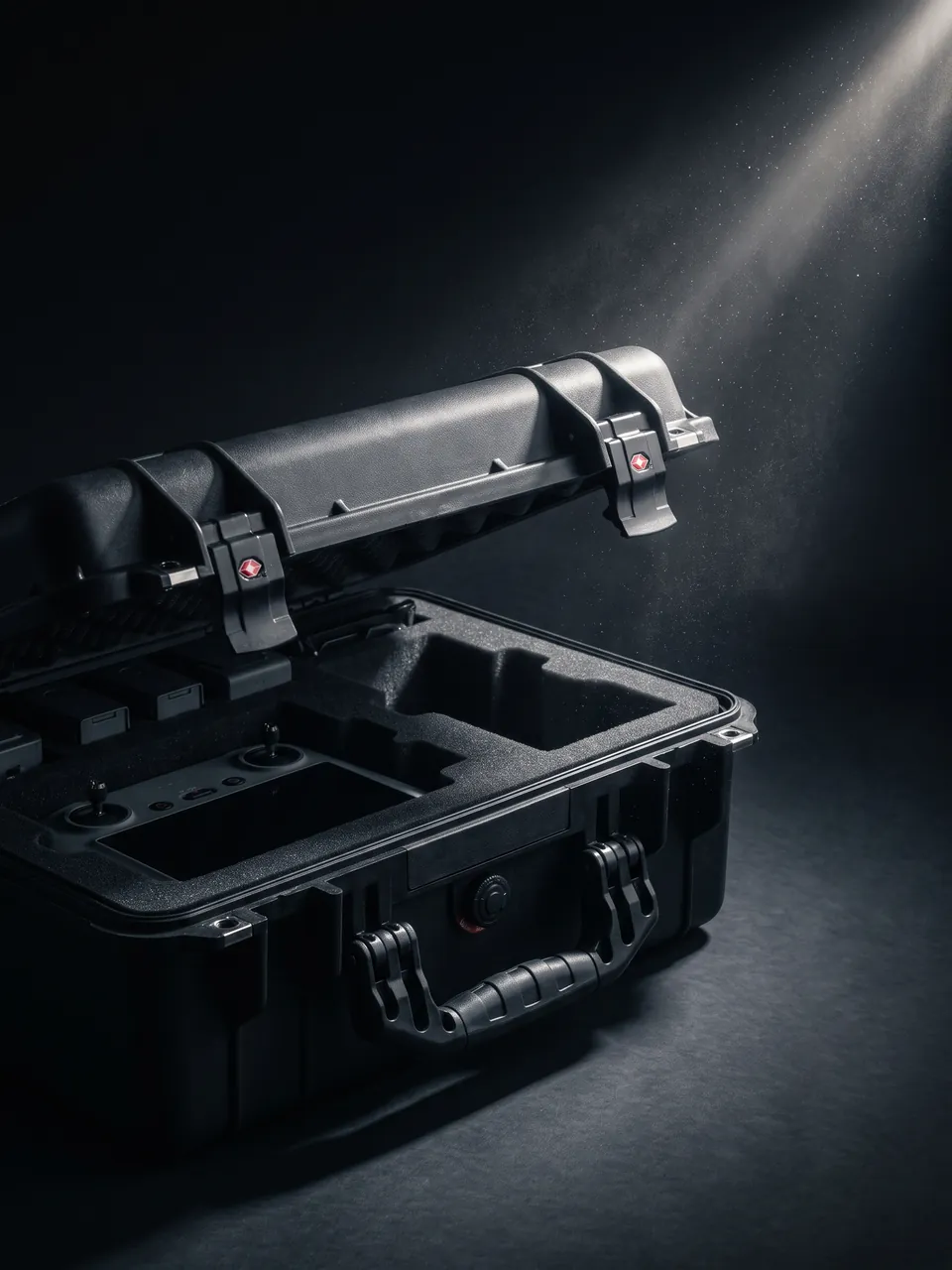
Last action before dispatch. Confirm the equalization valve breathes freely, since a blocked valve makes the case hard to open after a cross-climate leg. Check that every latch has engaged, then copy the seal number, packer and date onto the accompanying paperwork. A case with incomplete records does not leave the store.
Frequently Asked Questions
Q: Must the refrigeration components of an environmental chamber be shipped in separate cases, or can they stay on the machine?
A: The answer turns on how the machine travels and how long the journey is. A short road leg, with the factory transport fixings still fitted, such as compressor transport blocks, pipe supports and door locks, can reasonably be shipped assembled. Three cases argue for removal and separate casing. First, ocean or intermodal transport, where the container interior stays hot and humid for weeks and the machine frame provides neither an independent moisture barrier nor independent vibration isolation for the compressor. Second, inter-provincial relocation, where the machine envelope and centre of gravity may exceed general cargo limits and partial dismantling is unavoidable. Third, return to factory for overhaul or calibration. Separate casing brings a further benefit: each component gets a sealing level and liner matched to its own sensitivity, instead of forcing every part on the machine to accept one packaging condition. When supporting test equipment customers, JUNZHJIA normally recommends a fragility grading pass first, listing compressors, expansion valves and sensors as must-case items while structural parts travel with the machine or in simplified packaging.
Q: How should I choose between IP65 and IP67 cases for chamber component transport?
A: Look at where water can actually reach the case rather than at the number. IP65 keeps out water jets; IP67 additionally tolerates short immersion, conventionally one metre for thirty minutes. For a chamber component shipment the deciding factor is usually condensation inside a container, not rain outside it. A route that never leaves the road, with covered loading at both ends, is served well by IP65. Add a container leg, an open port yard or a rain-exposed transfer and the case should be IP67, because internal surfaces will sit below the dew point repeatedly across a two to four week voyage. Two points are worth repeating because they are commonly missed. A rating describes only ingress of water and solids; vibration, shock and drop performance are separate questions answered by the ISTA series or GB/T 4857, so a high rating is no substitute for a good liner. And any sealed case develops a pressure difference after a temperature change, so where the route crosses climate zones or includes an air leg, fit a pressure equalization valve. Without one, operators pry the lid, and prying is what kills the gasket long before the seal material reaches its design life. Where a shipment mixes heavy and precision parts, split the cases by sensitivity first, then set one rating for each group.
Q: What most often makes platinum resistance sensors and humidity sensors drift during transport?
A: Platinum sensors drift mainly through mechanical shock and lead damage. Their accuracy depends on a stable connection between the sensing element and its leads, and acceleration above the threshold can micro-crack a lead joint or deform the sheath, showing up as zero drift or reading jumps. Humidity sensors fail by an entirely different mechanism, dominated by sensing film contamination and chemical adsorption. Organic solvent vapour, plasticiser outgassing, dust and salt mist all change the dielectric behaviour of the sensing film, producing a persistent high or low bias. The two therefore need different packaging strategies. For the platinum sensor, the priority is mechanical restraint and lead management. For the humidity sensor, the priority is an individual sealed cavity, desiccant and low-outgassing liner material. Neither should share a closed space long term with rubber parts or ordinary recycled foam, because the plasticisers and sulphur compounds they release are exactly what shifts a capacitive reading over months of storage.
Q: Should the custom liner use EVA, PE or PU foam?
A: Choose by function and layer the structure rather than picking a single material. A common build has three layers: a base of high-density EVA or XPE for load bearing and impact absorption, a middle locating layer of EVA or PU with routed pockets, and a top compression layer of low-density PE or XPE. EVA has good dimensional stability and machines into complex pocket shapes, suiting heavy and multi-pocket layouts. PU conforms well and has excellent resilience, suiting irregular precision parts. Expanded PE costs little but collapses under long compression, so it suits light-part protection and filling rather than primary load bearing. Aim for 1 to 2 mm clearance between pocket and part; more and the part accelerates under vibration, less and loading becomes difficult. Chamfer or pad foam edges that touch diaphragms, sealing faces or glass panels so no hard point forms. See the case foam material comparison for detail.
Q: Which standards should chamber component transport be tested against, and does MIL-STD-810H count as military certification?
A: Treat the validation as two separate questions: what mechanical load the package sees, and what micro-climate it holds. On the mechanical side, the GB/T 4857 series gives the vibration, impact, stacking and drop methods most often named in contracts, the ISTA series adds a packaged-product performance route, and ASTM D4169 suits genuinely intermodal journeys because it lets a distribution cycle be assembled from the real legs. On the micro-climate side, the humidity and temperature methods of the environmental test standards define the profile. One clarification matters commercially: citing MIL-STD-810H, or any of its method numbers, means only that its test methods are being used as the source of an environmental profile. It does not mean the product holds any military certification or qualification, and quotations should not imply otherwise. The level-by-level content of these standards and the full IP classification method are not repeated here; see the complete protection-level and standards reference. In practice, run a transport simulation on a new case design, then a full loaded case drop, and after both, open the case and re-measure sensor zero and critical geometry rather than releasing on appearance alone.
Q: Does a sealed case need desiccant, and how much?
A: Yes, and the amount should be calculated from the internal volume rather than guessed. A practical starting point for a chamber component case is one 50 g molecular sieve sachet for every 50 litres of free internal space, stepped up to one sachet per 25 litres when the journey is by sea, when the packing environment exceeds 60 percent relative humidity, or when the transit window runs beyond a month. Silica gel is adequate for short road legs, but molecular sieve holds more water per gram and is the better choice wherever condensation is expected. Two practices matter as much as the quantity. Put a humidity indicator card where it is visible the moment the lid opens, so the receiver can judge exposure before anything is touched. And treat a caked sachet or a coloured card as evidence about the case, not just about the desiccant: either the gasket has failed or the case body has a crack, and both need resolving before the case goes out again. Finally, do not open a case straight out of a cold hold. Let it stand two to four hours in the unloading area so cold surfaces do not condense onto sensing films.
Q: How should I plan the number of cases for an equipment relocation?
A: Plan by two principles: group by sensitivity, split by weight. First run a fragility grading over the component list. Very high sensitivity items such as platinum and humidity sensors go in their own case. High sensitivity items such as expansion valves, pressure transmitters and boards go in one case. Medium sensitivity items such as the compressor and heat exchangers take one or two cases. Low sensitivity items such as flanges, brackets and duct parts can share a case or use simple packaging. Then control the weight per case. For manual handling, stay under about 30 kg; above that, add handles or castors, and above 50 kg add lifting eyes. On case count, prefer one or two extra cases over mixing precision parts with heavy parts. In real projects, a mid-size temperature-humidity chamber usually lands in the four to six case range. Finish by issuing a liner layout drawing and packing list as the reference for on-site assembly and traceability.
Q: How long do case latches and gaskets last, and should I stock spares?
A: The gasket and the latches are the first two components to age. Gasket life depends mainly on material and cycle count, with compression set being the key indicator; frequent opening and long periods under full-load compression both accelerate ageing. Latch life depends on pin structure and material, with full-load opening and closing being the main duty cycle. Choose metal pin structures and avoid using latches as structural load paths. In practice, stock spares at 10 to 15 percent of the installed base for frequently used equipment cases, and check sealing performance during annual equipment maintenance. If opening resistance rises markedly while there is no obvious vacuum inside, the usual cause is a blocked pressure equalization valve rather than the gasket, so check the valve first. Two habits extend service life noticeably: close the case on a level surface so the gasket seats evenly, and never use a latch as a lifting point or drag a loaded case by a handle beyond its rated load. See the toolbox hinge, latch and seal article for structural detail.
Conclusion & Related Reading
Protecting environmental chamber components means treating transport as a test condition in its own right. Refrigeration parts fear vibration and oil migration, sensing parts fear humidity and chemical contamination, and electrical parts fear moisture and static. Those three risks point to three different packaging strategies: structural restraint, micro-environment control and electrostatic protection. Getting those three right separately is more effective than simply thickening a case wall.
Four actions carry most of the value in practice. Grade the components by fragility first. Set the IP rating from the actual transport route. Design the liner in layers by sensitivity. Then validate with a transport simulation and run AQL sampling in production. Once those four are done, the probability of rework after an equipment relocation drops sharply.
Related Reading