

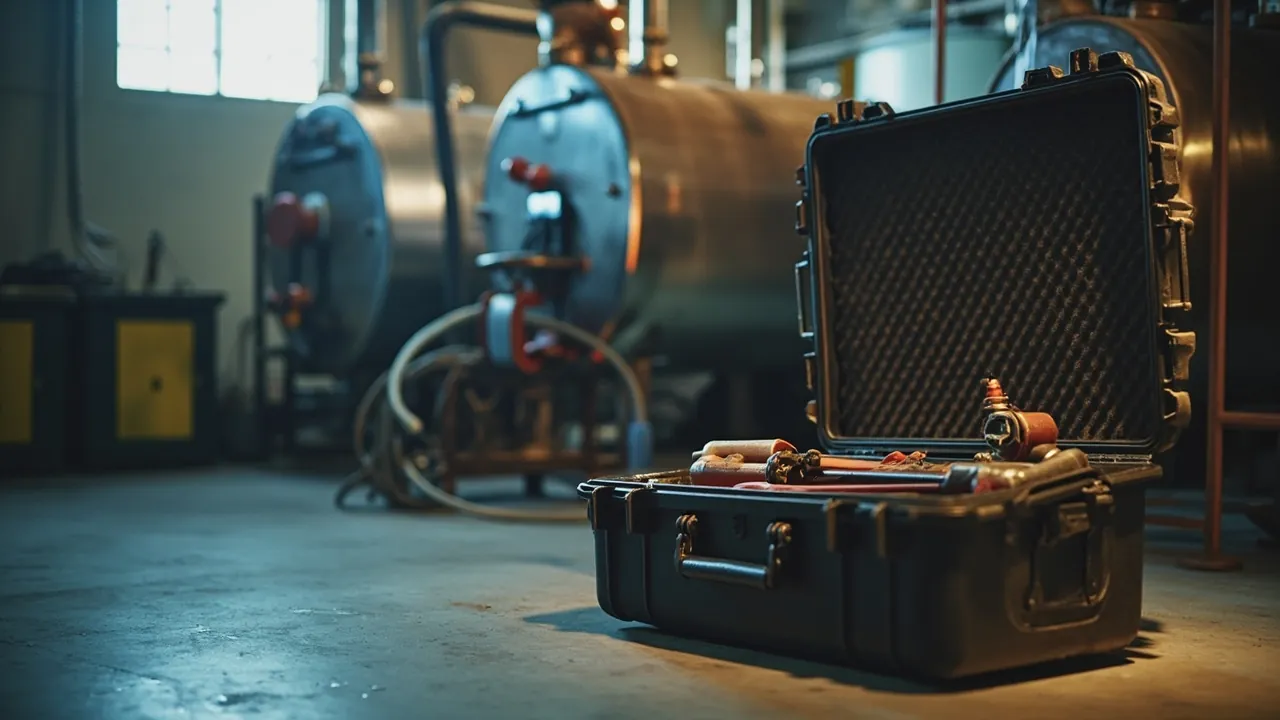
In boiler spare-parts logistics, the transport damage suffered by burner assemblies, heating-surface tube banks, headers, valve trains and instruments almost never comes from the gross weight of the machine. It comes from local point loads, edge impacts, bending of long slender parts, and slow moisture ingress. The selection conclusion for boiler equipment parts cases is direct: use a rigid shell combined with zoned, layered inserts, isolated component cavities and replaceable seals, grade the protection by component stiffness, surface sensitivity and cleanliness, and verify the design against GB/T 4857 and ISTA test series. JUNZHJIA supplies this class of case to boiler OEMs, power-plant maintenance organisations and export traders, with custom inserts, OEM/ODM programmes and volume supply.
The typical pain point of a boiler maintenance spare-parts shipment is that the batch is mixed, the shapes are irregular and the weight range is extremely wide. One shipment may contain an 80 kg burner windbox, a 3 m serpentine tube bank, and dozens of precision nozzles and pressure gauges. Packed in generic wooden crates with stretch film, such a shipment often arrives with ovalised tube ends, scratched flange sealing faces and shattered gauge glasses after the first transshipment. This article gives protection grades, insert materials, sealing levels and test references by component category, with comparison tables and an acceptance method that engineering and procurement staff can quote directly.
Table of Contents
- 1. Why Boiler Spares Are Harder to Ship Than a Complete Unit
- 2. Boiler Component Categories and Protection Grades
- 3. Burner Assembly Cases: Windbox, Servo and Ignition Components
- 4. Heating-Surface Tube Bank Cases: Serpentine, Superheater and Economiser
- 5. Water-Wall Panels and Headers: Controlling Deformation of Long Parts
- 6. Valve and Instrument Cases: Safety Valves, Gauges and Level Indicators
- 7. Heavy-Duty Case Structure: Ribs, Pallets and Lifting Points
- 8. Rust Prevention, Heat-Treatment State and Cleanliness
- 9. Insert Material Selection Compared
- 10. Sealing and Ingress Protection: IEC 60529 and GB/T 4208
- 11. Transport Test References: GB/T 4857, ISTA and ASTM D4169
- 12. Site Unpacking Acceptance and AQL Sampling
- 13. OEM/ODM Customisation Flow and Delivery Rhythm
1. Why Boiler Spares Are Harder to Ship Than a Complete Unit
Shipping a complete unit is difficult because it is heavy. Shipping spares is difficult because they are fragmented. When a boiler leaves the factory, the burner, heating surfaces and headers are usually pre-assembled or braced as a whole, so transport only has to solve lifting and lashing. Spare-parts transport faces disassembled high-precision components: sealing faces are exposed, tube ends have no caps, instruments have no outer covers, and servo actuators have no support. In the assembled machine these parts were mutually constrained by their assembly relationships. Once separated, every single part loses its structural support.
The second difficulty is the stiffness spread. Economiser serpentine tubes are commonly 3 to 5 mm wall thickness over spans of 3 to 6 m, and they have almost no bending resistance of their own. A burner windbox, by contrast, is a box-welded structure in 4 to 8 mm plate and is very stiff. Put both in the same case and apply the same clamping force and the inevitable result is that the stiff part crushes the soft one. The correct approach is zoning by stiffness: soft zones carried on contoured cradles, stiff zones located by hard stops.
The third difficulty is the install-on-arrival rhythm. A power-plant maintenance window is often only 7 to 15 days, and if damage is discovered at unpacking there is almost no rework margin on site. The value of a parts case is therefore not only protection but also moving quality confirmation upstream to the packing station: appearance, dimensions and part numbers can be checked at packing, and arrival only requires an unpacking appearance re-check. JUNZHJIA custom insert programmes support part-number zoning and labelling so that site teams can pick parts directly against the drawing. If you need to assess supplier capability from scratch, see how to choose a protective case OEM factory.
2. Boiler Component Categories and Protection Grades
Sorting common boiler spares into four grades using three dimensions - surface sensitivity, stiffness and weight - is the first step in configuring a case. The higher the grade, the softer the insert, the tighter the location and the greater the number of isolated cavities.
| Protection grade | Typical components | Dominant failure mode | Insert strategy | Recommended case form |
|---|---|---|---|---|
| --- | --- | --- | --- | --- |
| P1 Precision | Nozzles, atomisers, servo actuators, pressure transmitters, flame detectors | Micro-impact, oil contamination, moisture, static | Contoured precision-milled EVA plus anti-static layer plus desiccant | Small rigid case, one cavity per item |
| P2 Surface | Flange sealing faces, valve seats, header stubs, gauge glasses | Scratching, indentation, corrosion | Soft pads plus surface barrier film plus hard stops | Medium rigid case, zoned location |
| P3 Structural | Burner windbox, forced-draught fan, ignition transformer, short pipe spools | Distortion, coating damage | Hard stops plus elastic support plus local reinforcement | Heavy-duty case with integral pallet |
| P4 Long slender | Serpentine tube banks, water-wall panels, superheater bundles, long headers | Bending, ovalisation, cumulative distortion | Multiple cradles plus suspended support plus end caps | Long case or frame case with multiple lifting points |
In real projects a single consignment often spans P1 to P4. In that situation the recommendation is not one case for everything, but a split by grade, with the component list and drawing numbers marked on the outside of each case. This lowers individual case weight and lets the carrier allocate cases separately during transshipment, reducing the stacking conflict between long slender parts and precision parts.
For mixed P1 and P2 loads, a custom EVA insert (custom EVA foam insert process) is more controllable than hand-cutting on site. The outline is captured by 3D scanning or a template, then the cavity is milled to 0.5 to 2 mm accuracy. Cavity depth is usually 1/2 to 2/3 of component height so that the part cannot fall out even when the case is turned 180 degrees.
3. Burner Assembly Cases: Windbox, Servo and Ignition Components
The burner is the most machine-like of all boiler spares: large volume, many attachments, high-precision mating faces. Typical disassembled items include the windbox shell, air-register assembly, servo motor and linkage, ignition transformer, ignition electrodes, flame detector, gas valve train and nozzle assembly.
The windbox is P3 structural grade. Its failure mode is not fracture but slight distortion of mating faces causing damper sticking, or an uneven flange face causing air leakage. The protection points are: hard stops at the four corners of the windbox, full-face elastic support on the base, no rigid clamping on top, and only light restraint with an adjustable strap. If the windbox has a protruding adjustment shaft, a protective sleeve is mandatory to prevent the shaft end from being bent by load.
Servo motors and ignition transformers are P2 to P1 and should be isolated in their own cavities. A servo motor usually carries a gearbox and its output shaft must not see any side load. An ignition transformer is an epoxy-cast part that fears impact and moisture, so a 3 to 5 mm closed-cell foam secondary buffer inside the cavity is recommended.
Nozzles and electrode sets then go into a P1 precision cavity. Here the separation of oil contamination from metal debris must be emphasised: nozzle atomising holes are often only 0.5 to 2 mm across, and a single iron chip is enough to ruin atomisation. Each nozzle should be bagged individually before it enters the cavity, and the cavity floor should include a debris trough. For the optical window of a flame detector, add a removable transparent cap that is taken off after unpacking.
Where a windbox and nozzle assemblies travel in the same case, a removable divider system (removable divider system design) allows the load to be shipped as one case and picked compartment by compartment, so the site team does not have to empty the whole case at once.
4. Heating-Surface Tube Bank Cases: Serpentine, Superheater and Economiser
Heating surfaces carry the highest transport risk in the boiler, because they are simultaneously long, thin and easily deformed. Economiser serpentine banks can be 3 to 6 m long with 3 to 5 mm wall thickness and often include several bends. Superheater bundles use smaller tube diameters at higher packing density and their tube-end sealing faces demand even better protection.
The governing metrics are straightness and tube-end roundness. Practical guidance:
- Place three to five cradles along the length of the bank, with spacing back-calculated so that maximum deflection stays below L/1000. For a 6 m bank this usually means 1.2 to 1.8 m spacing.
- Use half-round contoured cradles matched to the tube diameter, lined with 5 to 10 mm of soft padding, to avoid line contact producing local indentation.
- Leave 100 to 150 mm of overhang at each end and fit plastic or rubber end caps, so that ends cannot strike the case wall in transit.
- Cap every tube end to keep foreign matter out and protect sealing faces.
For very long banks above roughly 4 m, an integral rigid case is not the best answer. Use a frame-type long case with multiple lifting points instead: the case shell only provides restraint and weather protection, while a steel inner frame carries the load, and the frame is connected to the case floor through elastic pads that interrupt the shock transmission path.
Superheater bundles are densely packed, and fixing each tube individually is unacceptable in cost and labour. A more economical approach is bundle pre-forming plus a common cradle: separate and set the tubes with soft spacers, lower the whole bundle into a contoured cradle, then restrain it with an adjustable strap. This works especially well on bent sections and prevents tubes from pressing against each other.
5. Water-Wall Panels and Headers: Controlling Deformation of Long Parts
Water-wall panels and headers are classic long slender parts, and the consequence of transport damage is very insidious. A few millimetres of bowing is invisible, but at site assembly the joint misalignment exceeds tolerance and forces welding rework. The protection target for these parts is therefore deformation control, not simply impact avoidance.
There are three levers for deformation control. First, constraint point distribution. A long part in transit experiences multi-point random vibration and inertial load. Too few constraint points allow visible flexing; too many create local stress concentration. The empirical value is four to six cradles distributed along the length, with the end cradles as close to the ends as practical without being tight against them.
Second, orientation control. The second moment of area of a panel or header differs greatly between the two axes, so the strong axis should face the load direction. Flat panels should be stood on edge or laid on their side with cradles preventing tipping. Round headers should sit in a half-round groove so they cannot roll.
Third, end protection. Header stubs and tube ends are the datums for subsequent welding. Once they are knocked out of shape, on-site grinding destroys the bevel angle. A removable U-shaped protective block over the stub area, taken off at unpacking, solves this.
Where a coating or galvanised layer must be preserved, the contact face of the insert should avoid sulphur-bearing or chlorine-bearing materials, which can cause pitting under humid conditions. Case sealing and dryness matter equally; for seal and desiccant configuration see toolbox hinge and latch sealing structure.
6. Valve and Instrument Cases: Safety Valves, Gauges and Level Indicators
Safety valves, pressure gauges, level indicators, pressure transmitters and thermocouples are P1 to P2 grade: light in weight but high in value and demanding in accuracy. They share three risks - impact, moisture, and drift of calibration state.
The heart of a safety valve is the spring and seat. Strong vibration in transit can alter spring preload and shift the set pressure. Countermeasures include locating the body in a contoured cavity, never allowing side load on the stem, fitting a protective pad on the seat face, and - for valves that have already been set - applying a lead seal or binding wire before packing so that seal integrity can be checked on arrival.
The sensitive points of a pressure gauge are the glass and the movement. Use one cavity per item with the dial facing up or sideways, and keep cavity depth less than the case height so the glass never carries load. Liquid-filled gauges should not be stored inverted for long periods.
Level indicators, whether glass plate or magnetic flap type, combine long slender geometry with fragility. Two half-shell EVA pieces can clamp the indicator, which then drops into a long channel with soft end pads. The float of a magnetic flap indicator is a separate item and should be bagged on its own with its purpose labelled.
The other instrument risk is moisture. In a persistently humid environment, corrosion of the movement causes indication error. Place silica gel desiccant in the case (roughly 20 to 50 g per 20 L of free volume) and prefer a case fitted with a pressure equalisation valve - a pressure equalisation valve balances the pressure differential during sharp temperature changes while blocking liquid water and dust, which matters greatly on multi-climate routes. See pressure equalisation valve configuration.
7. Heavy-Duty Case Structure: Ribs, Pallets and Lifting Points
Boiler spares frequently produce single-case gross weights of 150 to 500 kg and above. At that point the case itself is a load-bearing structure and must be designed as such rather than as a container.
Key design points are as follows:
- Integral floor and pallet: provide a full pallet structure under the floor, 60 to 100 mm high, for forklift handling. Connect the pallet to the case with through-bolts, not clips alone.
- Rib layout: side walls see the highest stress at mid-height, so use longitudinal ribs plus corner reinforcement blocks; for walls over 1.2 m long, add transverse ribs to prevent bulging.
- Lifting points: four corner lifting holes or ring seats, with single-point capacity designed at 2 to 2.5 times case gross weight to account for dynamic factors. Lifting points must align with the internal frame so that force does not pass into the walls.
- Stacking capability: if stacking is required, state the maximum number of layers and the load-bearing locations, and specify that cases must be stacked squarely, case on case, never bridging.
- Movement: cases above 200 kg should have heavy-duty castors or prepared castor mounting points. For castor selection, see case wheels and trolley handle selection.
One point must be stated explicitly: the parts case described here is an outer transport packaging container. It does not participate in the boiler pressure boundary, is not a pressure part, and does not replace the design or manufacture of pressure vessels or boiler components. The case is responsible only for mechanical and environmental protection during transport and storage.
8. Rust Prevention, Heat-Treatment State and Cleanliness
Corrosion of boiler spares is most acute in ocean freight and in rainy-season storage. Prevention must address three lines at once: material, coating and environment.
Material line: stainless and carbon steel parts must be separated to avoid galvanic corrosion; copper alloys and aluminium must not touch stainless steel directly.
Coating line: machined surfaces such as flange sealing faces, threads and weld bevels should receive a peelable rust-preventive film or an environmentally acceptable rust-preventive grease rather than ordinary machine oil, which runs off under hot humid conditions and attracts dust. After coating, mark the part clearly as requiring cleaning before installation.
Environment line: humidity control inside the case is decisive. The recommended combination is sealing plus desiccant plus a humidity indicator card. The card lets the unpacking team judge at a glance whether the protection has expired, and desiccant quantity is calculated from transit duration - ocean freight is normally designed with a 60 to 90 day margin.
For parts that have already been quenched and tempered or stress-relieved, no restraint that could cause plastic deformation may be applied in transit. This means no rigid clamp bars pressing directly on heat-treated parts; use elastic support instead. It also means never forcing a heat-treated part into position inside the case. Once heat-treatment state is altered by plastic deformation, appearance inspection on site cannot detect it, and the consequence is early failure in service.
On cleanliness, gas-system components such as valve trains, nozzles and filter housings should be managed to a cleanliness level: purge and cap before packing, and keep wood chips, paper dust and foam crumbs out of the case. This is also why ordinary timber inserts must not touch gas components directly - wood sheds debris and absorbs moisture.
For long-term case care and inspection cycles, see protective case service life assessment.
9. Insert Material Selection Compared
An insert is not simply better when it is softer. It is a balance between cushioning, support, oil resistance, temperature resistance and cost. The table below gives practical guidance for common boiler spare-parts insert materials.
| Insert material | Density and character | Cushioning and rebound | Oil and temperature | Suitable components | Cautions |
|---|---|---|---|---|---|
| --- | --- | --- | --- | --- | --- |
| Precision-milled EVA | Medium to high density, machinable | Good, dimensionally stable | Moderate, about -20 to 60 C | P1 precision parts, nozzles, instruments | Requires desiccant in humid conditions |
| PE pearl foam | Low density, low cost | Fair | Poor | P3 structural void fill and gap packing | Sheds debris, keep away from gas parts |
| PU foam (self-skinning) | Can be poured and bonded in place | Excellent, conforms to irregular shapes | Moderate | Irregular parts, mixed cavities | Must control density consistency |
| Nitrile or CR foam | Medium density, oil resistant | Excellent | Excellent | Oily parts, valve trains | Higher cost |
| Felt or non-woven | Low density, soft | Fair | Poor | Surface barrier, anti-scratch | Absorbs moisture, needs protection |
| Air-column or inflatable pads | Very light, recyclable | Excellent, single use | Poor | End-of-line cushioning for variable batches | Weak puncture resistance, not load bearing |
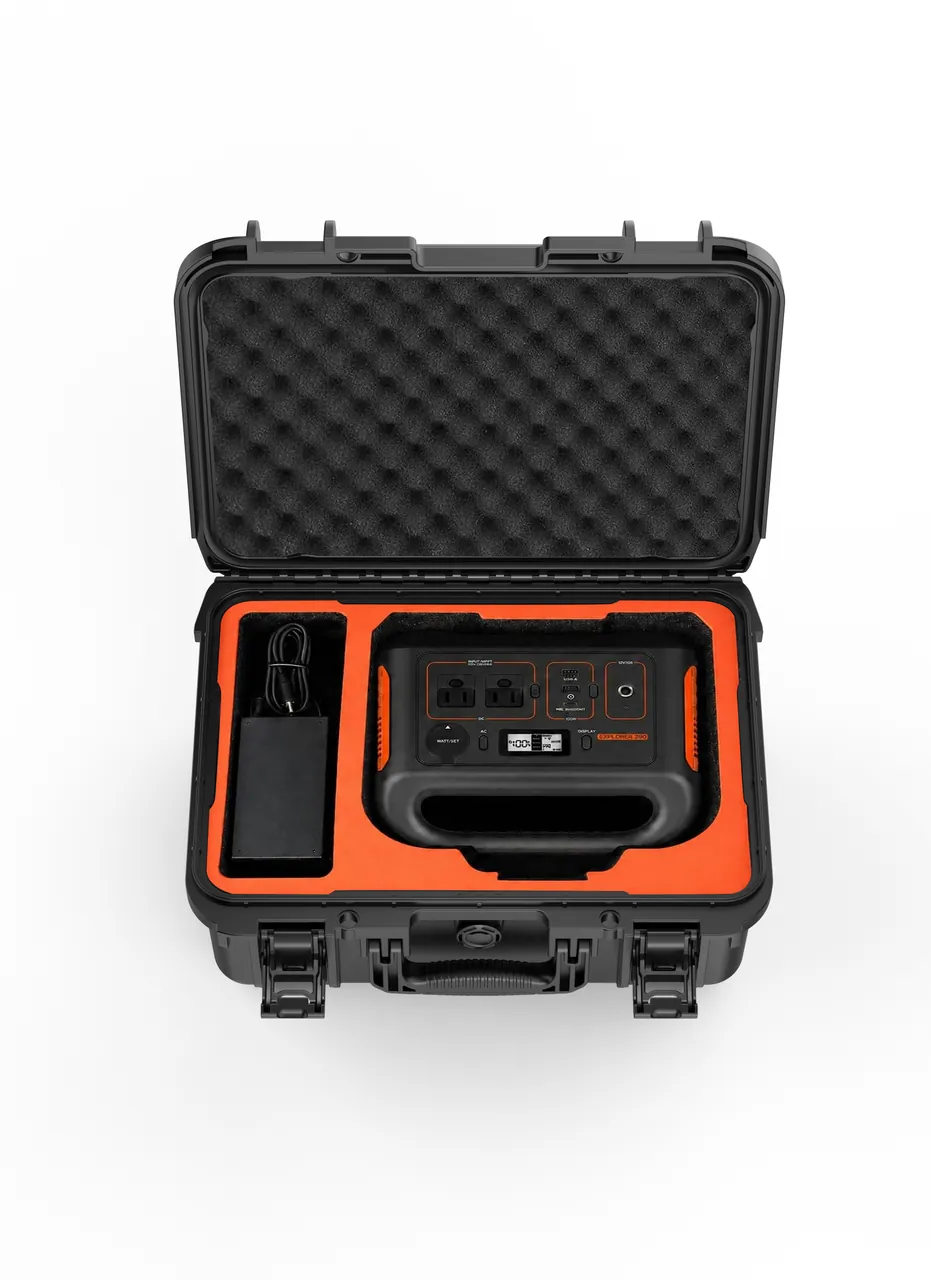
The practical rule is a three-layer structure: a rigid outer support layer (pallet or frame), an energy-absorbing middle layer (PU or EVA), and a surface-protection inner layer (felt or soft pad). This layering attenuates shock energy progressively along the transmission path and is more effective than simply thickening a single foam layer. For a fuller comparison see case foam material comparison.
For gas components with high cleanliness requirements, debris-shedding materials are banned from the inner layer; use a wrapped soft bag inside an EVA cavity instead, with a silicone-free, low-outgassing bag material.
10. Sealing and Ingress Protection: IEC 60529 and GB/T 4208
A case seal cannot be discharged with the word "waterproof". Ingress protection levels are defined by IEC 60529, and the identical Chinese standard is GB/T 4208. Two levels are typical for boiler parts cases:
- IP65: dust tight and protected against water jets. Suitable for in-plant movement, indoor storage and ordinary road transport.
- IP67: dust tight and protected against temporary immersion, typically 1 m for 30 minutes. Suitable for ocean freight, open-yard storage and rainy-season long-haul transport.
Which level to choose depends on the actual exposure scenario, not on a "higher is better" instinct. IP67 demands a stronger seal design and tighter assembly tolerances and costs more; if the part only circulates indoors, IP65 is sufficient.
In seal design the factors that determine the achieved level are gasket material and compression, uniformity of clamping after closure, and the number of latches. Gaskets are commonly silicone or EPDM with compression controlled at 20 to 30 percent; too little compression leaks, too much causes permanent set. The longer the case, the harder it is to guarantee mid-span clamping force, which is when additional latches or a reinforcing beam are needed. For the interaction between latch design and sealing, see toolbox hinge and latch sealing structure.
Note also that the insert material itself can become an internal water source through moisture absorption. Open-cell foam, felt and wood absorb moisture in humid conditions and release it into the case air when temperature falls. Sealed cases should therefore prefer closed-cell materials and be fitted with desiccant.
For components needing static dissipation, such as certain electronic control modules and sensor boards, provide an electrostatic discharge path to prevent triboelectric charging from damaging components.
11. Transport Test References: GB/T 4857, ISTA and ASTM D4169
Whether a case is strong enough should not be judged by feel but supported by test evidence. Three families of reference are commonly used for boiler parts cases.
The GB/T 4857 series (basic tests for transport packages) covers vibration, impact, stacking and drop test methods and is the foundation for transport packaging verification in China. Test conditions are normally selected at type-verification stage according to component weight and transport mode.
The ISTA series (International Safe Transit Association) emphasises organising test sequences around the distribution environment, combining temperature and humidity preconditioning, vibration, impact and compression according to parcel, palletised or less-than-truckload scenarios. For export orders, especially to North America, the buyer often specifies an ISTA procedure directly.
ASTM D4169 (standard practice for performance testing of shipping containers and systems) uses a distribution cycle plus assurance level approach, allowing test severity to be chosen by risk class - well suited to high-value, large-item verification.
The relationship can be summarised as: GB/T 4857 gives methods, ISTA gives scenario sequences, and ASTM D4169 gives a risk-assessment framework. For cargo like boiler spares - heavy, high value per item, long transport chain - at least vibration, impact and stacking should be tested, with an added bending verification for long slender parts. See GB/T 4857 transport packaging testing and ISTA transport testing procedures.
If the transport environment includes air freight or high-altitude transfer, the effect of low ambient pressure on a sealed case must also be considered: the differential pressure can draw the gasket into the case or bulge the shell. A pressure equalisation valve is the usual solution.
12. Site Unpacking Acceptance and AQL Sampling
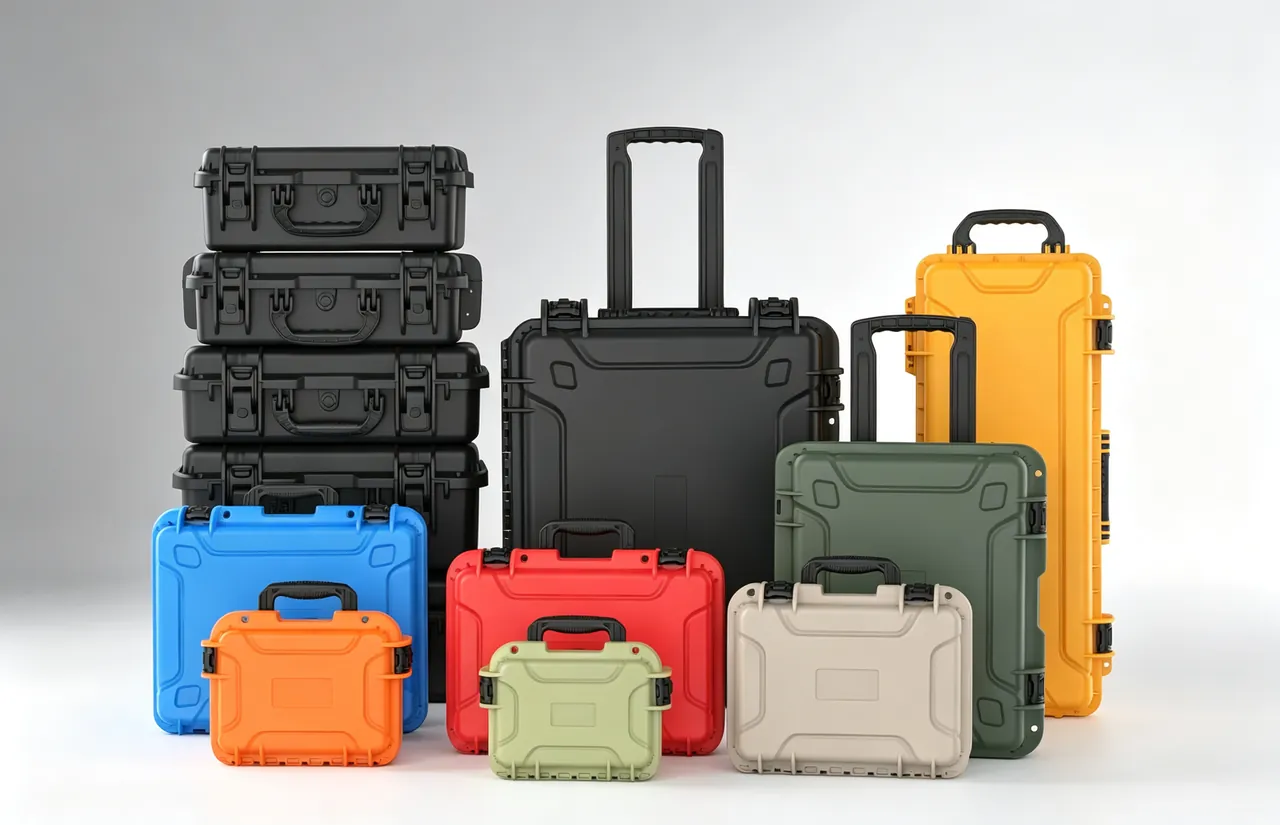
Acceptance is not "looks fine, sign here". For high-value cargo such as boiler spares, establish a three-check, one-measure flow.
Inspect the outer case first: look along the edges and base for rupture or distortion, and pay particular attention to any water staining near the tube-bundle end cavities, which signals seepage that may have reached the gauge glasses and heating-surface ports. Confirm that the seals and lead seals still match the packing document, and read the humidity indicator card; if it has changed colour, open the case and inspect tube ends and gauge glasses for corrosion.
Check the appearance: verify drawing numbers and quantities item by item against the packing list; inspect sealing faces, bevels, tube ends and gauge glasses for impact marks and scratches.
Check the state: for safety valves already set and instruments already calibrated, verify lead seals and labels; for heat-treated parts, verify markings and state certificates.
Measure critical dimensions: sample straightness on long parts, for example with a taut line; sample tube-end roundness with plug gauges or by measuring in two directions 90 degrees apart, and record the readings.
For volume orders, incoming inspection of inserts and case hardware can follow an AQL sampling plan (see custom case acceptance and AQL sampling): control appearance defects at general inspection level II with AQL 2.5, and treat defects that affect protective performance - missing gasket, misaligned insert cavity, failed latch - at AQL 0.65 or under tightened inspection.
One detail is easily overlooked: keep the insert and the case after unpacking so that they can be used for re-packing or later repair shipments. Many projects discard the original case after installation and then have to re-order a custom case for a repair, at far higher cost than simply keeping it.
13. OEM/ODM Customisation Flow and Delivery Rhythm
Boiler parts cases are usually procured as a one-off batch for a project rather than as single units. A typical flow is:
- Requirement clarification: provide the component list (name, drawing number, envelope dimensions, weight, surface requirements, heat-treatment status), transport mode, destination climate and whether stacking is required.
- Grading and case splitting: grade by P1 to P4 and issue a case-splitting plan with a per-case weight table.
- Insert design: 3D modelling or template contouring, producing cavity drawings and a loading sequence drawing.
- Sample case approval: build one sample case, trial-fit the real components, confirm ease of handling and effectiveness of the location stops.
- Test verification: run vibration, impact and stacking tests to GB/T 4857 or ISTA procedures, with test documentation available on request.
- Volume production: shell forming, insert milling, hardware assembly, cleaning and packing.
- Delivery and identification: part-list and drawing-number labels on the outside, packing list inside.
On delivery rhythm, the sample stage usually has to align with the availability of the real components, so the sample milestone should be pulled forward in project scheduling. JUNZHJIA can support the sample stage with insert drawings and trial-fit feedback, supply seals and hardware configured to each boiler part number, and provide trial-fit records plus packing documents that the buyer can file against the component list.
For cases intended for reuse across projects, a standard shell plus changeable insert strategy is recommended: the shell and hardware are common and the insert is project-specific. Later projects then only need a new insert, which significantly reduces cost and lead time. Where tooling is involved, evaluate mould amortisation (see protective case mould cost analysis) before committing to a standard-shell approach.
FAQ
Q: What is the core difference between a boiler equipment parts case and an ordinary wooden crate?
A: The core difference is controllability. Wooden crates have an obvious cost advantage, but their protective performance depends heavily on how well they are nailed together on site. Nails can puncture tube walls, timber battens contact components at points, wood absorbs moisture and then becomes a moisture source itself, and the crate is essentially non-reusable after opening. A parts case is an engineered product with a defined wall thickness, a defined ingress protection level such as IP65 or IP67, a defined load path, and reproducible insert dimensions. For P1 and P2 components such as nozzles, sealing faces and instruments, the risk with a crate is that damage is unpredictable. For P4 long slender parts, the risk is that constraint points cannot be positioned precisely. The sensible approach is graded use: low-value structural parts may travel in crates or frame boxes, while high-precision and small parts should use rigid parts cases. If the project is an export order and the destination country has phytosanitary requirements for wood packaging, a rigid case also removes the fumigation step and its waiting time, indirectly improving delivery rhythm.
Q: At what length should a heating-surface tube bank switch to a frame-type long case?
A: The empirical dividing line is around 4 m, but the more accurate criteria are slenderness ratio and wall thickness. For a bank longer than 4 m with wall thickness below 5 mm, the shell of an integral rigid case will itself develop significant bending under self-weight and inertia, which works against restraint, so a frame-type long case is the better answer. Its defining feature is that load bearing and weather protection are separated: an internal steel frame provides restraint and carries the load, while the outer shell only shields and seals. A further benefit is that lifting points can be placed directly on the frame, keeping force out of the walls. Also look at the number and distribution of bends - more bends means more cradles. If the bank has sealing faces at the tube ends, the last 100 to 150 mm must be free and fitted with end caps. Final selection should be confirmed by vibration and bending verification rather than length alone.
Q: How should IP65 versus IP67 be chosen for a boiler parts case?
A: Choose by actual exposure, and do not default to the highest rating. IP65 is dust tight and protected against water jets; IP67 is dust tight and protected against temporary immersion, typically 1 m for 30 minutes. If spares only circulate in-plant, are stored indoors, and travel by ordinary covered road transport, IP65 is sufficient and more economical. Choose IP67 when the route involves ocean freight, open storage yards, rainy-season long-haul road transport, or the risk of water accumulating in a container floor. Two cautions apply. First, an IP rating describes only the shell's protection against solids and water; it says nothing about impact resistance, which depends on structural design and test evidence. Second, the achieved level depends on gasket condition - gaskets age and take permanent set, so they need periodic inspection and replacement. For cases crossing climate zones, also fit a pressure equalisation valve to handle the pressure differential created by sharp temperature changes.
Q: Why does cleanliness matter so much for gas-system components, and to what degree must it be controlled?
A: Because the passages in gas valve trains, nozzles and filters are very small. Nozzle atomising holes are often in the 0.5 to 2 mm range and filter mesh counts are high, so a single metal chip or wood flake can cause a blockage or poor atomisation, which shows up during commissioning as unstable combustion. Cleanliness has three layers. The first is the component itself: purge and remove machining residue before packing, and cap every tube end and port. The second is the insert material: do not let wood or pearl foam that sheds debris touch passage components; use closed-cell EVA or silicone-free soft bags instead. The third is the working environment: the packing area should be away from cutting and grinding stations so that airborne particles cannot settle into cavities. In addition, silicone-bearing materials must be kept out of the case, because silicone contamination affects subsequent welding and coating. If the project has a defined cleanliness requirement, write the acceptance method into the technical agreement rather than agreeing verbally.
Q: How can drift of calibration state be prevented for safety valves and pressure gauges that have already been set?
A: Use three lines of defence. The first is structural protection: locate a safety valve body in a contoured cavity and never let the stem take side load or axial impact; give each pressure gauge its own cavity with cavity depth less than case height so the glass carries no load; and avoid storing liquid-filled gauges inverted for long periods. The second is state locking and identification: fit a lead seal or binding wire before packing, apply a set-and-sealed label on the outside, and verify seal integrity on arrival before opening. The third is transport condition control: keep transit time short, avoid repeated handling, and where necessary specify temperature and humidity requirements for the vehicle. Even with good protection, set values can still shift under severe impact, so re-verification on arrival per project procedure is recommended, particularly for safety valves. If re-verification is impossible, define the responsibility boundary explicitly in the technical agreement.
Q: How much desiccant should go into a case, and how often should it be replaced?
A: The quantity depends on case free volume, sealing level, transit duration and destination climate rather than on a fixed number. As a practical rule, in a well-sealed case allow roughly 20 to 50 g of silica gel per 20 L of free volume, taking the upper end for ocean freight or humid destinations, and always include a humidity indicator card so that colour change indicates whether replacement is due. The replacement interval is not a fixed number of months; it should be driven by the indicator card. Once the card enters the warning band, replace the desiccant and inspect the gasket. If the case is opened repeatedly, each opening introduces fresh moisture, so provide a quickly replaceable desiccant compartment. For projects with active humidity control requirements, reusable dried desiccant packs can be used, with the drying temperature and maximum cycle count stated in the instructions. Where a shipment is split across several cases, calculate the desiccant per case rather than for the total volume, because cases are opened at different times and a single shared allowance cannot be verified on site.
Q: Can boiler parts cases be stacked, and what has to be observed?
A: Yes, but explicit stacking rules must be issued. First, the case design must declare the maximum number of layers and the permitted load-bearing locations, and the stacking load must pass through the side walls or the internal frame rather than through the centre of the lid. Second, stacking must be squarely aligned so that the reinforcement structures of the upper and lower cases line up; bridging stacks cause local lid collapse. Third, confirm before stacking that lower cases are not locally distorted, adding a flat separator board to spread the load if necessary. Fourth, stacking height is also constrained by the carrier and the warehouse; in transit, heavy cases belong at the bottom and light cases on top, and long-part cases should not be used as a base layer. Finally, over long stacking periods the insert may take a permanent set, so after unpacking check whether cavities still restrain effectively and replace the insert if not.
Q: Can insert materials affect the later service of gas components?
A: Yes, and this must be designed out. There are three common risks. The first is debris contamination: wood, low-density pearl foam and felt generate fragments under vibration that are very hard to remove once they enter passage components. The second is silicone contamination: certain silicone-bearing release agents or silicone pads can release siloxanes under heat or prolonged contact, contaminating surfaces that will later be welded. The third is plasticiser migration: plasticisers in soft PVC materials can migrate onto rubber parts or coated surfaces, leaving them tacky or reducing coating adhesion. Avoid all three by using closed-cell EVA, PE or nitrile foam for the inner layer of gas and welding components, avoiding silicone-bearing and soft PVC materials, adding a silicone-free barrier film at contact faces, and - where the project has an explicit no-silicone requirement - writing it into the technical agreement and confirming by incoming inspection. For a gas train that is already assembled and tested, the safest course is to pack it in the same orientation in which it was tested, so that any internal residue settles in the position the test assumed.
Q: How is custom lead time scheduled, and which milestones are most often underestimated?
A: Custom lead time generally has four stages: design, sample case, testing and volume production. The stage most often underestimated is aligning the sample with the real components, because the insert must be contoured to the actual items and those items may still be on the production line, so waiting time can exceed case-making time. The second is test verification: if vibration, impact and stacking tests are required, scheduling the test cell and issuing the report takes additional time, and the test may expose a design issue that forces rework. The third is the procurement lead time for hardware and seals. The recommendation is to treat real-component availability as a front-end input in project scheduling: complete the case structure design first, then define the insert once components are on hand. For schedule-critical projects, use a standard-shell-first strategy so that the common shell and hardware go into production early, shortening the critical path.
Conclusion & Related Reading
The essence of a boiler equipment parts case is that it converts transport risk into engineering parameters that can be designed, verified and accepted. Grade components from P1 to P4, split cases by stiffness and surface sensitivity, attenuate impact with a three-layer insert, match the environment with IP65 or IP67, verify performance against GB/T 4857 and ISTA procedures, and close the loop through unpacking acceptance. Do these consistently and the arrival condition of boiler spares changes from a matter of luck to a matter of records.
One point deserves emphasis: a parts case remains outer transport packaging. It does not participate in the boiler pressure boundary and does not replace the design and manufacture of the boiler or pressure vessel itself. Design, manufacture and inspection of boiler bodies and pressure parts must follow the applicable regulations and standards, including GB/T 16507 for boilers and TSG 21 for fixed pressure vessels.
JUNZHJIA (Kexin New Materials (Guangdong) Co., Ltd.) supplies boiler equipment parts cases with custom inserts, OEM/ODM programmes and volume production to boiler OEMs, maintenance organisations and exporters, and can issue case-splitting plans, per-model packing specifications that map each component to its cavity, with head and flange drawings, seal and hardware lists, and unpacking-acceptance records for the buyer.
Related Reading