


Quick answer: Case user training needs three actions: bleed the valve before lifting, press the gasket before latching, and dry the rim with a 5 mm gap.
Table of contents
- Why the whole course fits in three actions
- Action one: bleed the valve, confirm both latches open
- Action two: press the gasket, then close the latches
- Action three: dry the rim and leave a 5 mm gap
- FAQ
1. Why the whole course fits in three actions
Three days of slides, forty pages of them, and a week later the average operator repeats three points and no more, all of them hand movements. That is not a memory problem but the ceiling of a working shift, where a person already tracks the machine, the cycle and the handover at once.
Four crews were compared on one floor. Taught with forty slides and six videos, a crew ran a 12 percent error rate over three months; taught with a 20 minute demonstration, eight questions and a 90 point pass mark, another fell to 3 percent. Cutting ninety percent of the class time improved the result, because every action was performed once and corrected once on the spot.
The three actions were filtered, not chosen: sorting a year of repair tickets puts rim distortion, gaskets pulled from their groove and half-closed latches above seventy percent of the total, all tracing back to how a case is opened.
| Action | What to look at | Cost of skipping it | Time per cycle |
|---|---|---|---|
| Bleed before opening | Valve pressed fully, both latches sprung | Gasket dragged out of the groove, hinge loaded on one side | 5 s |
| Press before latching | Palm swept from the centre outward, 2 passes | Lid crowns in the middle, mid-section gasket hangs free | 8 s |
| Dry before storing | Dry cloth one direction along rim and recess, 5 mm gap | Water sits in the recess, lid sticks next time | 30 s |
Add the three up and the total is 43 seconds, under a tenth of one full open-and-close cycle. That is the slice case user training has to protect.
2. Action one: bleed the valve, confirm both latches open
A case comes off the tail lift with its interior 8 to 10 °C colder than the air around it, and the lid is held by that difference. Pry the rim then and the handle takes 30 N of extra pull while the gasket shifts 0.5 mm in its groove. A month of that and the rim starts to curl.
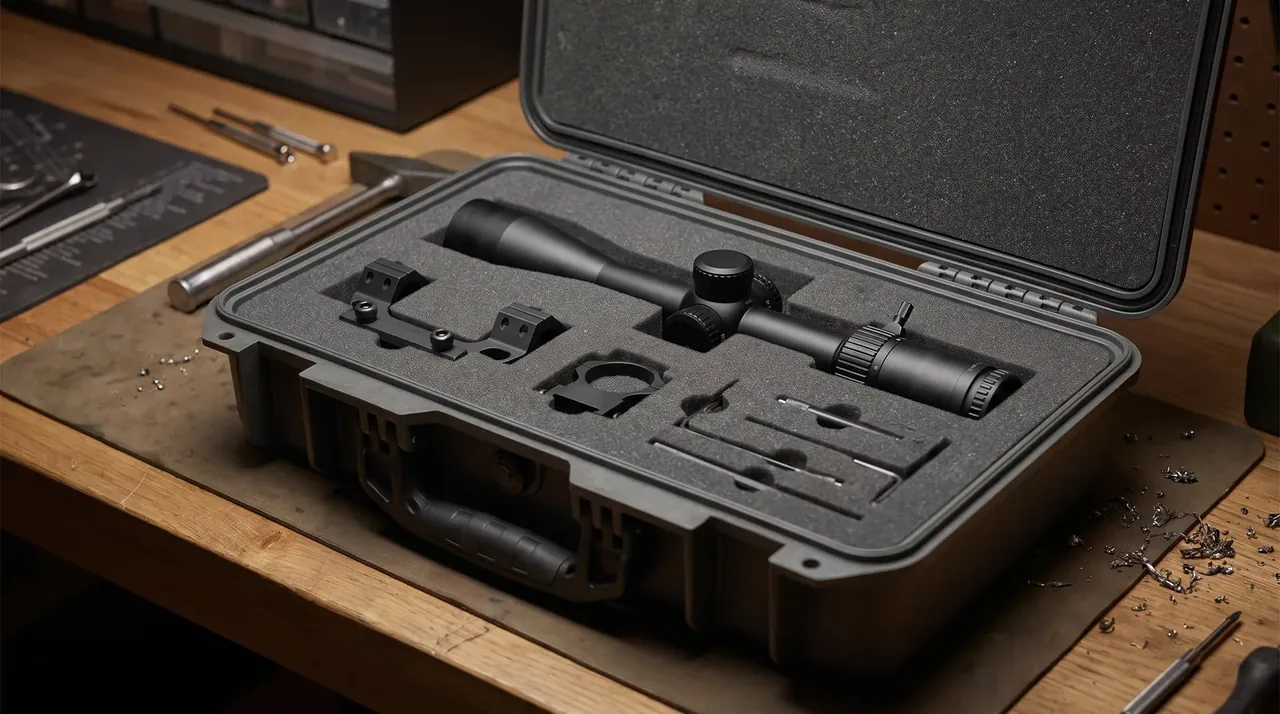
The sequence has two steps. Hold the relief valve for 2 seconds until air audibly enters, then let go, then check that both latches have sprung to their stops. Lift a lid with one latch half closed and it pivots on the hinge line, putting the whole torque on a single pin, which is where most repair tickets begin.
Teaching this takes under a minute. Let the trainee hold the valve, hear the hiss, then feel how high a released latch sits.
Judging a latch by eye is worse than by hand. A released latch sits flush with the shell; a half-closed one still stands about 3 mm proud and springs back when pressed. Case user training calls this the 3 mm check, and two rounds are enough to stop the mistake.
One detail gets lost: the valve core needs 1 second to seat. Release the button and lift immediately and the interior is still under vacuum, so the rim stays stuck. Naming that second prevents the conclusion that bleeding does nothing.
3. Action two: press the gasket, then close the latches
Latch force pulls inward from both ends, so the middle of the lid crowns by 0.3 to 0.5 mm. Latch first and the mid-section gasket stays suspended; press first and the gasket is held under load when the latches take over. Reverse the order and nothing looks different outside, yet sealing drops a grade.
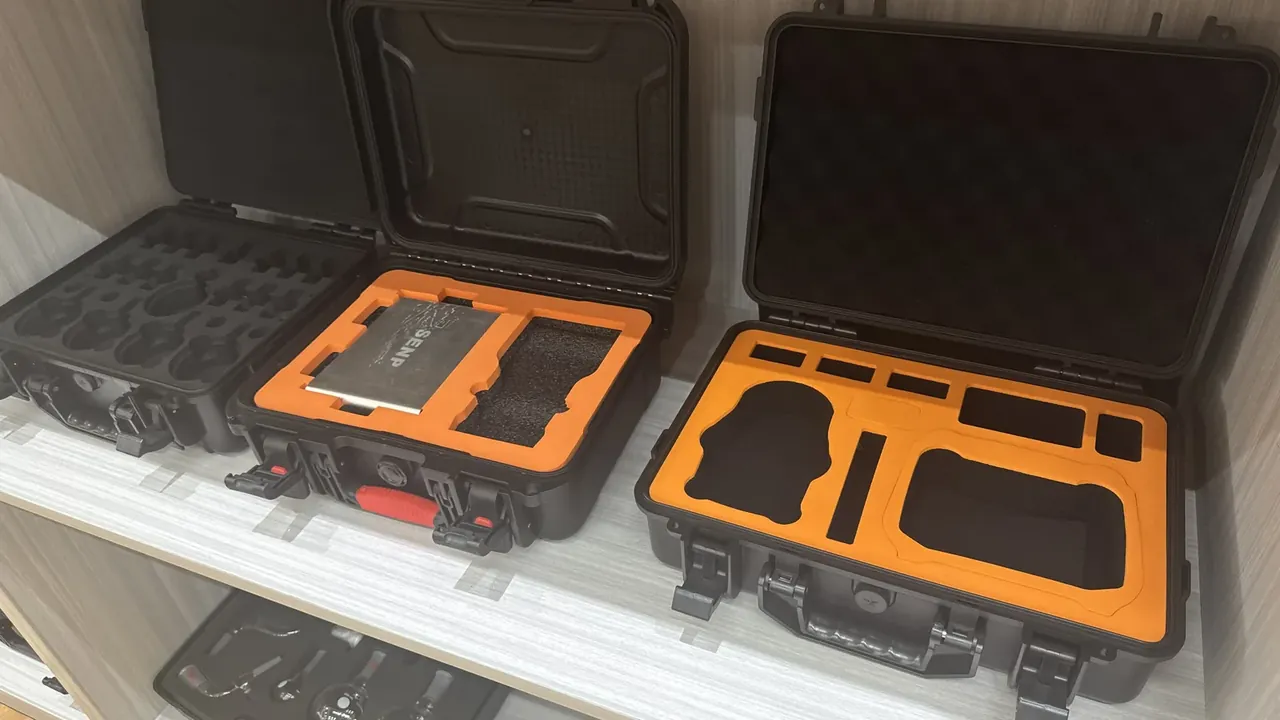
The method is one sentence. Close the lid, sweep the palm from the centre toward all four edges twice, wait until every corner sits down, then close both latches until each gives a sharp click.
The open cases on the shelf make a ready teaching aid. With the lid up and the insert exposed, a trainee sees from the side where the gasket sits in its groove, whether it has rolled, whether debris is trapped under it. One look at a properly seated profile, and the press at the workstation stops being a guess.
Load height is confirmed in the same step. Under 10 mm of clearance the lid lands on the insert, which reads as a failure to press hard enough; over 40 mm the contents shift, so the press feels vague for another reason. Give both numbers and packing errors stop being mistaken for technique.
Press with the heel of the hand. Fingertips load four points and leave the span between them hanging, while the heel covers an 80 mm band in one pass. In winter the gasket stiffens, so case user training raises the sweep from 2 passes to 3.
Latch order matters too: near side first, far side second, so the two pulls do not cancel. Done the other way round, the first latch has already pulled the lid down and the second gets a shorter stroke.
4. Action three: dry the rim and leave a 5 mm gap
The 30 seconds before clocking off are the ones most often skipped. Water sits along the rim and inside the latch recess, and a dry cloth run in one direction clears both; rubbing back and forth leaves a white ring by morning.
Store the case unlatched, a 5 mm gap at the front. A gasket held under load takes a set: press it for 30 days straight and the rebound lags on the next opening, taking sealing down with it. Five millimetres lets it return to free height without the lid popping open in transit.
Six cards go along the walking route: one inside the lid, one above each latch, one on the shelf upright, one on the tool cart, one at the goods-in bench. Each is 80 mm by 60 mm, matte laminated so oil wipes off. Placement beats content, since a card has to sit where the eye already lands.
Refresher training runs once a year, 20 minutes, eight questions, plus one practical round, with 90 points to pass. Anyone below the line repeats the actions on the spot.
| Assessment item | Items | Points | What is scored |
|---|---|---|---|
| Action order questions | 5 | 50 | Bleed, press and latch must not be reordered |
| Photo fault finding | 3 | 30 | Spotting an unbled valve, a half-closed latch, a latched-down lid |
| Practical round | 1 | 20 | One full cycle inside 43 s with no prompting |
| Total | 8 + 1 | 100 | 90 to pass; any reversed step fails the round |
Conclusion
Whether those 43 seconds deserve a course is a small arithmetic question. One missed bleed means a gasket swap costing half an hour of labour and a day of downtime; a crew of 20 at a 12 percent error rate hits that twice a month. Case user training runs once a year for 20 minutes, and the return is the drop from 12 percent to 3.
Roll it out in three moves: six cards on the walking route, the eight-item scoring sheet at the bench, a 20 minute refresher booked into the crew calendar. Cards steer the eye, the sheet steers the check, and the three actions stop being three lines on paper.
This article discusses container-side specifications and design implications only, and does not cover any handling, loading or use of the contents.
Related Reading
- When a pressure relief valve is required
- Warehouse inspection cycles and replacement limits
- Tool box maintenance: inspection items and replacement lines
Related Products
- 8 Series — Gun Cases; Military Equipment Cases; Camera Equipment Cases; Drone Cases; Watch Cases; Knife Cases; First Aid Cases; Electronics Equipment Cases
- WL8-2812 PP Gun Case — model WL8-2812
- All protective cases and toolboxes: 7 series, 158 models