

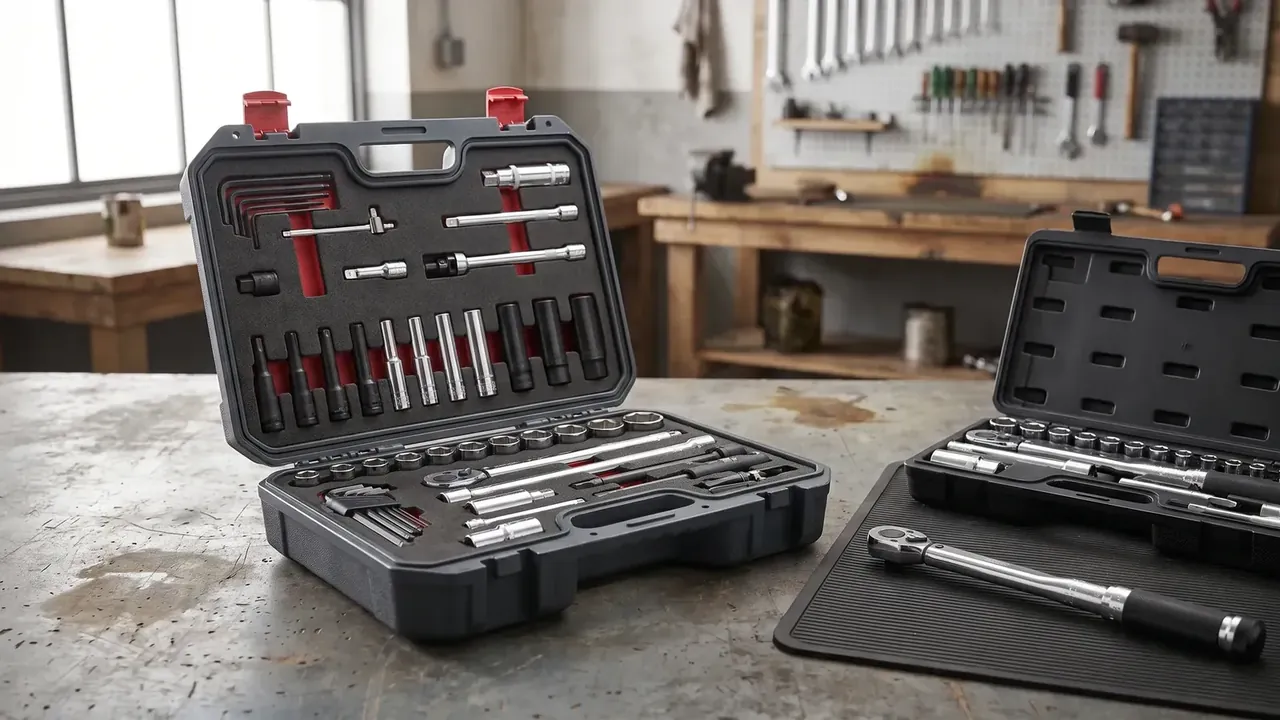
Quick answer: A tool box rarely fails on its surface. Six load paths decide its life: gasket, latches, hinge, handle mount, castors and corners, each with a measurable replacement line.
Table of contents
- How often a tool box needs inspecting
- Reading cracks on the shell and lid
- Fastener torque on handles and hinges
- Wear parts and their replacement lines
- Records and the scrap threshold
- FAQ
1. How often a tool box needs inspecting
Wiping a case clean is not maintenance. Failure starts at six load paths: gasket, latches, hinge, handle mount, castors and corners. The closer a failure sits to the case falling apart in the hand, the shorter the interval.
A half-seated latch is a pre-shift item, hinge play is monthly, gasket set is quarterly, disassembly is annual.
| Interval | Time | Check | Record |
|---|---|---|---|
| Pre-shift | 30 s | latches home, gasket seated, no cracks | visual |
| Monthly | 10 min | hinge play, handle bolts, castor drag | tick sheet |
| Quarterly | 40 min | gasket set, rivet rust, load label | photo |
| Annual | 2 h | hinge pin out, castors off, wall measured | log |
2. Reading cracks on the shell and lid
Look for where a crack starts, not how many there are. The first ones on a tool box appear at the lid corner, the root of a latch keeper and the hinge ear, where weld lines meet stress concentration and the surface whitens after a drop. A loupe finds a 0.5 mm hairline before it runs through.
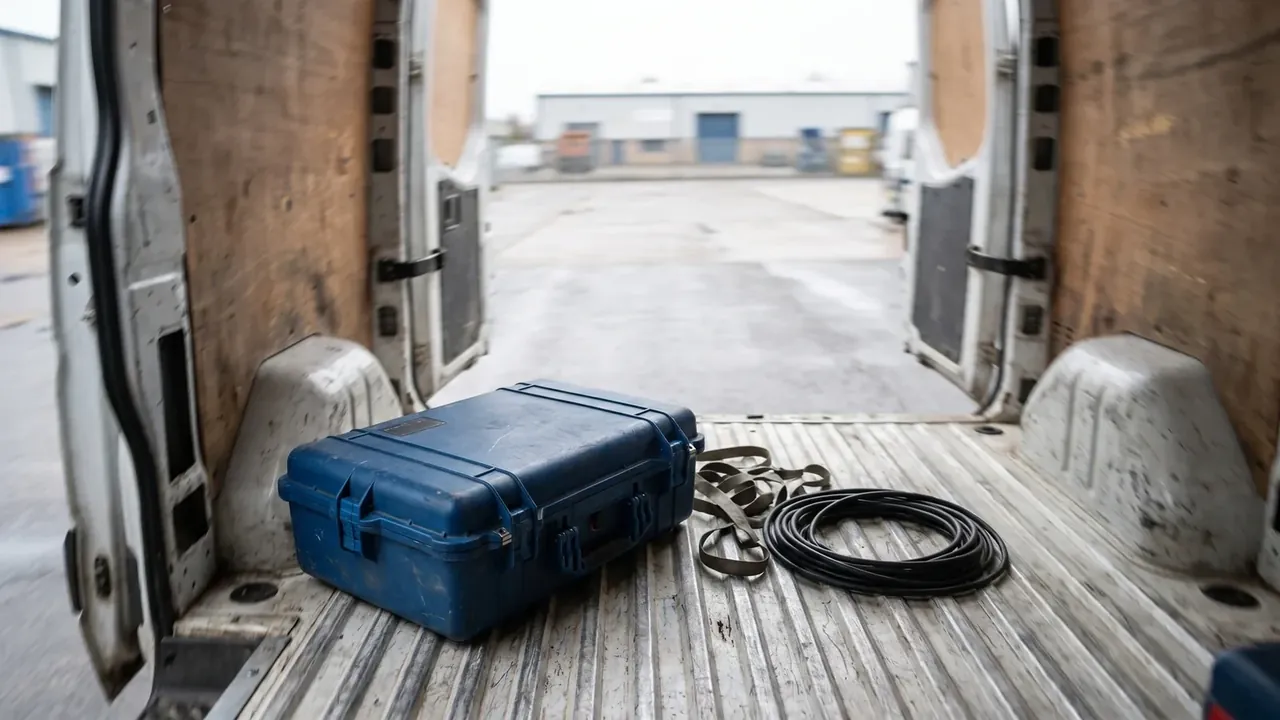
A crack over 3 mm, or one crossing into the flat panel, ends load-carrying duty; a shorter one off the load path can be radiused and logged. Polypropylene loses impact strength at minus 20 °C, so a drop dents a case in summer and splits it in winter.
3. Fastener torque on handles and hinges
A loose fastener is the quietest failure. Half a turn out on a handle-mount bolt is invisible, yet under load the handle shifts and ovalises the plastic boss. Lift an empty case and rock it: movement between handle and lid means preload is gone.
| Fastener | Thread | Torque | Interval |
|---|---|---|---|
| Handle bolt | M5 | 3.5 N·m | quarterly |
| Hinge circlip | M4 | 1.8 N·m | twice a year |
| Castor bracket | M6 | 6.0 N·m | quarterly |
| Valve nut | M12×1.5 | 8.0 N·m | annual |
The upper limit matters more than the lower one: past its rating a plastic boss collapses, so the bolt feels tight and then loosens as it cools. Inserts take the table value, plain plastic eighty percent. Latches need no tool, only a pull test; a new tool box closes at 60 to 80 N, below 40 N the claw is at its line.
4. Wear parts and their replacement lines
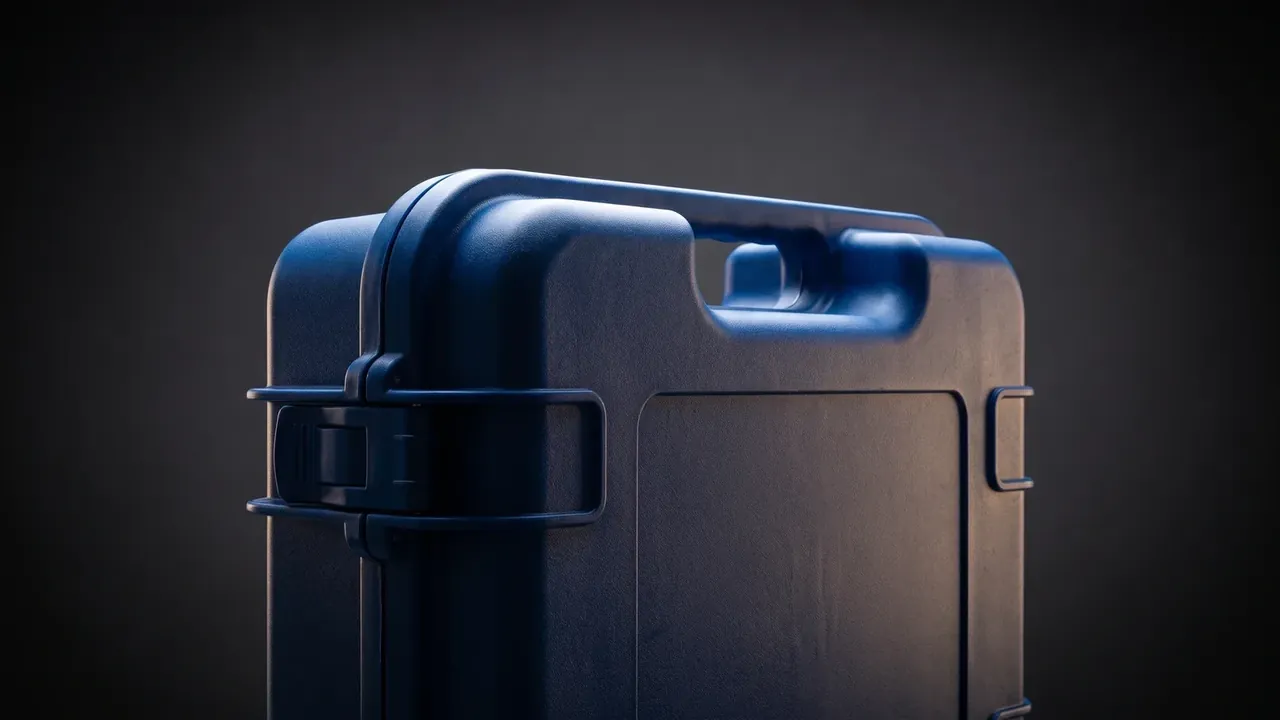
Wear parts live an order of magnitude shorter than the shell. A rotomoulded body lasts eight years or more; the gasket hardens in three, castors wear in two, and a latch claw rounds off after 3,000 closures.
| Wear part | Line | Life | Action |
|---|---|---|---|
| Gasket | set over 30 percent, or a 5 mm nick | 3 years | full loop |
| Latch | under 40 N, or claw rounded | 3,000 closures | in pairs |
| Hinge pin | end play over 0.5 mm | 4 years | pin and bush |
| Castor | 2 mm tread lost, or stiff | 2 years | full set |
Latches go in pairs: one new latch lets the lid rotate and press a diagonal mark into the gasket. Judge a gasket by compression set; laid flat for 24 hours, a section returning to under seventy percent of its height has spent its elasticity.
5. Records and the scrap threshold
A record needs only three answers: when the unit entered service, what was replaced, and the last verdict. Five fields cover it: ID, in-service date, inspection date, parts replaced, verdict.
Three verdicts: service, no crack or one under 3 mm off the load path; restricted, a crack off the load path or a failed latch, light loads, repair in a month; scrap, a through-crack, a torn keeper or diagonals off by 8 mm.
Conclusion
Six load paths, four intervals, five wear parts, three verdicts. What separates an eight-year unit from a three-year one is changing wear parts before their line — the whole job on a tool box.
This article discusses only the container (case body) side of specifications and design intent, and does not cover any handling, loading or use of the contents.
Related Reading
- How a tool box is built
- Why lids crack on hard cases
- Maintenance points for metal tool chests
- Tool box lid materials and sealing
Related Products
- 8 Series — Gun Cases; Military Equipment Cases; Camera Equipment Cases; Drone Cases; Watch Cases; Knife Cases; First Aid Cases; Electronics Equipment Cases
- WL8-2812 PP Gun Case — model WL8-2812
- All protective cases and toolboxes: 7 series, 158 models