

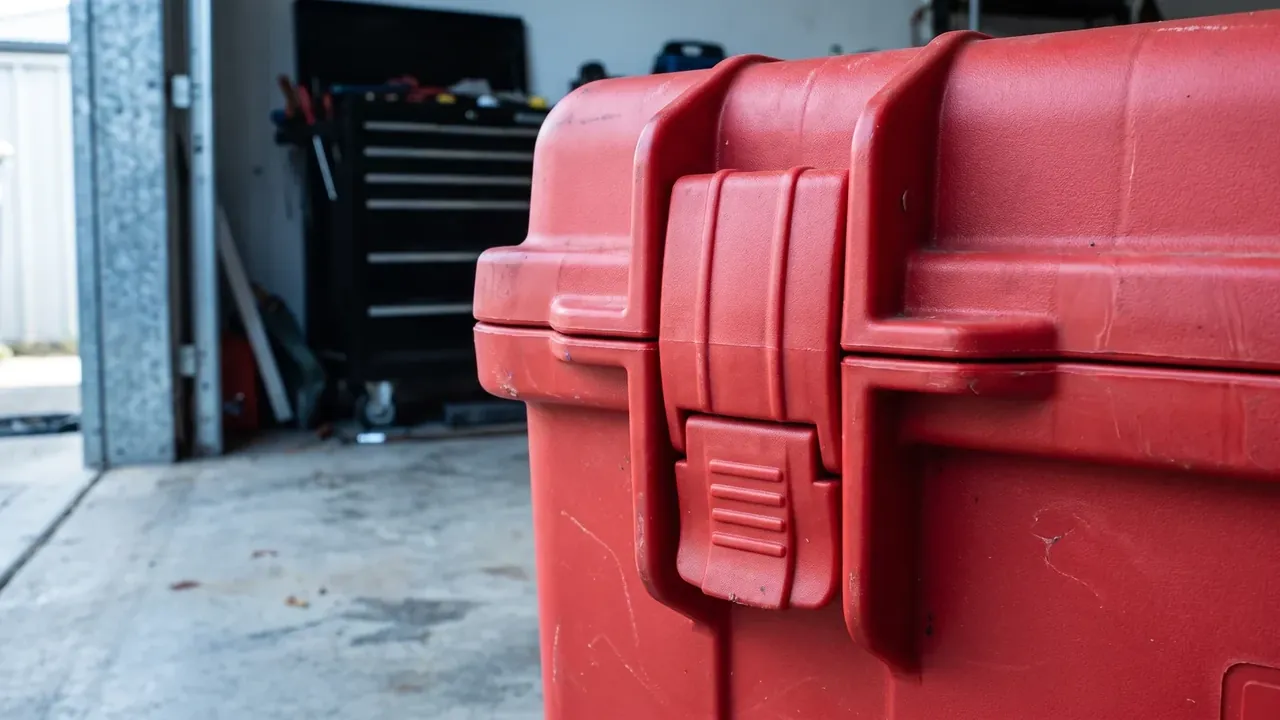
Quick answer: Set a tool bag beside a hard box, a rotomolded case and a shoulder pack and five metrics separate them: empty weight, usable volume, ingress protection, payload cost and access time.
Table of contents
- Five Metrics That Make a Tool Bag Comparison Meaningful
- Dead Weight and Usable Volume Come From Structure
- Ingress Protection and the Weight It Costs
- Payload Cost and Access Time
- One Table for Four Carriers
- FAQ
1. Five Metrics That Make a Tool Bag Comparison Meaningful
Arguments about carriers stall because each side answers a different question. Freeze five metrics first: empty weight, usable volume, sealing, price per kilogram of rated load, and seconds to retrieve a named tool.
Denominators decide comparability. Empty excludes tools, volume is net of liner and wall, and payload cost divides price by rated load.
| Metric | Measured as | Unit |
|---|---|---|
| Dead weight | Empty, liner fitted, no tools | kg |
| Usable volume | Net of liner and wall intrusion | L |
| Ingress protection | Sealing plus immersion condition | IP code |
| Payload cost | Price divided by rated load | currency per kg |
| Access time | Lid open to one tool out and back | seconds |
2. Dead Weight and Usable Volume Come From Structure
Empty weights read 1.4 kg for a 600D coated bag, 3.6 kg for an injection-molded box, 7.8 kg for a rotomolded case and 2.1 kg for a shoulder pack. Weight over rated load returns 0.078, 0.090, 0.104 and 0.095.
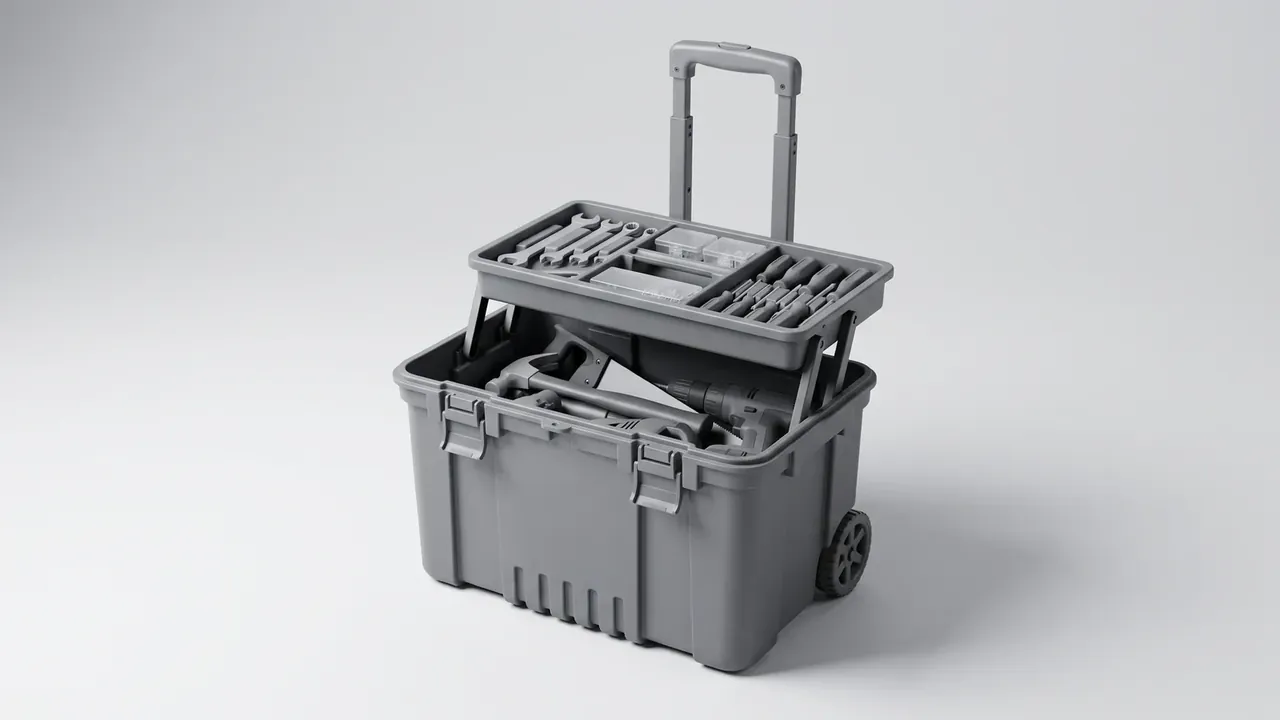
Structure sets that figure. A tool bag spreads load across a few stitched seams, with no rigid wall or seal groove carrying it. A rotomolded case spends its mass on one shell and two seals.
Volume runs opposite: 22, 38, 62 and 26 L, leaving 2, 9, 30 and 4 L of slack once the set is inside. Soft walls bow inward, costing another tenth.
3. Ingress Protection and the Weight It Costs
A cloth wall has no gasket, so it rates IPX0: spray is survivable, immersion and dust are not. A single-gasket injection-molded box reaches IP54; two seal rings and an equalization valve take a rotomolded case to IP67, holding 30 minutes at 1 m.
Drop limits separate them further. Loaded onto concrete, the rotomolded shell holds at 1.5 m, the injection-molded box at 1.0 m, and a soft bag at 0.8 m keeps only its own skin intact.
Temperature lands in the same column: coated fabric -20 to 70 °C, polypropylene softening at 60 °C, rotomolded LLDPE stable from -40 to 80 °C.
4. Payload Cost and Access Time
Prices of 420, 760, 1620 and 590 divided by rated loads of 18, 40, 75 and 22 kg give 23.3, 19.0, 21.6 and 26.8 per kilogram of payload. The lowest sticker carries the highest payload cost.
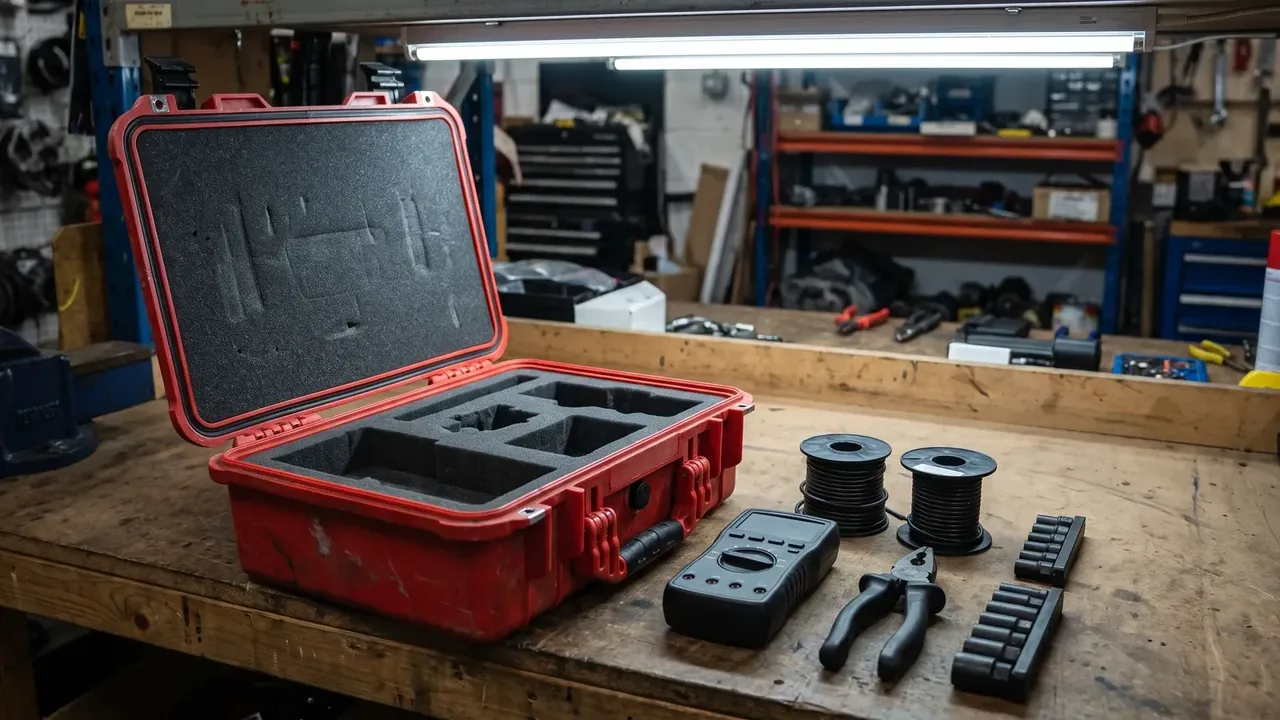
Access time is the bag's second card: 3.5 s against 4.8, 6.2 and 11 s, timed from hand on lid to tool back in place. Forty retrievals a day saves 300 s, about 20.8 hours over 250 working days.
Three-year cost adds purchase, tool loss and digging time: 420 plus 480 for replacements against one purchase for the hard box.
5. One Table for Four Carriers
Every metric on one ruler.
| Metric | Tool Bag | Injection-molded hard box | Rotomolded case | Shoulder-strap tool pack |
|---|---|---|---|---|
| Dead weight | 1.4 kg | 3.6 kg | 7.8 kg | 2.1 kg |
| Usable volume | 22 L | 38 L | 62 L | 26 L |
| IP rating | IPX0 | IP54 | IP67 | IPX0 |
| Payload cost | 23.3 per kg | 19.0 per kg | 21.6 per kg | 26.8 per kg |
| Access time | 3.5 s | 6.2 s | 11 s | 4.8 s |
Ranking then writes itself by scenario. Daily carry on level floors, the bag leads, a rain cover closing part of the sealing gap. Bulk transfer or immersion, the rotomolded case leads. A fixed workstation, the injection-molded box wins on payload cost.
A bag should never be the only carrier. A cloth wall thick enough to survive a 1.5 m drop has already surrendered the weight advantage that justified it.
Conclusion
The position is clear: light, fast and cheap on the label, expensive per kilogram of payload, weakest on protection. Put it in the right setting and the weakness never fires; put it in the wrong one and no amount of fabric compensates. The case for a tool bag rests on fit.
This article discusses only the container (case body) side of specifications and design intent, and does not cover any handling, loading or use of the contents.
Related Reading
- Tool bag versus hard case by scenario
- Fabric and abrasion layer comparison
- How to specify a mechanic tool pouch
- Tool roll as an alternative carrier
Related Products
- 8 Series — Gun Cases; Military Equipment Cases; Camera Equipment Cases; Drone Cases; Watch Cases; Knife Cases; First Aid Cases; Electronics Equipment Cases
- WL8-2812 PP Gun Case — model WL8-2812
- All protective cases and toolboxes: 7 series, 158 models