

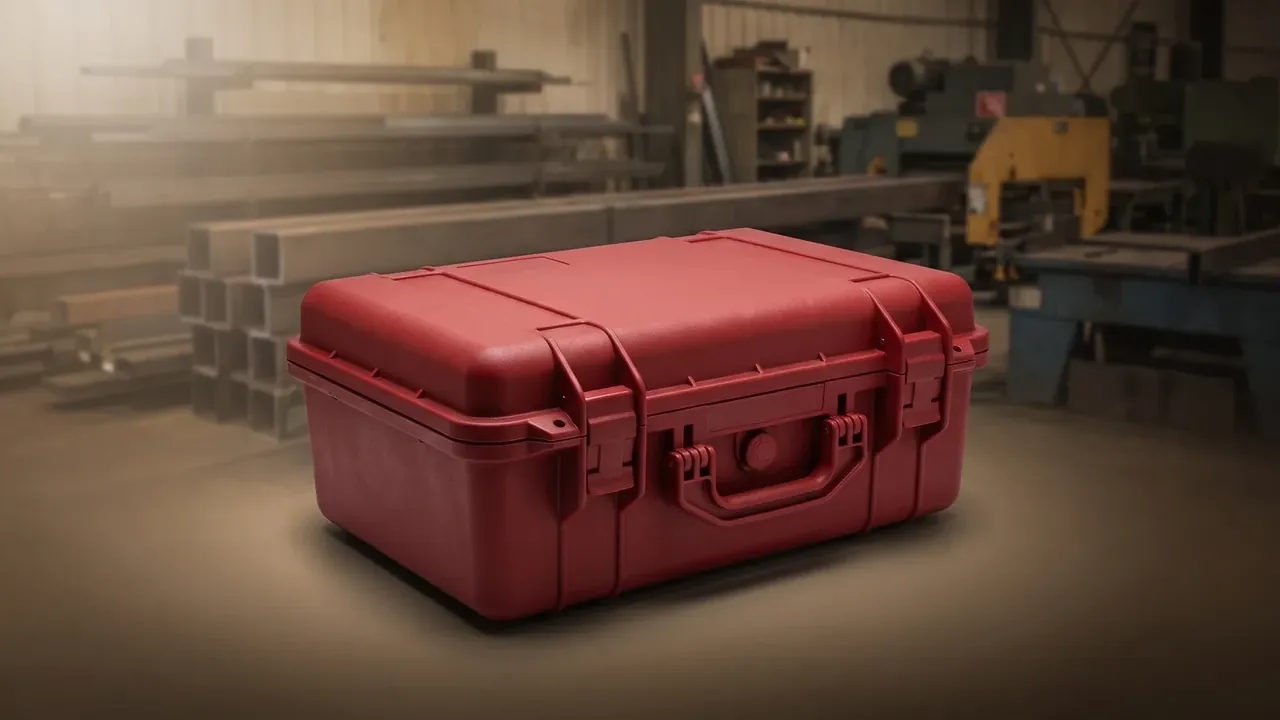
Quick answer: A Tool Bag is judged on five things: fabric weight, panel layout, stitch density, reinforcement points, corners and handles. Shells run 380 to 610 g/m², seams take 8 to 9 stitches per 3 cm, handles get four box-X tacks.
Table of contents
- Fabric and Weight: What Sets the Shell
- Panel Structure and Seam Layout
- Stitch Density and Reinforcement
- Zips, Buckles, Corners and Handles
- Five Checks That Prove the Workmanship
- FAQ
1. Fabric and Weight: What Sets the Shell
Fabric sets the ceiling on service life: 600D polyester at 380 g/m², 1000D at 480 and 1680D double-ply at 610, and the 230 g/m² gap doubles abrasion cycles.
Coating is easier to miss: PU at 0.15 mm holds about 1 500 mm of water column; at 0.08 mm the same fabric falls to 600 mm.
| Fabric | Weight | Thickness | Where it goes |
|---|---|---|---|
| 600D polyester | 380 g/m² | 0.42 mm | Side pockets |
| 1000D polyester | 480 g/m² | 0.52 mm | Body panels |
| 1680D double-ply | 610 g/m² | 0.62 mm | Base, handle roots |
| 5 mm PP sheet | 700 g/m² | 5.00 mm | Base insert |
Mix weights: 1000D body, 1680D base and handle roots, 600D pockets; a 420 by 240 by 280 mm Tool Bag lands at 1.1 kg, 220 g under an all-1680D build.
2. Panel Structure and Seam Layout
Five panels make a Tool Bag: front, back, U-shaped gusset, base and mouth binding. A one-piece gusset removes one seam per side and cuts seam length from 4.6 m to 3.4 m.
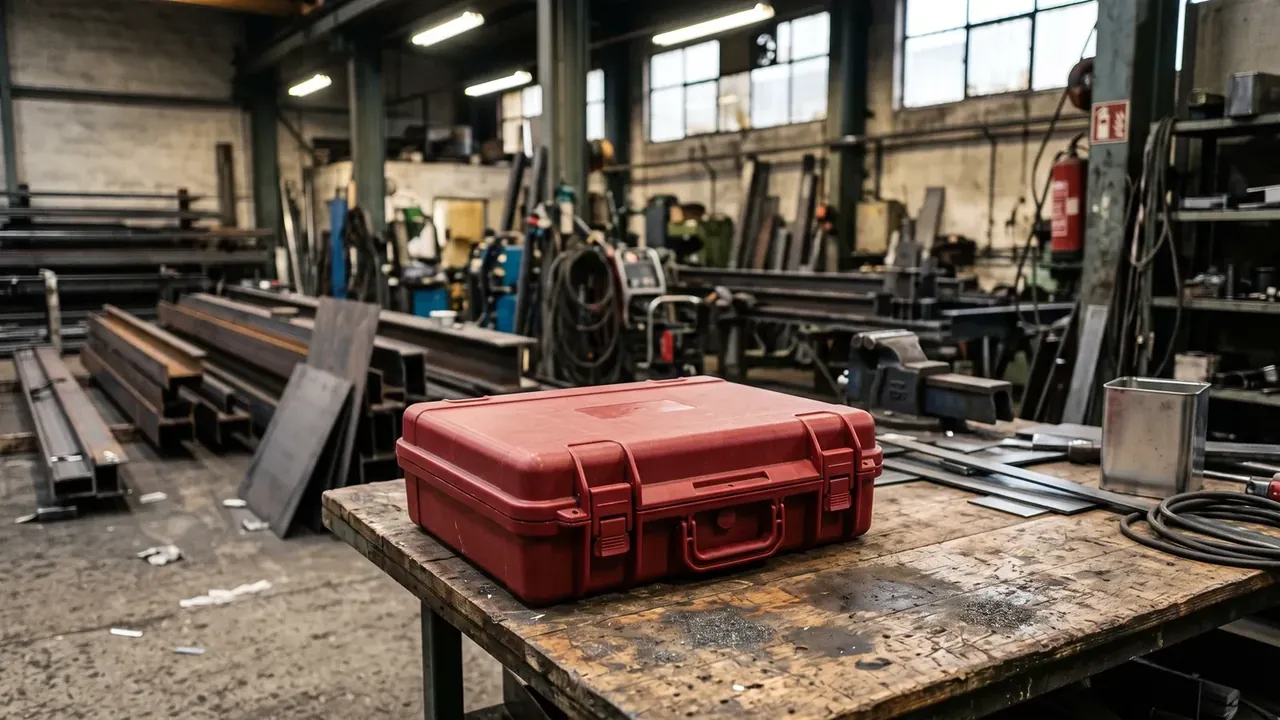
Load seams are flat-felled at a 12 mm allowance with two rows of topstitching, 40 percent stronger than a folded edge; the allowance must sit in the cutting plan.
Nesting is a hidden cost: a 420 mm body needs 1 040 mm of gusset, so a 1.5 m roll wastes 16 percent.
3. Stitch Density and Reinforcement
Density is not a race: 8 to 9 stitches per 3 cm at a 3.4 mm pitch is the balance; at 12 the needle cuts warp and weft and strength drops 15 percent.
| Position | Pitch | Stitches per 3 cm | Rows |
|---|---|---|---|
| Main seam | 3.4 mm | 8 to 9 | 2 |
| Base corner | 3.0 mm | 10 | 3 |
| Handle root | 3.0 mm | 10 | 4 box-X tacks |
| Mouth and zip | 3.8 mm | 7 to 8 | 1 plus bartack |
Reinforcement sits in three places: four box-X tacks of 42 stitches at the handle roots, 18 mm bartacks at mouth and zip ends, three rows at base corners, which take 35 percent of sewing time.
Thread is 20-count polyester at 4.6 kgf, with bobbin tension at 60 to 70 percent of the needle; too much tension leaves holes that let rain through.
4. Zips, Buckles, Corners and Handles
Use a size 8 coil zip with two sliders, set 15 mm from the mouth and bartacked at both ends.
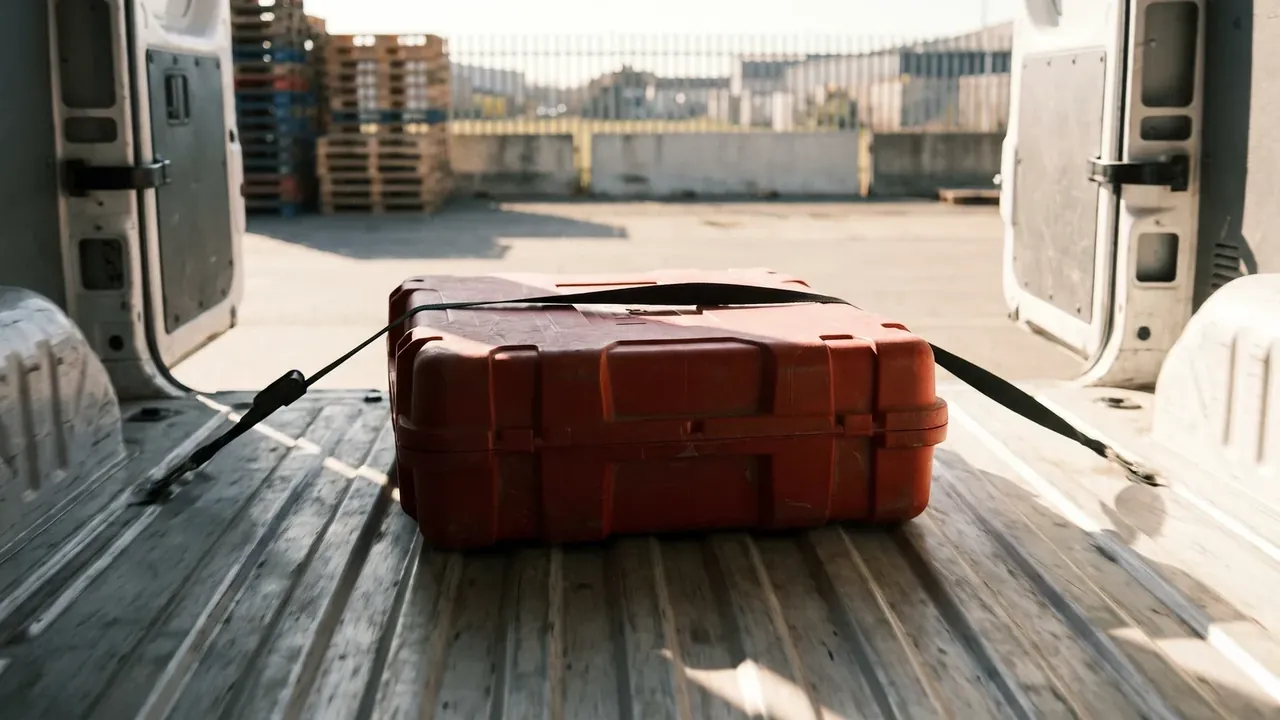
Buckles are 25 mm POM at 90 N, above 70 N after 3 000 cycles; at -10 ℃ they go brittle, so run 20 cycles cold first.
Handles are 38 mm webbing folded double with four box-X tacks, holding 30 kg for 60 minutes. Corners take 1680D plus 2.0 mm TPU, two rivets each, 60 mm tall, where wear concentrates.
5. Five Checks That Prove the Workmanship
Five checks turn workmanship into numbers: stitch count, seam strength, a 30 kg handle load, 3 000 buckle cycles and 500 abrasion turns, written into the acceptance sheet.
| Check | Method | Pass value |
|---|---|---|
| Stitch density | Count 3 cm at three spots | 8 to 9 main, 10 at base |
| Seam strength | Pull five samples | No failure below 420 N |
| Handle load | 30 kg for 60 minutes | Under 2 mm slip |
| Buckle cycles | 3 000 open-close | Holds 70 N or more |
| Corner abrasion | 500 falling-sand turns | Fabric not worn through |
Stitch density is skipped most often because it cannot be seen: cut one sample open and count 3 cm at the base corner. Seam strength at 420 N and the 30 kg handle are the hard lines for a loaded Tool Bag.
Conclusion
The difference between two Tool Bags is not styling but five numbers: fabric weight, panel count, stitch count, reinforcement points and patch thickness. Put them on the drawing and acceptance sheet, and the sample matches the production run. Weight sets cost, stitching sets life, corners decide where it fails. A Tool Bag bought against measured workmanship outlasts one picked by feel.
This article discusses only the container (case body) side of specifications and design intent, and does not cover any handling, loading or use of the contents.
Related Reading
- Comparing tool bag fabrics
- How a tool roll is put together
- Dividers and storage inside a bag
- Straps and carry options for tool carriers
Related Products
- 8 Series — Gun Cases; Military Equipment Cases; Camera Equipment Cases; Drone Cases; Watch Cases; Knife Cases; First Aid Cases; Electronics Equipment Cases
- WL8-2812 PP Gun Case — model WL8-2812
- All protective cases and toolboxes: 7 series, 158 models