

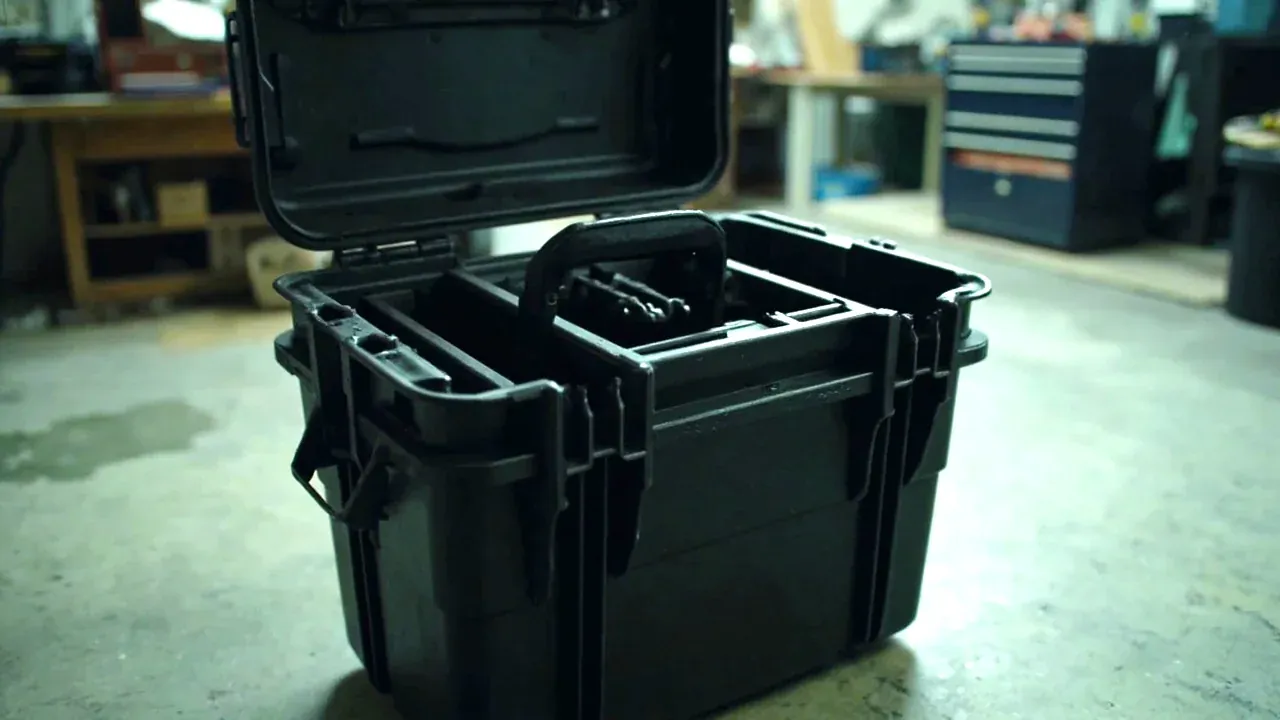
Quick answer: A tool carrier sits between person, tools and workstation: not fixed like a cabinet, not worn like a bag, but loaded once per shift and moved with the person from one station to the next. One question decides whether you need one — do you move between three or more stations a day?
Table of contents
- What a tool carrier is: the middle layer between three actions
- Loaded once, used many times
- Three conditions for moving with the person
- Internal structure: layers versus station zoning
- When a carrier is the wrong answer
- FAQ
1. What a tool carrier is: the middle layer between three actions
Between store and workstation there are three actions: issue, move, and reach. A cabinet solves reaching, a bag solves moving, and a tool carrier strings all three into one cycle — loaded in the store, moved to the station, used in place, returned as a set.
That fixes its form: a handle or castors for moving, internal dividers for reaching, and a lid or lock for the trip. Miss one and it degrades into a worse bag or a worse cabinet.
| Item | Tool carrier | Tool bag | Cabinet |
|---|---|---|---|
| Moving | carried or wheeled as a set | worn on the body | does not move |
| Access | park and open | while worn | walk to it |
| Closure | lid or lock | zip or flap | drawers and doors |
| Typical load | 15 to 40 kg | 5 to 15 kg | 50 kg plus |
2. Loaded once, used many times
The core gain is loading once. A bag is re-sorted at every station and a cabinet demands a walk back; a carrier compresses sorting to once per shift, with three stations sharing one load.
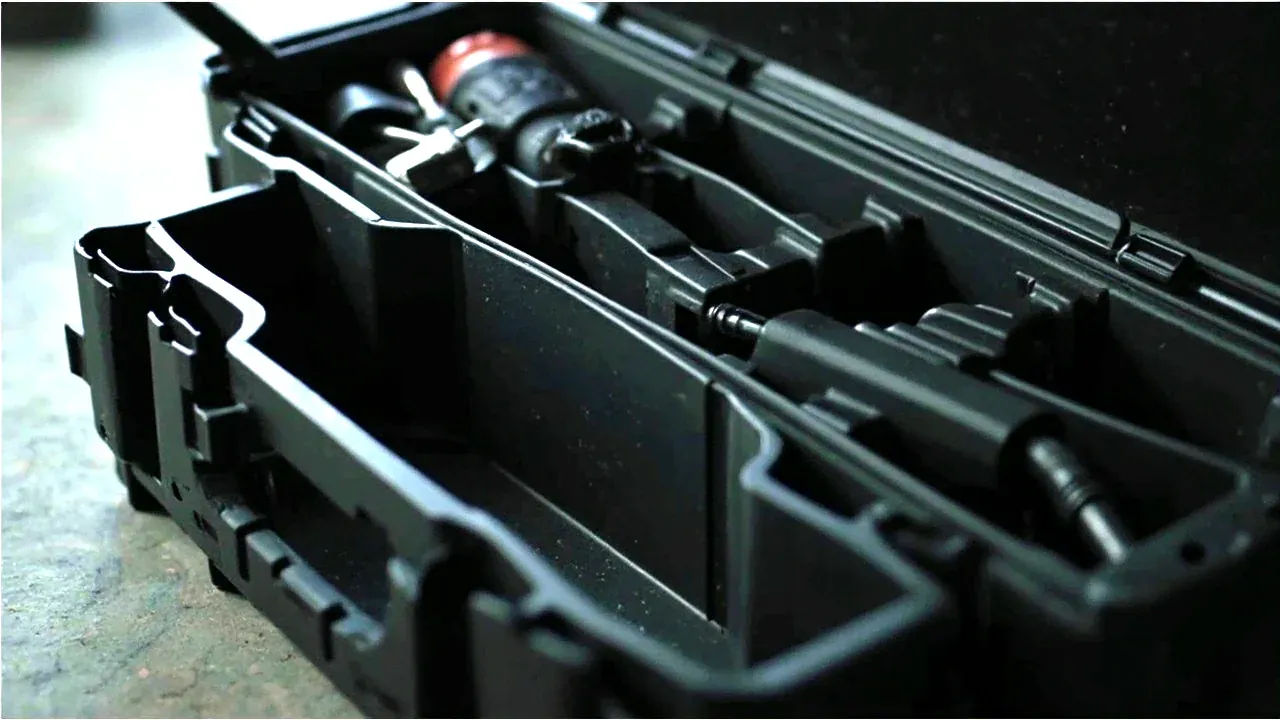
That requires dividers designed for cross-station use: universal tools outside, station-specific items layered behind. Divide by station and every move forces a reload, erasing the gain — the easiest thing to miss, because sample dividers always look tidy.
3. Three conditions for moving with the person
First, weight must match the moving method: a handle to fifteen kilograms, castors from fifteen to thirty, castors plus a push handle above thirty. Past that it becomes a two-person lift and stops travelling with anyone.

Second, it must stay put — a carrier that rolls away is no carrier, so either brakes or a flat resting face. Third, it must open fast: if parking to picking takes more than a few seconds, people carry the tool in hand instead.
4. Internal structure: layers versus station zoning
Dividers follow one of two logics: by layer — universal, specific, diagnostic — which suits similar stations, or by station, which suits stations with very different tools. The first needs no re-sorting when moving; the second does.
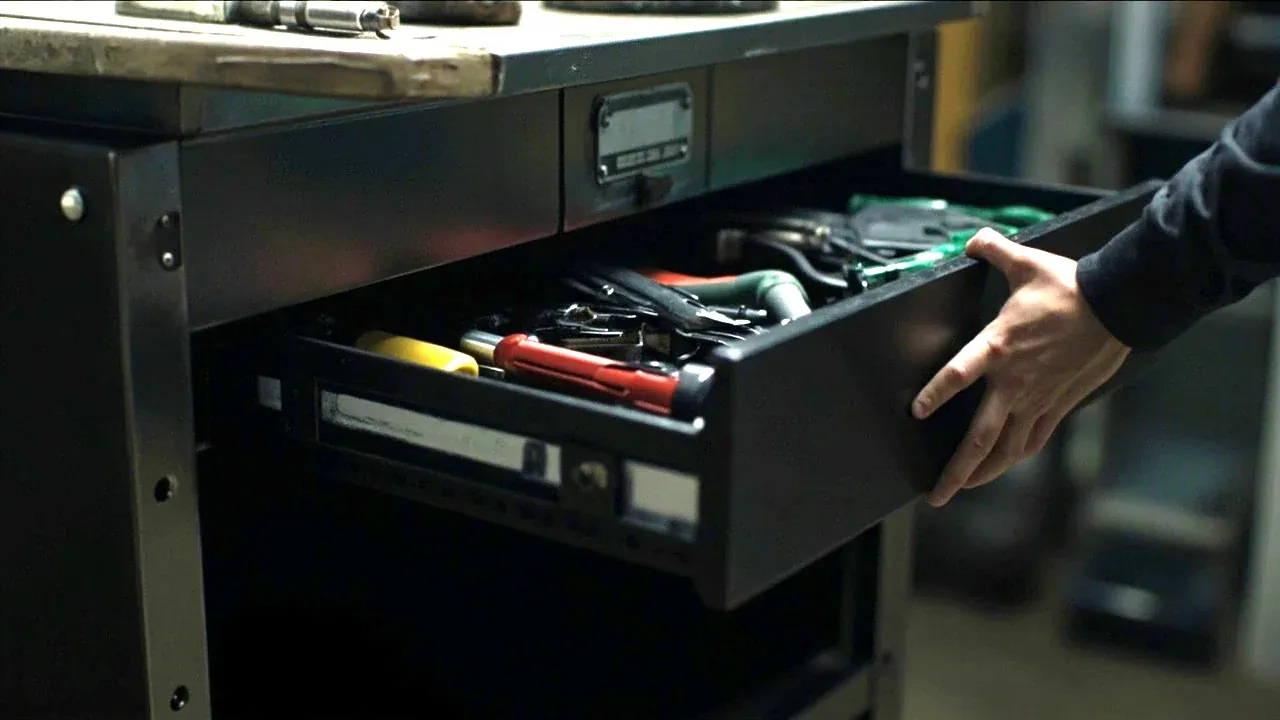
Most sites compromise: the main body layered, plus a removable small bin zoned by station, so the universal part travels and the specific part swaps.
5. When a carrier is the wrong answer
Three cases do not need one: a fixed station that never moves, where a cabinet is better; body-worn work needing free hands, where a bag is better; loads above fifty kilograms, where a trolley is better.
There is also false movement: two stations ten metres apart. Here the sorting saved does not cover the floor space taken, and a bag wins. Station count and distance decide, not load.
Conclusion
A tool carrier is one sentence: one load serving three or more stations. It works when weight matches the moving method, it stays put when parked, and it opens fast; its limits are fifty kilograms and three stations. Outside those, a bag or a cabinet fits better.
This article covers container-side specifications and design implications only, not the handling, loading or use of the contents.
Related Reading
- Choosing a tool carrier
- Tool box, bag and chest compared
- Choosing a mobile tool cabinet
- Tool box foam lining selection
Related Products
- 8 Series — Gun Cases; Military Equipment Cases; Camera Equipment Cases; Drone Cases; Watch Cases; Knife Cases; First Aid Cases; Electronics Equipment Cases
- WL8-2812 PP Gun Case — model WL8-2812
- All protective cases and toolboxes: 7 series, 158 models