

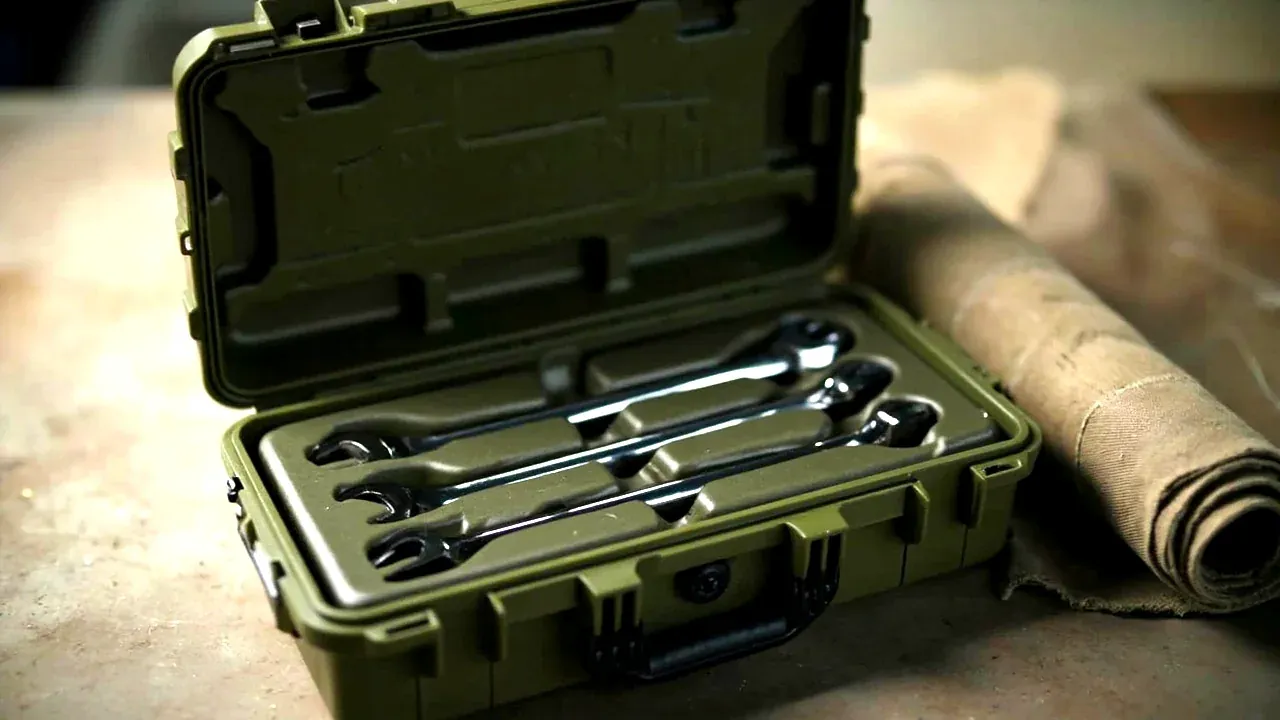
Quick answer: A tool roll is a canvas storage roll with pockets and elastic loops: unrolled, each flat tool takes one slot and a missing piece shows at a glance; rolled up, it becomes a cylinder you can stand, hang or carry. It suits flat, long-handled pieces like wrenches, screwdrivers and sockets, not heavy or odd shapes. Three checks settle it: slots cut to the tool profile, a tie that holds, a panel that lies flat when opened.
Table of contents
- What a tool roll is: a workbench that rolls up
- Slot-by-slot positioning: pockets, loops and handle-out
- Flat pieces only: wrenches, screwdrivers and gauges
- Roll-up order: which end first, and how to tie
- After rolling: standing, hanging and carrying
- FAQ
1. What a tool roll is: a workbench that rolls up
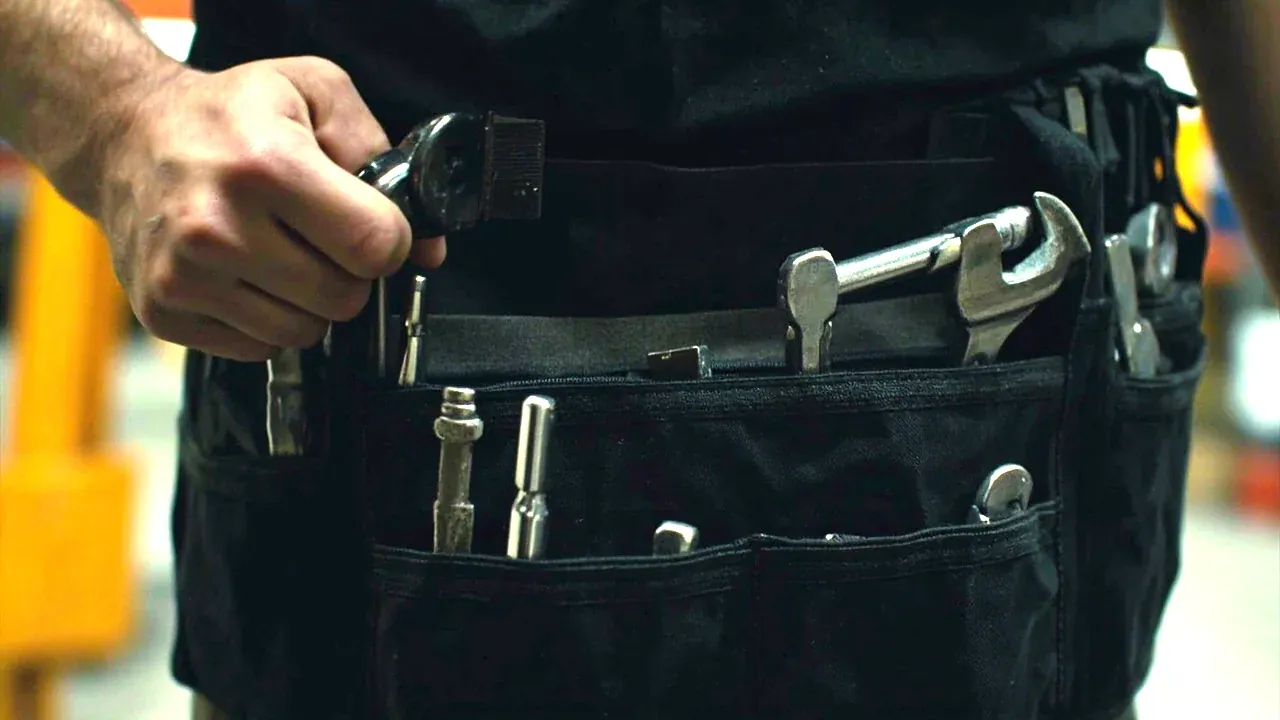
A tool roll is a canvas rectangle with one long edge punched into pockets and elastic loops. Unrolled, every slot takes one tool; rolled from the empty end, the panel becomes a cylinder. There is no lid and no rigid shell: the tool roll does not stop drops or rain, it pins each tool to one position.
In the close-up, a combination wrench sits handle-out in its pocket, so you pinch the exposed grip and pull instead of reaching into the bag.
2. Slot-by-slot positioning: pockets, loops and handle-out
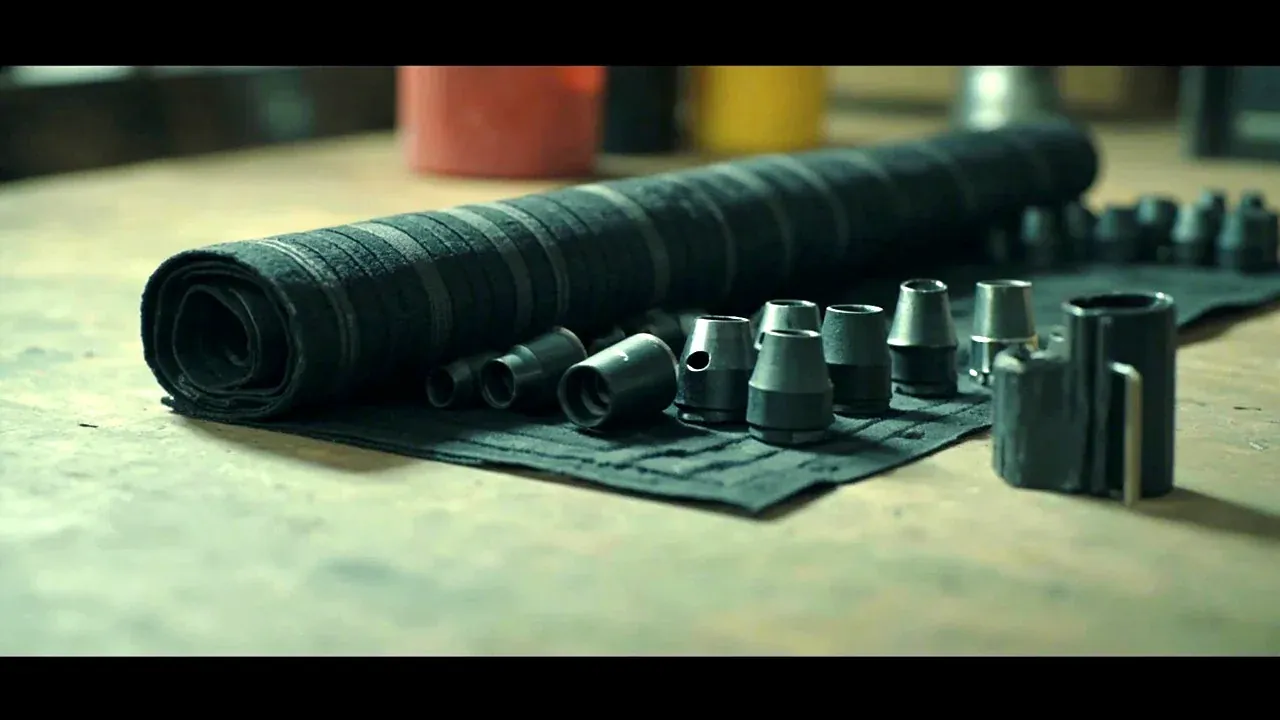
Slot-by-slot positioning is the core mechanism: one slot, one tool, position fixed. Counting runs as a sweep across the slots, and an empty slot is a missing tool.
Two slot types cover the range. Pockets take wrenches, screwdrivers and pliers: shank inside, handle out, mouth sized to the handle. Elastic loops take sockets and small gauges: the loop grips the drive and the piece cannot slide out. The photo shows sockets in their loops, ordered by size.
3. Flat pieces only: wrenches, screwdrivers and gauges
The slots of a tool roll are cut for flat, long-handled pieces: wrenches, screwdrivers, sockets, pliers, rules and calipers. All are thin, long and able to stand alone in a slot, clamped from both sides by canvas when rolled.
Three groups do not fit. Heavy pieces fail first: sledges and pullers above a few kilos tear the stitching and stretch the panel. Odd shapes fail second: power tools and oil cans cannot be gripped and roll out during roll-up. Fragile pieces need a liner and must not share a row with steel tools. The test is direct: if it stands, clamps and stays put when rolled, it belongs in the tool roll.
4. Roll-up order: which end first, and how to tie
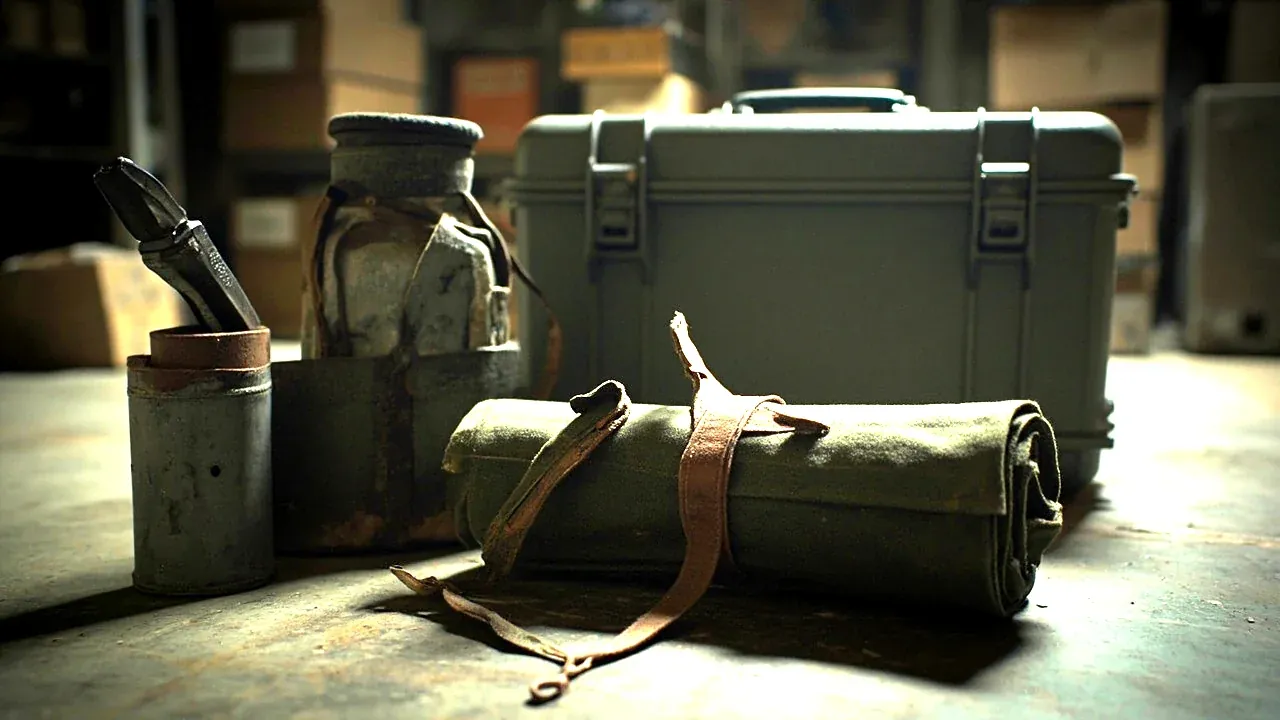
Roll from the empty end toward the tool end: take up the bare section first, then roll layer over layer across the slots. The other way crowds the tools toward one end, the roll stays loose, and the slots shift when reopened.
Tie the roll once it is tight, a strap around the outside, one or two turns, pulled snug; a leather strap beats an elastic band. In the photo the tied tool roll stands beside a hard case: the roll needs a fraction of the footprint, but cloth is not a shell.
5. After rolling: standing, hanging and carrying

A rolled tool roll has three destinations. Standing: leaned against a wall or a case, off the bench. Hanging: the loop or metal handle goes on a wall hook, so unrolling is a lift-and-lay and returning is a roll-and-hang. Carrying: one roll picked up and gone, lighter than an empty case.
The photo shows the roll closed on a workshop wall hook. Hanging depends on a tight, well-tied roll: a loose roll will not sit on a hook, and a panel that curls at the edges puts the slots out of true.
Conclusion
Three sentences settle what a tool roll is. It is a canvas panel laid out slot by slot: a workbench unrolled, a cylinder rolled. Its value is positioning: fast counting, no missing pieces, no swapped places. Its limits are clear: flat, long-handled pieces only. Before opening one up, count what is in your hands; when flat pieces, piece-by-piece checking and instant work all hold, a tool roll is worth unrolling.
This article covers container-side specifications and design implications only.
Related Reading
- Socket wrench set storage
- Choosing a measuring tool case
- Tool box foam lining selection
- Tool box capacity and sizing
Related Products
- 8 Series — Gun Cases; Military Equipment Cases; Camera Equipment Cases; Drone Cases; Watch Cases; Knife Cases; First Aid Cases; Electronics Equipment Cases
- WL8-2812 PP Gun Case — model WL8-2812
- All protective cases and toolboxes: 7 series, 158 models