

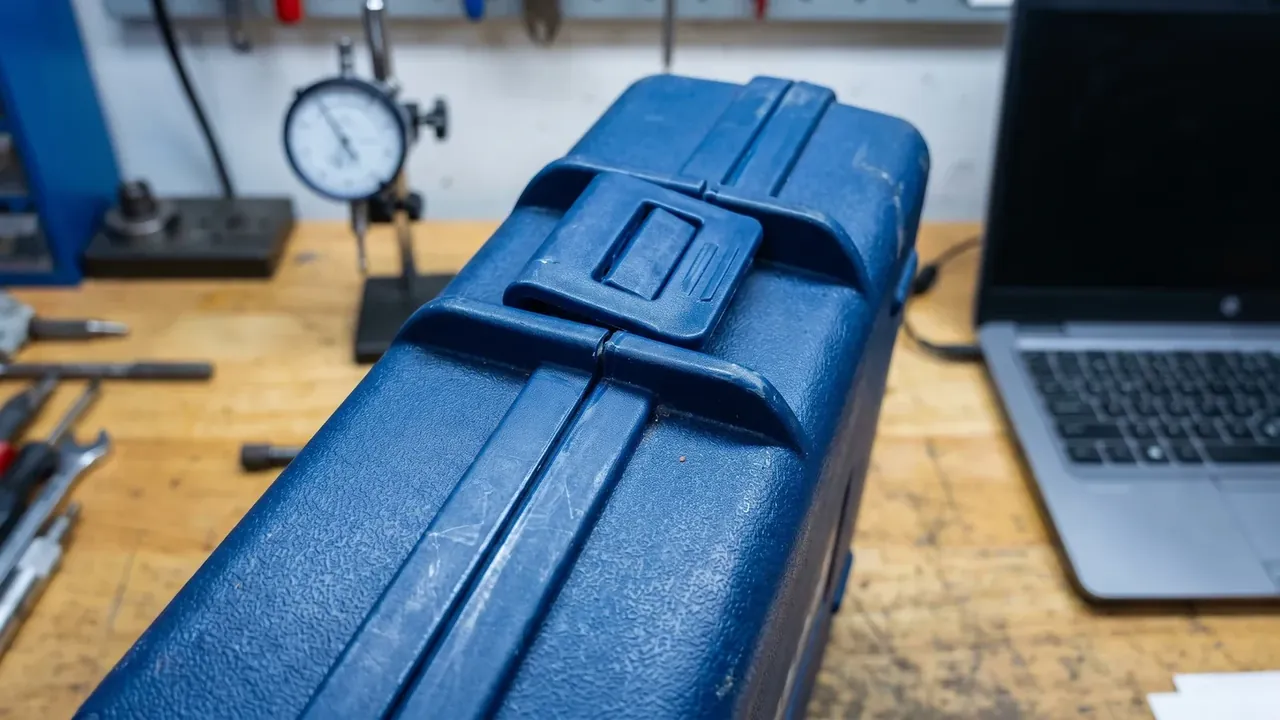
Quick answer: A Tool Box is configured by scenario, not by size. Bench work needs compartments and reach, service work a lock and dust sealing, fleet work temperature and stacking, outdoor work drop strength.
Table of contents
- What Changes When a Tool Box Moves Between Scenarios
- Bench and Line Side Settings
- Field Service and Fleet Settings
- Facilities and Outdoor Construction Settings
- Scenario to Configuration Matrix
- FAQ
1. What Changes When a Tool Box Moves Between Scenarios
Six settings cover the market: the assembly bench, field service, a vehicle fleet, building facilities, outdoor construction and the home workshop. Exterior dimensions barely differ; compartments, latches, resin and handles do the real work.
A 450 × 240 × 210 mm body with 180 mm internal depth is a case you park rather than carry; past it, a one-handed carry over 50 m has the wrist compensating.
Compartments follow the count. Six shallow trays plus a long bay suit twenty tools; twelve deep pockets suit a forty-item list, returning a named item in 4 s against 9 s, but not a 300 mm bar.
| Setting | Compartments | Latch |
|---|---|---|
| Assembly bench | 6 trays, long bay | Single, unlocked |
| Field service | 12 pockets, 30 mm | Twin, 8 mm padlock eye |
| Vehicle fleet | Three removable trays | Twin plus padlock |
| Facilities | 8 pockets, two pouches | Three-digit combination |
| Outdoor site | 45 mm bays, foam | Twin plus key lock |
2. Bench and Line Side Settings
At a bench a Tool Box is never locked and needs no gasket. It needs a lid that stays open and everyday items within 400 mm, which a 105 degree hinge stop delivers.
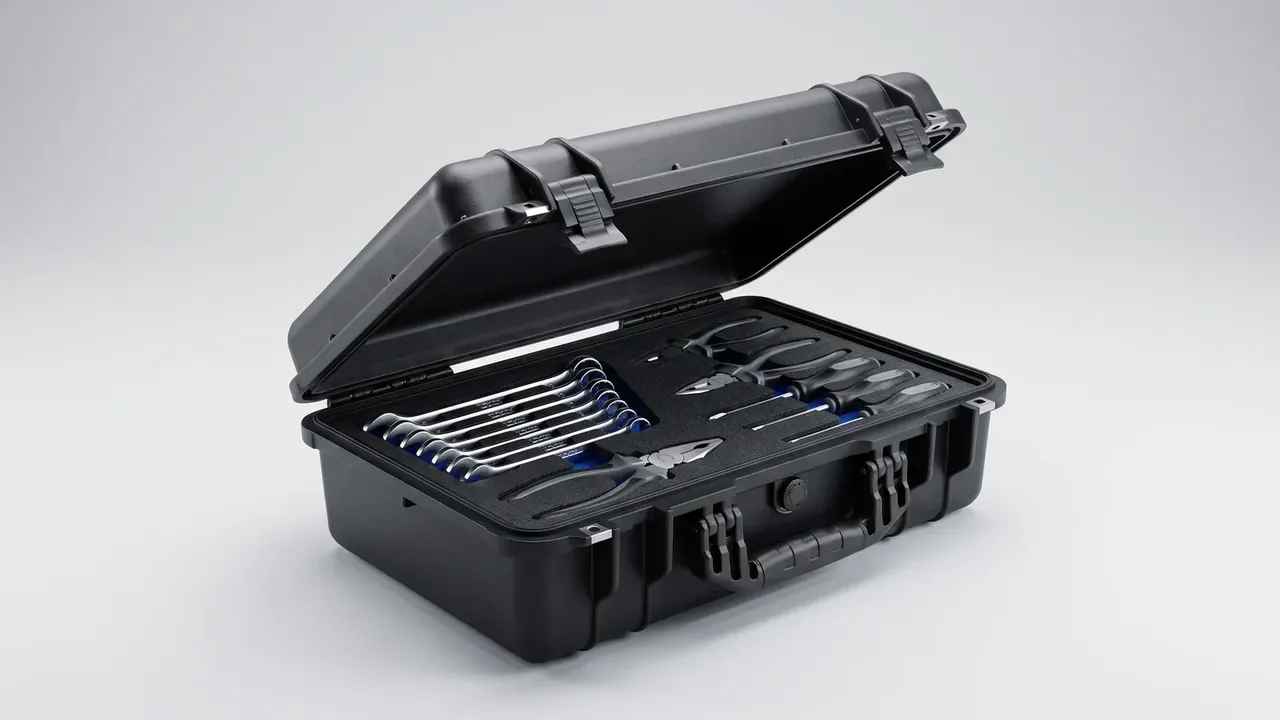
Tray depth follows the tool: 30 mm for bits and drivers upright, 60 mm for sockets lying down, with a 2 mm drain hole so coolant drains away.
3. Field Service and Fleet Settings
Service work adds a lock and dust sealing. Twenty machines at three inspections a week means twenty openings a day, so the hinge is the consumable: a moulded hinge takes 0.5 mm of play by 15,000 cycles, a steel pin one runs to 50,000.
Each latch holds 380 N, and the 8 mm padlock eye sits between them, where the shackle cannot press the gasket.
Fleet duty adds temperature. A boot measured 60 °C in summer and minus 20 °C in winter, so a Tool Box there runs glass-filled PA66 latches, which hold shape at 60 °C where plain PP loses spring at 55 °C. An 800 mm load height takes three tiers.
4. Facilities and Outdoor Construction Settings
Facilities work is a carry problem. Straps top out at 10–14 kg, and past 12 kg the user switches to two arms, so the body shrinks to 400 × 220 × 200 mm with eight pockets and a combination lock.
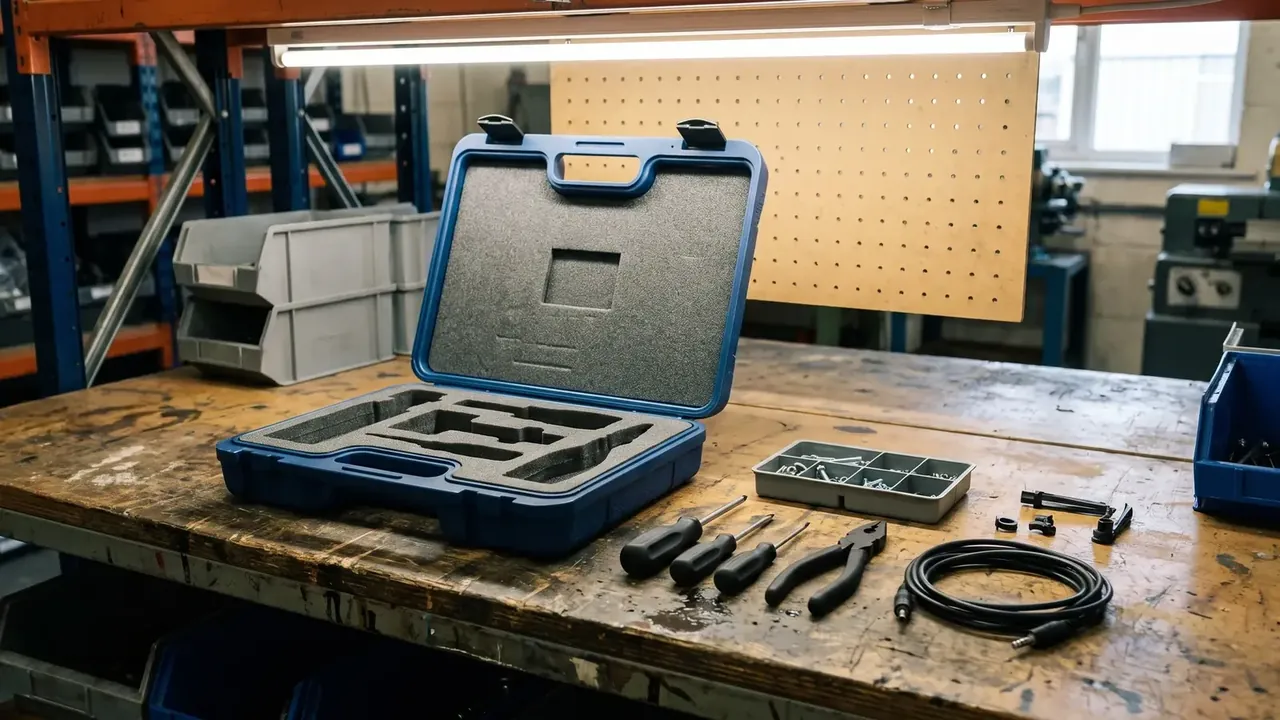
Outdoor sites are the one place a sealing grade must be written. A double-lip EPDM gasket at 30 percent compression gives IP65, 48 hours of salt spray leaves no rust, and 3.0 mm walls with 8 percent impact modifier survive a 1.2 m drop at minus 10 °C.
5. Scenario to Configuration Matrix
Rank the settings on carry distance, opens per day and site harshness, and the configuration falls out.
| Variable | Range | What to change |
|---|---|---|
| Carry distance | Under 5 m | Flat lid, no handle reinforcement |
| Carry distance | Over 200 m | Folding handle, 25 mm strap channel |
| Opens per day | Over 20 | Steel pin hinge, 105 degree stop |
| Environment | Rain and dust | Double-lip gasket, IP65 |
| Load | Over 12 kg | Two-person lift or split the load |
The common mistake is carrying a site Tool Box to a bench: twin latches take both hands and cost three seconds an opening. Estimating load from volume fails hardest: pulling rib pitch from 120 mm to 80 mm takes deflection under a 30 kg spread load from 2.4 mm to 0.9 mm.
Conclusion
The setting sets the configuration: compartments fix picking speed, latches fix whether it can be left alone, resin fixes life. Measure carry distance and daily openings first, then choose sealing and locking, and the Tool Box you specify will still be working in its second setting.
This article discusses only the container (case body) side of specifications and design intent, and does not cover any handling, loading or use of the contents.
Related Reading
- What a tool box is: types, materials and where each one fits
- How tool chests are used on a workshop floor
- Vehicle tool cases: scenarios and selection
- Organising trays and dividers inside a tool box
Related Products
- 8 Series — Gun Cases; Military Equipment Cases; Camera Equipment Cases; Drone Cases; Watch Cases; Knife Cases; First Aid Cases; Electronics Equipment Cases
- WL8-2812 PP Gun Case — model WL8-2812
- All protective cases and toolboxes: 7 series, 158 models